Choosing the right brake pads is critical for school and transit fleet safety, stopping performance, and maintenance costs. The best brake pad brands — Bendix, Meritor, Knorr-Bremse, ATE, and Federal-Mogul — offer different friction formulations and life expectancies. This guide compares top brands to help you select the best brake pads for your bus fleet.
Brake Pad Guide 2026
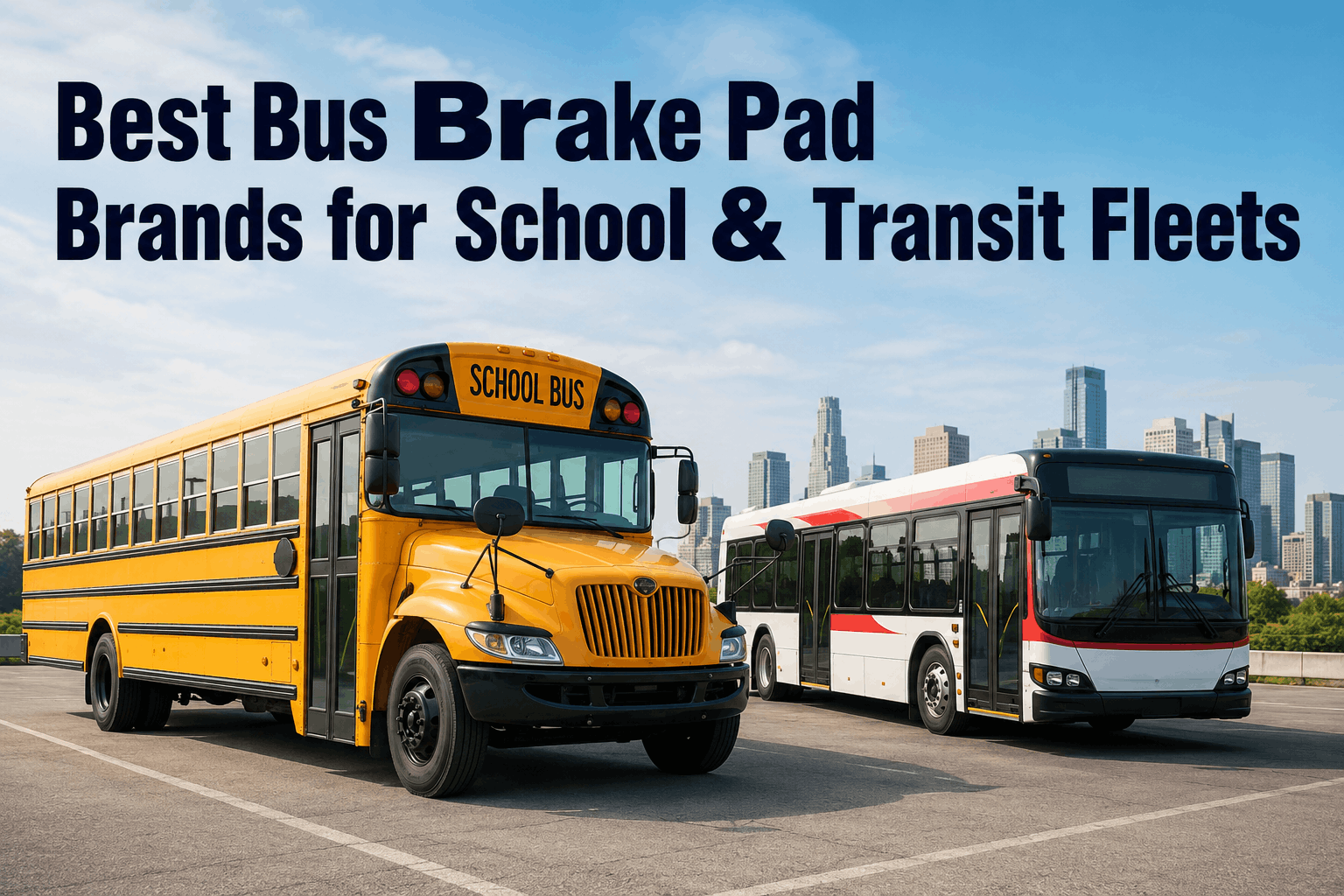
Best Bus Brake Pad Brands for School & Transit Fleets
Best bus brake pad brands for school and transit fleets. Bendix, Meritor, Knorr-Bremse, ATE, Federal-Mogul — friction performance and life expectancy.
Brake Pad Impact: The Cost of Poor Brake Choices
Brake pads are a critical safety component and a significant operational expense. Choosing the wrong brake pads can reduce stopping performance, increase replacement frequency, and compromise passenger safety. The right pads can extend life by 30-50% and improve safety.
$800-$2,000
Annual brake pad cost per bus
30-50%
Life extension with quality pads
20-40%
Performance variation between brands
50,000-100,000
Miles between pad replacements
Top Bus Brake Pad Brands Compared
1. Bendix
Best For: Heavy-duty school and transit buses. Excellent stopping power and fade resistance. Popular in North American fleets.
2. Meritor
Best For: OEM replacement and transit fleets. Consistent performance and long life. Strong in air brake applications.
3. Knorr-Bremse
Best For: European and premium fleets. Advanced friction technology. Excellent in disc brake applications.
4. ATE
Best For: European bus fleets. High-performance ceramic and semi-metallic options. Strong in Mercedes and MAN applications.
5. Federal-Mogul
Best For: Value and availability. Good performance at competitive pricing. Wide application coverage.
Brake Pad Brand Comparison
Bendix and Meritor lead in heavy-duty bus applications with excellent stopping power and fade resistance. Knorr-Bremse offers advanced friction technology for European fleets. ATE provides high-performance options for premium applications. Federal-Mogul offers good performance at competitive pricing.
Brake Pad Price & Life Comparison
Knorr-Bremse averages $130 per axle with 80,000+ mile life. ATE averages $125 with 75,000+ miles. Bendix averages $120 with 70,000+ miles. Meritor averages $115 with 65,000+ miles. Federal-Mogul offers the best value at $90 with 55,000+ mile life.
Brake Pad Selection Requirements
Friction Material
Choose between semi-metallic, ceramic, or NAO formulations. Semi-metallic offers best stopping power. Ceramic offers quieter operation and less dust.
Application Type
Match pads to your bus type. School buses need high-friction pads for frequent stops. Highway coaches need pads with good fade resistance.
Life Expectancy
Evaluate pad life in your application. Premium pads typically last 30-50% longer than economy pads. Consider total cost of ownership.
Noise & Dust
Consider noise and dust levels. Ceramic pads offer quieter operation and less brake dust. Semi-metallic may produce more noise and dust.
Rotor Compatibility
Ensure pad material is compatible with your rotors. Some formulations are harder on rotors. Consider rotor life when selecting pads.
Environmental Conditions
Consider operating conditions. Winter operation may require different friction compounds. Wet and dusty conditions affect pad performance.
Brake Pad Industry Trends
Premium brake pad adoption has grown from 35% to 80% between 2019 and 2025. Fleets are increasingly focused on total cost of ownership rather than upfront price. Premium pads offer longer life and better stopping performance, reducing overall brake costs.
Brake Pad Selection Checklist
Friction Performance
Evaluate stopping power in your application. Semi-metallic offers best performance. Ceramic offers quieter operation. Check fade resistance.
Life Expectancy
Compare pad life in similar applications. Premium pads typically last 30-50% longer. Consider total cost of ownership.
Noise & Dust
Consider noise levels and brake dust. Ceramic pads offer quieter operation. Some fleets prioritize noise reduction for passenger comfort.
Rotor Wear
Evaluate rotor wear with different pad materials. Some formulations are harder on rotors. Consider combined pad+rotor cost.
OEM Specifications
Ensure pads meet OEM specifications. Some buses require specific friction materials. Check manufacturer recommendations.
Supplier Reliability
Consider supplier availability and consistency. Choose established brands with reliable supply chains. Avoid unbranded or unknown suppliers.
Brake Pad KPIs
Track these five metrics to measure your brake pad program effectiveness:
Pad Life (Miles)
Target: 50,000+ miles per set. Track by brand and position. Short life indicates quality or usage issues.
Stopping Performance
Target: Within manufacturer specification. Track during PM inspections. Poor performance indicates pad or rotor issues.
Noise Complaints
Target: Decreasing trend. Track monthly. High noise indicates pad or installation issues.
Rotor Life
Target: 2-3 pad sets per rotor. Track by brand. Short rotor life indicates pad compatibility issues.
Brake Cost per Mile
Target: Decreasing trend. Track monthly. Premium pads often reduce cost per mile.
Our fleet of 180 school buses switched to Bendix brake pads in 2024. In the first year, pad life increased from 45,000 to 72,000 miles. Brake noise complaints decreased by 60%. Annual brake pad cost per bus decreased by 18% despite higher pad price. Stopping performance improved significantly.
Digitize Your Brake Management Program
BusCMMS provides comprehensive brake management including pad tracking, wear monitoring, cost analysis, and brand comparison. Track pad life by brand, monitor rotor condition, and optimize brake maintenance schedules. Book a demo to see how BusCMMS optimizes brake management.
Bus Brake Pad FAQs
What is the best brake pad brand for school buses?
Bendix and Meritor are the most popular brands for school buses. Bendix offers excellent stopping power and fade resistance. Meritor provides consistent OEM-quality performance. Both are trusted by school bus fleets nationwide.
How long should bus brake pads last?
Brake pad life varies by application. School buses typically get 40,000-60,000 miles per set. Transit buses get 50,000-80,000 miles. Highway coaches can get 80,000-100,000+ miles. Premium pads typically last 30-50% longer than economy pads.
What is the difference between semi-metallic and ceramic brake pads?
Semi-metallic pads offer better stopping power and heat resistance, ideal for heavy-duty applications. Ceramic pads offer quieter operation and less brake dust but may not perform as well in extreme conditions. Choose based on your application and priorities.
How much do bus brake pads cost?
Brake pad prices range from $90-$130 per axle depending on brand and material. Federal-Mogul averages $90. Meritor averages $115. Bendix averages $120. ATE averages $125. Knorr-Bremse averages $130. Premium pads offer better value over time.
How do I know when brake pads need replacement?
Brake pads need replacement when thickness is below 3mm, when wear indicators make contact (squealing), or when stopping performance degrades. Regular PM inspections should measure pad thickness and check for uneven wear patterns.
Can BusCMMS track brake pad performance?
Yes. BusCMMS tracks brake pad installation, mileage, thickness measurements, and replacement reasons. The system generates pad life reports, compares brand performance, and identifies uneven wear patterns. This helps optimize pad selection and replacement intervals.
The Bottom Line
Choosing the right brake pads is critical for bus fleet safety and cost management. Bendix and Meritor lead in heavy-duty school and transit applications with excellent stopping power and fade resistance. Knorr-Bremse offers advanced friction technology for European fleets. ATE provides high-performance ceramic and semi-metallic options. Federal-Mogul offers good performance at competitive pricing. When selecting pads, prioritize friction performance, life expectancy, noise levels, rotor compatibility, and supplier reliability. Premium pads may cost more upfront but typically offer 30-50% longer life and better stopping performance. When combined with proper brake management through CMMS, fleets can optimize pad selection and replacement intervals for maximum safety and value.