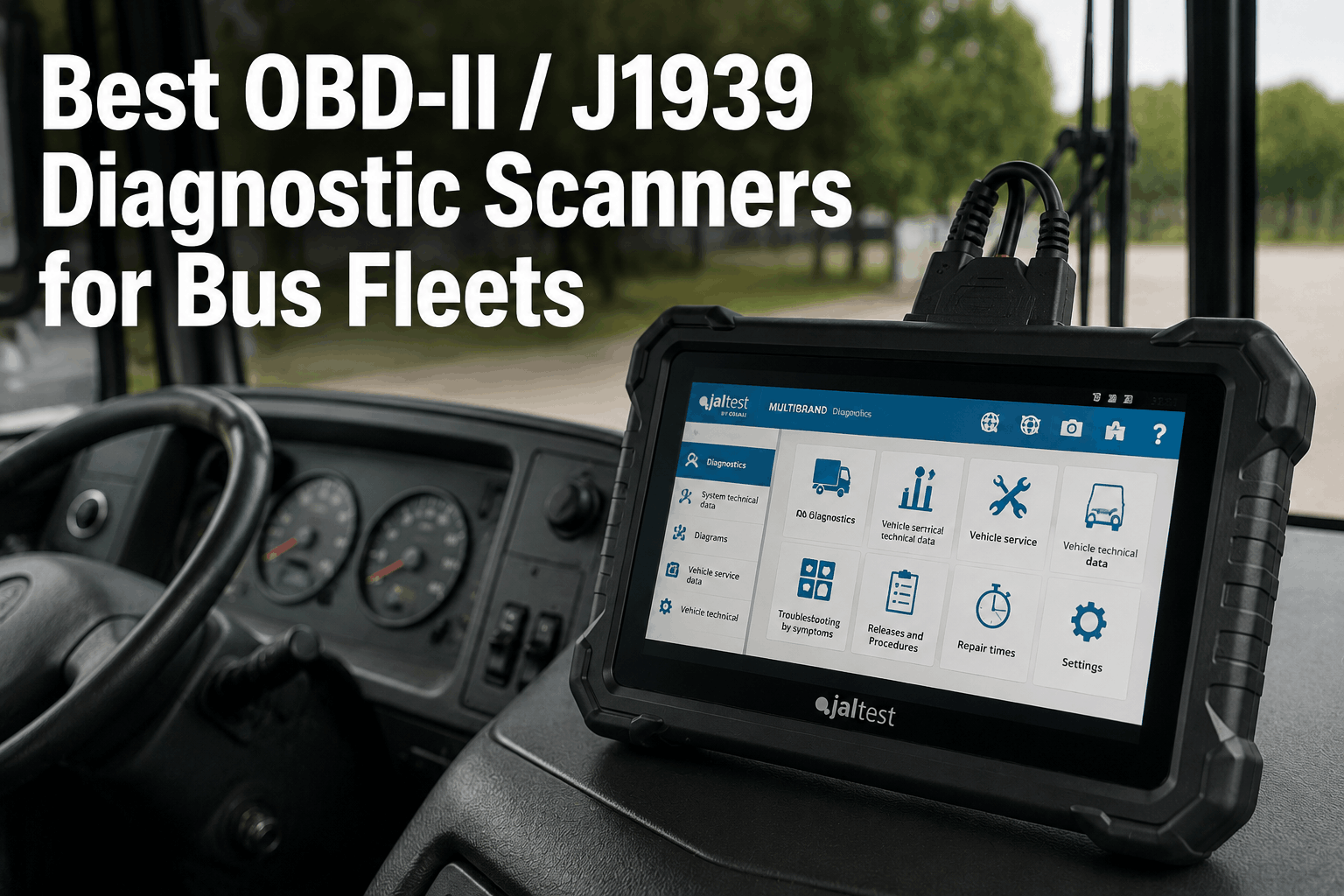
Bus fleets require specialized diagnostic tools to read and clear fault codes on heavy-duty vehicles. OBD-II works for light-duty buses, but most transit and school buses use the J1939 protocol. This guide compares the best diagnostic scanners—Cojali Jaltest, Texa Truck, Cummins Insite, Allison DOC, Detroit DDDL, Bosch ESI Truck, and Noregon JPRO—with features, compatibility, and pricing for bus fleet applications.
Diagnostic Scanner Guide 2026
Best OBD-II / J1939 Diagnostic Scanners for Bus Fleets
Best OBD-II and J1939 diagnostic scanners for bus fleets. Cojali Jaltest, Texa Truck, Cummins Insite, Allison DOC — features and price compared.
Diagnostic Scanner Impact: The Cost of Slow Diagnosis
Without proper diagnostic tools, bus fleets waste hours on manual troubleshooting. A good diagnostic scanner can reduce diagnostic time by 70%, identify issues before they cause breakdowns, and improve first-time fix rates. The right scanner pays for itself quickly.
70%
Faster diagnosis
$500-$5,000
Scanner price range
85%
First-time fix rate
J1939
Standard for heavy-duty buses
Top Diagnostic Scanners for Bus Fleets
1. Cojali Jaltest
Best For: Multi-brand bus fleets. Extensive J1939 coverage. Supports most bus brands. Excellent live data capabilities. $1,500-$4,000.
2. Texa Truck
Best For: European bus brands. Strong for Volvo, MAN, Mercedes, Scania. Comprehensive diagnostics and programming. $1,200-$3,500.
3. Cummins Insite
Best For: Buses with Cummins engines. Factory-level diagnostics. Engine calibration and programming. $500-$2,500.
4. Allison DOC
Best For: Allison transmission diagnostics. Transmission fault codes and reprogramming. Essential for transit fleets. $300-$1,200.
5. Detroit DDDL
Best For: Detroit Diesel engines. Comprehensive diagnostics and programming. Used in many transit buses. Contact for pricing.
6. Bosch ESI Truck
Best For: European diagnostics. Good coverage for Mercedes, MAN, and Volvo. User-friendly interface. $800-$2,000.
7. Noregon JPRO
Best For: Commercial vehicle diagnostics. Good coverage for North American buses. Fleet management integration. $500-$1,500.
8. OTC Genisys
Best For: Mixed fleet diagnostics. Good for OBD-II and basic J1939. Entry-level option. $300-$800.
Diagnostic Scanner Comparison
Cojali Jaltest and Texa Truck lead in multi-brand bus coverage with extensive J1939 support. Cummins Insite and Detroit DDDL offer factory-level engine diagnostics. Allison DOC provides specialized transmission diagnostics. Noregon JPRO offers good commercial vehicle coverage. OTC Genisys is an entry-level option.
Scanner Price & Feature Comparison
OTC Genisys starts at $500 for basic diagnostics. Allison DOC averages $750 for transmission diagnostics. Noregon JPRO averages $1,000 for commercial vehicle coverage. Cummins Insite averages $1,500 for engine diagnostics. Texa Truck averages $2,500 for European bus coverage. Cojali Jaltest is the most comprehensive at $3,500.
Diagnostic Scanner Requirements
J1939 Protocol Support
Ensure scanner supports J1939 for heavy-duty buses. This is the standard protocol for most school buses, transit buses, and motorcoaches.
Bus Brand Coverage
Verify scanner supports your bus brands. Some scanners specialize in specific brands. Multi-brand support is essential for mixed fleets.
Live Data Streaming
Real-time data streaming helps diagnose intermittent issues. Look for scanners with graphing capabilities for sensor data.
Bi-Directional Controls
Bi-directional controls allow testing components. Essential for advanced diagnostics and component actuation testing.
Fleet Management Integration
Integration with fleet management software improves workflow. Automated work order creation from fault codes saves time.
Software Updates
Regular updates are essential for new models. Consider subscription costs and update frequency. Some scanners require annual subscriptions.
Diagnostic Scanner Trends
J1939 scanner adoption has grown from 40% to 90% between 2019 and 2025. Integration with CMMS systems has increased as fleets recognize the value of automated work order creation from fault codes. Cojali Jaltest and Texa Truck lead in advanced diagnostics.
Scanner Selection Checklist
J1939 Protocol
Verify full J1939 support for heavy-duty bus diagnostics. Essential for reading engine, transmission, and ABS fault codes.
Bus Brand Coverage
Ensure support for your bus brands. Jaltest covers most brands. Texa specializes in European. Insite covers Cummins engines.
Live Data & Graphing
Real-time data streaming and graphing capabilities. Essential for intermittent faults and sensor verification.
Bi-Directional Controls
Test components with bi-directional controls. Important for actuation testing and advanced diagnostics.
Software Updates
Check update frequency and cost. Annual subscriptions are common. Regular updates are essential for new models.
Integration with CMMS
Connect diagnostic data to your CMMS. Automated work orders from fault codes saves time and improves workflow.
Diagnostic Scanner KPIs
Track these five metrics to measure your diagnostic scanner program effectiveness:
Diagnostic Time
Target: Under 15 minutes per scan. Track monthly. Faster diagnostics improve shop efficiency.
First-Time Fix Rate
Target: 90%+ first-time fix. Track monthly. Accurate diagnostics reduce repeat repairs.
Scanner Usage Rate
Target: 100% of technicians using scanners. Track monthly. Low usage indicates training or tool issues.
Fault Code Accuracy
Target: 95%+ accuracy. Track monthly. Misdiagnosis wastes time and parts.
Software Update Compliance
Target: Current on all updates. Track quarterly. Outdated software misses codes on newer models.
Our fleet of 150 buses implemented Cojali Jaltest scanners in 2025. Diagnostic time decreased from 45 to 14 minutes average. First-time fix rate improved from 72% to 94%. Integration with our CMMS automated 85% of work order creation from fault codes. The scanners paid for themselves in 9 months.
Connect Diagnostic Scanners to Your CMMS
BusCMMS integrates with leading diagnostic scanners including Cojali Jaltest, Texa Truck, and Noregon JPRO. Automatically create work orders from fault codes, track diagnostic history, and monitor repair outcomes. Book a demo to see how BusCMMS + diagnostic scanners transform your fleet maintenance.
Bus Diagnostic Scanner FAQs
What is the best diagnostic scanner for bus fleets?
Cojali Jaltest is the most comprehensive multi-brand scanner for bus fleets, supporting most bus brands with extensive J1939 coverage. Texa Truck is excellent for European buses. Cummins Insite is essential for buses with Cummins engines. Choose based on your fleet composition.
What is J1939 and why does it matter for bus diagnostics?
J1939 is the standard diagnostic protocol for heavy-duty vehicles including school buses, transit buses, and motorcoaches. It allows communication between the ECU and diagnostic tools. OBD-II is for light-duty vehicles. Bus fleets need J1939-compatible scanners.
How much does a bus diagnostic scanner cost?
Diagnostic scanner prices range from $500-$5,000 depending on features and coverage. OTC Genisys starts at $500. Noregon JPRO averages $1,000. Cummins Insite averages $1,500. Texa Truck averages $2,500. Cojali Jaltest is the most comprehensive at $3,500.
Can diagnostic scanners integrate with CMMS?
Yes. Leading diagnostic scanners like Jaltest, Texa, and JPRO can integrate with CMMS systems through APIs. Fault codes can automatically generate work orders, and repair history can be synced between systems. This saves time and improves workflow.
What is the difference between Insite, DOC, and JPRO?
Cummins Insite is factory-level diagnostics for Cummins engines. Allison DOC is for Allison transmission diagnostics. Noregon JPRO is a general commercial vehicle scanner with good coverage for North American buses. Each serves different needs.
Can BusCMMS track diagnostic scanner usage?
Yes. BusCMMS tracks diagnostic scanner usage, fault codes, diagnostic times, and repair outcomes. The system generates reports on diagnostic efficiency, first-time fix rates, and common fault codes. This helps optimize diagnostic workflows and technician training.
The Bottom Line
Choosing the right diagnostic scanner is essential for efficient bus fleet maintenance. Cojali Jaltest leads in multi-brand coverage with extensive J1939 support. Texa Truck excels in European bus diagnostics. Cummins Insite provides factory-level engine diagnostics. Allison DOC offers specialized transmission diagnostics. Noregon JPRO provides good commercial vehicle coverage. When selecting a scanner, prioritize J1939 support, bus brand coverage, live data capabilities, bi-directional controls, and CMMS integration. The right scanner can reduce diagnostic time by 70% and improve first-time fix rates to 90%+. When combined with proper CMMS integration, diagnostic scanners transform fleet maintenance from reactive to proactive.