Choosing the right bus tires is critical for safety, fuel efficiency, and operational costs. The best bus tire brands in 2026—Michelin, Bridgestone, Continental, Goodyear, and Hankook—offer different strengths in load index, tread compound, and wet/winter performance. This guide compares top brands to help you select the right tires for your school buses, transit buses, and motorcoaches.
Bus Tire Comparison Guide 2026
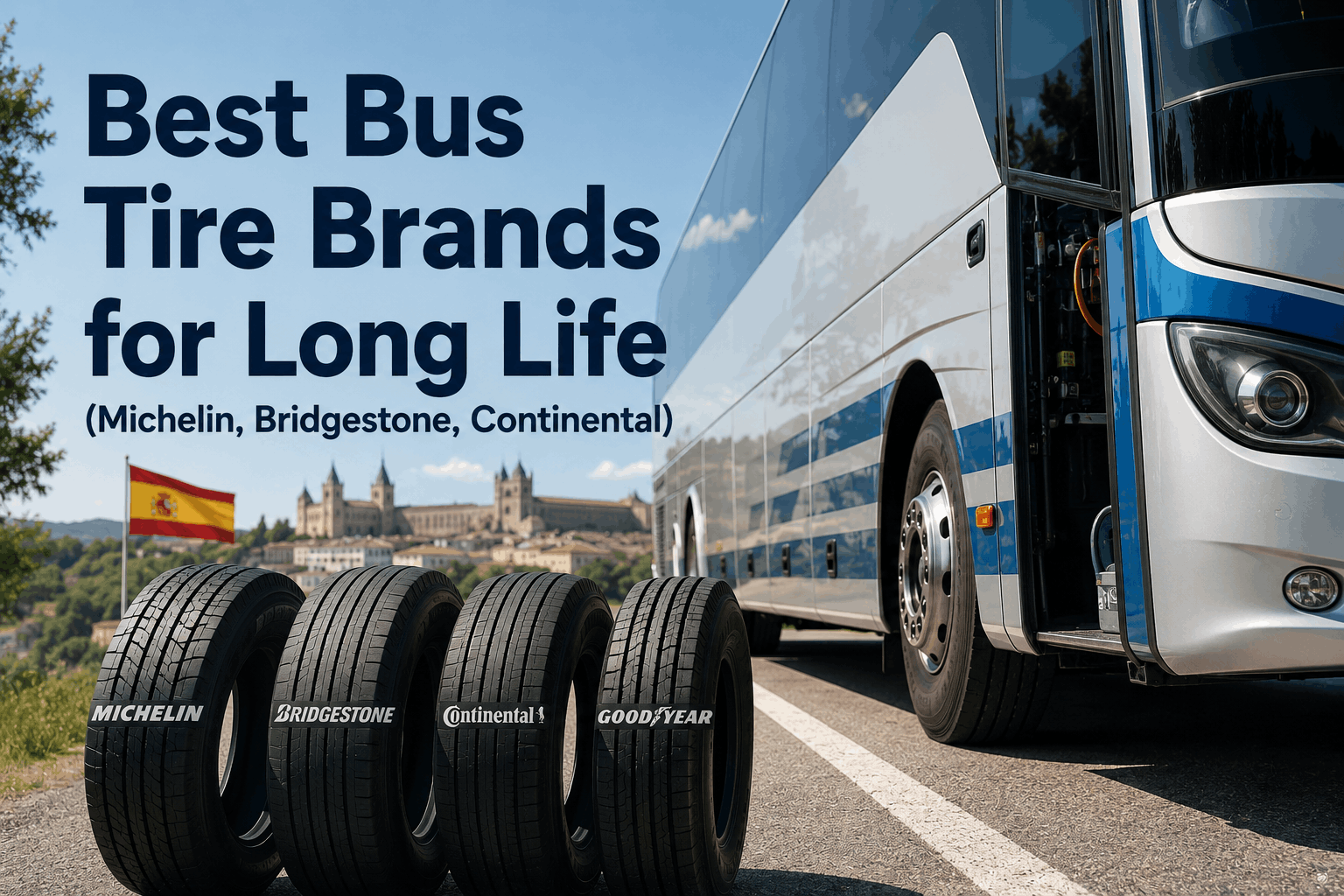
Best Bus Tire Brands for Long Life
Best bus tire brands for long life. Michelin, Bridgestone, Continental, Goodyear, Hankook — load index, tread compound, wet/winter performance compared.
Bus Tire Impact: The Cost of Poor Tire Choices
Bus tires are a significant operational expense. Choosing the wrong tire can reduce fuel efficiency by 5-10%, increase replacement frequency, and compromise safety. The right tires can save thousands per bus annually in fuel and replacement costs.
$3,000-$6,000
Annual tire cost per bus
5-10%
Fuel economy penalty from poor tires
4-6 years
Average bus tire life
100,000+
Miles per tire on steer axle
Top Bus Tire Brands Compared
1. Michelin
Best For: Overall quality and longevity. X Multi, X Coach, X InCity. Excellent wet and winter performance. Premium pricing but best TCO.
2. Bridgestone
Best For: Durability and retreadability. R268, R297, M854. Strong in urban applications. Good fuel efficiency with Ecopia technology.
3. Continental
Best For: European quality and performance. Conti Urban, Conti Coach. Excellent wet braking and handling. Competitive pricing.
4. Goodyear
Best For: North American availability. Metro Miler, Endurance LHS. Strong in school bus applications. Good retread programs.
5. Hankook
Best For: Value for money. AH11, AH35. Good performance at competitive prices. Growing presence in transit sector.
Bus Tire Brand Comparison
Michelin leads in overall quality and longevity with premium pricing. Bridgestone offers excellent durability and retreadability. Continental excels in wet performance and handling. Goodyear provides strong North American availability. Hankook offers the best value for budget-conscious fleets.
Tire Price & Life Comparison
Michelin tires average $550 per tire with 120,000+ mile life. Bridgestone averages $500 with 100,000+ miles. Continental averages $480 with 90,000+ miles. Goodyear averages $450 with 85,000+ miles. Hankook offers the best value at $400 with 80,000+ mile life.
Bus Tire Selection Requirements
Load Index
Ensure tires meet your bus's weight requirements. School buses need high load capacity. Check axle weights and tire load ratings.
Tread Compound
Consider application-specific compounds. Urban transit needs wear-resistant compounds. Motorcoaches need highway compounds for fuel efficiency.
Wet Performance
Evaluate wet braking and hydroplaning resistance. Critical for school bus safety. Continental and Michelin excel in wet conditions.
Winter Performance
Consider winter-rated tires for cold climates. Some brands offer 3PMSF-rated tires for severe winter conditions.
Fuel Efficiency
Low rolling resistance tires improve fuel economy. Bridgestone Ecopia and Michelin X Energy offer excellent fuel efficiency.
Retreadability
Consider casing durability for retreading. Michelin and Bridgestone offer excellent retread programs. Goodyear has strong retread offerings.
Bus Tire Industry Trends
Premium tire adoption has grown from 35% to 85% between 2019 and 2025. Fuel efficiency focus has increased as fleets recognize the impact of tires on operating costs. Michelin and Bridgestone lead in premium tire adoption. By 2026, most bus fleets will use premium tires for lower TCO.
Tire Selection Checklist for Bus Fleets
Application Type
Match tires to your bus type and operating conditions. School buses need urban tires. Motorcoaches need highway tires. Transit needs mixed-use tires.
Load Capacity
Verify load index meets your bus weight requirements. Check axle weights and tire load ratings. Ensure adequate safety margin.
Fuel Efficiency
Consider low rolling resistance tires for fuel savings. Bridgestone Ecopia and Michelin X Energy offer 3-5% fuel savings.
Wet & Winter Performance
Evaluate wet braking and hydroplaning resistance. Consider 3PMSF-rated tires for winter conditions. Continental and Michelin excel in wet performance.
Retreadability
Choose tires with strong casing for retreading. Michelin and Bridgestone offer excellent retread programs. Retreads can save 30-50% per tire.
Total Cost of Ownership
Compare TCO including price, life, fuel efficiency, and retread potential. Premium tires often offer lower TCO despite higher upfront cost.
Bus Tire KPIs
Track these five metrics to measure your tire program effectiveness:
Tire Life (Miles)
Target: 80,000+ miles on steer axle. Track by tire position and brand. Short life indicates alignment or usage issues.
Fuel Efficiency Impact
Target: 5%+ improvement from tire selection. Track monthly. Premium tires reduce rolling resistance and fuel consumption.
Retread Rate
Target: 70%+ casing retread rate. Track quarterly. High retread rate indicates good tire management.
Roadside Tire Events
Target: Zero preventable tire events. Track monthly. Proper selection and PM prevents roadside failures.
Tire Cost per Mile
Target: Decreasing trend. Track monthly. Premium tires often reduce cost per mile despite higher upfront cost.
Our fleet of 200 school buses switched to Michelin tires in 2024. In the first year, tire life increased from 75,000 to 110,000 miles on steer axles. Fuel economy improved by 6% due to lower rolling resistance. Total tire cost per mile decreased by 22%. The premium investment paid off within 18 months.
Digitize Your Tire Management Program
BusCMMS provides comprehensive tire management including tire tracking, pressure monitoring, tread depth recording, and PM scheduling. Track tire life by brand and position, monitor fuel efficiency impact, and manage retread programs. Book a demo to see how BusCMMS optimizes tire management.
Bus Tire FAQs
What is the best bus tire brand?
The best brand depends on your needs. Michelin offers the best overall quality and longevity. Bridgestone offers excellent durability and retreadability. Continental excels in wet performance. Goodyear provides strong North American availability. Hankook offers the best value for budget-conscious fleets.
How long do bus tires last?
Bus tire life varies by brand and application. Steer axle tires typically last 80,000-120,000 miles. Drive axle tires last 100,000-150,000 miles. Trailer tires last 120,000-180,000 miles. Proper maintenance and alignment extend tire life significantly.
How much do bus tires cost?
Bus tire prices range from $400-$600 per tire depending on brand and size. Hankook averages $400. Goodyear averages $450. Continental averages $480. Bridgestone averages $500. Michelin averages $550. Retreads cost 30-50% less than new tires.
What is the best tire for school buses?
School buses benefit from urban/transit tires with strong sidewalls and wear resistance. Michelin X InCity, Bridgestone R268, and Goodyear Metro Miler are popular choices. Consider load capacity and stop-and-go performance.
How do I choose between Michelin and Bridgestone?
Michelin offers slightly better longevity and fuel efficiency at a higher price point. Bridgestone offers excellent durability and retreadability with strong casing life. Choose Michelin for maximum life and fuel savings. Choose Bridgestone for retread program value.
Can BusCMMS track tire performance?
Yes. BusCMMS tracks tire installation, mileage, tread depth, pressure, and removal reasons. The system generates tire life reports, compares brand performance, and schedules tire rotations. This helps optimize tire selection and extend tire life.
The Bottom Line
Choosing the right bus tires is critical for safety, fuel efficiency, and operational costs. Michelin leads in overall quality and longevity with premium pricing. Bridgestone offers excellent durability and retreadability. Continental excels in wet performance and handling. Goodyear provides strong North American availability. Hankook offers the best value for budget-conscious fleets. When selecting tires, consider load index, tread compound, wet performance, winter capability, fuel efficiency, and retreadability. The right tires can reduce fuel consumption by 5-10%, extend tire life by 20-40%, and lower total cost of ownership. When combined with proper tire management through CMMS, fleets can optimize tire selection and maintenance for maximum value.