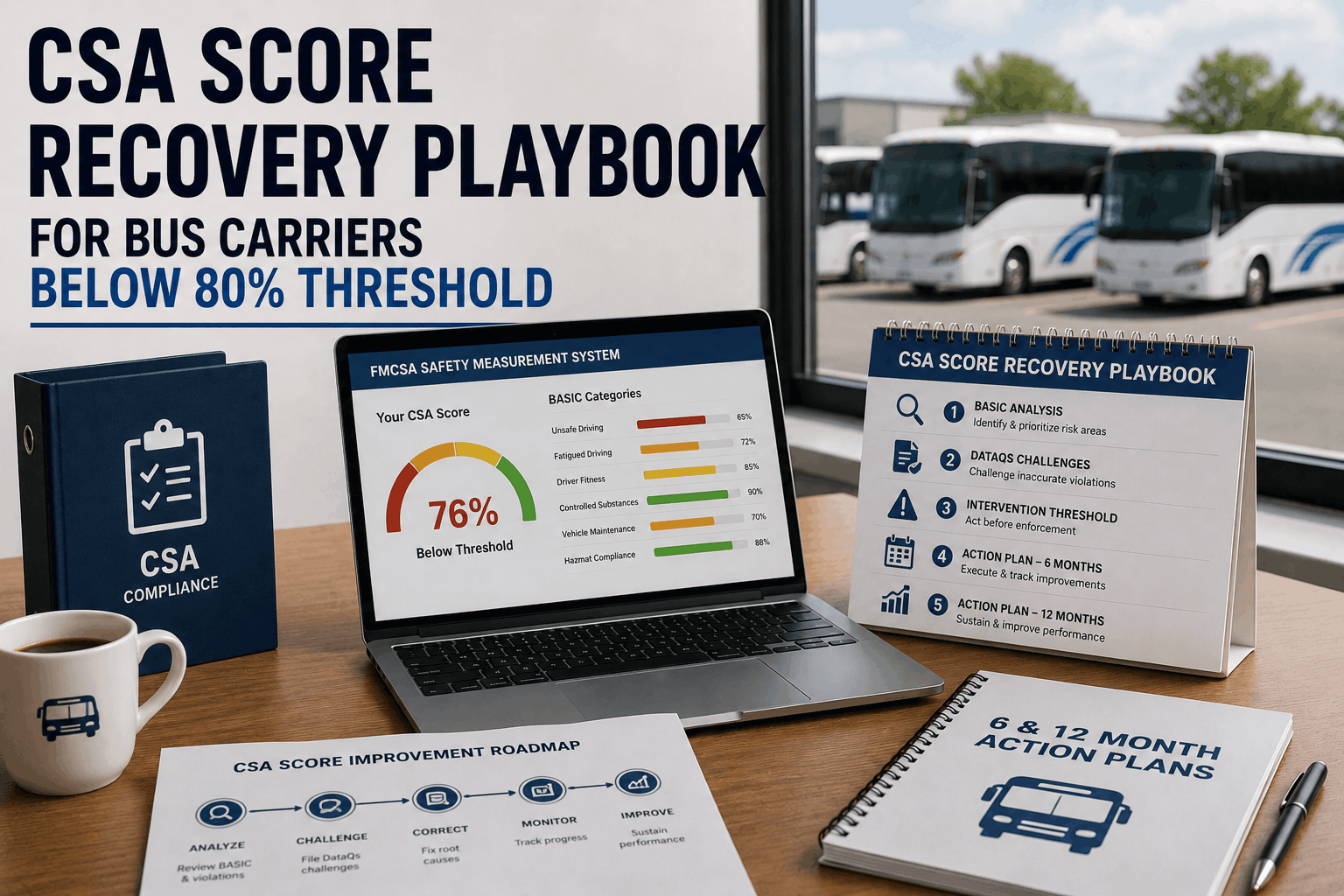
CSA scores below the 80% threshold trigger automatic FMCSA interventions, increased roadside inspections, and insurance premium hikes of 20–40%. This playbook gives bus carriers a step-by-step recovery plan — BASIC analysis, DataQs challenges, 6-month and 12-month action plans — to restore your score and get your fleet out of the high-risk category.
CSA Score Recovery Guide 2026
CSA Score Recovery Playbook for Bus Carriers Below 80% Threshold
Step-by-step CSA score recovery playbook for bus carriers. BASIC analysis, DataQs challenges, intervention threshold, 6-month and 12-month action plans.
The Real Cost of a Below-Threshold CSA Score
A CSA score below 80% means your carrier is flagged for targeted enforcement. Insurance costs surge, customers hesitate to contract, and every roadside stop becomes a high-stakes event. Recovery is possible — but only with a disciplined, data-driven approach.
80%
Threshold for FMCSA intervention
20–40%
Insurance premium increase
7 BASICs
Categories to monitor and improve
12 months
Realistic full recovery timeline
Why a Structured Recovery Plan Is Critical
Unsafe Driving BASIC
Speeding, reckless driving, and inattention violations weigh heavily. Telematics-based driver coaching reduces these violations within 90 days.
Vehicle Maintenance BASIC
Lights, brakes, and tire violations accumulate quickly. Digital pre-trips and automated PM schedules eliminate repeat defects.
Driver Fitness BASIC
Expired medical cards and missing CDL endorsements trigger violations. Automated DQ file management prevents these entirely.
Controlled Substances BASIC
Any positive drug or alcohol test devastates this score. Clearinghouse-II compliance and random testing programs are your defense.
HOS Compliance BASIC
Hours-of-service violations signal fatigue risk. Electronic logging and automated alerts keep drivers within legal limits.
Crash Indicator BASIC
Crash frequency relative to fleet size and miles traveled. Preventive maintenance and driver coaching reduce crash probability.
BASIC Score Breakdown by Category
The donut chart shows exactly where your score is bleeding. Attack the two largest segments — Vehicle Maintenance and Unsafe Driving — for the fastest recovery.
6-Month Action Plan to Restore Your CSA Score
Month 1–2: Audit All BASIC Scores
Download your full SMS report. Identify every violation and its severity weight. Map each violation to a specific driver, bus, or process failure.
Month 3: File DataQs Challenges
Challenge any violation with errors, duplicates, or missing evidence. Successful challenges remove points permanently and demonstrate compliance diligence.
Month 4: Launch Driver Coaching
Use telematics data to coach the top 10% of drivers by violation count. Weekly feedback sessions with positive reinforcement reduce repeat offenses.
Month 5: Tighten PM Schedules
Increase preventive maintenance frequency on high-mileage buses. Digital work orders ensure no inspection point is missed.
Month 6: Re-Audit and Verify
Re-run your SMS report and compare against your starting baseline. Document improvement in every BASIC. Prepare a compliance file for future audits.
Ongoing: Monitor and Defend
Set up real-time alerts for any new violations. Review your CSA dashboard weekly. Never let a violation age without investigating it.
Recovery Progress Tracker
BASIC Score Audit Complete
Full SMS report downloaded and every violation mapped to a root cause. No unknown violations remain.
DataQs Challenges Filed
Challenges submitted for all eligible violations. Average resolution time: 45 days. Track response status weekly.
Driver Coaching Program Active
Weekly coaching sessions underway for identified drivers. Violation recurrence rate tracking downward.
PM Schedule Tightened
All high-risk buses moved to accelerated PM intervals. Digital checklists deployed.
Score Improvement Documented
First measurable improvement in Vehicle Maintenance BASIC. Tracking toward 80% threshold.
Full Recovery Projected
Based on current trajectory, full recovery above 80% expected within 8–10 months.
CSA Recovery KPIs
Overall CSA Score
Target: Above 80% in all seven BASICs. Track monthly and set milestone targets.
DataQs Success Rate
Target: 60%+ of challenges resolved in your favor. Successful challenges permanently remove points.
Violation Recurrence Rate
Target: Zero repeat violations within 90 days of the first occurrence.
Roadside Inspection Pass Rate
Target: 95%+ clean inspections. Every clean inspection dilutes old violations over time.
Driver Coaching Attendance
Target: 100% of flagged drivers complete weekly coaching sessions.
We were sitting at 68% and losing contracts. Following this playbook — especially the DataQs challenges and driver coaching — we climbed back above 85% in 10 months. The digital documentation was the key to winning challenges.
Recover Your CSA Score With BusCMMS
BusCMMS provides real-time CSA monitoring, automated violation tracking, digital DQ files, and PM scheduling — everything you need to rebuild your score. Book a demo to start your recovery plan today.
CSA Score Recovery FAQs
How long does it take to recover a CSA score?
Realistic recovery takes 6–12 months, depending on the severity and age of violations. Violations age out after 24 months, and clean inspections dilute the score over time.
What is DataQs and how do I use it?
DataQs is FMCSA's online system for challenging violations and crash reports. Submit evidence that a violation was incorrect, duplicate, or missing critical data. Successful challenges remove points permanently.
Which BASIC score is most important for bus carriers?
Vehicle Maintenance and Unsafe Driving typically account for the largest share of points. Focus recovery efforts on these two categories for the fastest overall improvement.
How can fleet management software help with CSA recovery?
A CMMS with compliance tracking monitors your BASIC scores, flags new violations, schedules PMs, and maintains digital records that support DataQs challenges.
What happens if my CSA score stays below the threshold?
FMCSA can initiate interventions including warning letters, targeted roadside inspections, and on-site compliance reviews. Insurance may be canceled or become unaffordable.
Can I recover my CSA score without buying new equipment?
Yes. The majority of recovery comes from process improvement — better inspections, driver coaching, and challenging incorrect violations — not capital expenditure.
Recovery Is a Process, Not a Quick Fix
Restoring a CSA score above 80% requires systematic effort: auditing your BASIC scores, challenging incorrect violations, coaching drivers, and tightening maintenance processes. With the right data and documentation, bus carriers can reverse a downward trend within 12 months. The key is starting immediately — every month of delay allows violations to compound and new ones to appear. Build your recovery playbook, execute it relentlessly, and let your digital records tell the story of a carrier committed to safety.