A 94-bus school district in Illinois ignored its diesel particulate filter (DPF) warning lights for three months. "It's just a sensor," the head mechanic said. By month four, all six buses with active DPF warnings were derated to 5 mph. Four required full DPF replacements at $8,000–$12,000 each. Two needed complete exhaust system rebuilds after the DPFs cracked from excessive backpressure. Total cost: $68,000 in parts plus three weeks of downtime. The mechanic was fired. The superintendent was questioned by the school board. The root cause: nobody understood modern aftertreatment systems. DPFs need regeneration. SCR systems need DEF. Sensors need calibration. The diesel engines of 2010–2026 are not your grandfather's Detroit Diesel. This guide covers what every fleet manager must know about DPF, SCR, DEF, and keeping emissions systems online.
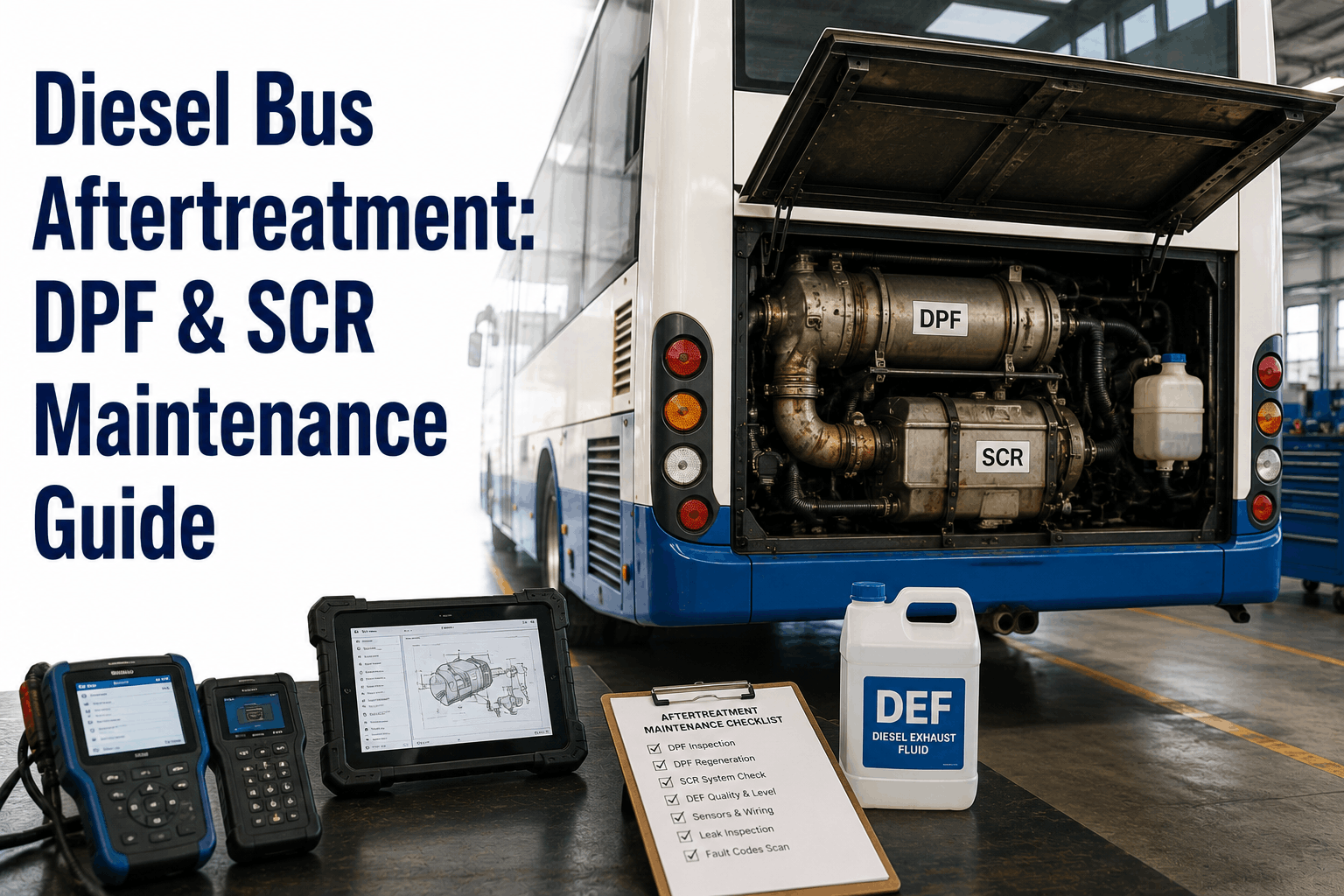
Diesel Bus Aftertreatment: DPF & SCR Maintenance Guide
DPF regeneration cycles. SCR catalyst care. DEF quality management. Sensor diagnostics. Keep emissions systems online and avoid costly failures.
Aftertreatment Failure — Fleet Impact
Proactive aftertreatment maintenance costs 80% less than reactive failure repairs. Regeneration cycles are not optional.
DPF Fundamentals: How It Works & Why It Fails
The Diesel Particulate Filter traps soot from exhaust. Over time, soot builds up and increases backpressure. To clean the filter, the engine management system initiates regeneration — raising exhaust temperature to 1,100–1,200°F to burn soot into ash. There are three regeneration types: passive (occurs during highway driving at high load), active (injected fuel increases temperature when passive isn't possible), and parked (stationary regen initiated by driver). The most common failure mode: excessive idling and low-speed routes prevent regeneration. Soot accumulates. Backpressure rises. The DPF cracks from thermal stress or clogs completely, requiring replacement. Fleets with 50%+ city driving must perform weekly parked regenerations.
DPF Soot Load vs. Driving Conditions
School bus routes with extended idling for student loading are the #1 DPF failure cause. Schedule weekly parked regenerations.
"We had three buses go into derate on the same morning. All had DPF warning lights that drivers had been ignoring for weeks. The shop didn't have a diagnostic tool capable of forced regeneration. We paid $18,000 to have a mobile emissions specialist perform cleaning and resets. Now every bus gets a forced regen logged in BusCMMS every Friday afternoon. Zero derates in 18 months."
DPF Regeneration: How Often & When to Do It
Regeneration frequency depends on duty cycle. Highway fleets (55+ mph continuous) may regen passively every 300–500 miles with no driver action. Mixed-use fleets need active regeneration every 500–800 miles — the ECU injects fuel into exhaust to raise temperature. Urban fleets with low average speeds and frequent idling need parked regeneration every 200–400 miles or weekly. Warning signs that regen is needed: DPF light illuminated, increased fuel consumption, reduced power, failed emissions test, or check engine light with soot-related codes. Never ignore a DPF warning light — continued operation without regeneration leads to DPF cracking or complete clogging, requiring replacement at $8,000+.
DPF Neglect Consequences
Cracked DPF from thermal stress (uneven regeneration)
Engine derate (5–15 mph maximum speed)
Turbocharger damage from excessive backpressure
Failed emissions inspection — bus out of service
Complete DPF replacement: $8,000–$12,000
Plus towing, downtime, and missed routes
DPF Proactive Maintenance
Track soot load using OEM diagnostic tool
Schedule parked regen weekly for urban fleets
Replace differential pressure sensor every 200,000 miles
Ash cleaning service every 200,000–300,000 miles
Annual cost: $500–$1,500 per bus
Ash cleaning requires specialized equipment — OEM dealer or emissions specialist only
When the DPF light comes on, you have approximately 50 operating hours or 500 miles before derate. Parked regeneration takes 30–60 minutes. Ignoring it costs $8,000–$12,000.
SCR & DEF: The Selective Catalytic Reduction System
Selective Catalytic Reduction (SCR) injects Diesel Exhaust Fluid (DEF) into exhaust stream. DEF is 32.5% urea, 67.5% deionized water. When heated, it converts NOx into harmless nitrogen and water vapor. The system depends on three components: DEF tank and pump, DEF injector, and SCR catalyst. Common failures: DEF crystallization (injector nozzle clogs), low-quality DEF (improper concentration), empty DEF tank (causes derate), and failed NOx sensors. The most preventable failure is running the DEF tank to empty — most buses have a DEF gauge, and running dry permanently damages the injector. DEF has a shelf life of 12 months; expired DEF crystallizes and ruins the entire system.
DEF Quality & Handling
SCR Failure Modes
Common Fault Codes & Troubleshooting
Aftertreatment systems generate specific diagnostic trouble codes (DTCs). Knowing which codes require immediate action versus which can wait for scheduled maintenance saves downtime and prevents catastrophic failures. The table below shows the most common codes for Cummins, Detroit, and Navistar engines.
Common Aftertreatment Fault Codes — Action Guide
Always clear codes after repair and perform forced regen test to verify system function. Some codes require driving cycle to reset.
"We had a code for 'SCR conversion efficiency low' on three buses. A local shop quoted $14,000 for new catalysts on each. We sent a DEF sample to a lab — concentration was 28% (too low). Someone had added water to stretch DEF. We drained all three tanks, refilled with ISO 22241, drove the buses for an hour. Codes cleared. No replacement needed. Cost: $600 for lab tests and new DEF. Lesson: Always diagnose before replacing expensive parts."
Preventive Maintenance Schedule for Aftertreatment Systems
Aftertreatment components require specific maintenance at defined intervals. Missing these services leads to progressive damage that eventually requires replacement. This schedule applies to Cummins, Detroit, and Navistar diesel engines from 2010–2026 model years.
Aftertreatment PM Schedule
DPF ash cleaning cannot be done with onboard regeneration. Requires removal and specialized baking/flow bench. Cost: $500–$1,500 versus $8,000–$12,000 for new DPF. Do not skip this interval.
Fleet Expert Review
Modern diesel aftertreatment systems are reliable when maintained properly. The failures happen when fleets treat them as "fit and forget" components. DPF requires regeneration frequency based on duty cycle — city buses need weekly parked regens while highway coaches may regen passively. DEF requires quality management — expired or contaminated DEF destroys injectors and catalysts. Sensors fail from thermal stress — plan for replacement at intervals. The fleets with the lowest aftertreatment costs don't wait for warning lights. They proactively regen, test DEF quality, and schedule ash cleaning. They also use maintenance software to track regeneration dates, DEF refills, and fault code resolution. The cost of proactive aftertreatment maintenance is $500–$1,500 per bus annually. The cost of reactive failure is $8,000–$20,000 per incident plus downtime. The math is clear.
The Bottom Line
Diesel aftertreatment systems are not optional and not forgiving. DPF needs regeneration — schedule it weekly for urban fleets. SCR needs DEF — test quality annually, never let tanks run dry. Sensors fail — budget for replacement. The fleets that ignore DPF warnings pay $8,000–$12,000 per replacement. The fleets that ignore DEF quality pay $6,000–$15,000 for SCR catalysts. The fleets that ignore fault codes pay in downtime and derates. BusCMMS tracks aftertreatment PM — regeneration frequency, DEF refill dates, quality test results, fault code history, and ash cleaning intervals. One dashboard gives you complete visibility into every emissions system in your fleet. Because in 2026, diesel engines are emissions systems that happen to also provide propulsion. Manage them accordingly.
Stop Aftertreatment Failures Before They Start
BusCMMS tracks DPF regenerations, DEF quality tests, fault codes, and ash cleaning intervals. Keep emissions systems online. Avoid $10,000+ replacements. Free 14-day trial.
Frequently Asked Questions
How often should I perform DPF regeneration on school buses?
What happens if I ignore the DPF warning light?
Can I use any DEF fluid in my diesel bus?
What is the shelf life of DEF?
How often do NOx sensors fail on diesel buses?
Can BusCMMS track DPF regeneration and DEF levels?
Diesel + Electric + CNG. Aftertreatment + Battery + Cylinders.
All fuel types. All emissions systems. All PM schedules. One dashboard tracks DPF regeneration, DEF quality, battery SOH, and cylinder checks. Free 14-day trial.