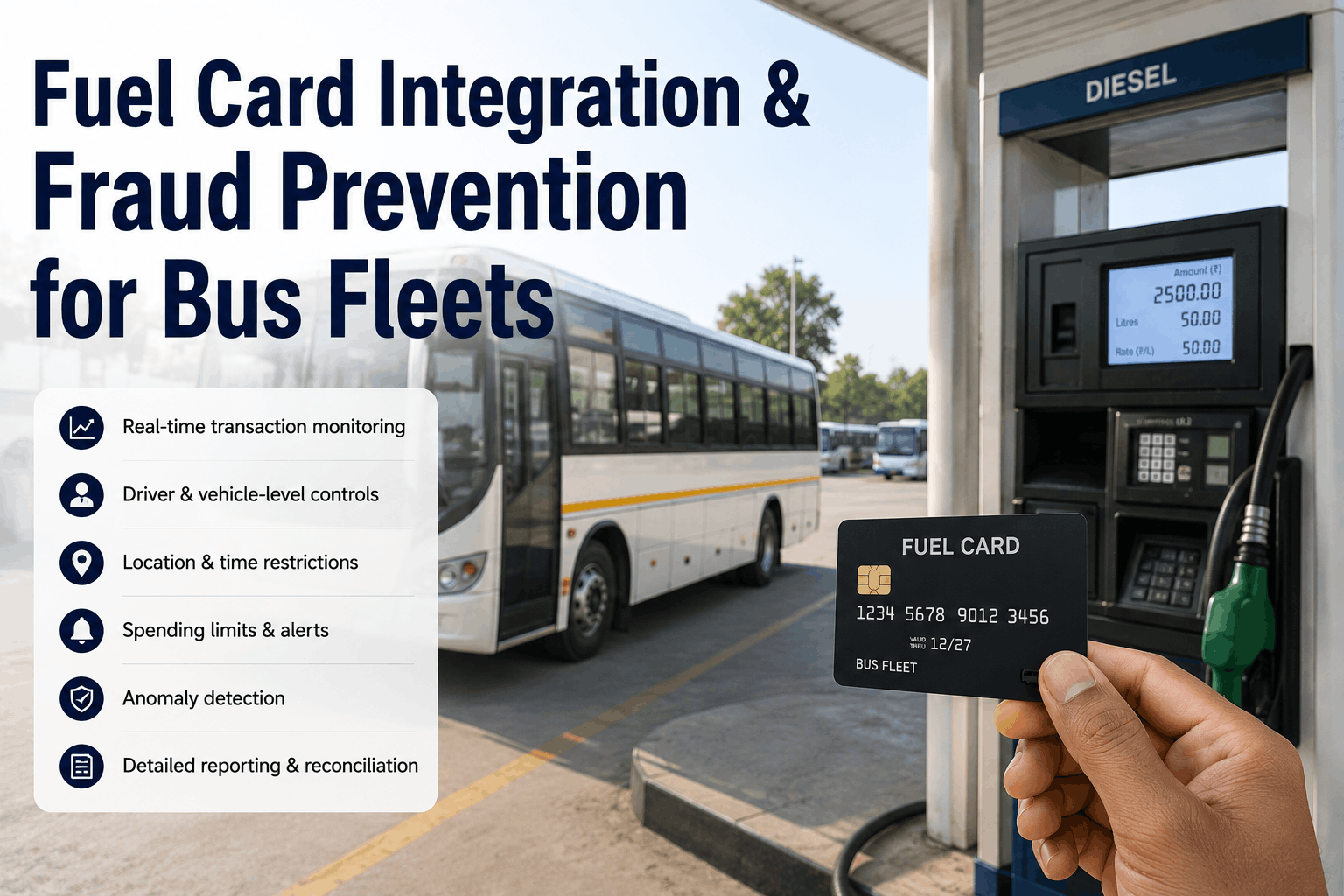
A 200-bus transit fleet in California discovered $47,000 in fuel fraud over a single year. The culprits: three mechanics using fleet fuel cards to fill personal vehicles on weekends, a driver selling fuel card PINs for cash, and a supervisor approving his own fuel reimbursements without odometer verification. The fraud wasn't discovered by an audit — it was discovered when the fuel management software flagged a Saturday fill-up of 95 gallons on a bus with a 75-gallon tank. That single alert unraveled the entire scheme. Without automated fuel card integration and fraud detection, the theft would have continued indefinitely. This guide covers how to integrate fuel cards with fleet management software, what fraud detection rules catch thieves, and how to build a fuel security program that protects every gallon.
Fuel Card Integration & Fraud Prevention for Bus Fleets
Catch fuel theft automatically. Reconcile transactions in minutes. Integrate fuel cards with maintenance software. Stop losing money at the pump.
Fuel Fraud & Theft — Fleet Impact
Fuel fraud detection pays for fuel management software 5-10x over. Most fraud is discovered by software exceptions, not internal audits.
How Fuel Card Integration Works
Fuel card integration connects your fleet's fuel cards directly to your maintenance management software. Every time a driver or mechanic uses a fleet fuel card, the transaction data flows automatically into the software — typically within 24 hours or in real time. The data includes: date and time, location (station address), gallons purchased, total cost, price per gallon, fuel type (diesel, gas, DEF), odometer reading (if entered at pump), driver ID or vehicle ID (if assigned), and a unique transaction number. The software then assigns each transaction to the correct bus record, either automatically (if the driver entered the bus number at the pump) or manually (if reconciliation is needed). Good fuel card integration also pulls from multiple card providers: WEX (Wright Express), Fuelman, Voyager, Comdata, and regional fuel networks. Without integration, staff must manually enter transaction data — errors and omissions are common, and fraud goes undetected.
Fuel Card Data Fields (Auto-Imported)
Supported Fuel Card Providers
"Before integration, we spent 6 hours every Monday manually entering fuel data from paper receipts and card statements. Errors were constant. Now the data imports automatically overnight. I spend 10 minutes reviewing exceptions. Fuel card integration alone saved us 250 staff hours annually."
Types of Fuel Fraud & Theft
Fuel fraud takes many forms. The most common: personal vehicle fueling (employee uses fleet card for own car), card sharing (driver gives PIN to friend for cash), fuel siphoning (removing fuel from bus after fueling), receipt falsification (claiming higher gallons than purchased), odometer tampering (entering lower mileage to hide personal trips), bulk fuel theft (diverting fuel from depot tanks), and billing errors (station overcharges or duplicate charges). Without automated detection, these theft methods continue for years. Fuel thieves count on manual reconciliation that never happens. They know that a fleet without exception alerts will never catch a 10-gallon overfill on a weekend. Good fuel management software flags every anomaly automatically.
Common Fuel Fraud Methods
Personal vehicle fueling — using fleet card for own car
Card/PIN sharing — selling access for cash
Fuel siphoning — removing fuel after bus returns
Receipt falsification — claiming more gallons than purchased
Odometer tampering — entering lower miles to hide trips
Bulk fuel theft — diverting from depot tanks
Billing errors — overcharges, duplicate transactions
Manual reconciliation catches less than 10% of fraud. Automated exception detection catches 90%+.
Fuel thieves don't steal large amounts at once. They steal 5-15 gallons per transaction — small enough to avoid notice, frequent enough to add up to $25,000–$75,000 annually. Automated exceptions catch the pattern.
Fraud Detection Rules & Exception Alerts
The most effective fuel fraud detection uses automated exception rules. The software reviews every transaction and flags any that violate predefined rules. Overfill alerts: gallons exceed vehicle fuel tank capacity (75-gallon bus shows 95-gallon purchase). Underfill alerts: gallons too low for miles driven since last fill (bus drove 300 miles but only took 20 gallons). Time anomaly alerts: fueling occurs on weekends, holidays, or after 9 PM. Location anomaly alerts: fueling at stations far from bus routes or outside operating area. Frequency anomaly alerts: same bus fueling twice in one day or fueling daily for multiple days. Price anomaly alerts: price per gallon significantly above station average. No-odometer alerts: driver failed to enter odometer reading — often a fraud indicator. Each alert requires investigation. Over time, the software learns normal patterns and reduces false positives.
Fuel Exception Rules — Detection Guide
Set exception rules based on your fleet's normal patterns. Review flagged transactions weekly. Investigate repeat offenders.
"Our fuel software flagged a bus that was fueling every Sunday at 8 AM — same station, 40 gallons, bus number entered correctly. But that bus didn't run on Sundays. Investigation revealed a driver was using the bus for personal trips every weekend, reimbursing himself for fuel through the card. The software caught what manual reconciliation never would have."
Odometer Fraud & Missing Readings
Odometer fraud is one of the most common and overlooked fuel theft methods. The driver enters a lower odometer reading at the pump than the bus actually has. The software calculates MPG based on the difference between this fill and the last fill. If the driver enters a lower reading, the calculated miles driven is lower, and the MPG appears artificially low. The fraud hides personal trips — the driver takes the bus for personal use, uses fleet fuel, and manipulates the odometer to avoid detection. The fix: require odometer entry at every fill (refuse transactions without odometer). Integrate with telematics to auto-populate true odometer reading at time of fueling — GPS data doesn't lie. Flag any transaction where entered odometer is less than the previous fill's odometer. Flag any transaction where entered odometer is unreasonably low for time elapsed since last fill.
MPG Anomaly Detection — Fraud Indicator
Telematics integration eliminates odometer fraud completely. GPS provides true mileage at time of fueling. No driver entry needed.
If you require odometer entry at the pump but never audit it, you have no fraud protection. Drivers learn that any number works. Integrate telematics or audit every transaction where entered odometer deviates from expected.
Auto-populate odometer with telematics integration — sign up free
Fuel Card Controls & PIN Management
Fuel cards without strong controls are invitations to fraud. Implement these controls immediately: assign individual PINs to each driver (not shared). Limit fueling to specific hours (e.g., 5 AM to 7 PM for school bus operations). Limit fueling to specific stations (authorized fuel stops only). Set per-transaction gallon limits (e.g., max 80 gallons for a 75-gallon tank). Set daily, weekly, or monthly frequency limits. Require odometer entry before pump authorization. Require vehicle ID entry (bus number) that matches assigned driver. Require driver ID (PIN) that matches route assignment. Revoke cards immediately when an employee leaves. Audit exception reports weekly. The software enforces these controls in real time at the pump — the transaction is declined if rules are violated. This stops fraud before it happens.
Fuel Card Control Settings
"A driver was selling his PIN for $50 per week to a friend with a pickup truck. The friend filled his truck every Sunday using our fleet card. We changed to individual PINs with vehicle ID validation — the card would only authorize if the entered bus number matched the driver's assigned bus. The fraud stopped immediately. That single PIN cost us $2,600 before we caught it."
Bulk Fuel & Depot Fraud Prevention
Fleets with on-site fuel depots face different fraud risks: fuel theft from unattended pumps, inaccurate meter readings, tank stick fraud (manual measurement manipulation), and fuel diversion to personal vehicles. Solutions: install card readers on depot pumps that require driver PIN and vehicle ID. Log every fueling event with timestamp, vehicle ID, driver ID, and gallons. Compare fuel dispensed (pump meter) with tank inventory (electronic tank gauging). Any discrepancy over 2% triggers investigation. Install security cameras covering pumps. Conduct random audits of fuel records against vehicle odometer readings. Use fuel management software that tracks depot fueling alongside card fueling on the same dashboard. Without these controls, depot fuel theft is almost impossible to detect. With them, every gallon is accounted for.
Bulk Fuel Security Measures
Depot fuel theft is often internal — employees stealing from their own employer. Card readers and electronic gauges eliminate the opportunity.
Fleet Expert Review
Fuel fraud is not rare — it's endemic in fleets without automated detection. The thieves are often trusted employees: drivers, mechanics, supervisors. They steal small amounts frequently, believing no one will notice. And without fuel card integration and exception alerts, they're right. Manual reconciliation catches less than 10% of fuel fraud. Automated exception rules catch over 90%. The cost of fuel management software is trivial compared to the fraud it prevents. A fleet spending $1.5 million annually on fuel losing just 3% to fraud loses $45,000 per year. That's enough to pay for software many times over. The fleets that integrate fuel cards and set exception rules stop fraud before it starts. The fleets that don't are paying thieves every month.
The Bottom Line
Fuel card integration with exception-based fraud detection is the most cost-effective security investment a fleet can make. Every transaction is automatically imported, assigned to the correct bus, and reviewed against fraud rules. Overfills, off-hours fueling, out-of-route stations, odometer anomalies, and excessive frequency are flagged instantly. The software catches what manual reconciliation misses. Individual PINs, transaction limits, and odometer requirements stop fraud before it happens. For fleets with depot fueling, electronic tank gauging and pump card readers close the last loophole. BusCMMS integrates with all major fuel card providers, sets custom exception rules, and auto-populates odometer readings from telematics. Every gallon accounted for. Every transaction audited. Every thief caught.
Every Gallon. Every Transaction. One Dashboard.
Fuel card integration, exception alerts, odometer validation, depot fueling tracking. Stop fraud and reconcile fuel spend automatically. Free 14-day trial.
Frequently Asked Questions
How much fuel fraud is typical in bus fleets without detection software?
What are the most common fuel fraud methods?
Can fuel management software detect fraud in real time?
Does BusCMMS integrate with my existing fuel cards?
How do I prevent odometer fraud at the pump?
What fuel fraud detection rules should every fleet implement?
Diesel + Electric + Depot. Every Fuel Source. One System.
Fuel card integration for diesel. Charger tracking for electric. Inventory management for depot tanks. All fuel sources. All fraud detection. Free 14-day trial.