A 150-bus transit fleet in Ohio was spending $380,000 annually on parts inventory. The problem: they didn't know where most of it was. Brake pads buried in unlabeled bins. Air filters ordered last week when 50 were already on the shelf. Oil filters that hadn't moved in 18 months. The maintenance director estimated 22% of their inventory was dead stock — parts that would never be used. That's $83,000 in cash sitting on shelves, collecting dust. Meanwhile, the fleet was still ordering parts weekly, paying rush shipping fees because common items weren't where mechanics could find them. Parts inventory software solves this. It tracks every part, sets reorder points, automates purchase orders, and tells you what's actually moving. This guide covers how parts inventory software works for bus fleets, what features matter, and how to choose the right platform.
What Is Parts Inventory Software for Bus Fleets?
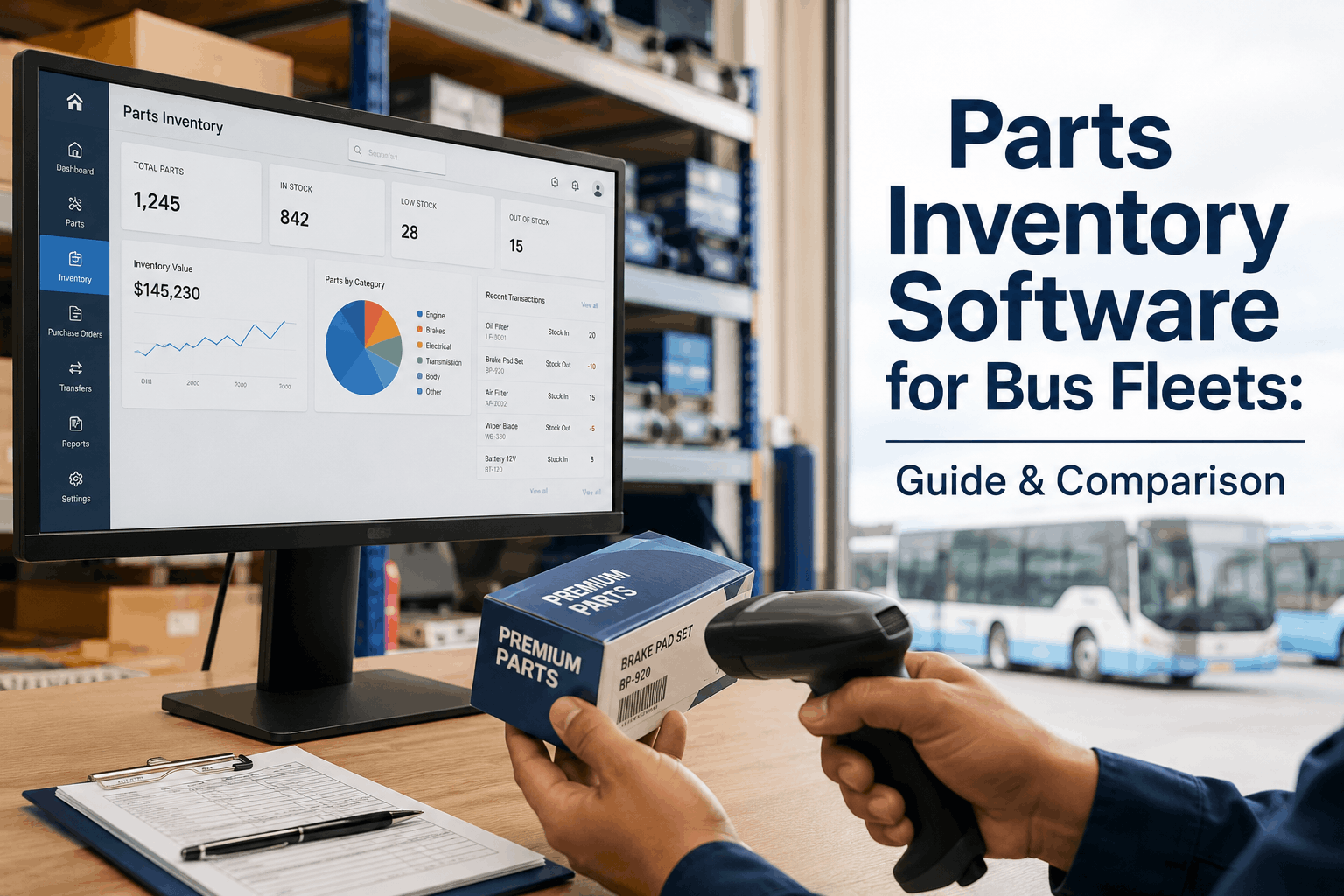
Parts inventory software is a digital system that tracks every part in your shop from receiving to installation. For bus fleets, it manages brake pads, air filters, oil filters, tires, belts, hoses, bulbs, wiper blades, coolant, DEF, and thousands of other components. The software records: part number, description, quantity on hand, location (bin, shelf, rack), reorder point, vendor information, cost per unit, and usage history. When a mechanic removes parts for a work order, the software deducts from inventory. When stock falls below reorder point, the software generates a purchase order. Parts inventory software integrates with work orders and preventive maintenance — when a PM is scheduled, the required parts are reserved and ready. Without inventory software, fleets face three problems: stockouts (can't complete repairs), overstock (cash tied up), and shrinkage (parts lost or stolen).
BusCMMS includes complete parts inventory management alongside work orders and preventive maintenance. Book a demo to see inventory management in action.
Core Features Your Parts Inventory Software Must Have
Not all inventory systems are built for bus fleets. These features are non-negotiable for maintenance operations.
BusCMMS includes all four core features plus bus-specific part categories. Sign up free to start managing parts inventory.
How Parts Inventory Software Saves Money
The financial case for parts inventory software is clear. Calculate your potential savings using these metrics.
Barcode Scanning: The Game-Changer
Barcode scanning transforms parts inventory management from tedious to effortless. Here's how it works and why it matters.
BusCMMS includes mobile barcode scanning for iOS and Android devices. Book a demo to see barcode scanning in action.
Setting Reorder Points: The Science of Stock Levels
Reorder points are the heart of inventory optimization. Too low = stockouts. Too high = overstock. Calculate the optimal reorder point using this formula.
BusCMMS calculates optimal reorder points automatically based on your usage history. Sign up free to set up auto-reorder rules.
Parts Categories Every Bus Fleet Must Track
Bus fleets manage thousands of parts. These are the categories where inventory software delivers the highest ROI.
BusCMMS includes pre-configured categories for all bus-specific parts. Book a demo to see parts categorization.
Frequently Asked Questions
What is parts inventory software for bus fleets?
Parts inventory software tracks every part in your shop from receiving to installation, with barcode scanning, auto-reorder points, work order integration, and usage analytics optimized for bus fleet maintenance.
How much can parts inventory software save my fleet?
Typical annual savings for a 100-bus fleet: $78,000 from reduced carrying costs, fewer emergency orders, less dead stock, less over-ordering, and less mechanic time searching for parts.
Does parts inventory software work with barcode scanning?
Yes. Modern parts inventory software includes mobile barcode scanning for receiving parts, issuing to work orders, and cycle counting. Eliminates manual data entry errors.
How do reorder points work in inventory software?
The software calculates reorder point based on average daily usage, vendor lead time, and safety stock. When stock drops below reorder point, it automatically generates a purchase order or alert.
Can BusCMMS track parts used on specific buses?
Yes. When a mechanic completes a work order, parts are deducted from inventory and attached to that bus record. Complete parts usage history per bus is always available.
What is the ROI timeline for parts inventory software?
Most fleets achieve payback in 3-6 months through reduced carrying costs, fewer emergency orders, elimination of duplicate purchases, and recovered mechanic time.