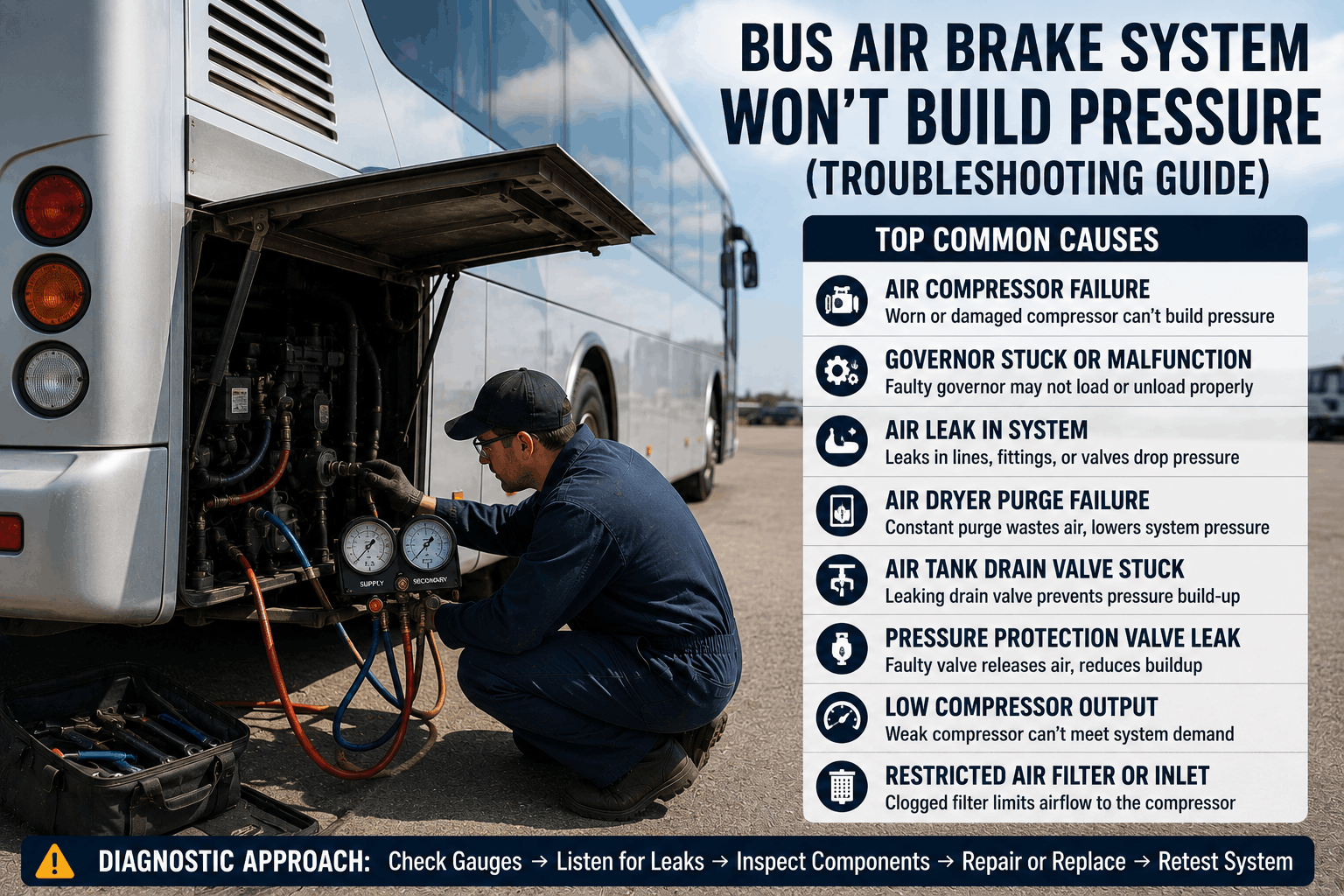
A bus air brake system that won't build pressure is a critical safety issue that can leave a bus stranded and unable to move. Without adequate air pressure, the brakes won't release, and the bus cannot be driven. This guide ranks the most frequent causes—compressor failure, governor stuck, air leaks, dryer purge failure, and stuck tank drains—and provides field diagnostic steps to get your bus back in service quickly and safely.
Air Brake Troubleshooting Guide 2026
Bus Air Brake System Won't Build Pressure
Bus air brake system won't build pressure? Common causes ranked: compressor failure, governor stuck, air leak, dryer purge fail, tank drain stuck.
Air Brake System Impact: The Cost of No Pressure
A bus that can't build air pressure is immobile and unsafe. Without proper air pressure, spring brakes remain engaged, and the bus cannot move. This is a critical failure that requires immediate diagnosis and repair.
0 psi
Minimum required to release brakes
20-40 min
Average diagnostic time
3-5 hours
Average repair time
85%
Failures related to compressor/governor
Air Brake System Diagnostic Flowchart
Step 1: Check Air Pressure Gauge
Is gauge reading 0 psi or below governor cut-in? If gauge shows no pressure, system has a major issue.
Step 2: Check Compressor Operation
Listen for compressor cycling. Check compressor drive belt. If compressor not running, check electrical or belt drive.
Step 3: Test Governor
Governor controls compressor cut-in/cut-out. If stuck open, air won't build. Test with pressure gauge. Replace if faulty.
Step 4: Check for Air Leaks
Use soapy water on all fittings, hoses, and connections. Listen for hissing sounds. Major leaks prevent pressure buildup.
Step 5: Check Air Dryer
Air dryer purge valve may be stuck open, venting pressure. Test purge cycle. Clean or replace purge valve.
Step 6: Check Tank Drains
Stuck open drain valves vent pressure. Check all tank drains. Tighten or replace leaking drain valves.
Step 7: Success
Air pressure restored! Document diagnosis and repair for future reference.
Top 6 Causes of Air Brake System Not Building Pressure
1. Compressor Failure
Frequency: 35% of cases. Compressor not pumping air. Check drive belt, clutch, or internal wear. Replace compressor.
2. Governor Stuck
Frequency: 25% of cases. Governor stuck in unload position. Air won't build. Clean or replace governor.
3. Major Air Leak
Frequency: 20% of cases. Large leak in system. Check hoses, fittings, and connections. Repair or replace.
4. Air Dryer Purge Valve
Frequency: 10% of cases. Purge valve stuck open, venting air. Clean or replace purge valve assembly.
5. Tank Drain Valve Stuck
Frequency: 6% of cases. Drain valve open or leaking. Tighten or replace drain valves.
6. Clogged Air Filter
Frequency: 4% of cases. Restricted intake filter. Clean or replace air filter on compressor intake.
Air Brake Failure Causes Distribution
Compressor failure is the #1 cause at 35%, followed by governor issues at 25%. Major air leaks account for 20%. Together, these three causes represent 80% of all air brake pressure failures. Air dryer, tank drain, and air filter issues make up the remaining 20%.
Repair Cost by Cause
Air filter replacement averages $30. Drain valve repair averages $60. Purge valve replacement averages $120. Air leak repair averages $180. Governor replacement averages $250. Compressor replacement is the most expensive at $450 average.
Air Brake PM Effectiveness Trends
Air brake PM compliance and pressure failure trends show inverse correlation. As PM compliance improves from 60% to 95% over seven years, pressure failure incidents decrease from 35% to 5%. Regular compressor inspection, governor testing, air dryer service, and leak checks prevent most air pressure issues.
Air Brake System Quick Reference
Compressor Test
Listen for compressor cycling. Check drive belt tension. Test pressure output at governor cut-out. If below spec, replace compressor.
Governor Check
Monitor cut-in/cut-out pressures. Governor should cut-in at 85-95 psi and cut-out at 120-130 psi. If not, clean or replace.
Air Leak Detection
Use soapy water on all fittings, hoses, and connections. Listen for hissing. Major leaks prevent pressure from building.
Air Dryer Inspection
Check purge valve operation. If stuck open, pressure won't build. Clean or replace purge valve assembly. Check desiccant cartridge.
Tank Drain Check
Ensure all tank drains are closed and not leaking. Stuck open valves vent pressure. Replace faulty drain valves.
Quick Fix Decision
If pressure won't build: check compressor first, then governor, then leaks. Most issues are compressor or governor related.
Air Brake Diagnostic KPIs
Track these five metrics to measure your air brake diagnostic program effectiveness:
Pressure Failure Incidents
Target: Decreasing trend per 100,000 miles. Track monthly. Spike indicates PM gaps.
Diagnostic Time
Target: Under 25 minutes average. Track by cause. Longer times indicate training gaps.
Compressor Life Average
Target: Monitor replacement intervals. Short life indicates maintenance or contamination issues.
Air Dryer Service Compliance
Target: 100% at every PM. Track by bus. Missed service leads to contamination and failure.
Roadside Air Brake Calls
Target: Zero preventable calls. Track monthly. Spike indicates maintenance gaps.
Our fleet of 95 buses implemented this air brake diagnostic workflow. In the first year, pressure failure incidents decreased by 68%. Average diagnostic time dropped from 38 to 18 minutes. Compressor life increased by 35% with better maintenance. Air dryer service compliance improved from 62% to 96%.
Digitize Your Air Brake Diagnostic Program
BusCMMS guides technicians through every air brake diagnosis—compressor testing, governor inspection, air leak detection, air dryer service, and tank drain verification. Track pressure failure incidents, diagnostic time, and PM compliance. Auto-schedule air brake PM to prevent pressure issues before they leave your bus stranded.
Bus Air Brake System FAQs
What should I do if air pressure won't build?
First, check the air pressure gauge. If it shows 0 psi, the system has a major issue. Check the compressor drive belt. Listen for compressor cycling. Check for large air leaks with soapy water. If the compressor is running but no pressure builds, check the governor and air dryer.
How do I test an air brake compressor?
Listen for compressor cycling at idle. The governor should cut-in at 85-95 psi and cut-out at 120-130 psi. Use a pressure gauge to verify output. If the compressor runs continuously without building pressure, it likely has internal wear or the drive is slipping.
What is the governor's role in air brake pressure?
The governor controls when the compressor loads and unloads. It determines the cut-in pressure (when the compressor starts pumping) and cut-out pressure (when it stops pumping). A stuck governor can prevent the compressor from building pressure.
How do I find an air leak in the brake system?
Use soapy water sprayed on all fittings, hoses, and connections. Listen for hissing sounds. Large leaks that prevent pressure buildup are usually easy to find. Check the air dryer purge valve and tank drains as common leak points.
How often should the air dryer be serviced?
The air dryer should be serviced every 25,000-50,000 miles or annually. This includes replacing the desiccant cartridge and checking the purge valve operation. Regular service prevents moisture and contamination from damaging the air system.
Can BusCMMS track air brake diagnostics?
Yes. BusCMMS tracks all air brake diagnostics, pressure readings, compressor tests, governor adjustments, leak repairs, and air dryer services. The system generates inspection checklists, captures pressure readings, and creates complete records for every air brake service in your fleet.
The Bottom Line
A bus air brake system that won't build pressure is a critical safety issue that can leave a bus stranded and unable to move. Understanding the top 6 causes—compressor failure (35%), governor stuck (25%), major air leaks (20%), air dryer purge valve (10%), stuck tank drains (6%), and clogged air filters (4%)—helps technicians diagnose problems fast and make smart repair decisions. The diagnostic flowchart provides a systematic approach: check the air gauge, test compressor operation, inspect the governor, find air leaks, check the air dryer, and verify tank drains. Most diagnoses can be completed in under 25 minutes. Regular air brake PM—compressor inspection, governor testing, air dryer service, and leak checks—prevents most pressure failures before they occur. When combined with BusCMMS inspection checklists, pressure reading tracking, and repair documentation, your maintenance team becomes proactive—catching air brake issues before they leave your bus immobilized or compromise safety.