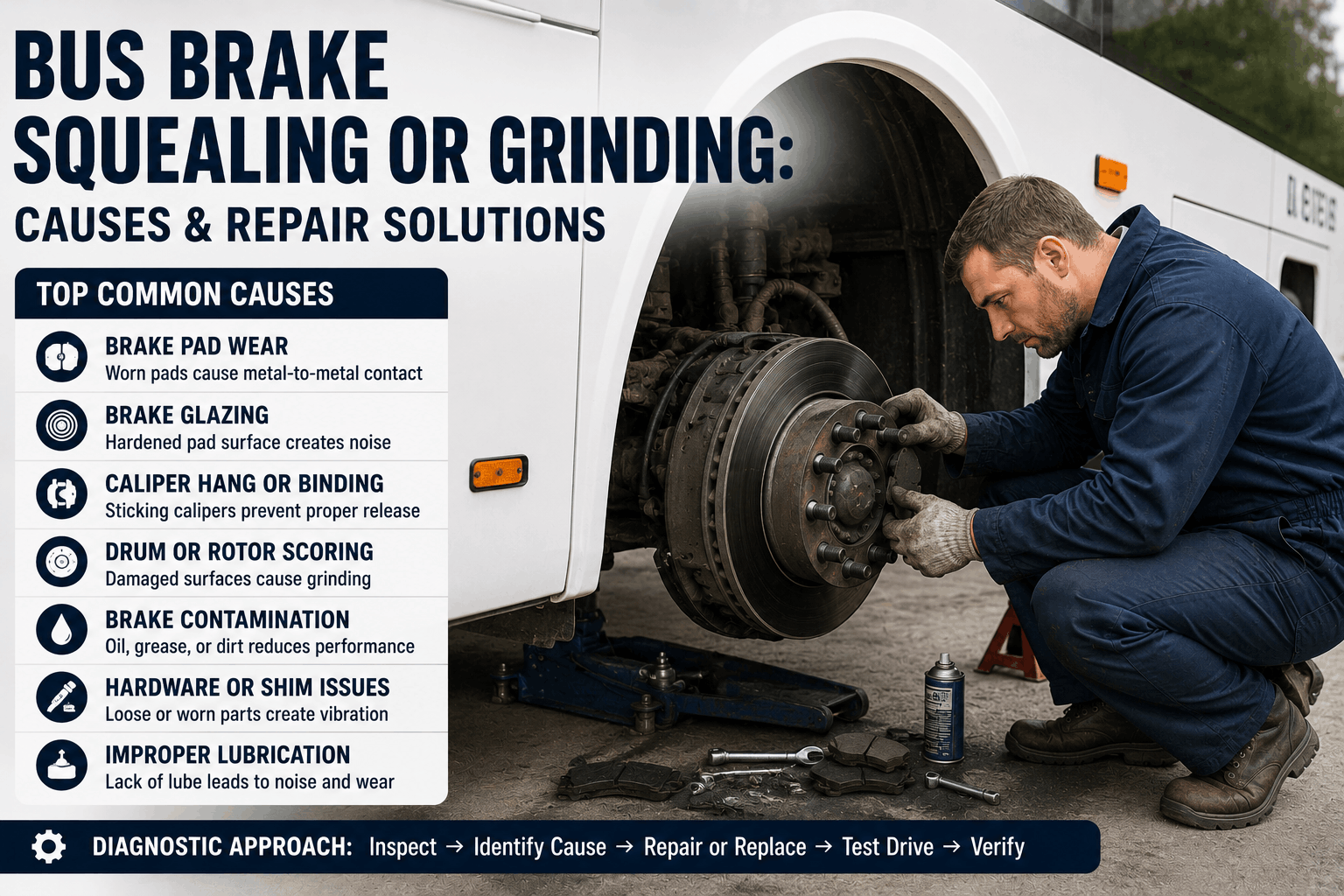
Brake squealing or grinding is one of the most common complaints from bus drivers and passengers. These noises are not just annoying—they indicate wear, contamination, or mechanical issues that can compromise stopping power and safety. This guide ranks the most frequent causes of brake noise and provides diagnostic steps and repair solutions for school buses, transit buses, and motorcoaches.
Brake Noise Diagnostic Guide 2026
Bus Brake Squealing or Grinding: Causes & Repair Solutions
Bus brakes squealing or grinding? Causes ranked: pad wear, glazing, caliper hang, drum scoring, contamination. Diagnostic and repair approach inside.
Brake Noise Impact: The Cost of Ignoring Squeals and Grinds
Brake noise is often the first warning sign of brake system wear. Ignoring squealing or grinding can lead to rotor or drum damage, caliper failure, and increased stopping distances. Repair costs escalate quickly when brake issues are neglected.
$200-$800
Basic pad/rotor replacement
$1,000-$2,500
Caliper & rotor replacement
30-60 min
Typical diagnostic time
85%
Noise issues fixed by pad service
Brake Noise Diagnostic Flowchart
Step 1: Identify the Noise
Squeal (high-pitched) vs Grind (metal-on-metal). Squeal indicates pad wear or glazing. Grind indicates worn pads contacting rotor/drum.
Step 2: Inspect Brake Pads
Check pad thickness. Below 3mm requires immediate replacement. Check for uneven wear indicating caliper issues.
Step 3: Check Rotor/Drum
Inspect for scoring, cracks, or glazing. Measure thickness. If below spec or damaged, replace or resurface.
Step 4: Test Caliper
Check for free movement. Sticking calipers cause uneven wear and dragging. Test slide pins and piston operation.
Step 5: Check for Contamination
Look for brake fluid, grease, or oil on pads. Contamination causes squealing and reduces braking performance.
Step 6: Success
Brakes quiet and safe! Document diagnosis and repair for future reference.
Top 6 Causes of Bus Brake Noise
1. Worn Brake Pads
Frequency: 40% of noise cases. Pads below 3mm thickness. Wear indicator screech. Replace pads and inspect rotors.
2. Brake Pad Glazing
Frequency: 20% of noise cases. Hardened, shiny pad surface from overheating. Sand or replace pads. Check for caliper issues.
3. Caliper Hang-Up
Frequency: 15% of noise cases. Sticking caliper causing uneven wear and dragging. Free or rebuild caliper. Replace slide pins.
4. Drum Scoring
Frequency: 12% of noise cases. Grooves in brake drums from worn pads. Resurface or replace drums. Replace pads.
5. Contamination
Frequency: 8% of noise cases. Oil, grease, or fluid on pads. Replace contaminated pads. Find and fix the leak source.
6. Rotor Warpage
Frequency: 5% of noise cases. Warped rotors cause pulsation and noise. Replace or resurface rotors.
Brake Noise Causes Distribution
Worn brake pads are the #1 cause at 40%, followed by pad glazing at 20%. Caliper hang-up accounts for 15%. Together, these three causes represent 75% of all brake noise failures. Drum scoring, contamination, and rotor warpage make up the remaining 25%.
Brake Noise Severity by Cause
Glazing repair averages $80. Contamination cleanup averages $120. Worn pad replacement averages $200. Caliper service averages $400. Rotor or drum replacement is the most expensive at $600 average.
Brake Noise Incident Trends
Brake PM compliance and noise complaint trends show inverse correlation. As PM compliance improves from 60% to 95% over seven years, brake noise complaints decrease from 40% to 8%. Regular brake inspections, pad thickness monitoring, and caliper service prevent most brake noise issues.
Brake Noise Diagnostic Quick Reference
Squeal Diagnosis
High-pitched squeal indicates pad wear indicator or glazing. Inspect pad thickness. If below 3mm, replace. If glazed, sand or replace.
Grind Diagnosis
Metal-on-metal grinding indicates pads worn to backing plate. Replace pads immediately. Inspect rotors/drums for damage.
Caliper Inspection
Check slide pins for free movement. Test piston retraction. Sticking calipers cause uneven wear and dragging noise.
Rotor/Drum Check
Inspect for scoring, cracks, or glazing. Measure thickness. If below spec or damaged, replace or resurface.
Contamination Check
Look for oil, grease, or fluid on pads. Replace contaminated pads. Find and fix the leak source immediately.
Quick Fix Decision
Squeal only: check pads and lube slide pins. Grinding: replace pads and inspect rotors. Uneven wear: rebuild calipers.
Brake Noise Diagnostic KPIs
Track these five metrics to measure your brake noise diagnostic program effectiveness:
Brake Noise Complaints
Target: Decreasing trend per 100,000 miles. Track monthly. Spike indicates PM gaps.
Diagnostic Time
Target: Under 30 minutes average. Track by cause. Longer times indicate training gaps.
Pad Life Average
Target: Monitor by bus and model. Short pad life indicates caliper or operational issues.
PM Compliance
Target: 100% at every interval. Track by bus. Missed PMs increase noise and failure risk.
Caliper Rebuild Rate
Target: Monitor frequency. High rate indicates corrosion or maintenance issues.
Our fleet of 110 buses implemented this brake noise diagnostic workflow. In the first year, brake noise complaints decreased by 65%. Average diagnostic time dropped from 45 to 22 minutes. Brake pad life increased by 28% with better caliper maintenance. PM compliance improved from 70% to 96%.
Digitize Your Brake Noise Diagnostic Program
BusCMMS guides technicians through every brake noise diagnosis—pad thickness inspection, rotor/drum assessment, caliper testing, and contamination detection. Track noise complaints, diagnostic time, pad life, and PM compliance. Auto-schedule brake inspections to prevent noise and ensure safety.
Bus Brake Noise FAQs
What does brake squealing mean on a bus?
Brake squealing usually indicates worn brake pads (the wear indicator is making contact) or pad glazing from overheating. Inspect pad thickness immediately. If pads are below 3mm, replace them. If glazed, sand or replace pads.
What causes grinding when braking?
Grinding indicates metal-on-metal contact between the brake pad backing plate and the rotor or drum. This means the friction material is completely worn through. Stop driving immediately and replace pads and inspect rotors/drums for damage.
How do I fix brake squeal?
If pads are worn, replace them. If pads are glazed, sand the pad surface with 80-grit sandpaper. Check caliper slide pins and lubricate them. Clean rotor surface with brake cleaner. If squeal persists, check for contamination.
How often should brake pads be inspected?
Brake pads should be inspected at every PM service (typically every 10,000-15,000 miles). School and transit buses may need more frequent inspections due to stop-and-go duty cycles. Document pad thickness measurements.
What causes uneven brake pad wear?
Uneven pad wear is typically caused by stuck caliper slide pins, worn caliper piston seals, or a collapsed brake hose. Inspect the caliper for free movement and rebuild or replace as needed. Check brake hoses for internal failure.
Can BusCMMS track brake noise diagnostics?
Yes. BusCMMS tracks all brake noise diagnostics, pad thickness measurements, rotor/drum inspections, and repairs. The system generates inspection checklists, captures measurements, and creates complete records for every brake service in your fleet.
The Bottom Line
Brake squealing and grinding are not just annoying—they are warning signs of wear, contamination, or mechanical issues that can compromise stopping power and safety. Understanding the top 6 causes—worn pads (40%), glazing (20%), caliper hang-up (15%), drum scoring (12%), contamination (8%), and rotor warpage (5%)—helps technicians diagnose problems fast and make smart repair decisions. The diagnostic flowchart provides a systematic approach: identify the noise type, inspect pads, check rotors/drums, test calipers, and check for contamination. Most diagnoses can be completed in under 30 minutes. Regular brake PM—pad thickness monitoring, caliper service, and rotor/drum inspection—prevents most brake noise issues before they start. When combined with BusCMMS inspection checklists, measurement tracking, and repair documentation, your maintenance team becomes proactive—catching brake issues before they cause noise complaints, safety concerns, or expensive rotor/drum damage.