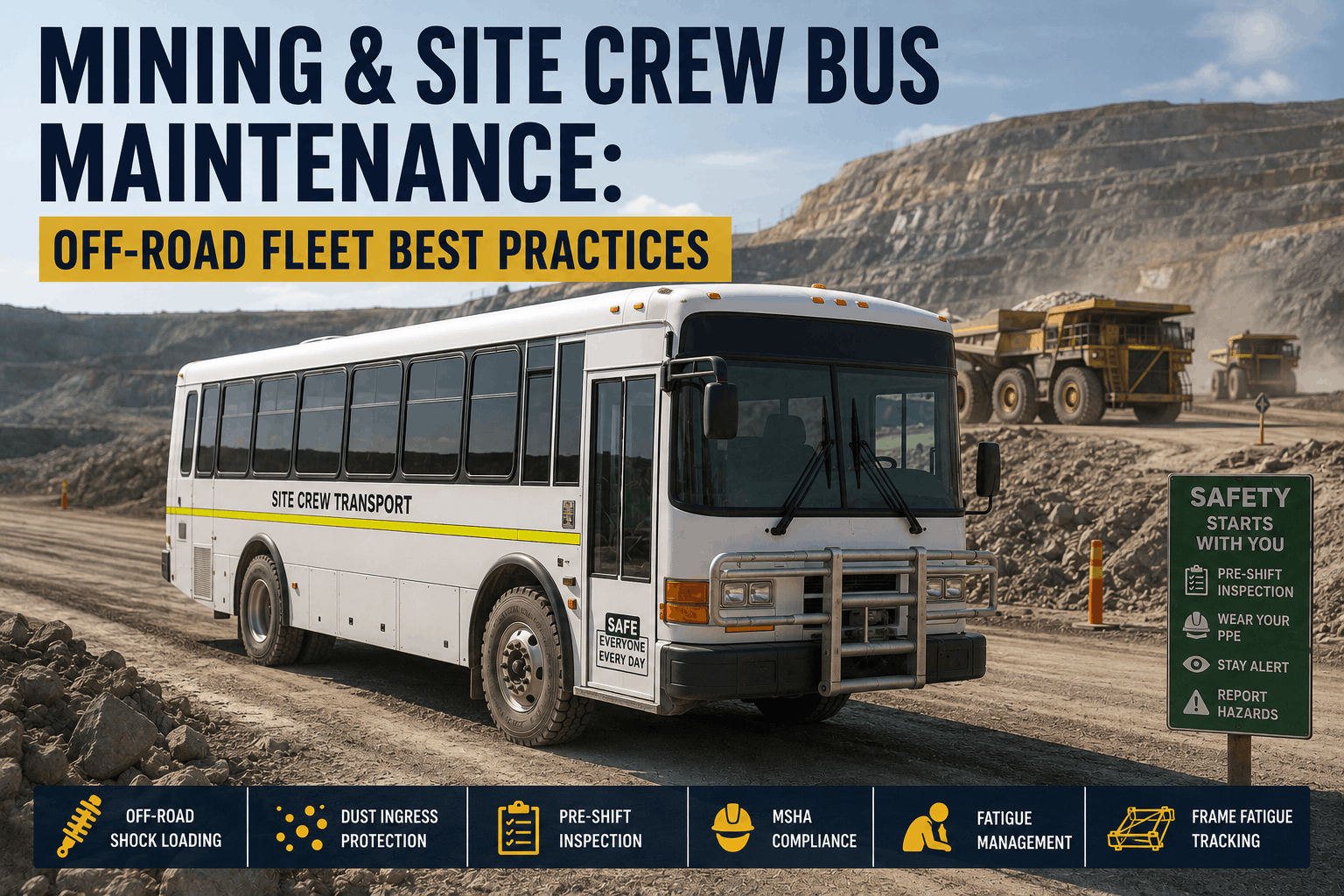
A forward-looking bus maintenance strategy in 2026 is essential for ensuring fleet reliability, passenger safety, and cost control in an increasingly complex transit environment. As buses integrate advanced electronics, telematics, and alternative powertrains, maintenance is no longer just reactive—it must be data-driven, preventive, and aligned with evolving operational demands.
Modern fleets face growing risks when best practices are not followed: inconsistent inspection routines, delayed software updates, poor parts lifecycle management, and inadequate technician training can lead to higher failure rates, compliance issues, and unexpected service interruptions. Without standardized maintenance frameworks and real-time condition monitoring, small issues can escalate into major operational setbacks.
This guide to bus maintenance best practices for 2026 outlines proven approaches fleet operators are adopting to improve uptime and extend vehicle life—ranging from predictive maintenance and digital work order systems to technician upskilling and sustainability-focused servicing. By applying these best practices, transit agencies and private operators can reduce downtime, optimize maintenance costs, and deliver reliable service in a rapidly changing transportation landscape.
Ready to Upgrade Your Bus Maintenance Strategy for 2026
Discover how modern maintenance best practices—powered by predictive insights, digital inspections, and smarter scheduling—help fleets reduce downtime, improve safety, and extend vehicle life.
Bus Maintenance Best Practices – 2026
In 2026, bus maintenance best practices focus on proactive planning, data-driven inspections, and skilled technicians to ensure safety, reliability, and cost efficiency. Modern fleets rely on structured maintenance programs to reduce breakdowns, improve uptime, and extend vehicle life.
Outdated Maintenance Approach
- Unplanned repair expenses
- Frequent service disruptions
- Higher safety and compliance risks
- Reduced fleet availability
Best Practices in 2026
- Predictable maintenance costs
- Scheduled, minimal downtime
- Improved passenger and driver safety
- Extended bus lifespan
30–40%
Maintenance Cost Savings
45%
Fewer Road Failures
4–6 Yrs
Extended Fleet Life
Mileage & Time-Based Maintenance – 2026
Bus maintenance best practices in 2026 rely on combining mileage thresholds with time-based schedules. Smart fleet systems track both metrics automatically, ensuring maintenance tasks are performed at the right moment to prevent failures, reduce downtime, and maintain safety compliance.
Daily Safety Checks
Every Shift- Brake and steering response
- Tire condition & pressure
- Exterior lights & indicators
- Mirrors, cameras & sensors
- Emergency equipment readiness
Weekly Maintenance Review
7 Days- Battery health & connections
- HVAC system operation
- Fluid level verification
- Door mechanisms & seals
- Telematics fault review
Monthly System Inspection
30 Days / 5K Miles- Brake wear & system testing
- Suspension & steering check
- Electrical diagnostics scan
- Cooling system inspection
- Charging or fuel system review
Quarterly Preventive Service
90 Days / 15K Miles- Full drivetrain inspection
- Brake component replacement check
- Wheel alignment & tire rotation
- Software & firmware updates
- Compliance & safety audit
Critical Bus Systems to Monitor in 2026
Bus maintenance best practices in 2026 prioritize continuous monitoring of safety-critical and performance-impacting systems. Focusing on these components helps fleets prevent failures, maintain compliance, and ensure reliable passenger service.
Brake System
- Brake pad and rotor wear levels
- Brake fluid quality and leaks
- ABS and traction control status
- Air or hydraulic pressure stability
- Emergency braking performance
Steering & Suspension
- Steering responsiveness and play
- Suspension components and bushings
- Shock absorber performance
- Wheel alignment and balance
- Ride stability under load
Powertrain & Drivetrain
- Engine or motor operating health
- Oil or lubrication condition
- Cooling system effectiveness
- Transmission or gearbox status
- Emission or efficiency performance
Electrical & Control Systems
- Battery state of charge and health
- Charging or alternator output
- Lighting and signaling systems
- Dashboard alerts and fault codes
- Cameras, sensors, and safety tech
Measuring Bus Maintenance Performance – 2026
Bus maintenance best practices in 2026 depend on continuous performance measurement. Advanced fleet platforms provide real-time dashboards that help operators track reliability, cost efficiency, and preventive maintenance success.
MTBF
Mean Time Between Bus Failures
Target: +25% improvement annuallyCost Per Mile
Total maintenance cost efficiency
Target: Under $0.18 per mileFleet Availability
Buses ready for scheduled service
Target: 96%+ operational uptimePM Compliance
On-time preventive maintenance completion
Target: 98–100% complianceFrequently Asked Questions
What are the most important bus maintenance best practices in 2026
In 2026, best practices focus on preventive and predictive maintenance supported by data. This includes scheduled inspections based on mileage and time, continuous monitoring of safety-critical systems, standardized digital checklists, and regular technician training. Fleets that follow these practices experience fewer breakdowns, higher uptime, and improved passenger safety.
How often should buses be serviced under modern maintenance programs
Service frequency depends on both mileage and operating conditions. Daily safety checks are recommended before each shift, while weekly and monthly inspections address wear items and system performance. Quarterly preventive services are used for deeper inspections, component replacements, and compliance reviews to ensure long-term reliability.
How does predictive maintenance improve bus reliability
Predictive maintenance uses vehicle data, fault codes, and performance trends to identify issues before they cause failures. By acting on early warning signs—such as abnormal brake wear, battery degradation, or temperature fluctuations—fleets can schedule repairs proactively and avoid unplanned downtime.
What KPIs should fleet operators track in 2026
Key performance indicators include Mean Time Between Failures (MTBF), maintenance cost per mile, fleet availability, and preventive maintenance compliance. Tracking these KPIs helps operators measure maintenance effectiveness, control costs, and continuously improve fleet performance.
How do best practices help extend the lifespan of buses
Consistent preventive maintenance reduces excessive wear on critical components such as brakes, suspension, and powertrain systems. Combined with proper inspections, timely replacements, and software updates, these practices can extend bus service life by several years while maintaining safety and regulatory compliance.
Start Your Bus Maintenance Best Practices 2026 Program Today
Transform your fleet maintenance from reactive chaos to proactive precision with modern bus-maintenance-best-practices-2026, including automated inspections, compliance tracking, and real-time alerts.