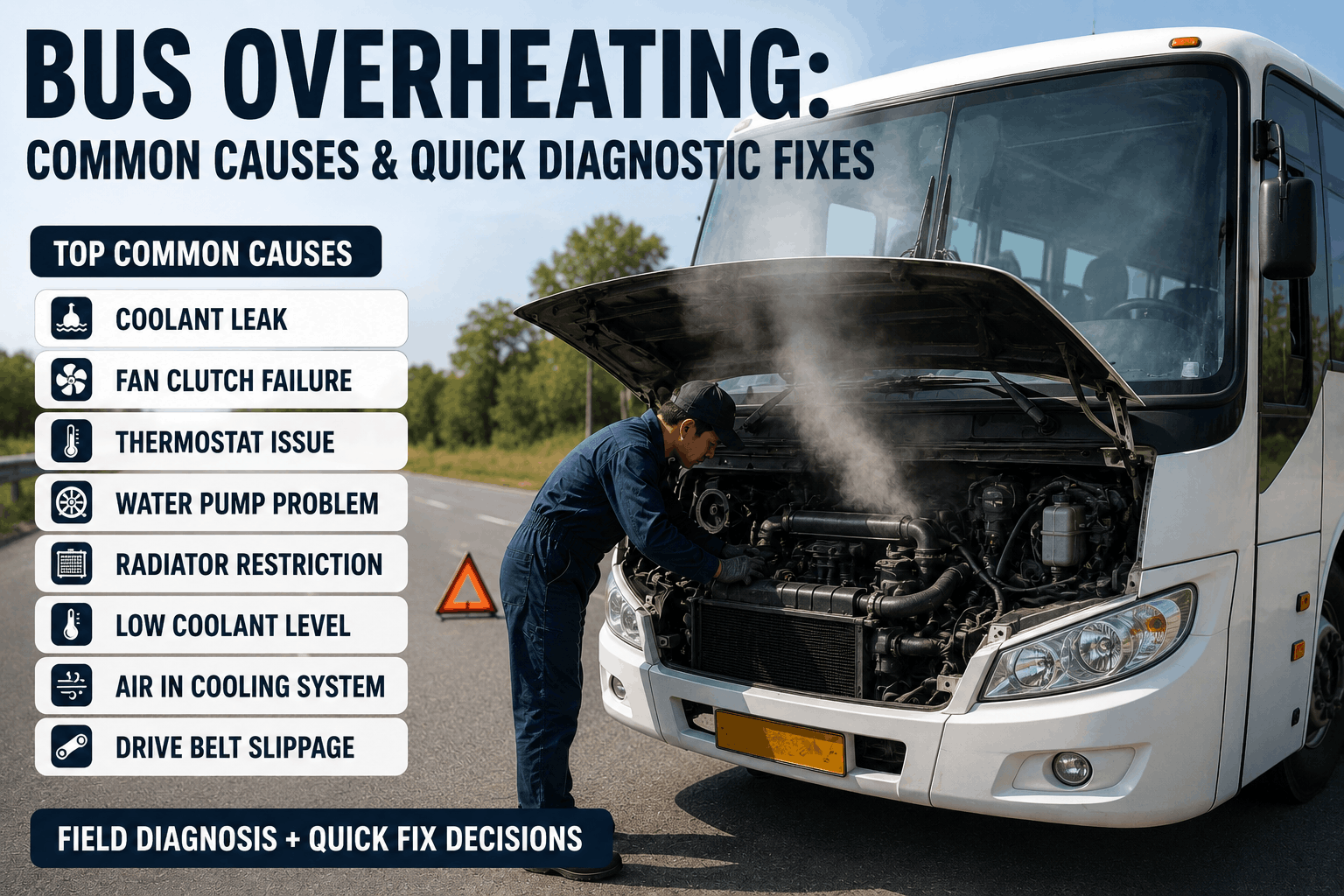
Bus overheating is one of the most common roadside emergencies that can lead to engine damage if not addressed quickly. Understanding the top causes—coolant leaks, fan clutch failure, thermostat issues, water pump failure, and radiator restrictions—helps technicians diagnose problems fast and make smart repair decisions. This guide ranks the most frequent causes and provides field diagnostic steps to get your bus back on the road.
Bus Overheating Troubleshooting Guide 2026
Bus Overheating: Common Causes & Quick Diagnostic Fixes
Bus overheating? Common causes ranked: coolant leak, fan clutch, thermostat, water pump, radiator restriction. Field diagnosis + quick fix decisions.
Bus Overheating Impact: The Cost of Engine Temperature Emergencies
Engine overheating is a leading cause of roadside breakdowns and costly engine damage. A single overheating event can cause head gasket failure, cylinder damage, or complete engine failure costing $15,000-$40,000 in repairs.
$15,000-$40,000
Engine damage from overheating
15-30 min
Field diagnostic time
60-90 min
Roadside repair time
65%
Failures prevented by regular cooling PM
Cooling System Diagnostic Flowchart
Step 1: Check Coolant Level
Check expansion tank and radiator. If low, inspect for leaks. Top up and monitor.
Step 2: Check Fan Clutch
Listen for fan engagement. Test by hand (engine off). If free-spinning, replace.
Step 3: Check Thermostat
Feel upper radiator hose. If cold while engine hot, thermostat stuck closed. Replace.
Step 4: Check Water Pump
Look for leaks at weep hole. Check belt tension. If leaking or seized, replace.
Step 5: Check Radiator
Inspect for debris, bent fins, or external restriction. Clean or replace as needed.
Step 6: Success
Cooling system restored! Document diagnosis and repair for future reference.
Top 5 Causes of Bus Overheating
1. Coolant Leak
Frequency: 35% of overheating cases. Caused by worn hoses, failed water pump seals, or radiator damage. Check for visible leaks and pressure test.
2. Fan Clutch Failure
Frequency: 25% of overheating cases. Fan doesn't engage at high temperature. Test by listening for fan roar at operating temperature.
3. Thermostat Stuck
Frequency: 18% of overheating cases. Thermostat stuck closed prevents coolant flow. Check upper radiator hose temperature differential.
4. Water Pump Failure
Frequency: 15% of overheating cases. Pump impeller worn or seal leaking. Check weep hole and belt tension.
5. Radiator Restriction
Frequency: 7% of overheating cases. External debris or internal scale restricts airflow/coolant flow. Clean or replace radiator.
Overheating Failure Distribution
Coolant leaks are the #1 cause at 35%, followed by fan clutch failure at 25%. Thermostat issues account for 18%. Together, these three causes represent nearly 80% of all overheating failures. Water pump and radiator restrictions make up the remaining 22%.
Cooling System PM Effectiveness
Cooling system PM compliance and overheating incident trends show inverse correlation. As PM compliance improves from 65% to 95% over seven years, overheating incidents decrease from 35% to 5%. Regular coolant testing, fan clutch inspection, and radiator cleaning prevent most overheating failures.
Field Diagnostic Quick Reference
Coolant Leak Detection
Pressurize cooling system. Look for drips at hoses, water pump, radiator. Check for white residue. Tighten or replace as needed.
Fan Clutch Test
Start cold engine. Listen for fan roar at temperature. Engine off, spin fan. Should have resistance. If free-spinning, replace.
Thermostat Check
Feel upper radiator hose when hot. If cool, thermostat stuck. Check temperature differential. Replace if faulty.
Water Pump Inspection
Check weep hole for coolant. Verify belt tension. Look for wobble. Replace if leaking or seized.
Radiator Inspection
Check for debris on fins. Look for bent fins. Use IR gun for cold spots. Clean or replace as needed.
Quick Fix Decision
If coolant low: top up and monitor. If fan free: replace. If thermostat stuck: replace. If water pump leaks: replace. If radiator blocked: clean or replace.
Overheating Diagnostic KPIs
Track these five metrics to measure your overheating diagnostic program effectiveness:
Overheat Incident Rate
Target: Decreasing trend per 100,000 miles. Track monthly. Spike indicates cooling system issues.
Diagnostic Time
Target: Under 15 minutes average. Track by cause. Longer times indicate training gaps.
First-Time Fix Rate
Target: 95%+ first-time repair. Track monthly. Low rate indicates misdiagnosis.
Coolant Test Compliance
Target: 100% at every PM. Track by bus. Untested coolant causes corrosion and failure.
Roadside Overheat Calls
Target: Zero preventable calls. Track monthly. Spike indicates maintenance gaps.
Repair Cost by Cause
Coolant leak repairs average $75. Thermostat replacement averages $120. Fan clutch replacement averages $350. Water pump replacement averages $500. Radiator replacement is the most expensive at $800 average.
Our fleet of 95 buses implemented this cooling system diagnostic workflow across all maintenance shops. In the first year, overheating incidents decreased by 58%. Average diagnostic time dropped from 28 to 12 minutes. Cooling system PM compliance improved from 65% to 94%. Prevented 42 overheating-related engine failures.
Digitize Your Bus Overheating Diagnosis Program
BusCMMS guides technicians through every overheating diagnosis—coolant level check, fan clutch testing, thermostat verification, water pump inspection, and radiator assessment. Track diagnostic time, first-time fix rates, and common failure patterns across your fleet. Auto-schedule cooling system PM to prevent overheating before it happens.
Bus Overheating FAQs
What should I do first when a bus starts overheating?
Immediately turn off the air conditioning, turn on the heater to maximum, and pull over safely. Check the temperature gauge. If it's in the red zone, shut off the engine and allow it to cool before checking coolant levels or opening the radiator cap.
How do I test a fan clutch on a bus?
Start the engine cold and listen. When the engine reaches operating temperature, the fan should roar loudly. With the engine off, spin the fan by hand—it should have resistance. If it spins freely with no resistance, the fan clutch has failed.
What causes a bus thermostat to fail?
Thermostats fail from age, corrosion, or debris in the cooling system. They typically fail in the closed position, blocking coolant flow to the radiator. Replace thermostats every 50,000 miles or as part of cooling system PM.
How do I check for a water pump failure?
Check the weep hole on the water pump body for coolant leaks. Look for belt tension and pulley wobble. Listen for grinding noises. If the pump is leaking or seized, replace it immediately with the belt and tensioner.
How often should cooling system PM be performed?
Cooling system PM should be performed every 25,000 miles or 6 months. This includes coolant level check, coolant analysis, fan clutch inspection, belt inspection, and radiator cleaning. Regular PM prevents most overheating failures.
Can BusCMMS track overheating diagnosis history?
Yes. BusCMMS tracks all overheating diagnoses, repairs, and outcomes. The system generates diagnostic workflow checklists, captures temperature readings, and creates complete records for every overheating event in your fleet.
The Bottom Line
Bus overheating is a serious roadside emergency that can cause catastrophic engine damage if not addressed quickly. Understanding the top 5 causes—coolant leaks (35%), fan clutch failure (25%), thermostat issues (18%), water pump failure (15%), and radiator restrictions (7%)—helps technicians diagnose problems fast and make smart repair decisions. The diagnostic flowchart provides a systematic approach: check coolant level, then fan clutch, thermostat, water pump, and radiator. Most diagnoses can be completed in under 15 minutes with simple tools. Regular cooling system PM—coolant testing, fan clutch inspection, belt checks, and radiator cleaning—prevents 65% of overheating failures before they occur. When combined with BusCMMS diagnostic checklists, temperature monitoring, and repair documentation, your maintenance team becomes proactive—catching cooling system issues before they leave passengers stranded or cause expensive engine damage.