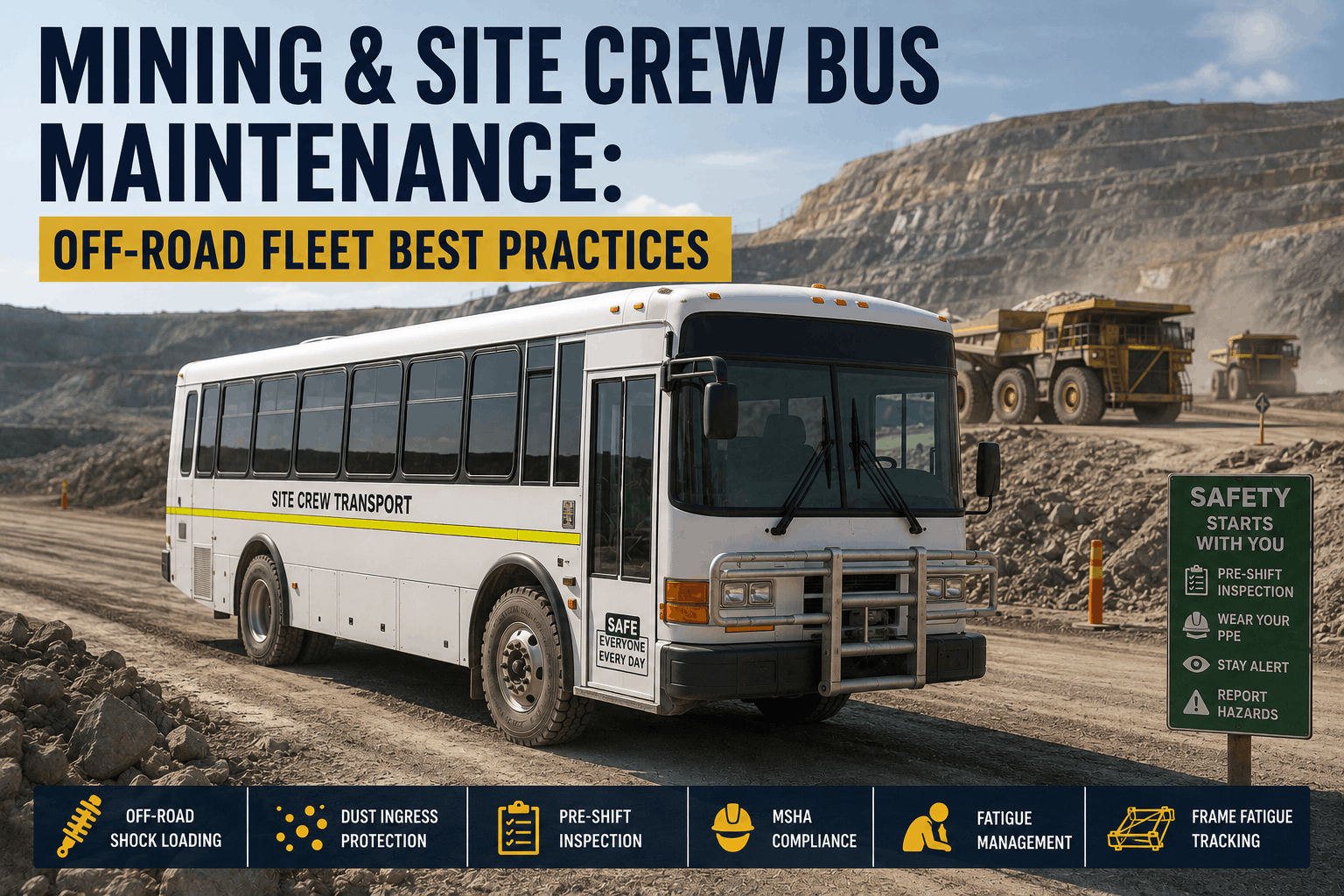
Federal Motor Carrier Safety Administration (FMCSA) compliance represents one of the most critical operational requirements for US bus fleets. The regulatory framework encompasses comprehensive safety standards, maintenance protocols, and documentation requirements that directly impact fleet operations, driver safety, and business continuity.
Modern bus fleet operators face increasingly complex compliance challenges as FMCSA regulations evolve to address emerging safety concerns and technological advances. The integration of digital systems and automated processes has become essential for maintaining consistent compliance while managing operational efficiency and cost control.
Implementing robust Bus CMMS (Computerized Maintenance Management Systems) platforms provides fleet operators with comprehensive tools to meet FMCSA requirements systematically. These systems transform compliance from a reactive, paper-based process into a proactive, data-driven approach that reduces violations by up to 45% and streamlines regulatory reporting.
Critical FMCSA Compliance Areas
Essential Compliance Components
- Vehicle Maintenance Records: Comprehensive documentation of all maintenance activities, inspections, and repairs as required under 49 CFR Part 396
- Driver Qualification Files: Complete records including licenses, medical certificates, training documentation, and employment history per 49 CFR Part 391
- Hours of Service Compliance: Accurate tracking and reporting of driver duty status and rest periods according to 49 CFR Part 395
- Vehicle Inspection Programs: Systematic pre-trip, post-trip, and periodic safety inspections as mandated by 49 CFR Part 396
Advanced Bus CMMS platforms automate compliance tracking across all these critical areas, providing real-time alerts for upcoming requirements, automated report generation, and comprehensive audit trails that satisfy FMCSA documentation standards.
Vehicle Maintenance Record Management
FMCSA regulations require meticulous documentation of all vehicle maintenance activities, creating substantial administrative burdens for fleet operators. Modern Bus CMMS systems streamline this process through automated record creation, digital documentation storage, and integrated compliance reporting.
Required Maintenance Documentation
Daily Vehicle Inspection Reports (DVIR)
Electronic capture and storage of pre-trip and post-trip inspection results with driver signatures and defect reporting
Periodic Inspection Records
Comprehensive annual inspections with detailed component assessments and compliance certifications
Maintenance and Repair Documentation
Complete work order histories, parts usage records, and technician certifications for all maintenance activities
Driver Qualification File Management
FMCSA requires comprehensive driver qualification files that must be maintained throughout employment and for three years after termination. Bus CMMS platforms with integrated human resource modules provide automated tracking and renewal alerts for all required documentation.
Essential Driver Documentation
- Commercial Driver's License (CDL): Current license verification with automated expiration tracking and renewal notifications
- Medical Examiner's Certificate: DOT physical examination records with compliance monitoring and renewal scheduling
- Employment Application: Complete employment history verification and reference documentation
- Training Records: Safety training completion certificates, ongoing education documentation, and skills assessments
Hours of Service Compliance Management
Electronic Logging Device (ELD) compliance under FMCSA regulations requires sophisticated data management and reporting capabilities. Integration between Bus CMMS platforms and ELD systems provides comprehensive hours of service monitoring and automated violation prevention.
HOS Compliance Features
Advanced systems monitor driver duty status in real-time, providing automated alerts for approaching limits, mandatory rest periods, and weekly reset requirements. Integration with dispatch systems ensures compliance considerations are incorporated into route planning and driver assignments.
Comprehensive reporting capabilities within Bus CMMS platforms generate FMCSA-compliant documentation for roadside inspections, safety audits, and regulatory reviews. Automated data backup and retention ensures compliance with FMCSA record-keeping requirements.
Safety Management System Implementation
FMCSA's Safety Management System (SMS) methodology evaluates carrier safety performance across multiple Behavioral Analysis and Safety Improvement Categories (BASICs). Effective Bus CMMS implementation directly impacts several BASIC categories through improved maintenance practices and comprehensive documentation.
BASIC Category Impact Areas
Vehicle Maintenance BASIC
Proactive maintenance scheduling and comprehensive documentation directly improve Vehicle Maintenance BASIC scores
Driver Fitness BASIC
Integrated driver qualification management ensures compliance with medical certification and license requirements
HOS Compliance BASIC
Automated hours of service monitoring and reporting reduces violations and improves compliance scores
Audit Preparation and Documentation
FMCSA Audit Readiness Checklist
- Maintenance Record Completeness: Ensure all required maintenance documentation is current, complete, and easily accessible
- Driver File Compliance: Verify all driver qualification files contain required documentation with current dates
- Inspection Program Verification: Confirm systematic vehicle inspection programs meet FMCSA requirements
- Safety Performance Monitoring: Maintain current SMS scores and corrective action documentation
Advanced Bus CMMS platforms provide audit-ready documentation through automated report generation, comprehensive search capabilities, and regulatory compliance dashboards that highlight potential issues before they become violations.
Technology Integration and Compliance
Modern FMCSA compliance requires seamless integration between multiple technology systems including ELDs, fleet management platforms, and maintenance management systems. Bus CMMS platforms serve as central hubs for compliance data aggregation and reporting.
Integration Benefits
Comprehensive system integration eliminates data silos, reduces manual data entry errors, and provides holistic compliance monitoring. Real-time data synchronization ensures all compliance metrics are current and accurate across all operational systems.
Cloud-based Bus CMMS solutions provide secure, scalable platforms that meet FMCSA data security requirements while enabling remote access for compliance monitoring and reporting from any location.
Cost-Benefit Analysis of CMMS Compliance
Investment in comprehensive Bus CMMS platforms for FMCSA compliance delivers measurable returns through reduced violation penalties, improved safety scores, and streamlined administrative processes. Industry analysis demonstrates average cost savings of 40-50% in compliance-related administrative expenses.
Financial Impact Assessment
Automated compliance processes reduce administrative labor costs by up to 60% while improving accuracy and completeness of regulatory documentation. Prevention of FMCSA violations through proactive compliance monitoring eliminates penalty costs that can range from hundreds to thousands of dollars per incident.
Enhanced safety performance resulting from systematic Bus CMMS implementation improves insurance ratings, reduces liability exposure, and supports favorable regulatory relationships with FMCSA enforcement personnel.
Implementation Best Practices
Successful CMMS Compliance Implementation
- Comprehensive Staff Training: Ensure all personnel understand FMCSA requirements and CMMS procedures for compliance documentation
- Regular System Updates: Maintain current Bus CMMS software versions with latest FMCSA regulatory updates
- Continuous Monitoring: Establish regular compliance audits and performance reviews to identify improvement opportunities
- Documentation Standards: Develop and maintain consistent documentation procedures that exceed FMCSA minimum requirements
Conclusion
FMCSA compliance represents a fundamental operational requirement that demands systematic, technology-driven approaches for effective management. The integration of comprehensive Bus CMMS platforms with established compliance procedures creates robust frameworks for meeting all regulatory requirements while supporting operational efficiency and cost control.
Success in FMCSA compliance requires commitment to continuous improvement, investment in appropriate technology solutions, and development of organizational cultures that prioritize safety and regulatory adherence. Fleet operators who embrace comprehensive CMMS solutions position themselves for sustained compliance success and competitive operational advantages.
Ready to Achieve FMCSA Compliance Excellence?
Discover how Bus CMMS can streamline your FMCSA compliance processes and ensure consistent regulatory adherence for your fleet operations.