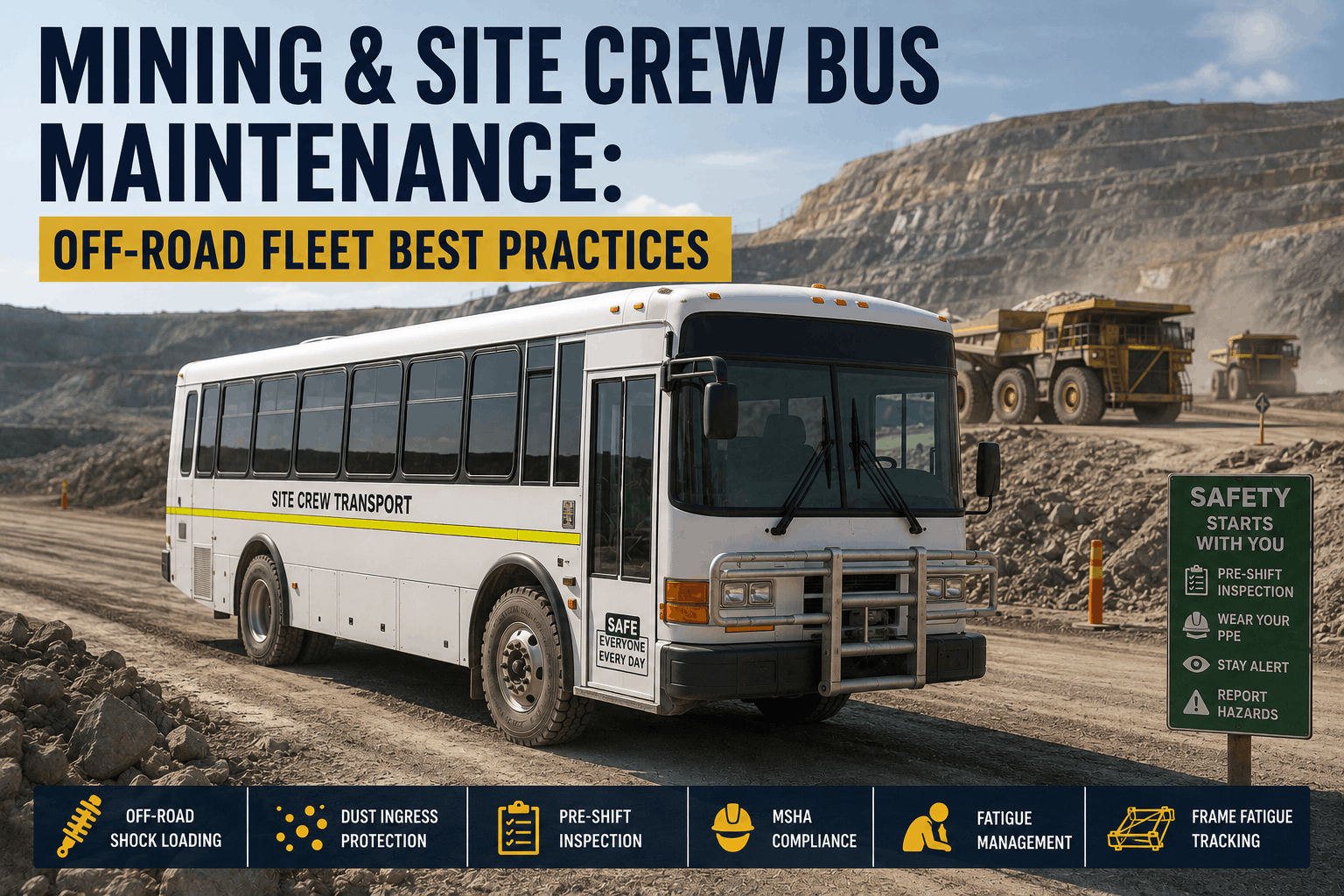
It's 5:47 AM and your phone buzzes: Bus 2847 won't start. Then 6:12 AM: Bus 3102 broke down en route with a transmission warning light. By 7:30, you've pulled two spares, delayed three routes, and fielded four angry calls from drivers and supervisors. Sound familiar? For operations pushing vehicles to their limits, this isn't bad luck it's what happens when reliability isn't systematically engineered into daily operations. The question isn't whether breakdowns will occur; it's whether you've built the systems and workflows that prevent single failures from cascading into operational chaos that affects passengers and budgets alike.
High-utilization fleets face a fundamental challenge that standard operations don't encounter: compressed maintenance windows combined with accelerated component wear. When buses run 14-18 hours daily, the overnight maintenance window shrinks to just 6-8 hours—and that window must accommodate fueling, cleaning, driver changeovers, and actual repair work. Meanwhile, components that might last 100,000 miles in a standard fleet reach failure thresholds at 60,000-70,000 miles due to the intensity of stop-and-go urban routes, mountain terrain, and extreme temperature cycling There's no slack in the schedule to catch up on deferred maintenance because every vehicle is needed every day.
What Separates High-Utilization Fleets from Standard Operations
Understanding the operational differences is critical before implementing reliability strategies. A fleet running 25,000-35,000 annual miles per bus operates in fundamentally different territory than one pushing 45,000-80,000 miles. Standard fleets typically deploy 70-80% of vehicles at peak times and maintain 15-20% spare ratios, giving them buffer capacity when breakdowns occur. High-utilization operations deploy 90-95% of vehicles at peak and run spare ratios of just 8-12%, meaning every single breakdown directly impacts service delivery. Components wear 2-3x faster, maintenance windows compress by 40-50%, and the consequences of deferred preventive maintenance multiply exponentially rather than linearly.
| Factor | Standard Fleet | High-Utilization Fleet | Operational Impact |
|---|---|---|---|
| Annual Miles/Bus | 25,000-35,000 | 45,000-80,000 | Components wear 2-3x faster |
| Daily Operating Hours | 8-10 hours | 14-18 hours | Maintenance windows shrink to 6-8 hours |
| Peak Vehicle Deployment | 70-80% | 90-95% | Every breakdown affects service |
| Spare Ratio | 15-20% | 8-12% | Less buffer requires tighter PM discipline |
Diagnosing Your Fleet's Current Reliability Health
Before implementing fixes, operations leaders need honest assessment of where their fleet actually stands. Five key indicators reveal whether you're running a proactive maintenance operation or trapped in reactive mode. These metrics should be available in real-time—if you can't pull them instantly, that visibility gap is itself a reliability problem. PM compliance rate is your leading indicator: fleets maintaining 95%+ compliance see MDBF improvements of 40-60% compared to those below 85%. Emergency repair ratio tells you whether you're preventing problems or just responding to them—above 25% unplanned work orders signals reactive mode where premium emergency dollars consume budgets meant for prevention.
PM Compliance Rate
Your leading indicator. PM compliance above 95% correlates with MDBF improvements of 40-60%. Below 85% means you're building a breakdown backlog that will eventually cascade into service failures.
Emergency Repair Ratio
What percentage of work orders are unplanned? Above 25% means reactive mode—spending premium emergency dollars instead of prevention investments.
Mean Distance Between Failures
Transit industry standard for mechanical reliability. Well-maintained fleets achieve 7,500+ miles between failures. Top performers exceed 10,000 miles consistently.
Repeat Repair Rate
Repairs recurring within 30 days signal diagnosis or quality problems. High repeat rates mean you're fixing symptoms rather than root causes.
Fleet Availability
Industry benchmark is 95%. High-performers target 98%+. Every point below 95% represents buses sitting when they should be generating revenue or serving passengers.
The Reliability Playbook: Five Interventions That Actually Work
Research across 86 transit agencies and operations ranging from 10 buses to 10,000 reveals consistent patterns in what moves reliability metrics. These aren't theoretical frameworks—they're documented interventions with measurable outcomes. The agencies achieving 98%+ availability share common operational disciplines that compound over time. They've moved beyond hoping for reliability to engineering it into their daily workflows, technology systems, and organizational culture. Each intervention builds on the others: PM compliance enables predictive maintenance, which depends on telematics integration, which requires technician productivity to act on alerts, which needs parts availability to complete repairs quickly.
Lock PM Compliance at 98%—No Exceptions
This isn't negotiable for high-utilization fleets. The temptation to skip or delay preventive maintenance when vehicles are desperately needed is intense—and destructive. Every deferred PM creates compound risk: one service delayed becomes three, then seven, then a breakdown costing 10x what the original PM would have cost. Agencies maintaining 98%+ PM compliance consistently report 40-60% higher MDBF than those below 85%, 30-50% reduction in roadside failures, and emergency repair ratios under 10%. The discipline to hold PM schedules even when it hurts short-term is what separates operations that work from those constantly fighting fires.
Implementation:
Automated scheduling based on actual mileage, not calendar assumptions. Escalation triggers at 500 miles overdue (supervisor alert), 1,000 miles (manager notification). No exceptions without documented approval from operations director.
Connect Telematics Directly to Work Orders
Most fleets have invested in telematics. Shockingly few actually use the data effectively. Fault codes stream into dashboards that nobody monitors consistently. Alerts accumulate without triggering work orders. The gap between "having data" and "acting on data" is exactly where preventable breakdowns occur. Modern predictive maintenance systems reduce costs by 30-50% while increasing uptime by 20-25%—the predictive maintenance market hit $10.93 billion in 2024 and is projected to reach $70.73 billion by 2032 precisely because it delivers measurable ROI. Technology without workflow integration is expensive decoration; technology connected to action is transformation.
Implementation:
Fault codes trigger automatic work order creation with vehicle history attached. Severity tiers determine response: Critical = immediate return-to-base decision within 15 minutes. Moderate = schedule within 48 hours. Low = next available maintenance window.
Transform Pre-Trip Inspections from Checkbox to Defense
Drivers are your first line of defense against roadside failures—if the inspection process is designed to catch real issues rather than satisfy compliance requirements. The difference between paper-based checkbox inspections and robust digital processes with photo documentation is dramatic: fleets implementing comprehensive digital pre-trip report 25-35% reduction in roadside failures. The key is creating feedback loops where drivers see their reported defects actually get addressed, building engagement and thoroughness. When drivers understand that their inspections prevent breakdowns rather than just generating paperwork, inspection quality transforms from obligation to ownership.
Implementation:
Digital inspections with photo requirements for any reported defect. Defects route immediately to maintenance with severity triage. Critical issues prevent dispatch; minor issues schedule for next return window. Weekly feedback showing drivers which of their reported issues prevented failures.
Maximize Technician Wrench Time to 80%+
Industry average wrench time—hours actually spent turning wrenches versus administrative tasks, parts hunting, and waiting—hovers at 55-65%. That means technicians spend 35-45% of their day NOT doing productive maintenance work. Moving to 75-85% wrench time effectively adds 33% more technician capacity without hiring a single additional person. For a five-technician shop, that's equivalent to gaining 1.6 technicians—worth $80,000-$120,000 annually in labor value. The productivity gains come from eliminating the treasure hunts: searching for work orders, hunting for parts, waiting for approvals, tracking down vehicle history. Digital systems that put information at technicians' fingertips transform wasted motion into completed repairs.
Implementation:
Digital work orders eliminating paper trails. Parts staged before technician arrives based on work order requirements. Mobile access to complete service history and repair procedures. Approval workflows that don't require technicians to leave the bay.
Stock Critical Parts Based on Failure Data, Not Intuition
A perfectly diagnosed problem waiting three days for a part is still a bus out of service impacting your availability metrics. Inefficient parts inventory management consumes 10-15% of total maintenance budgets through a combination of excess carrying costs on slow-moving items and emergency expediting fees on items that should have been stocked. The solution isn't simply stocking more of everything—it's intelligent inventory based on actual failure patterns, lead times, and criticality. Parts integrated with work order systems automatically track consumption and adjust reorder points based on real demand rather than guesswork or historical patterns that may no longer apply to your current fleet composition.
Implementation:
Critical parts stocking based on failure frequency analysis and supplier lead times. Demand forecasting aligned with upcoming PM schedules and fleet age distribution. Inventory system integrated with work orders so consumption updates automatically trigger reorder evaluation.
Daily Operational Rhythm of High-Reliability Fleets
Theory without execution is worthless. High-performing operations structure their daily rhythm around reliability touchpoints that catch problems before they cascade. The overnight maintenance window isn't just when repairs happen—it's when tomorrow's availability is determined. The pre-dawn readiness check isn't administrative overhead—it's the moment when spare assignments happen proactively rather than reactively after drivers discover problems. Every transition point in the day becomes an opportunity for inspection, intervention, and prevention rather than just a schedule milestone to hit.
Pre-Dawn Readiness
Night supervisor reviews overnight completion status. Any vehicle not ready triggers immediate escalation—not when drivers arrive. Spares pre-assigned for known issues before the morning rush begins.
Driver Pre-Trip
Digital inspections completed before dispatch release. Defects flagged immediately route to maintenance. Critical issues prevent pullout; minor issues schedule for return window later in the day.
Active Monitoring
Telematics dashboard monitored continuously for fault codes and anomalies. Critical alerts trigger 15-minute decisions: continue service, return to base, or dispatch roadside response.
Shift Change Windows
Driver changeovers become mini-inspection opportunities. Minor issues addressed in 15-30 minute windows. Prioritization based on afternoon route criticality and vehicle condition.
Overnight Maintenance
Primary PM window. Scheduled repairs. Defect resolution. Real-time completion tracking ensures tomorrow's availability. Any incomplete work escalates immediately for coverage planning.
See Proven Reliability Frameworks in Action
View the workflows that help fleets achieve 98%+ availability at scale.
Getting Started Book a DemoFive Ways Fleets Sabotage Their Own Reliability
Even well-intentioned operations undermine their reliability through patterns that seem reasonable in the moment but compound into systemic problems. Recognizing these patterns is the first step toward breaking them. The most dangerous aspect of these reliability killers is that they often feel like pragmatic responses to immediate pressures—but they trade short-term relief for long-term operational degradation that becomes increasingly difficult and expensive to reverse.
"We'll Catch Up on PM Next Week"
You won't. Next week has its own operational demands and emergencies. Deferred PM compounds—one service delayed becomes three, then seven, then a breakdown costing 10x the original PM. High-utilization fleets have zero catch-up capacity because every vehicle is scheduled every day. Discipline to hold PM schedules even when it hurts is the only path forward.
Fixing Symptoms Instead of Root Causes
Driver reports brake issue. Technician adjusts and returns vehicle to service. Three weeks later: roadside failure from the sticking caliper nobody properly diagnosed. Thorough root-cause resolution takes longer initially but prevents the repeat repairs that destroy availability metrics and passenger trust.
Treating Telematics as Expensive Decoration
Fleet invested significant capital in telematics. Fault codes stream in daily. Nobody acts on them consistently. Alerts accumulate without triggering work orders. Technology without workflow integration is waste. The value isn't in having data—it's in systematically connecting data to maintenance action.
Concentrating Knowledge in Single Individuals
One senior technician knows all the fleet's quirks, workarounds, and history. When they're out sick or on vacation? Capability gaps emerge immediately. When they retire? Institutional knowledge disappears. Documentation, cross-training, and standardized procedures distribute knowledge so reliability doesn't depend on any single person's presence.
Budgeting for Emergencies Instead of Prevention
Last year's maintenance budget was 40% emergency repairs, so this year's budget assumes the same. That's not planning—it's institutionalizing failure. Strategic budgets fund PM compliance, predictive technology, and capability building that reduces the emergency spend consuming previous budgets.
Documented Results: What's Actually Achievable
These aren't theoretical projections or vendor marketing claims. They're documented outcomes from transit operations that implemented systematic reliability programs with proper technology infrastructure and organizational commitment. The Colorado school district case demonstrates that operational excellence and financial discipline aren't opposing forces—they reinforce each other. Better reliability reduces emergency costs, extends component life, improves fuel efficiency, and protects the operation's reputation with the community it serves.
Fleet Availability
Colorado school district achieved within 8 months through integrated route optimization and predictive maintenance scheduling.
Annual Savings
Same district reduced costs while improving reliability—operational excellence and financial discipline reinforce each other.
MDBF Improvement
Typical gain for fleets moving from reactive (below 85% PM compliance) to proactive (95%+) maintenance programs.
Uptime Increase
Documented improvement from predictive maintenance systems that simultaneously reduce costs by 30-50%.
Realistic Implementation Timeline
Month 1-2: Establish baseline metrics and deploy visibility tools. Month 3-4: PM compliance stabilizes above 95% through automated scheduling. Month 5-6: Emergency ratios begin declining as predictive patterns emerge, MDBF trending upward. Month 7-12: Predictive algorithms mature with accumulated data, operations targeting 98%+ availability consistently.
Frequently Asked Questions
How does CMMS technology actually improve reliability for high-utilization fleets?
CMMS platforms attack reliability through three mechanisms that compound over time. First, automated PM scheduling based on actual mileage ensures preventive maintenance happens regardless of operational pressure—this alone typically moves PM compliance from 70-80% to 95%+, directly increasing Mean Distance Between Failures by 40-60%. Second, telematics integration routes fault codes directly into prioritized work orders with complete vehicle history attached, closing the gap between "having alerts" and "acting on them" that causes preventable breakdowns. Third, real-time dashboards let operations leaders spot reliability trends before they become crises—vehicles with declining MDBF, PM backlog aging toward overdue status, technician capacity constraints emerging. Fleets implementing comprehensive CMMS report 20-25% uptime improvement. The technology doesn't replace good maintenance practices—it makes good maintenance systematic, consistent, and sustainable across personnel changes and operational pressures. See these reliability workflows in a live demo.
What results are realistic to achieve, and how quickly can we expect improvement?
Most fleets see meaningful improvement within 90 days of systematic implementation, though full transformation takes longer. Initial gains come from visibility—simply knowing which vehicles have overdue PM, active fault codes, and excessive maintenance consumption enables immediate prioritization decisions that weren't possible before. These visibility improvements typically produce 2-5 percentage point availability gains within the first month. Sustained improvement requires building new organizational habits: consistent PM completion regardless of pressure, thorough defect resolution rather than quick fixes, proactive response to telematics alerts. By month 4-6, expect PM compliance stabilized above 95%, emergency repair ratios declining measurably, and MDBF trending upward. Full transformation to 98%+ availability typically requires 6-12 months as predictive algorithms learn your specific fleet's patterns and maintenance culture genuinely shifts from reactive to proactive. Progress is measurable week over week for operations that implement systematically with leadership commitment. Start building systematic reliability infrastructure for your fleet.
The Bottom Line for Operations Leaders
High-utilization fleet reliability isn't mysterious, and it doesn't require unlimited budgets or brand-new vehicles. It requires engineering systems that make reliability inevitable rather than accidental—then maintaining the discipline to execute those systems consistently even when short-term pressures tempt shortcuts. The fleets achieving 98%+ availability share common traits: PM compliance locked at 98%+ regardless of operational pressure, telematics connected to work orders rather than just dashboards, pre-trip inspections designed to catch real issues, technician time protected from administrative waste, and parts available when needed to complete repairs quickly.
None of these practices are revolutionary or secret. But the discipline to execute them consistently, day after day, shift after shift, is what separates operations that reliably deliver from operations constantly fighting fires. The question for your operation isn't whether these results are achievable—the documented outcomes prove they are. The question is whether you're ready to build the systems, invest in the technology, and commit to the discipline that produces them. Your passengers, your budget, and your team are counting on the answer.
See Proven Reliability Frameworks
View the workflows that leading fleets use to achieve 98%+ availability at scale.
Getting Started Book a Demo