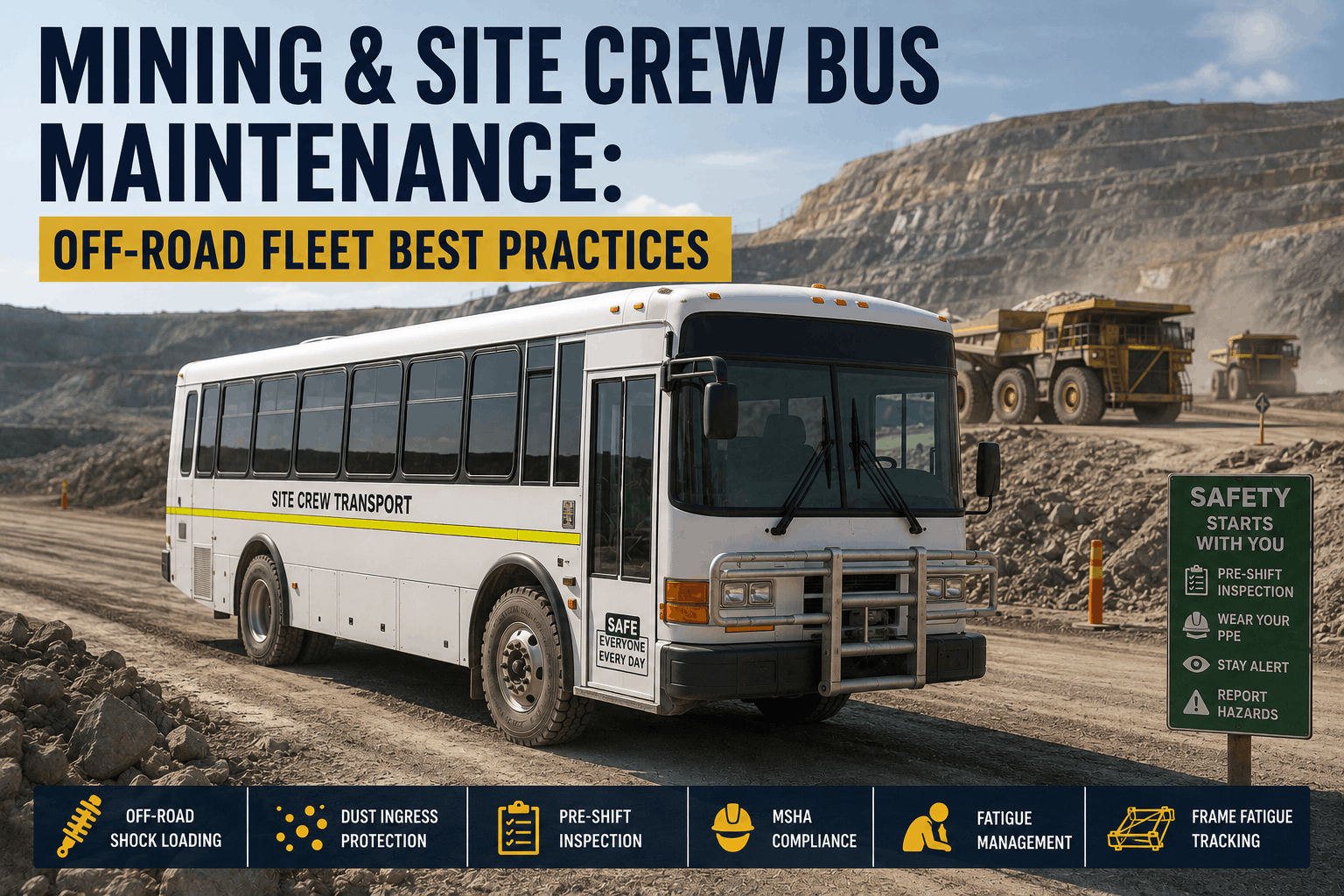
Modern bus fleets represent significant capital investments for transit agencies and private operators across the United States. The average transit bus costs between $300,000 to $700,000, making fleet longevity a critical factor in operational sustainability. Bus CMMS systems have revolutionized how fleet managers approach maintenance scheduling and asset life-cycle management.
Bus architecture encompasses multiple interconnected systems including propulsion, braking, electrical, HVAC, and safety systems. Each component has specific maintenance requirements and failure patterns that, when properly managed through comprehensive maintenance programs, can extend vehicle life from the industry standard of 12 years to 15-18 years or more.
The key to maximizing bus fleet longevity lies in understanding the relationship between preventive maintenance intervals, component wear patterns, and operational conditions. Fleet managers utilizing advanced Bus CMMS platforms report 25-30% improvements in vehicle availability and 20% reductions in total cost of ownership through optimized maintenance scheduling.
Critical Warning Signs of Maintenance Neglect
Early Warning Indicators
- Increased Fuel Consumption: A 15% or greater increase in fuel usage often indicates engine inefficiency, clogged filters, or transmission issues
- Unusual Noises: Grinding, squealing, or knocking sounds from brakes, transmission, or engine compartments
- Fluid Leaks: Oil, coolant, brake fluid, or hydraulic fluid leaks indicate seal failures or component wear
- Dashboard Warning Lights: Persistent or intermittent warning lights should trigger immediate diagnostic procedures
- Decreased Performance: Reduced acceleration, poor shifting, or difficulty maintaining highway speeds
Fleet managers using Bus CMMS tracking systems can identify these warning signs before they result in costly breakdowns. Predictive analytics within modern CMMS platforms analyze historical data to forecast component failures, enabling proactive maintenance interventions.
Comprehensive Maintenance Strategies
Preventive Maintenance Framework
Effective bus fleet maintenance requires a multi-tiered approach that addresses both time-based and condition-based maintenance requirements. Bus CMMS systems excel at managing complex maintenance schedules across diverse fleet compositions.
Essential Maintenance Categories
Daily Inspections (A-Level)
- Exterior and interior visual inspections
- Fluid level checks (oil, coolant, brake fluid)
- Tire pressure and condition assessment
- Lights and safety equipment verification
- Basic cleanliness and presentation standards
Periodic Service (B-Level)
- Oil and filter changes (typically every 6,000-10,000 miles)
- Brake system inspections and adjustments
- Transmission service and fluid replacement
- HVAC system maintenance and filter replacement
- Battery and electrical system testing
Major Overhauls (C-Level)
- Engine rebuilds or replacements (400,000-600,000 miles)
- Transmission overhauls
- Suspension system rebuilds
- Complete brake system overhauls
- Body and structural repairs
Technology Integration and Modern Maintenance
Contemporary bus fleets increasingly incorporate advanced technologies that require specialized maintenance approaches. Hybrid and electric buses, GPS tracking systems, passenger information displays, and automated fare collection systems all introduce additional maintenance complexity that traditional approaches cannot adequately address.
Bus CMMS platforms have evolved to accommodate these technological advances through integrated diagnostic capabilities, automated work order generation, and real-time monitoring of critical systems. Fleet managers report that technology-enabled maintenance programs result in 40% fewer unexpected failures and 35% improvements in first-time fix rates.
Cost Analysis and ROI of Preventive Maintenance
Financial Impact Metrics
Research conducted across multiple US transit agencies demonstrates clear financial benefits of comprehensive maintenance programs:
- Maintenance Cost Reduction: 20-25% decrease in annual maintenance expenses
- Vehicle Availability: 8-12% improvement in fleet availability rates
- Fuel Efficiency: 5-8% improvement in miles per gallon
- Component Life Extension: 30-50% longer component lifespans
- Emergency Repair Reduction: 60-70% fewer emergency roadside repairs
Implementation Best Practices
Establishing Effective Maintenance Programs
Successful implementation of comprehensive maintenance programs requires careful planning, staff training, and technology adoption. Bus CMMS implementations should begin with thorough assessment of current maintenance practices, identification of improvement opportunities, and development of standardized procedures.
Key implementation steps include establishing baseline metrics, training maintenance staff on new procedures and technologies, creating accountability measures, and developing continuous improvement processes. Fleet managers should expect 6-12 months for full program implementation and realization of benefits.
Success Factors
- Executive leadership commitment and resource allocation
- Comprehensive staff training and certification programs
- Integration with existing operational systems and processes
- Regular performance monitoring and program adjustments
- Vendor partnerships for specialized maintenance requirements
Transform Your Fleet Maintenance Program
Ready to extend your bus fleet longevity and reduce operational costs? Bus CMMS provides the tools and expertise necessary to implement world-class maintenance programs that deliver measurable results.