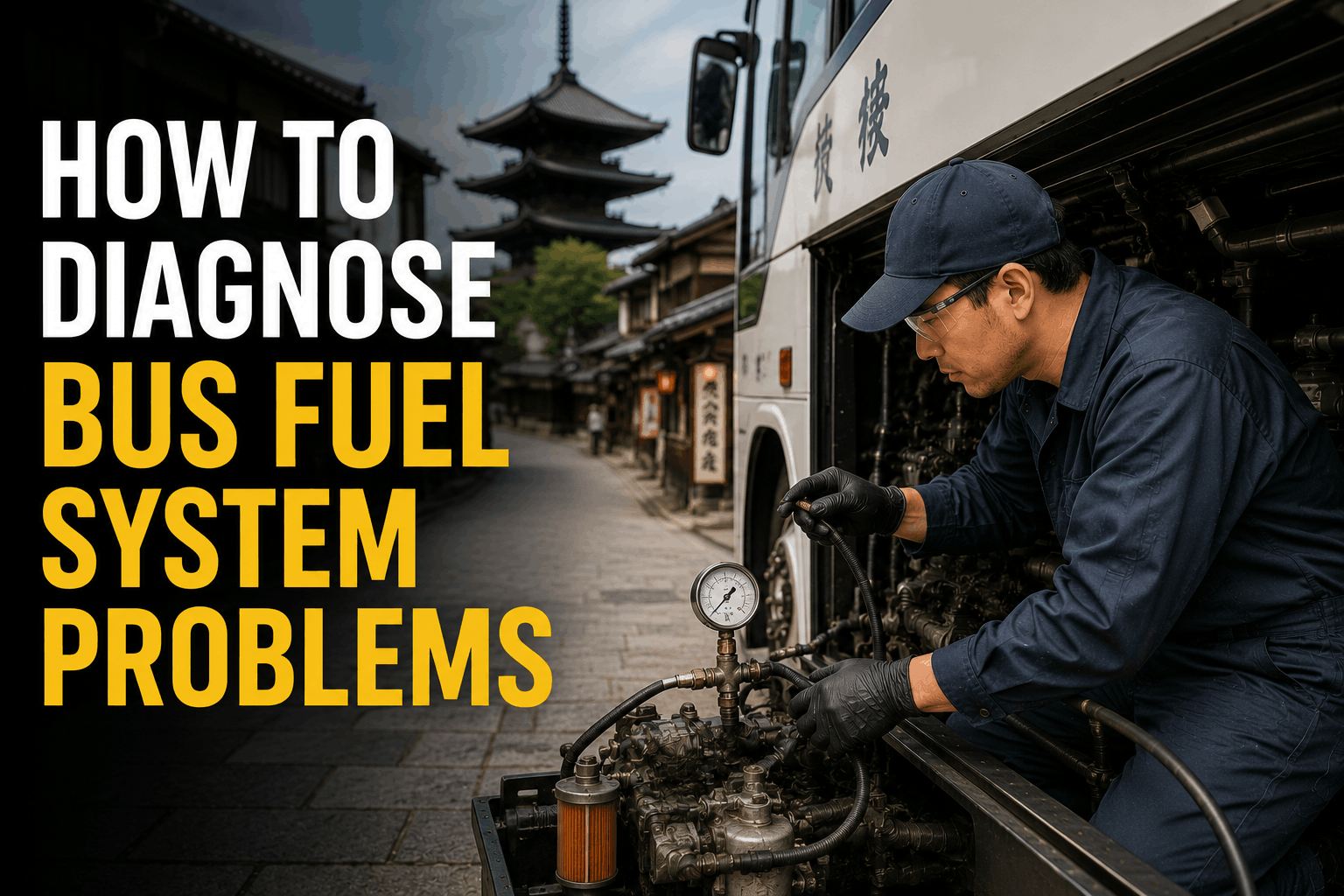
Fuel system problems are among the most frustrating and difficult-to-diagnose issues in bus fleet maintenance. A bus that loses power, hesitates on acceleration, or fails to start can have a fuel system issue that mimics electrical or mechanical problems. Fuel pressure tests, injector balance checks, filter restriction measurements, and water-in-fuel detection are all essential diagnostic procedures. This guide walks through the most common fuel system problems—fuel pressure issues, injector balance problems, filter restriction, water in fuel, and low/high pressure fuel system failures—with step-by-step diagnostic procedures.
Fuel System Diagnostics Guide 2026
How to Diagnose Bus Fuel System Problems
Diagnose bus fuel system problems. Fuel pressure tests, injector balance, filter restriction, water in fuel, low pressure and high pressure fuel issues.
Fuel System Failures: What the Data Shows
Understanding which fuel system components fail most often helps focus diagnostic efforts and preventive maintenance. Data from fleet fuel system repair records reveals clear patterns:
Injector failures account for 34% of fuel system issues, followed by fuel pump failures at 22%. Filter restrictions make up 16%, and water contamination causes 12%. This means over 80% of fuel system problems are in these four categories—a focused diagnostic approach can resolve most issues quickly.
Fuel System Diagnostic Progress
1
Fuel Pressure Test
Connect fuel pressure gauge. Compare to specification. Low pressure indicates pump, filter, or line issues.
2
Injector Balance Test
Check injector balance rates via diagnostic software. Imbalance indicates worn or failing injectors.
3
Filter Restriction Check
Measure fuel filter restriction. Replace filter if pressure drop exceeds specification.
4
Water-in-Fuel Test
Check fuel sample for water contamination. Drain water separator. Water causes injector damage.
5
High Pressure Fuel Test
Test high pressure fuel pump output. Low pressure indicates pump failure or internal leak.
6
Air Intrusion Test
Check for air in fuel system. Air causes hard starting and poor performance.
Fuel System Diagnostic Reference Table
Fuel Pressure Low
Causes: Clogged filter, failing pump, suction leak, fuel line restriction
Check: Filter restriction, pump pressure, fuel line condition
Fix: Replace filter, repair pump, clear line restriction
Fuel Pressure High
Causes: Regulator failure, return line restriction, pump over-speeding
Check: Regulator function, return line, pump speed
Fix: Replace regulator, clear return line
Injector Balance Imbalance
Causes: Worn injector, clogged nozzle, electrical fault
Check: Injector balance rates via diagnostic software
Fix: Replace or rebuild injectors in pairs
Filter Restriction
Causes: Clogged filter, contaminated fuel, water in fuel
Check: Filter pressure drop, fuel sample
Fix: Replace fuel filter, drain water separator
Water in Fuel
Causes: Contaminated fuel, condensation, poor fuel storage
Check: Drain water separator, fuel sample test
Fix: Drain system, change filters, treat fuel
Air in Fuel System
Causes: Suction leak, low fuel level, pump seal failure
Check: Fuel lines, fuel level, pump seals
Fix: Repair lines, fill tank, replace seals
Fuel System Diagnostic KPIs
Track these five metrics to measure your fuel system diagnostic program effectiveness:
Fuel Pressure Compliance
Target: Within specification. Track by engine. Low pressure indicates filter or pump issues.
Injector Balance Rate
Target: Within ±10% of mean. Track by engine. Imbalance indicates injector wear.
Filter Restriction
Target: < 5 PSI drop. Track by engine. Rising restriction indicates filter clogging.
Water-in-Fuel Detection
Target: Zero. Track by bus. Water indicates fuel contamination requiring investigation.
Fuel System Repair Frequency
Target: Decreasing trend. Track by bus. High frequency indicates recurring issues.
We implemented this fuel system diagnostic guide across our 85-bus fleet. In the first year, our average fuel diagnosis time dropped from 2 hours to 40 minutes. We reduced unnecessary injector replacements by 35% because we identified fuel pump and filter issues that were causing the problems. The step-by-step process helped our technicians systematically diagnose fuel system faults instead of guessing and replacing parts.
Digitize Your Fuel System Diagnostic Process
BusCMMS guides technicians through every fuel system diagnostic point—fuel pressure testing, injector balance checks, filter restriction measurement, water-in-fuel detection, and high pressure fuel testing. Auto-schedule fuel system PM intervals based on mileage. Complete audit trail for every fuel system component in your fleet.
Bus Fuel System FAQs
What is normal fuel pressure for a diesel bus?
Normal fuel pressure varies by engine type and system design. Typical low pressure systems: 50-80 PSI. High pressure common rail systems: 10,000-30,000 PSI. Always reference manufacturer specifications for your specific engine. Low pressure indicates pump, filter, or line issues.
What causes injector imbalance?
Injector imbalance is caused by: worn injector nozzle, clogged injector, electrical fault, or fuel contamination. Diagnostic software measures injector balance rates. Imbalance greater than ±10% from mean indicates a failing injector requiring replacement.
How do I check for water in fuel?
Drain the water separator into a clear container. Water will settle at the bottom. Use water detection paste on a dipstick to test for water in the fuel tank. Water contamination causes injector damage and should be addressed immediately.
What causes fuel filter restriction?
Fuel filter restriction is caused by: contamination in fuel, water in fuel, or normal wear. Measure filter pressure drop—drop above 5 PSI indicates restriction requiring filter replacement. Regular filter changes prevent restriction.
What are the signs of air in the fuel system?
Signs of air in the fuel system include: hard starting, rough idle, loss of power, and engine stalling. Air is caused by suction leaks, low fuel level, or pump seal failure. Bleed the system and check fuel lines for leaks.
Can BusCMMS track fuel system diagnostic history?
Yes. BusCMMS tracks fuel pressure readings, injector balance rates, filter restriction measurements, water-in-fuel test results, and fuel system repairs. This creates a complete fuel system history for each bus, helping identify patterns and predict maintenance needs before component failure occurs.
The Bottom Line
Diagnosing bus fuel system problems does not have to be time-consuming or frustrating. Most fuel system faults follow predictable patterns: injector failures, fuel pump failures, filter restrictions, and water contamination account for over 80% of fuel system issues. A systematic diagnostic approach—starting with fuel pressure testing, then injector balance, then filter restriction, then water-in-fuel detection—resolves most fuel system problems quickly. This guide provides the step-by-step procedures your technicians need to diagnose and repair common bus fuel system faults. When combined with BusCMMS digital inspection forms, auto-scheduled PM intervals, and complete fuel system history tracking, your fuel system maintenance program becomes proactive—catching issues before they cause power loss or engine failure.