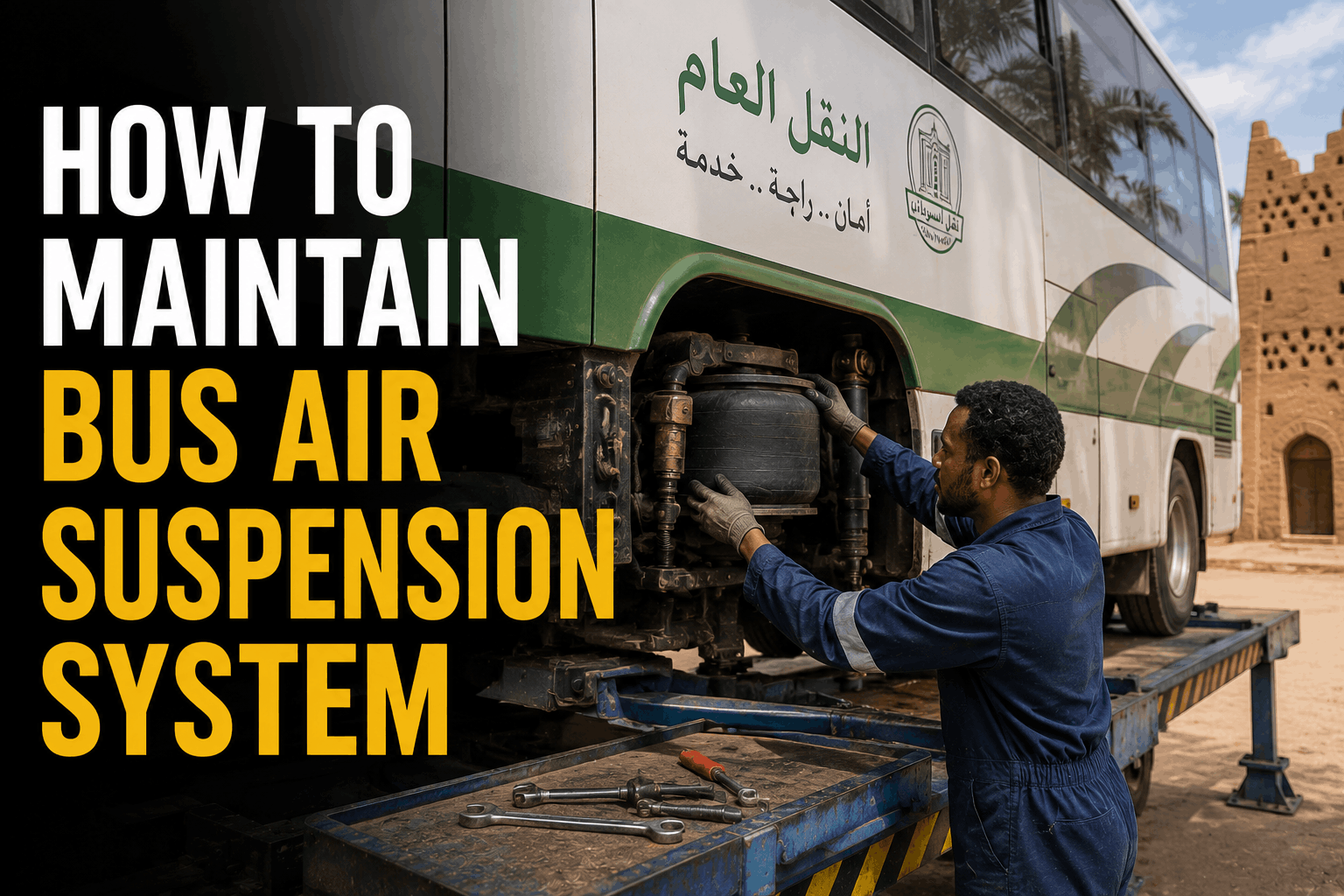
The air suspension system is what separates a comfortable ride from a rough, jarring experience—and it is critical to vehicle stability, brake performance, and tire life. A failed air bag can leave a bus sitting on its bump stops. A malfunctioning height control valve can cause uneven ride height that affects handling. Air leaks can cause the compressor to run continuously, leading to premature failure. This guide covers everything you need to maintain a bus air suspension system—air bag inspection, height control valves, shock absorbers, leveling sensors, and air leak detection methods.
Air Suspension Maintenance Guide 2026
How to Maintain Bus Air Suspension System
Maintain a bus air suspension system. Air bag inspection, height control valves, shock absorbers, leveling sensors and air leak detection methods.
Air Suspension Maintenance Impact: The Cost of Neglect
Air suspension systems require regular maintenance to perform reliably. Neglect leads to costly failures that affect ride quality, tire wear, and vehicle stability.
$800–$2,500
Air bag replacement per axle
40-60%
Reduction in failures with PM
25%
Tire life loss from misalignment
3-5x
PM cost vs. emergency repair
Air Suspension Maintenance Progress
1
Air Bag Inspection
Inspect air bags for cracks, bulges, chafing, and damage. Check mounting hardware for security.
2
Leak Detection
Use soapy water or ultrasonic detector to find air leaks. Repair all leaks found.
3
Height Control Valve Test
Verify height control valve function. Check for binding and correct ride height adjustment.
4
Shock Absorber Check
Test shock absorber function. Replace worn shocks in pairs for balanced performance.
5
Leveling Sensor Test
Verify leveling sensor function. Check for binding or damage. Adjust if needed.
Air Leak Detection Methods
Soapy Water Test
Method: Apply soapy water to connections, fittings, and air bags. Look for bubbles indicating leaks.
Best For: Small leaks, visible connections, quick checks
Tools: Spray bottle, soapy water
Ultrasonic Leak Detector
Method: Use ultrasonic detector to "hear" air leaks that are not visible. Ideal for leaks in hard-to-reach areas.
Best For: Large leaks, hard-to-reach areas, noisy environments
Tools: Ultrasonic leak detector
Pressure Decay Test
Method: Pressurize system, monitor pressure drop over time. Pressure loss indicates system leak.
Best For: System-wide leak detection, air dryer and valve testing
Tools: Pressure gauge, timer
Air Suspension Health Trends
The chart above shows air suspension component health over time. Air bags show significant deterioration after 5 years of service, with failure rates increasing dramatically after year 6. Shock absorbers show more gradual degradation. Proactive replacement of air bags at 5-6 years prevents unexpected failures and roadside breakdowns.
Air Suspension KPIs
Track these five metrics to measure your air suspension maintenance program effectiveness:
Air Bag Replacement Frequency
Target: 5-6 year intervals. Track by bus. Early replacement indicates environmental factors or overloading.
Air Leak Detection Rate
Target: 100% of leaks found and repaired. Track by bus. Unresolved leaks cause compressor failure.
Ride Height Compliance
Target: 100% within specification. Track by bus. Incorrect height causes tire wear and handling issues.
Compressor Cycle Frequency
Target: Stable or decreasing. Track by bus. Increasing cycles indicate system leaks.
Suspension-Related Breakdowns
Target: Zero. Track monthly. Spike indicates maintenance gaps or component issues.
We implemented this air suspension maintenance procedure across our 85-bus fleet. In the first year, we found 34 air leaks that were causing compressors to cycle excessively, replaced 18 air bags showing signs of deterioration before they failed, and identified 12 faulty height control valves. Our suspension-related breakdowns dropped by 65%, and our average compressor life increased from 3 years to 5 years.
Digitize Your Air Suspension Maintenance Program
BusCMMS guides technicians through every air suspension inspection point—air bag condition, leak detection, height control valve function, shock absorber testing, and leveling sensor verification. Auto-schedule suspension PM intervals based on mileage. Complete audit trail for every suspension component in your fleet.
Bus Air Suspension FAQs
How often should air bags be inspected?
Air bags should be inspected at every preventive maintenance service (typically every 15,000–20,000 miles or 6 months). Visual inspection for cracks, bulges, chafing, and damage. Inspect mounting hardware for security. Replace air bags showing signs of deterioration.
What causes air bag failure?
Air bag failure is caused by: age (rubber degradation), chafing against components, contamination (oil, debris), overloading, and impact damage. Regular inspection catches deterioration before failure occurs. Replace air bags at 5-6 years proactively.
How do I find air suspension leaks?
Use soapy water applied to connections, fittings, and air bags—bubbles indicate leaks. Ultrasonic leak detectors can identify leaks in noisy environments. Pressure decay testing identifies system-wide leaks. Repair all leaks found to prevent compressor failure.
What is the correct ride height for a bus?
Ride height varies by bus model and manufacturer. Always reference the bus manufacturer's specification—typically measured from the frame to the axle at specified points. Incorrect ride height causes alignment issues, tire wear, and handling problems. Adjust height control valves to specification.
How do I test shock absorbers on a bus?
Perform a bounce test: push down firmly on each corner of the bus and release. The bus should rebound once and stop. If it continues to bounce, shocks are worn. Also inspect for oil leaks, damage, and worn mounting bushings. Replace shocks in pairs.
Can BusCMMS track air suspension maintenance history?
Yes. BusCMMS tracks air bag condition, leak detection results, height control valve function, shock absorber condition, leveling sensor function, and suspension repair history. This creates a complete air suspension history for each bus, helping identify patterns and predict maintenance needs.
The Bottom Line
Maintaining bus air suspension systems is essential for ride quality, vehicle stability, and component life. Air bags typically last 5-6 years before showing significant deterioration. Shock absorbers show more gradual degradation but require regular inspection. The 5-step inspection procedure—air bag inspection, leak detection, height control valve test, shock absorber check, and leveling sensor test—identifies issues before they cause failures. This guide provides the step-by-step procedures your technicians need to maintain every air suspension component in your fleet. When combined with BusCMMS digital inspection forms, auto-scheduled PM intervals, and complete suspension history tracking, your air suspension maintenance program becomes proactive—catching issues before they cause ride quality problems, tire wear, or breakdowns.