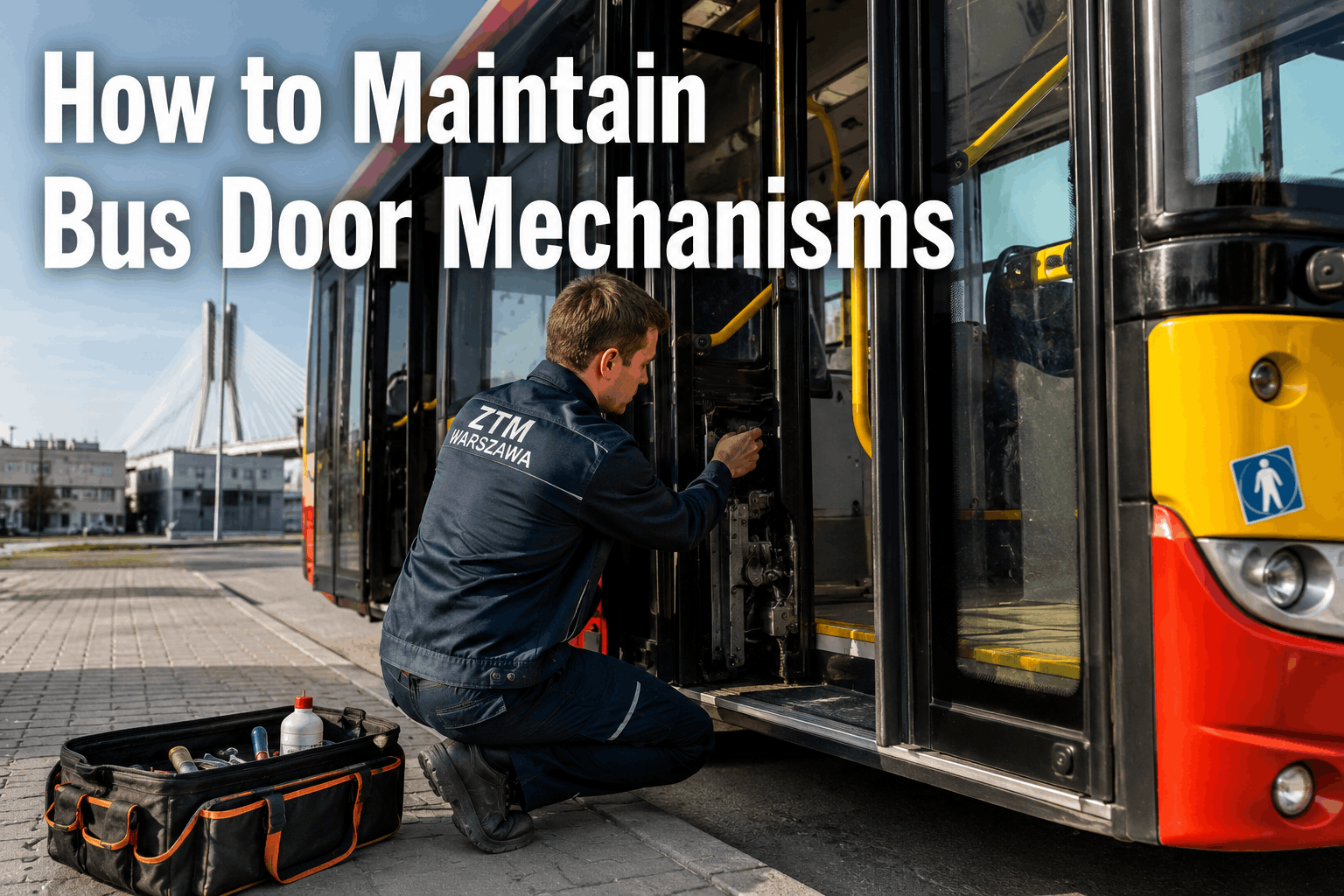
Bus doors are the primary entry and exit points for passengers—and they are among the most frequently used components on any bus. A door that fails to open or close properly can trap passengers, delay routes, or prevent emergency egress. Folding doors, sliding doors, and pneumatic doors all have specific maintenance requirements, lubrication points, alignment procedures, and interlock testing protocols. This guide covers everything you need to maintain bus door mechanisms across all types—folding, sliding, and pneumatic.
Door Mechanism Guide 2026
How to Maintain Bus Door Mechanisms (Folding, Sliding, Pneumatic)
Maintain bus door mechanisms across folding, sliding and pneumatic types. Lubrication, alignment, interlock testing and sensor diagnostics.
Door Mechanism Maintenance Impact: The Cost of Failure
Door mechanism failures are among the most common accessibility and safety issues on buses. A door that fails to close properly can cause passenger injury, route delays, and ADA compliance violations.
15-20%
of bus breakdowns from doors
60%
Fewer failures with PM
30 min
Average repair time
100%
ADA compliance requirement
Door Mechanism Maintenance Progress
1
Visual Inspection
Inspect door panels, hinges, tracks, and seals for damage or wear. Check for alignment issues or binding during operation.
2
Lubrication
Lubricate hinges, tracks, rollers, and pivot points. Use correct lubricant for each component type. Avoid over-lubrication.
3
Alignment Check
Verify door alignment in closed position. Check for gaps, binding, or uneven closing. Adjust hinges or tracks as needed.
4
Interlock Testing
Test interlock function—bus should not move with door open. Verify interlock switch operation. Replace faulty interlocks.
5
Sensor Diagnostics
Test door sensors (obstruction, position, pressure). Verify sensor readings. Clean or replace faulty sensors.
6
Door Alarm Test
Test door alarm function—alarm should sound when door is open with bus in motion. Verify alarm volume and clarity.
Door Mechanism Failure Rates by Type
Pneumatic doors have the highest failure rate at 35%, followed by folding doors at 28% and sliding doors at 22%. Focus inspection efforts on pneumatic systems—air leaks, cylinder wear, and control valve issues are common failure points.
Door Mechanism Maintenance Quick Reference
Lubrication Points
Lubricate hinges, rollers, tracks, and pivot points with appropriate lubricant. Use silicone spray for rubber seals, lithium grease for metal-on-metal contact.
Alignment Adjustment
Check door alignment in closed position. Adjust hinges, tracks, or stops to ensure even closing without gaps or binding.
Interlock Testing
Test interlock function: bus should not move with door open. Verify switch operation. Replace faulty interlocks immediately.
Sensor Diagnostics
Test door sensors for proper function. Clean sensors. Replace faulty sensors. Verify sensor readings with diagnostic tools.
Pneumatic Cylinders
Inspect pneumatic cylinders for leaks, damage, and proper operation. Check air lines and fittings for leaks. Replace worn cylinders.
Door Seals
Inspect door seals for condition and integrity. Replace worn or damaged seals. Verify seals keep weather and noise out.
Door Mechanism KPIs
Track these five metrics to measure your door mechanism maintenance program effectiveness:
Door Operation Compliance
Target: 100% operational. Track by bus. Non-operational doors require immediate repair.
Interlock Function
Target: 100% functional. Track by bus. Failed interlocks are a safety violation.
Door Alarm Function
Target: 100% functional. Track by bus. Non-functional alarms are a safety violation.
Sensor Reliability
Target: 95%+ reliable. Track by bus. Frequent sensor failures indicate underlying issues.
Door-Related Breakdowns
Target: Zero. Track monthly. Spike indicates maintenance gaps or driver training needs.
We implemented this door mechanism maintenance procedure across our 85-bus fleet. In the first year, we caught 34 door alignment issues, 17 failed interlocks, 12 pneumatic cylinder leaks, and 23 faulty door sensors. Our door-related breakdowns dropped by 75%.
Digitize Your Door Mechanism Maintenance Program
BusCMMS guides technicians through every door maintenance step—visual inspection, lubrication, alignment check, interlock testing, sensor diagnostics, and door alarm testing. Auto-schedule door PM intervals based on mileage. Complete audit trail for every door mechanism in your fleet.
Bus Door Mechanism FAQs
How often should bus door mechanisms be inspected?
Door mechanisms should be inspected daily during pre-trip inspections. Comprehensive door maintenance should be performed at every PM service (typically every 15,000–20,000 miles or 6 months). Annual DOT inspections require verification of all door components.
What is a door interlock and why is it important?
A door interlock prevents the bus from moving when the door is open. It is a critical safety feature that prevents passenger falls or being dragged by the bus. If the interlock fails, the bus may move with the door open—immediate repair is required.
What causes pneumatic door failure?
Pneumatic door failure is caused by: air leaks, cylinder seal wear, control valve failure, and contamination. Regular inspection of air lines, fittings, and cylinders catches issues before they cause failure. Replace worn cylinders promptly.
How do I test a door interlock?
Open the door, attempt to move the bus (with parking brake off). The bus should not move. If the bus moves with the door open, the interlock has failed and requires immediate repair. Also test with door closed—bus should move normally.
What causes door alignment issues?
Door alignment issues are caused by: worn hinges, track damage, body flex, and impact damage. Alignment issues cause binding, gaps, and premature seal wear. Regular inspection and adjustment prevents alignment problems.
Can BusCMMS track door mechanism maintenance history?
Yes. BusCMMS tracks door alignment, lubrication, interlock function, sensor diagnostics, and door alarm testing. This creates a complete door mechanism history for each bus, helping identify patterns and predict maintenance needs.
The Bottom Line
Maintaining bus door mechanisms is essential for passenger accessibility, safety, and ADA compliance. The 6-step procedure—visual inspection, lubrication, alignment check, interlock testing, sensor diagnostics, and door alarm testing—ensures every door mechanism operates reliably. Pneumatic doors have the highest failure rate at 35%, followed by folding doors at 28% and sliding doors at 22%. Regular lubrication, alignment checks, and interlock testing prevent the most common failures. This guide provides the step-by-step procedures your technicians need to maintain every door mechanism in your fleet. When combined with BusCMMS digital inspection forms, auto-scheduled PM intervals, and complete door history tracking, your door maintenance program becomes proactive—catching issues before they cause passenger safety hazards or compliance violations.