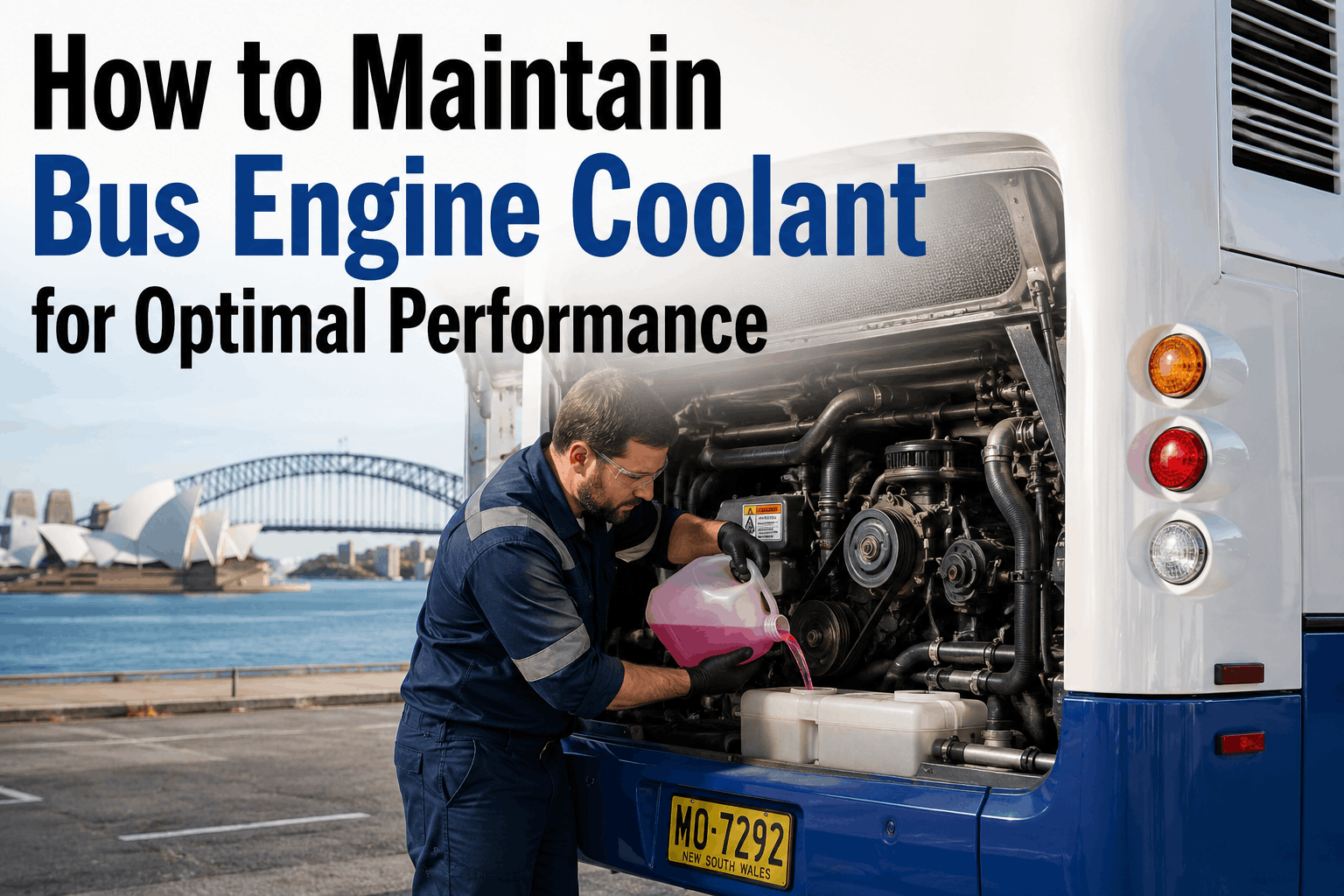
Engine coolant is the lifeblood of the bus cooling system—it transfers heat, prevents freezing, protects against corrosion, and extends engine life. But coolant quality degrades over time. pH levels drop, SCA (Supplemental Coolant Additive) depletes, and contamination can cause cylinder liner pitting, head gasket failure, and engine damage. This guide covers everything you need to maintain bus engine coolant for optimal performance—testing SCA, pH, color, top-up procedures, mixing rules, and complete coolant change intervals by engine type.
Coolant Maintenance Guide 2026
How to Maintain Bus Engine Coolant for Optimal Performance
Maintain bus engine coolant correctly. Test SCA, pH, color, top-up procedures, mixing rules and complete coolant change intervals by engine type.
Coolant Maintenance Impact: The Cost of Neglect
Coolant neglect is one of the most common causes of premature engine failure. Proper coolant maintenance prevents cylinder liner pitting, head gasket failure, and engine damage.
$4,200–$12,000+
Engine damage from poor coolant
50%
Extended engine life
60%
Reduced overheating risk
$25–$50
Cost of coolant test
Coolant Maintenance Progress
1
Visual Inspection
Check coolant level in reservoir and radiator. Inspect color—clear/colored = good, dark/cloudy = contaminated.
2
pH Test
Test coolant pH with test strips or meter. Target: 9.0-11.0 for diesel engines. Add SCA if pH is low.
3
SCA Level Test
Test SCA (Supplemental Coolant Additive) levels. Target: 1,500-3,000 ppm. Add SCA if low.
4
Freeze Point Test
Test coolant concentration with refractometer. Target: 50/50 mix (-34°F freeze point).
5
Contamination Check
Check for oil or fuel contamination. Oil film indicates head gasket or oil cooler failure. Address immediately.
6
Record Results
Document all test results. Track trends over time. Schedule next coolant service based on intervals.
Coolant Health Indicators: pH, SCA, and Color Trends
The chart above shows coolant health indicators over 36 months. pH and SCA levels decline as coolant ages. pH drops below 9.0 at 24 months—below safe operating levels. SCA levels drop below 1,500 ppm at 18 months. Color clarity also degrades over time. Regular testing and SCA replenishment maintain coolant health and prevent engine damage.
Coolant Maintenance KPIs
Track these five metrics to measure your coolant maintenance program effectiveness:
pH Level Compliance
Target: 9.0-11.0. Track by bus. Low pH causes acid corrosion of engine components.
SCA Level Compliance
Target: 1,500-3,000 ppm. Track by bus. Low SCA causes cylinder liner pitting.
Freeze Point Compliance
Target: -34°F (50/50 mix). Track by bus. Incorrect concentration reduces protection.
Contamination Rate
Target: Zero. Track by bus. Oil or fuel contamination requires immediate action.
Coolant Change Compliance
Target: 100% at interval. Track by engine type. Late changes cause engine damage.
We implemented this coolant maintenance procedure across our 85-bus fleet. In the first year, we caught 23 buses with low SCA levels, 12 with pH below 9.0, and 8 with contaminated coolant. We prevented what would have been 3-4 head gasket failures. The coolant testing program paid for itself in engine protection alone.
Digitize Your Coolant Maintenance Program
BusCMMS guides technicians through every coolant maintenance step—visual inspection, pH testing, SCA level testing, freeze point testing, contamination checking, and coolant change scheduling. Auto-schedule coolant PM intervals based on engine type and coolant type. Complete audit trail for every coolant service in your fleet.
Bus Engine Coolant FAQs
What is SCA and why is it important?
SCA (Supplemental Coolant Additive) prevents cylinder liner pitting and cavitation damage in diesel engines. Low SCA levels allow microscopic bubbles to collapse against cylinder walls, causing pitting that leads to coolant leaks and engine failure. Test SCA levels at every PM service and replenish as needed.
What is the correct pH level for bus engine coolant?
Target pH range is 9.0-11.0 for diesel engines. pH below 9.0 indicates acidic coolant that can corrode engine components. pH above 11.0 indicates alkaline coolant that can damage seals. Test pH with test strips or a meter at every PM service.
How often should engine coolant be tested?
Coolant should be tested at every PM service (typically every 15,000–20,000 miles or 6 months). Test pH, SCA levels, freeze point, and check for contamination. More frequent testing is recommended for severe-duty applications or older coolant.
What causes coolant contamination?
Coolant contamination is caused by: oil leaks (head gasket or oil cooler failure), fuel leaks (injector cup issues), rust (corrosion), and dirt/debris. Oil contamination appears as an oil film on the coolant surface. Fuel contamination may have a fuel smell. Any contamination requires immediate investigation.
What is the correct coolant concentration for a bus?
Target concentration is 50/50 antifreeze/water, providing -34°F freeze protection. Use a refractometer to test concentration. Do not exceed 60% antifreeze, as this reduces heat transfer efficiency and can cause overheating.
Can BusCMMS track coolant maintenance history?
Yes. BusCMMS tracks pH test results, SCA level tests, freeze point readings, contamination checks, and coolant change dates. This creates a complete coolant history for each bus, helping identify patterns and predict maintenance needs before engine damage occurs.
The Bottom Line
Maintaining bus engine coolant is essential for engine protection and long life. pH and SCA levels decline over time—regular testing catches issues before they cause engine damage. The 6-step procedure—visual inspection, pH test, SCA level test, freeze point test, contamination check, and record results—ensures coolant remains in optimal condition. This guide provides the step-by-step procedures your technicians need to maintain coolant across your fleet. When combined with BusCMMS digital inspection forms, auto-scheduled PM intervals, and complete coolant history tracking, your coolant maintenance program becomes proactive—catching issues before they cause cylinder liner pitting, head gasket failure, or engine damage.