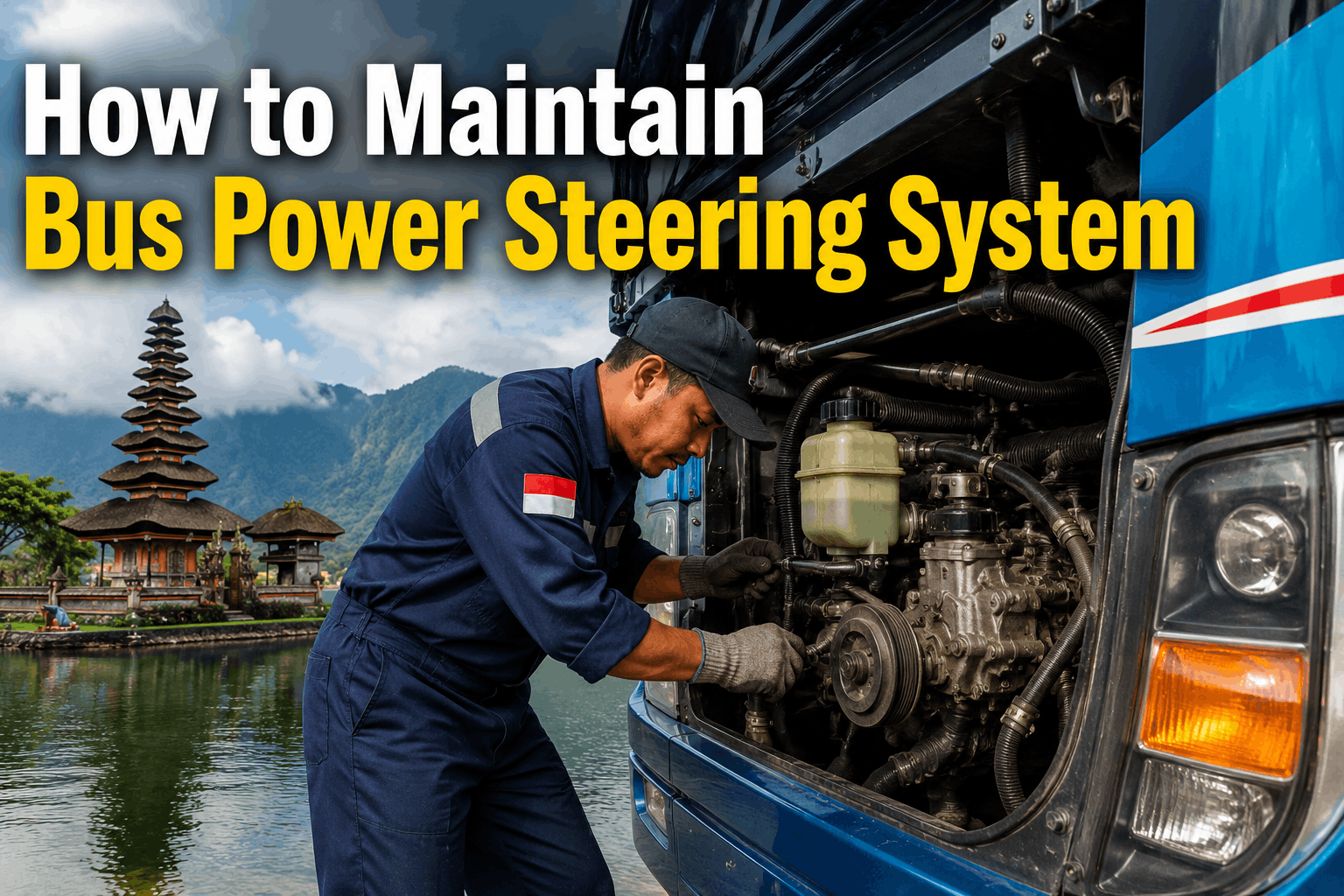
The power steering system is what separates a bus that handles like a truck from one that drives like a car. A failed power steering pump makes steering extremely difficult—especially at low speeds. A leaking hose or worn gearbox can cause sudden loss of assist, creating a dangerous situation for the driver. This guide covers everything you need to maintain a bus power steering system—fluid type and level, pump pressure test, hose integrity, gearbox seals, and common failure modes by manufacturer. Use it as your standard procedure for every power steering PM service.
Power Steering Guide 2026
How to Maintain Bus Power Steering System
Maintain a bus power steering system. Fluid type, level, pump pressure test, hose integrity, gearbox seals and common failure modes by manufacturer.
Power Steering Maintenance Impact: The Cost of Failure
Power steering failures are among the most dangerous and difficult to control breakdowns. A failed pump or hose leak can cause sudden loss of steering assist, creating a safety hazard.
$800–$2,500
Power steering pump replacement
50%
Reduced failures with PM
3-5x
PM cost vs. repair cost
90%
Leaks from hoses or seals
Power Steering Maintenance Progress
1
Fluid Level Check
Check fluid level with engine running. Top up with correct fluid type. Low fluid indicates leak requiring investigation.
2
Fluid Condition
Fluid should be clear amber. Dark or burnt fluid indicates overheating or contamination requiring flush and refill.
3
Hose and Fitting Inspection
Inspect hoses for leaks, chafing, cracks, or bulges. Check fittings for tightness. Replace damaged hoses.
4
Pump Pressure Test
Test pump pressure at idle and 1,500 RPM. Low pressure indicates pump wear or internal leak. Record readings.
5
Gearbox Seal Check
Inspect steering gearbox for leaks at input and output shafts. Leaking seals require replacement.
6
Steering Feel Test
Test drive and verify smooth, responsive steering. Note any noise or binding. Document results.
Power Steering Pump Pressure Analysis
The chart above shows power steering pump pressure across different RPM ranges. A healthy pump delivers 800 PSI at idle, 1400 PSI at 1,500 RPM, and 1600 PSI at 2,500 RPM. A worn pump with internal leaks delivers significantly lower pressure—400 PSI at idle, 600 PSI at 1,500 RPM, and 900 PSI at 2,500 RPM. Low pressure causes hard steering and accelerated wear.
Power Steering Maintenance Quick Reference
Fluid Type
Use manufacturer-specified fluid. Most buses use automatic transmission fluid (ATF) or dedicated power steering fluid. Wrong fluid damages seals and pumps.
Fluid Level
Check with engine running. Fluid should be at proper level. Low fluid causes pump cavitation and noise. Top up as needed.
Hose Integrity
Inspect hoses for leaks, chafing, cracks, or bulges. Replace if any damage is found. Hose failure causes sudden loss of steering assist.
Pump Pressure
Test pump pressure at idle and 1,500 RPM. Low pressure indicates pump wear or internal leak requiring replacement.
Gearbox Seals
Inspect gearbox for leaks at input and output shafts. Leaking seals indicate internal wear requiring gearbox service or replacement.
Common Failures
Common failure modes: pump wear, hose leaks, seal failure, and fluid contamination. Regular inspection catches these early.
Power Steering System KPIs
Track these five metrics to measure your power steering system maintenance program effectiveness:
Fluid Level Compliance
Target: 100% at proper level. Track by bus. Low fluid causes pump cavitation and failure.
Pump Pressure Trends
Target: Stable or increasing. Track by bus. Declining pressure indicates pump wear requiring replacement.
Hose Condition
Target: 100% leak-free. Track by bus. Leaking hoses require immediate replacement.
Gearbox Seal Condition
Target: 100% leak-free. Track by bus. Leaking seals indicate internal wear requiring service.
Steering Feel Quality
Target: Smooth, responsive. Track by bus. Poor feel indicates pump or gearbox issues.
We implemented this power steering maintenance procedure across our 85-bus fleet. In the first year, we caught 14 power steering pumps with declining pressure before they failed, replaced 23 leaking hoses, and identified 8 gearbox seal leaks. Our steering-related driver complaints dropped by 80%.
Digitize Your Power Steering Maintenance Program
BusCMMS guides technicians through every power steering maintenance step—fluid level check, fluid condition inspection, hose integrity verification, pump pressure testing, gearbox seal inspection, and steering feel testing. Auto-schedule steering PM intervals based on mileage. Complete audit trail for every power steering component in your fleet.
Bus Power Steering System FAQs
What type of fluid does a bus power steering system use?
Most buses use automatic transmission fluid (ATF) or dedicated power steering fluid. Check manufacturer specifications for your bus model. Never mix different fluid types—incompatible fluids can damage seals and pumps.
What causes power steering pump failure?
Pump failure is caused by: low fluid level (cavitation), contaminated fluid, wear from age, and belt issues. Regular fluid level checks and pressure testing catch issues before complete failure. A healthy pump lasts 200,000-300,000 miles with proper maintenance.
What are the signs of a failing power steering pump?
Signs include: whining or groaning noise when turning, hard steering, fluid leaks, and pump pressure below specification. Noise is often the first warning sign—address immediately before pump failure.
How do I test power steering pump pressure?
Use a power steering pressure gauge connected to the pump outlet. Test at idle and 1,500 RPM. Normal pressure: 800-1000 PSI at idle, 1400-1600 PSI at 1,500 RPM. Low pressure indicates pump wear or internal leak requiring replacement.
What causes power steering hose failure?
Hose failure is caused by: age (rubber degradation), chafing against components, heat exposure, and contamination. Inspect hoses regularly for cracks, bulges, or chafing. Replace hoses at manufacturer-recommended intervals or immediately if any damage is found.
Can BusCMMS track power steering maintenance history?
Yes. BusCMMS tracks fluid level checks, pump pressure readings, hose condition, gearbox seal condition, and steering feel tests. This creates a complete power steering history for each bus, helping identify patterns and predict maintenance needs.
The Bottom Line
Maintaining bus power steering systems is essential for driver safety and vehicle control. The 6-step procedure—fluid level check, fluid condition inspection, hose integrity verification, pump pressure testing, gearbox seal inspection, and steering feel testing—ensures every power steering system performs reliably. Low pump pressure indicates wear or internal leaks requiring immediate attention. Hose leaks cause sudden loss of assist. This guide provides the step-by-step procedures your technicians need to maintain every power steering system in your fleet. When combined with BusCMMS digital inspection forms, auto-scheduled PM intervals, and complete steering history tracking, your power steering maintenance program becomes proactive—catching issues before they cause loss of steering assist.