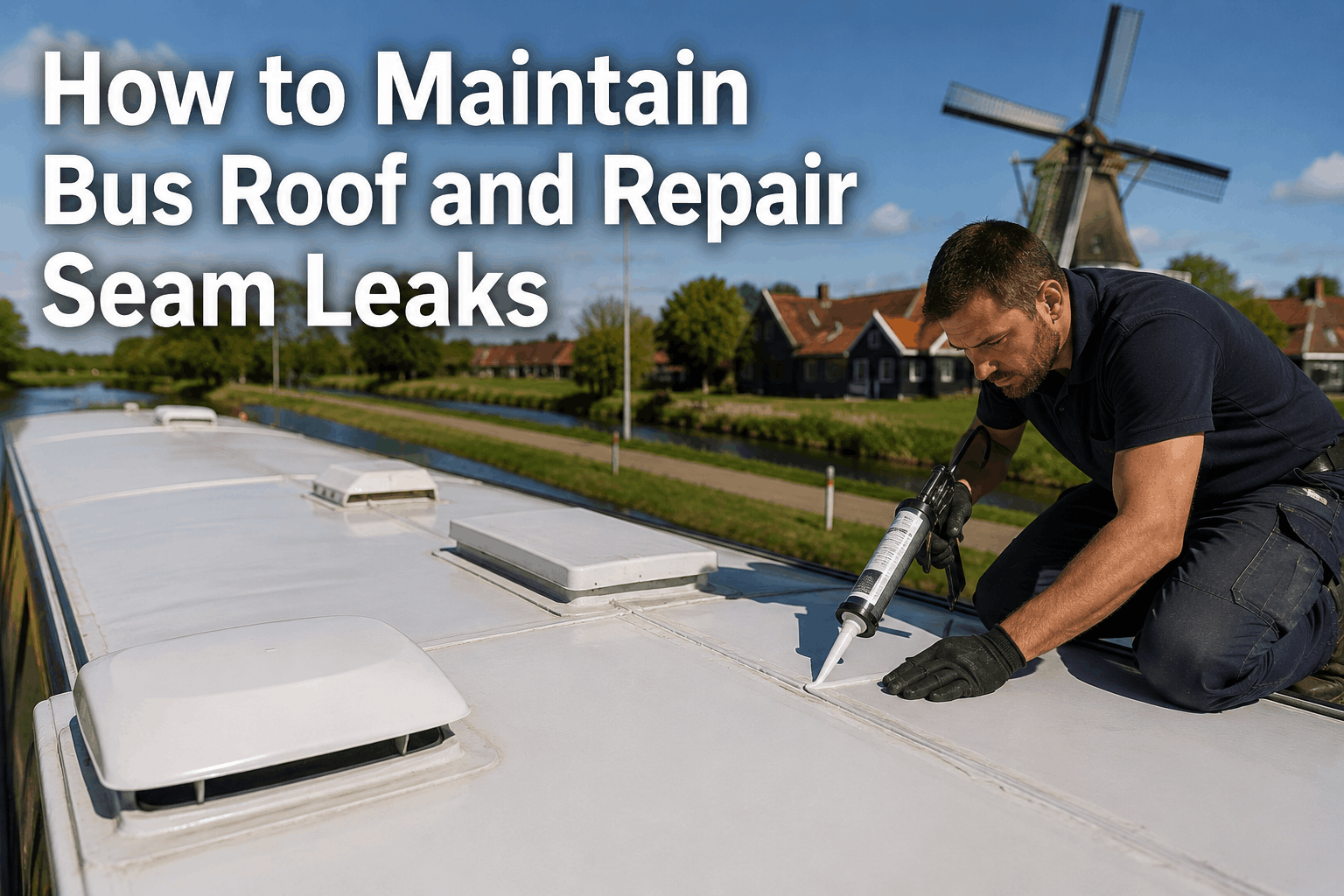
Bus roof maintenance and seam leak repair are essential for preventing water damage, corrosion, and interior deterioration. A leaking roof can cause electrical failures, mold growth, and structural damage. This guide covers annual inspection, sealant selection, panel repair, drip rail care, and water test methodology for all bus types.
Bus Roof Maintenance Guide 2026
How to Maintain Bus Roof & Repair Seam Leaks
Maintain a bus roof and repair seam leaks. Annual inspection, sealant selection, panel repair, drip rail care and water test methodology.
Roof Maintenance Impact: The Cost of Water Damage
Roof leaks are a leading cause of interior damage, electrical failures, and corrosion in buses. A leaking roof can damage seats, flooring, lighting, and electrical systems.
$4,000–$8,000
Interior water damage repair
5-10 days
Bus out of service time
90%
Leaks at roof seams
65%
Fewer leaks with PM
Roof Maintenance Progress
1
Annual Inspection
Complete roof inspection. Check all seams, panels, and drip rails for damage or deterioration.
2
Water Test
Conduct water test on roof. Identify all leak points. Mark leak locations for repair.
3
Sealant Selection
Select appropriate sealant for seam type. Use polyurethane or silicone based on roof material.
4
Seam Leak Repair
Remove old sealant. Clean and prepare surface. Apply new sealant properly.
5
Panel Repair
Repair damaged panels. Fix dents, holes, or corrosion. Replace panels if necessary.
6
Drip Rail Care
Clean and inspect drip rails. Clear drainage channels. Apply protective coating.
Roof Maintenance Methods Comparison
Water testing is the most comprehensive at 96% effectiveness. Seam repair catches 92% of issues. Annual inspection identifies 85% of potential leaks. Panel repair and drip rail care are less comprehensive at 78% and 70% but remain essential for complete roof maintenance.
Roof Leak Distribution by Location
Roof leak distribution shows seam failures most frequently at 40%, followed by panel leaks at 25%. Drip rail issues account for 20%, and other sources represent 15%. Regular maintenance reduces seam and panel leaks by 65%.
Roof Maintenance Pass/Fail Thresholds
Annual Inspection
Pass: All seams intact. No panel damage. Drip rails clear and functional.
Fail: Cracks in seams. Panel damage. Clogged or damaged drip rails.
Water Test
Pass: No water intrusion after 30-minute test. All sealed areas dry.
Fail: Water intrusion detected. Leak points identified. Requires immediate repair.
Sealant Condition
Pass: Sealant flexible and intact. No cracks or gaps. Proper adhesion.
Fail: Sealant cracked or hardened. Gaps present. Poor adhesion.
Panel Condition
Pass: No dents or holes. No corrosion. Proper panel attachment.
Fail: Dents or holes. Corrosion present. Loose panel attachment.
Drip Rail
Pass: Drains clear. No blockages. Proper drainage flow.
Fail: Blocked drains. Standing water. Damaged or missing sections.
Replacement Trigger
Replace any failed sealant immediately. Repair panel damage within 30 days. Replace damaged drip rails. Document all repairs for maintenance records.
Roof Maintenance KPIs
Track these five metrics to measure your roof maintenance program effectiveness:
Inspection Compliance
Target: 100% annual inspection. Track by bus. Missed inspections increase leak risk.
Water Test Pass Rate
Target: 95%+ pass rate. Track annually. Lower rate indicates widespread sealant failure.
Repair Cycle Time
Target: Less than 5 days from detection. Track by bus. Longer times increase interior damage.
Interior Damage Incidents
Target: Decreasing trend. Track monthly. Spike indicates roof maintenance gaps.
Sealant Life
Target: 5+ years. Track by bus. Short life indicates incorrect sealant or application issues.
Roof Maintenance Trends
Water test pass rate trends show consistent improvement from 65% to 95% over seven years. Regular maintenance and proactive repairs drive this improvement. Interior damage incidents decrease as pass rates improve.
Our fleet of 95 buses includes both school buses and transit buses. After implementing this roof maintenance program, we reduced interior water damage claims by 74%. Annual water testing identified 43 seam leaks before they caused interior damage. Sealant life increased from 3 to 6 years with proper application.
Digitize Your Roof Maintenance Program
BusCMMS guides technicians through every roof maintenance task—annual inspection, water testing, sealant application, panel repair, and drip rail care. Auto-schedule roof inspections based on calendar intervals. Complete audit trail for every roof in your fleet.
Bus Roof Maintenance FAQs
How often should a bus roof be inspected?
Inspect the bus roof annually before the rainy season. Inspect after any major storm or hail event. Inspect immediately if interior water stains are noticed. Document all inspections for maintenance records.
What sealant should be used for bus roof seams?
Use polyurethane or silicone sealant designed for bus roof applications. Polyurethane provides superior adhesion. Silicone offers better UV resistance. Always follow manufacturer recommendations for your specific roof material.
How do you perform a water test on a bus roof?
Apply water flow to roof sections for 30 minutes using a hose or water test equipment. Inspect interior for water intrusion. Mark all leak points. Conduct test from multiple angles to simulate rain conditions.
What causes bus roof seam leaks?
Seam leaks are caused by sealant aging and cracking, expansion and contraction, vibration, UV exposure, and improper sealant application. Regular inspection and timely sealant replacement prevent leaks.
How do you repair a leaking bus roof panel?
Repair small holes with appropriate patch material. Replace severely damaged panels. Apply sealant to all seams around repaired panels. Paint and protect repaired areas to prevent corrosion.
Can BusCMMS track roof maintenance history?
Yes. BusCMMS tracks all roof inspections, water tests, sealant applications, panel repairs, and drip rail maintenance. The system generates inspection schedules, sends due-date alerts, and creates complete maintenance records for every roof in your fleet.
The Bottom Line
Maintaining bus roofs and repairing seam leaks is essential for preventing interior water damage and corrosion. The 6-step maintenance workflow—annual inspection, water testing, sealant selection, seam repair, panel repair, and drip rail care—identifies issues before they cause interior damage. Seam and panel leaks account for 65% of all roof water entry points. Regular maintenance reduces water damage claims by 74%. This guide provides the step-by-step procedures your technicians need to maintain every roof in your fleet. When combined with BusCMMS digital inspection forms and complete maintenance history tracking, your roof program becomes proactive—catching issues before they cause interior damage, electrical failures, or corrosion.