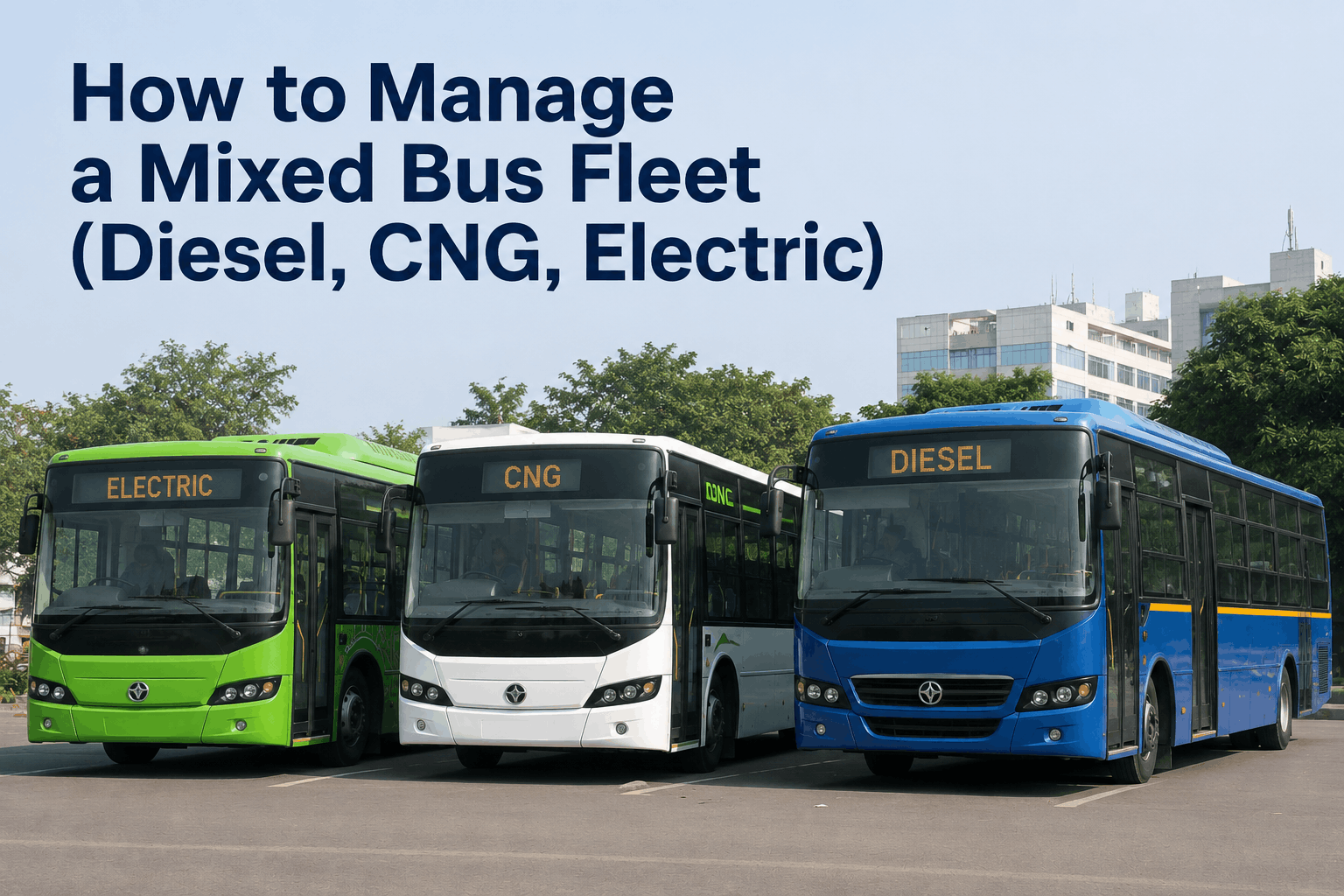
Managing a mixed bus fleet with diesel, CNG, and electric powertrains is the new reality for many operators. Each powertrain has unique maintenance requirements, technician training needs, and infrastructure demands. This guide provides a comprehensive framework for managing mixed fleets — PM split, technician training, depot infrastructure, parts inventory, and reporting structure.
Mixed Fleet Guide 2026
How to Manage a Mixed Bus Fleet (Diesel, CNG, Electric)
Manage a mixed bus fleet across diesel, CNG and electric. PM split, technician training, depot infrastructure, parts inventory and reporting structure.
Mixed Fleet Impact: The Transition Challenge
Fleets transitioning to electric and CNG buses face the challenge of managing multiple powertrains simultaneously. Each powertrain has different maintenance costs, technician skill requirements, and parts needs. Successful mixed fleet management requires a structured approach to minimize complexity and maximize efficiency.
3-5 years
Typical transition period
40%
Additional training required
3
Powertrain types to manage
5
Management focus areas
Five Focus Areas for Mixed Fleet Management
1. PM Split Management
Action: Create separate PM schedules for each powertrain. Diesel: traditional intervals. CNG: additional gas system checks. Electric: battery and HV system maintenance.
2. Technician Training
Action: Train technicians on each powertrain. Diesel and CNG require engine training. Electric requires HV safety and battery training. Cross-train for flexibility.
3. Depot Infrastructure
Action: Plan for multiple fuel types. Diesel: standard fueling. CNG: compression and storage. Electric: charging infrastructure. Coordinate with utility providers.
4. Parts Inventory
Action: Maintain parts for all powertrains. Electric parts have longer lead times. CNG parts require special ordering. Diesel parts are widely available.
5. Reporting Structure
Action: Track metrics by powertrain. Compare diesel, CNG, and electric performance. Use data to optimize the mix and transition strategy.
Powertrain Comparison
Diesel powertrains have moderate complexity with well-established maintenance procedures. CNG and electric powertrains have high complexity due to specialized systems and safety requirements. Hybrid powertrains offer moderate complexity. Hydrogen fuel cell powertrains have high complexity with emerging maintenance standards.
Mixed Fleet Management Roadmap
Phase 1: Assessment
Audit current fleet composition. Assess technician skills. Evaluate depot infrastructure. Set transition timeline.
Phase 2: Planning
Create PM schedules for each powertrain. Plan technician training. Design depot infrastructure. Develop parts strategy.
Phase 3: Implementation
Train technicians. Install infrastructure. Procure parts. Launch mixed fleet operations.
Phase 4: Monitoring
Track performance by powertrain. Compare costs and reliability. Identify improvement opportunities.
Phase 5: Optimization
Adjust strategies based on data. Optimize fleet mix. Scale successful approaches. Continuous improvement.
Mixed Fleet Management Requirements
PM Schedule Management
Create and maintain separate PM schedules for diesel, CNG, and electric buses. Use CMMS to manage multiple schedules and track compliance.
Technician Training Program
Develop comprehensive training for each powertrain. Include HV safety for electric. Include gas system safety for CNG. Cross-train technicians for flexibility.
Depot Infrastructure Planning
Plan for diesel fueling, CNG compression/storage, and electric charging. Coordinate with utility providers. Ensure safety systems are in place.
Parts Inventory Strategy
Maintain parts for all powertrains. Electric parts require longer lead times. CNG parts require special ordering. Diesel parts are widely available.
Reporting & Analytics
Track metrics by powertrain. Compare costs, reliability, and performance. Use data to optimize fleet mix and transition strategy.
Safety & Compliance
Ensure compliance with all regulations. Diesel: standard emissions. CNG: pressure vessel safety. Electric: HV safety. Hydrogen: fuel cell safety.
Mixed Fleet Performance Trends
Diesel bus uptime has remained stable at 92-96% over seven years. Electric bus uptime has improved from 86% to 93% as technology matures and maintenance practices evolve. By 2026, electric uptime is expected to reach diesel levels in well-managed fleets.
Mixed Fleet KPIs
Track these five metrics to measure your mixed fleet management effectiveness:
Uptime by Powertrain
Target: 95%+ for all powertrains. Track monthly. Identify underperforming powertrains.
Cost per Mile by Powertrain
Target: Decreasing trend for each. Track monthly. Compare diesel, CNG, and electric costs.
PM Compliance by Powertrain
Target: 100% for all powertrains. Track monthly. Identify gaps in specific powertrain maintenance.
Technician Training Completion
Target: 100% of technicians trained for each powertrain. Track quarterly. Ensure skills match fleet composition.
Parts Availability by Powertrain
Target: 95%+ for all powertrains. Track monthly. Electric and CNG parts may have lower availability.
Our transit agency operates 120 diesel, 45 CNG, and 35 electric buses. Managing three powertrains was challenging until we implemented structured PM schedules, cross-trained technicians, and dedicated infrastructure. Within 18 months, uptime improved from 88% to 95% across all powertrains. Technician training completion reached 100%.
Manage Your Mixed Fleet with BusCMMS
BusCMMS provides the tools you need to manage mixed fleets — separate PM schedules for each powertrain, technician training tracking, parts inventory management, and performance reporting by powertrain. Book a demo to see how BusCMMS helps fleets manage mixed powertrains efficiently.
Mixed Fleet FAQs
How do I manage multiple powertrain types in one fleet?
Manage mixed fleets through five focus areas: PM split management, technician training, depot infrastructure, parts inventory, and reporting structure. Use CMMS to track each powertrain separately. Cross-train technicians for flexibility.
What are the main challenges of mixed fleets?
Main challenges include: different PM schedules for each powertrain, technician training on multiple systems, depot infrastructure for multiple fuel types, parts inventory management, and reporting complexity. A structured approach addresses each challenge.
How do I train technicians for mixed fleets?
Train technicians on each powertrain. Diesel and CNG require engine training. Electric requires HV safety and battery training. Cross-train for flexibility. Track training completion. Consider specialized teams for each powertrain.
What depot infrastructure is needed for mixed fleets?
Diesel: standard fueling infrastructure. CNG: compression equipment and storage. Electric: charging infrastructure with utility coordination. Plan for all three. Safety systems are essential for each fuel type.
How do I track mixed fleet performance?
Track metrics by powertrain: uptime, cost per mile, PM compliance, and parts availability. Compare diesel, CNG, and electric performance. Use data to optimize the fleet mix and transition strategy.
The Bottom Line
Managing a mixed bus fleet with diesel, CNG, and electric powertrains requires a structured approach across five focus areas: PM split management, technician training, depot infrastructure, parts inventory, and reporting structure. Each powertrain has unique characteristics — diesel is well-established, CNG requires specialized gas system knowledge, electric requires HV safety and battery expertise. The transition period typically lasts 3-5 years, during which fleets must manage all three powertrains simultaneously. PM schedules must be tailored to each powertrain. Technicians must be trained and certified for each system. Infrastructure must accommodate multiple fuel types. Parts inventory must cover all powertrains. Reporting must track performance by powertrain. When combined with proper CMMS tools, mixed fleet management becomes manageable — ensuring all buses, regardless of powertrain, achieve high uptime and cost-effective operation during the transition to a cleaner fleet.