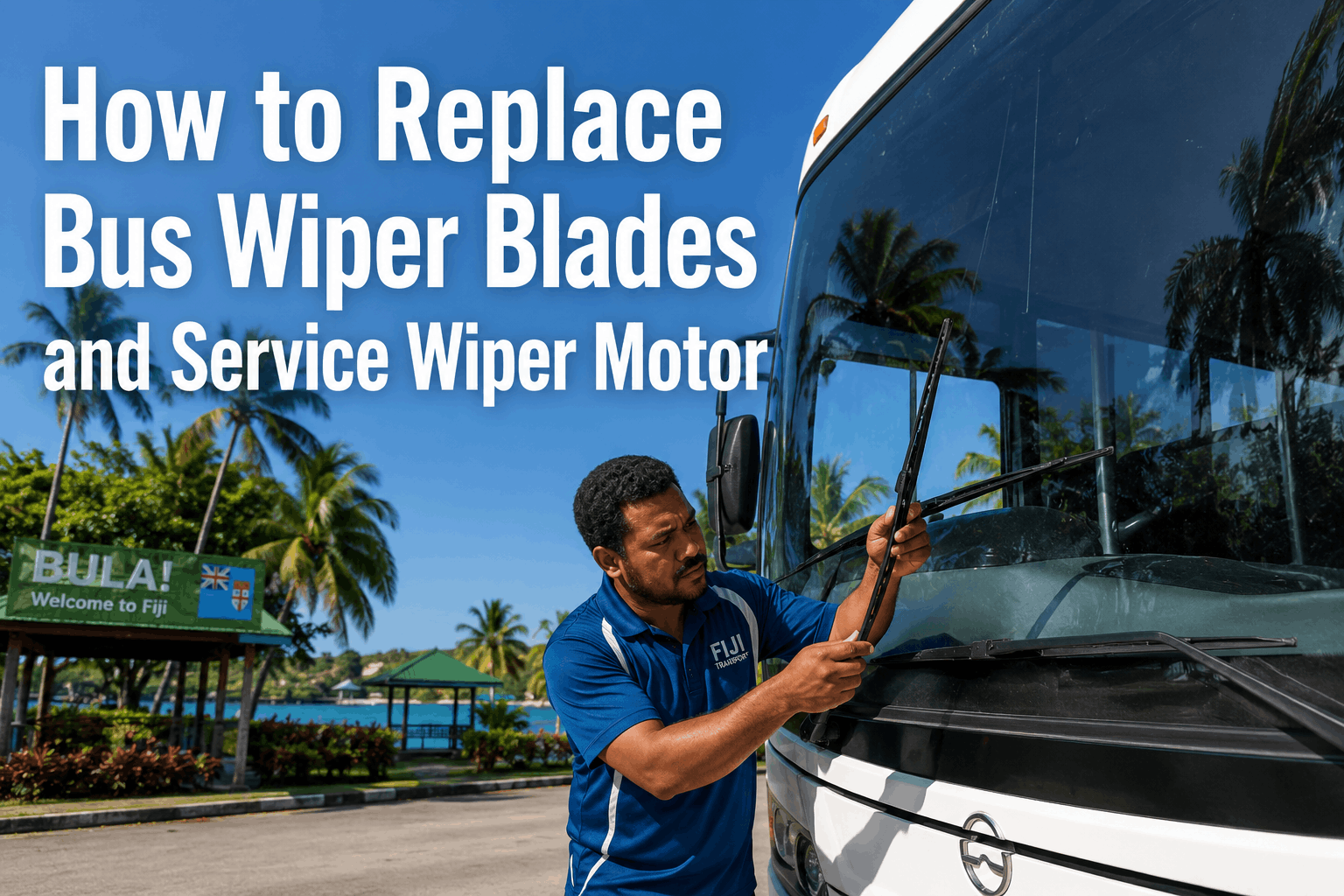
Wiper blades and motors are often overlooked during routine PM inspections, yet they are critical for driver visibility and safety. Worn blades streak and chatter, reducing visibility in rain. A failed wiper motor can leave a driver unable to clear the windshield in a downpour. This guide covers everything you need to replace bus wiper blades and service wiper motors—sizing, arm tension, motor amp draw test, and washer pump troubleshooting. Use it as your standard procedure for every wiper PM service and pre-trip inspection.
Wiper Service Guide 2026
How to Replace Bus Wiper Blades and Service Wiper Motor
Replace bus wiper blades and service the wiper motor. Sizing, arm tension, motor amp draw test and washer pump troubleshooting tips for fleet buses.
Wiper System Impact: The Cost of Failure
Wiper system failures are among the most common visibility issues in bus fleets. Worn blades, failing motors, and non-functional washers compromise driver safety in adverse weather.
6-12 months
Wiper blade replacement interval
80%
Visibility loss with worn blades
$200–$800
Wiper motor replacement cost
95%
Visibility restored with new blades
Wiper Service Progress
1
Inspect Current Blades
Check blade condition—streaking, chattering, skipping, or visible wear. Note blade size for replacement.
2
Blade Replacement
Select correct size blades. Remove old blades, install new ones, verify secure attachment and wiper arm tension.
3
Motor Amp Draw Test
Measure wiper motor current draw at all speeds. Excessive draw indicates worn motor bearings or linkage binding.
4
Washer Pump Test
Test washer pump function and spray pattern. Clean or replace clogged nozzles. Verify fluid level and quality.
5
Linkage and Arms
Inspect wiper linkage for wear, binding, or looseness. Lubricate pivot points. Check arm tension.
6
Function Test
Operate wipers at all speeds. Verify clear wipe pattern. Document results.
Wiper Motor Performance: Amp Draw Analysis
The chart above shows wiper motor amp draw at different speeds. A healthy motor draws 4-8 amps across speeds. A worn motor with binding linkage draws 9-16 amps—excessive current that can overheat the motor and cause failure. Regular amp draw testing identifies failing motors before they fail completely.
Wiper Service Quick Reference
Blade Sizing
Measure existing blade length or consult bus manufacturer specification. Use correct size for each arm. Incorrect size causes poor wipe pattern and arm damage.
Arm Tension
Verify wiper arm spring tension. Insufficient tension causes streaking. Excessive tension causes blade wear and motor strain. Replace springs if weak.
Motor Amp Draw
Test amp draw at all speeds with a DC amp clamp. Normal draw: 4-8 amps. Draw above 10 amps indicates motor wear or linkage binding requiring attention.
Washer Pump
Test washer pump function. Verify spray pattern covers windshield. Clean clogged nozzles. Use winter-grade fluid in cold climates.
Linkage Lubrication
Lubricate wiper linkage pivot points with silicone grease. Stiff linkage causes motor overload and premature failure.
Wipe Pattern Test
Run wipers with water on windshield. Verify full coverage without streaks. Replace blades immediately if streaking persists after cleaning.
Wiper System KPIs
Track these five metrics to measure your wiper system maintenance program effectiveness:
Blade Replacement Compliance
Target: 100% at 6-12 month intervals. Track by bus. Worn blades reduce visibility.
Motor Amp Draw Trends
Target: Stable or decreasing. Track by bus. Increasing draw indicates wear requiring service.
Washer Function
Target: 100% operational. Track by bus. Non-functional washers reduce visibility.
Wipe Pattern Quality
Target: Clear, streak-free. Track by bus. Streaking indicates worn blades or arm tension issues.
Wiper Motor Life
Target: 5+ years. Track by bus. Regular amp draw testing prevents premature motor failure.
We implemented this wiper service procedure across our 95-bus fleet. In the first year, we found 12 wiper motors with excessive amp draw that were on the verge of failure, replaced 67 worn blades that were compromising visibility, and repaired 23 washer pump issues. Our visibility-related driver complaints dropped by 85%.
Digitize Your Wiper Service Process
BusCMMS guides technicians through every wiper service step—blade inspection, blade replacement, motor amp draw testing, washer pump testing, and linkage lubrication. Auto-schedule wiper PM intervals based on season or mileage. Complete audit trail for every wiper service in your fleet.
Bus Wiper System FAQs
How often should bus wiper blades be replaced?
Wiper blades should be replaced every 6-12 months, or when they show signs of wear—streaking, chattering, skipping, or visible cracks. Seasonal changes (spring and fall) are ideal times for replacement. Winter-grade blades should be installed before cold weather.
What is the normal amp draw for a bus wiper motor?
Normal wiper motor amp draw is 4-8 amps across all speeds. Draw above 10 amps indicates motor wear or linkage binding. Draw above 15 amps requires immediate inspection—excessive current can overheat the motor and cause failure.
How do I test a wiper motor?
Test wiper motor using a DC amp clamp on the power wire. Run wipers at low, medium, and high speeds—compare amp draw to specification. Listen for unusual noise or grinding. Check for smooth operation without hesitation or binding.
What causes wiper streaking?
Wiper streaking is caused by: worn or cracked wiper blades, debris on the windshield, bent wiper arms, or insufficient arm spring tension. Start by cleaning the windshield and replacing blades. If streaking persists, check arm tension and adjust or replace arms.
How do I fix a non-working washer pump?
Check fuse and relay first. Test pump with 12V direct—if it runs, the pump is good. Check fluid level and lines for blockage. Clean nozzles with a pin. If pump is faulty, replace washer pump—cost is typically $50-$150.
Can BusCMMS track wiper service history?
Yes. BusCMMS tracks blade replacement dates, motor amp draw readings, washer pump function, linkage lubrication, and wiper service records. This creates a complete wiper system history for each bus, helping identify patterns and predict maintenance needs.
The Bottom Line
Replacing bus wiper blades and servicing wiper motors is essential for driver visibility and safety in adverse weather. The 6-step procedure—inspection, blade replacement, motor amp draw test, washer pump test, linkage lubrication, and function test—ensures every wiper system performs when needed. Wiper blades should be replaced every 6-12 months. Motor amp draw testing catches failing motors before they fail completely. This guide provides the step-by-step procedures your technicians need to service every wiper system in your fleet. When combined with BusCMMS digital inspection forms, auto-scheduled PM intervals, and complete wiper system history tracking, your wiper maintenance program becomes proactive—catching issues before they compromise driver visibility.