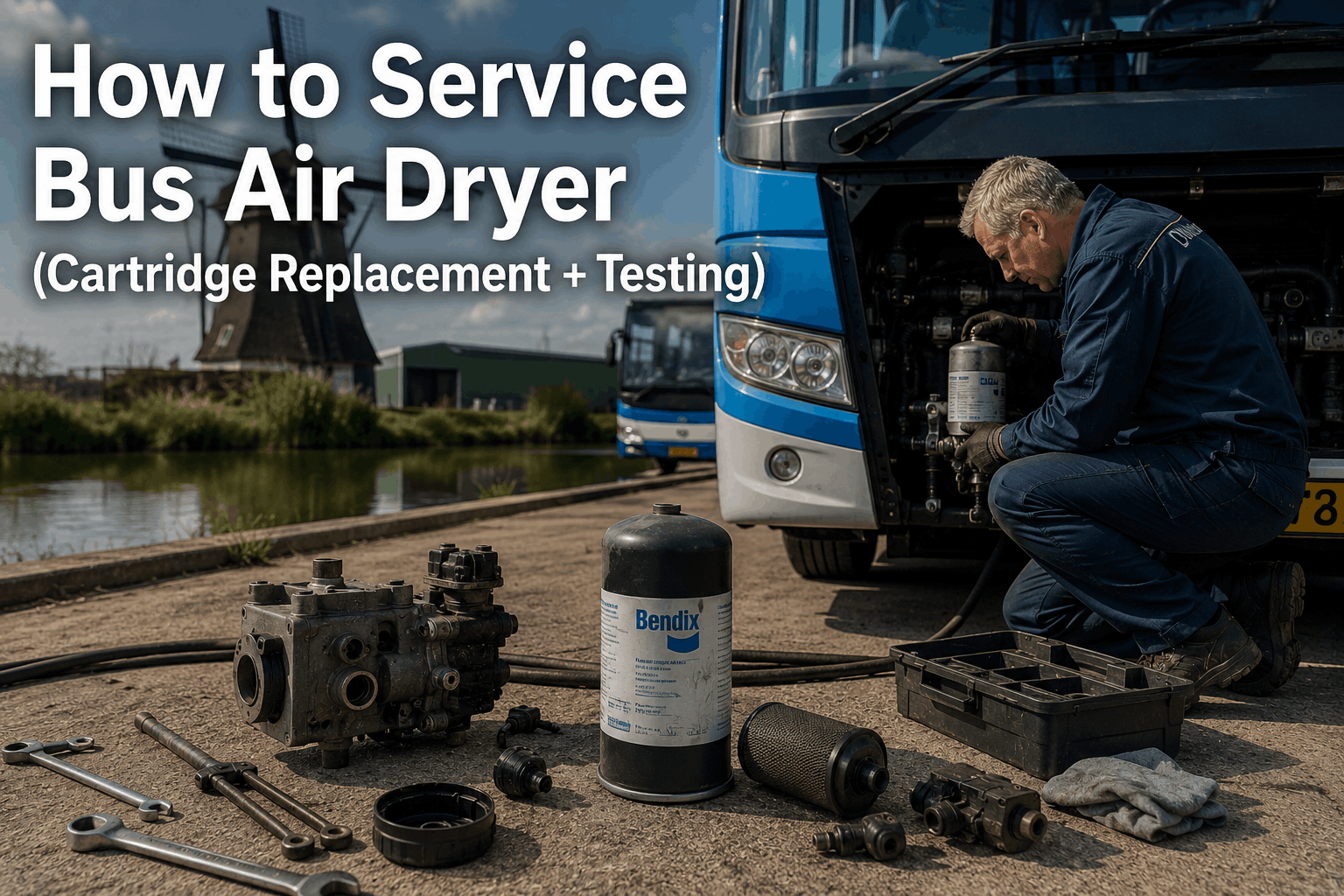
Bus air dryer service is critical for maintaining clean, dry air in your brake system. A failed air dryer allows moisture and contaminants into the air system, causing brake valve corrosion, freeze-ups, and costly component failures. This guide covers cartridge replacement intervals, purge valve testing, heater testing, tank drainage inspection, and contamination checks for Bendix and Meritor WABCO air dryers.
Air Dryer Service Guide 2026
How to Service Bus Air Dryer
Service a bus air dryer the right way. Cartridge replacement interval, purge valve test, heater test, tank drainage inspection and contamination check.
Air Dryer Service Impact: The Cost of Moisture
Air dryer failure is a leading cause of brake system corrosion and freeze-ups. A failed air dryer allows moisture into the air system, damaging valves, brake chambers, and air components.
$2,500–$5,000
Brake valve replacement cost
3-5 days
Bus out of service time
80%
Moisture removal required
70%
Fewer failures with service
Air Dryer Service Progress
1
Tank Drainage Inspection
Drain air tanks. Check for water, oil, or contamination. Excessive moisture indicates dryer issues.
2
Purge Valve Test
Check purge valve operation. Listen for proper cycling. Inspect for air leaks or sticking.
3
Heater Test
Test heater operation. Check amperage draw. Verify thermostat function. Replace if faulty.
4
Contamination Check
Inspect desiccant cartridge. Check for oil contamination. Replace if discolored or saturated.
5
Cartridge Replacement
Replace desiccant cartridge at recommended interval. Use manufacturer-specified cartridge.
6
System Test
Test air system for proper pressure. Check for leaks. Verify dryer cycling. Document all results.
Air Dryer Service Methods Comparison
Cartridge replacement is the most comprehensive at 98% effectiveness. Purge valve testing catches 92% of issues. Heater testing identifies 85% of failures. Contamination checks and tank drainage are less comprehensive at 75% and 65% but remain essential for early detection.
Air Dryer Failure Distribution by Component
Air dryer failure distribution shows desiccant failures most frequently at 35%, followed by purge valve failures at 25%. Heater failures account for 20%, and contamination represents 20%. Regular service reduces these failures by 70%.
Air Dryer Service Pass/Fail Thresholds
Tank Drainage
Pass: Minimal water discharge. No oil contamination. Clear drainage.
Fail: Excessive water. Oil contamination. Dirty or discolored drainage.
Purge Valve
Pass: Cycles properly. No air leaks. Valve opens and closes fully.
Fail: Sticking valve. Air leaks. Improper cycling or no cycling.
Heater Test
Pass: Amperage draw within spec. Thermostat functional. Heats properly.
Fail: No amperage draw. Thermostat stuck. No heat output.
Contamination Check
Pass: Desiccant dry and clean. No oil saturation. Proper color.
Fail: Oil contamination. Saturated desiccant. Discoloration.
Cartridge Replacement
Pass: New cartridge installed. Proper torque. System test passes.
Fail: Expired cartridge. Improper installation. System test fails.
Replacement Trigger
Replace desiccant cartridge at manufacturer interval or when contamination is detected. Replace purge valve if sticking or leaking. Replace heater if amperage is out of spec.
Air Dryer Service KPIs
Track these five metrics to measure your air dryer service program effectiveness:
Service Compliance
Target: 100% at every interval. Track by bus. Missed service increases failure risk.
Moisture Detection Rate
Target: Increasing detection. Track monthly. Higher rate indicates earlier problem identification.
Cartridge Life
Target: At or above manufacturer spec. Track by bus. Short life indicates contamination issues.
Brake Valve Failures
Target: Decreasing trend. Track monthly. Spike indicates air dryer performance issues.
Freeze-up Incidents
Target: Zero winter incidents. Track monthly. Heater failures cause winter freeze-ups.
Air Dryer Service Trends
Service compliance trends show consistent improvement from 70% to 95% over seven quarters. Regular tracking and reporting drive this improvement. Moisture-related failures decrease as compliance reaches 95%.
Our fleet of 85 buses runs Bendix air dryers. After implementing this service schedule, we reduced moisture-related brake valve failures by 72%. Tank drainage inspection caught 31 contamination issues before they caused component damage. Winter freeze-up incidents dropped from 14 to zero in two years.
Digitize Your Air Dryer Service Program
BusCMMS guides technicians through every air dryer service—tank drainage inspection, purge valve testing, heater testing, contamination checks, and cartridge replacement. Auto-schedule service intervals based on mileage and calendar. Complete audit trail for every air dryer in your fleet.
Bus Air Dryer Service FAQs
How often should a bus air dryer cartridge be replaced?
Replace the desiccant cartridge every 12-18 months or 100,000-150,000 miles, whichever comes first. Replace sooner if contamination is detected. Always use manufacturer-specified cartridges for your air dryer model.
What are signs of a failing bus air dryer?
Signs include excessive moisture in air tanks, oil contamination, purge valve not cycling, heater not working, and freeze-ups in cold weather. Regular tank drainage inspection catches these issues early.
How do you test a bus air dryer purge valve?
Observe purge valve cycling during compressor operation. Listen for proper cycling at governor cut-out. Check for air leaks at the purge valve. Valve should open and close fully without sticking.
What causes oil contamination in a bus air dryer?
Oil contamination is caused by worn compressor rings, leaking oil seals, or excessive oil in the air system. Replace the desiccant cartridge immediately if oil contamination is detected. Address the root cause at the compressor.
How do you test a bus air dryer heater?
Test heater amperage draw using a clamp meter. Normal draw is typically 15-25 amps depending on model. Check thermostat function. Replace heater if amperage is out of spec or if thermostat is faulty.
Can BusCMMS track air dryer service history?
Yes. BusCMMS tracks all air dryer services, cartridge replacements, purge valve tests, heater tests, and contamination checks. The system generates service schedules, sends due-date alerts, and creates complete maintenance records for every air dryer in your fleet.
The Bottom Line
Servicing bus air dryers is essential for brake system reliability and winter operation. The 6-step service workflow—tank drainage inspection, purge valve testing, heater testing, contamination checks, cartridge replacement, and system testing—identifies issues before they cause brake valve failures or freeze-ups. Desiccant and purge valve failures account for 60% of all air dryer breakdowns. Regular service reduces moisture-related failures by 70%. This guide provides the step-by-step procedures your technicians need to service every air dryer in your fleet. When combined with BusCMMS digital inspection forms and complete service history tracking, your air dryer program becomes proactive—catching issues before they cause brake system damage or winter service interruptions.