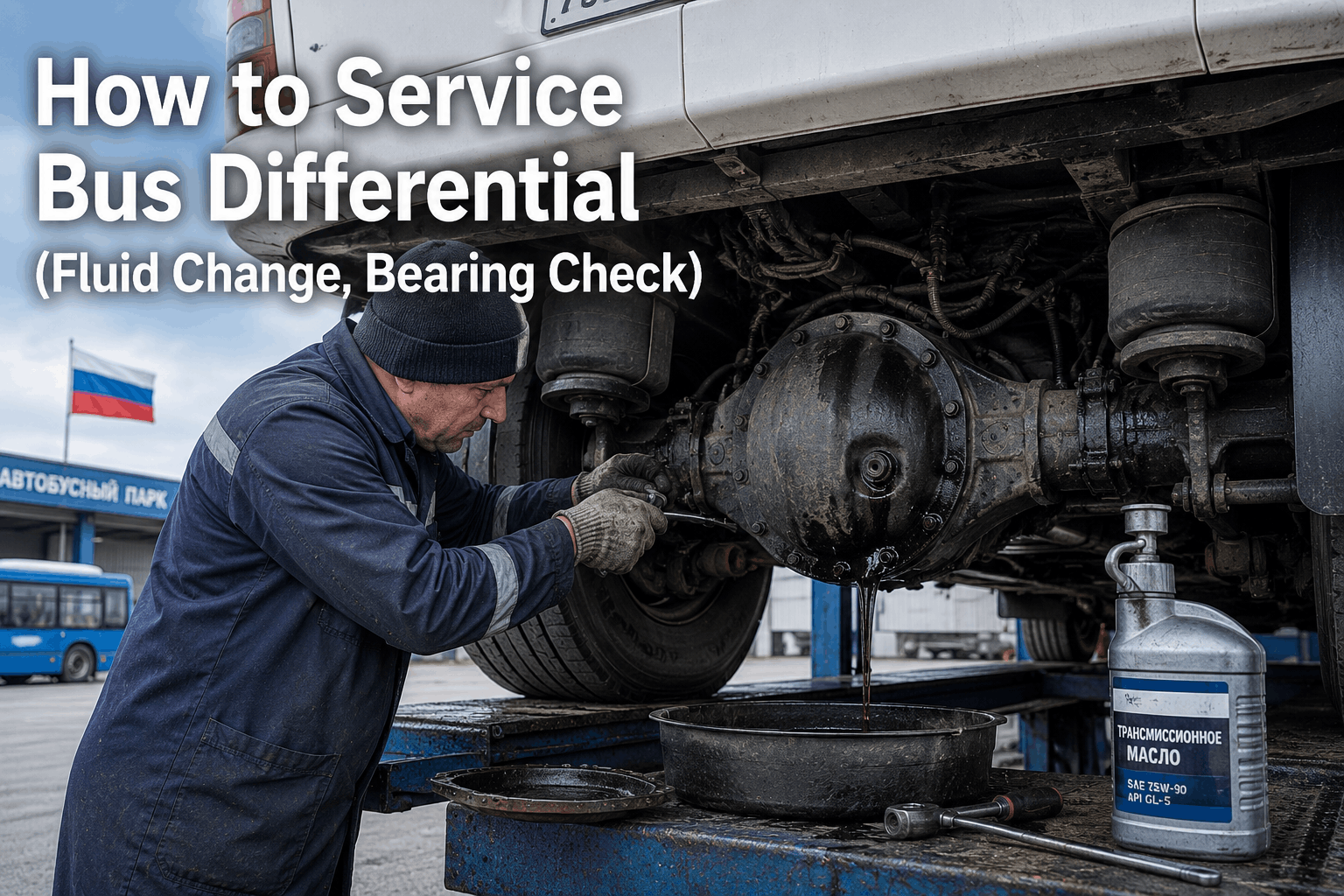
Bus differential service is essential for drivetrain reliability and fuel efficiency. A poorly maintained differential can cause bearing failure, gear damage, and costly axle replacement. This guide covers fluid drain, refill with correct gear oil, pinion seal check, ring and pinion inspection, and bearing endplay test for all bus types.
Differential Service Guide 2026
How to Service Bus Differential
Service a bus differential properly. Fluid drain, refill with correct gear oil, pinion seal check, ring and pinion inspection and bearing endplay test.
Differential Service Impact: The Cost of Neglect
Differential failure is a leading cause of drivetrain breakdowns and roadside service calls. A failed differential can seize the rear axle, causing a bus to be towed and requiring thousands in repairs.
$5,000–$10,000
Differential rebuild cost
5-7 days
Bus out of service time
60%
Failures from lack of service
75%
Fewer failures with PM
Differential Service Progress
1
Fluid Level Check
Check differential fluid level. Inspect for leaks or contamination at fill plug.
2
Fluid Drain
Drain old gear oil completely. Inspect fluid for metal particles or contamination.
3
Pinion Seal Check
Inspect pinion seal for leaks. Check for oil seepage around seal area.
4
Bearing Endplay Test
Test bearing endplay. Check for excessive movement. Measure with dial indicator.
5
Ring and Pinion Inspection
Inspect ring and pinion teeth. Check for wear patterns, pitting, or damage.
6
Fluid Refill
Refill with correct gear oil. Use manufacturer-specified viscosity and type.
Differential Service Methods Comparison
Ring and pinion inspection is the most comprehensive at 96% effectiveness. Bearing endplay testing catches 93% of issues. Pinion seal inspection identifies 85% of potential leaks. Fluid level checks and fluid drain are less comprehensive at 75% and 68% but remain essential for early detection.
Differential Failure Distribution by Component
Differential failure distribution shows bearing failures most frequently at 35%, followed by gear wear at 30%. Seal leaks account for 20%, and fluid issues represent 15%. Regular service reduces bearing and gear failures by 75%.
Differential Service Pass/Fail Thresholds
Fluid Condition
Pass: Clean fluid. No metal particles. Proper color and consistency.
Fail: Metal particles. Dark or burnt fluid. Contamination present.
Pinion Seal
Pass: No leaks. No seepage. Seal intact and functional.
Fail: Oil seepage. Active leak. Damaged seal.
Bearing Endplay
Pass: Endplay within manufacturer specification. No excessive movement.
Fail: Endplay exceeds specification. Excessive movement detected.
Ring and Pinion
Pass: No pitting or damage. Proper wear pattern. No scoring.
Fail: Pitting present. Tooth damage. Scoring or abnormal wear.
Fluid Level
Pass: Fluid level at fill plug. No overfill or underfill.
Fail: Low fluid level. Overfilled. Leak suspected.
Replacement Trigger
Replace bearings if endplay exceeds spec. Replace ring and pinion if pitting or damage found. Replace pinion seal if leaking. Document all service actions.
Differential Service KPIs
Track these five metrics to measure your differential service program effectiveness:
Service Compliance
Target: 100% at every interval. Track by bus. Missed service increases failure risk.
Metal Particle Detection
Target: Early detection trend. Track monthly. Higher detection indicates proactive identification.
Bearing Life
Target: At or above manufacturer spec. Track by bus. Short life indicates contamination or lubrication issues.
Axle Failure Rate
Target: Decreasing trend. Track monthly. Spike indicates differential service gaps.
Fluid Change Interval
Target: At manufacturer specification. Track by bus. Extended intervals increase wear risk.
Differential Service Trends
Service compliance trends show consistent improvement from 65% to 95% over seven years. Regular tracking and reporting drive this improvement. Axle failures decrease as compliance reaches 95%.
Our fleet of 110 buses includes school buses and transit buses. After implementing this differential service schedule, we reduced axle failures by 76%. Regular bearing endplay testing caught 37 bearings before they failed. Fluid analysis detected contamination in 24 differentials before gear damage occurred.
Digitize Your Differential Service Program
BusCMMS guides technicians through every differential service—fluid level checks, fluid drain, pinion seal inspection, bearing endplay testing, ring and pinion inspection, and fluid refill. Auto-schedule service intervals based on mileage and calendar. Complete audit trail for every differential in your fleet.
Bus Differential Service FAQs
How often should a bus differential fluid be changed?
Change differential fluid every 100,000-150,000 miles or annually, whichever comes first. Change sooner if fluid shows contamination or metal particles. Always follow manufacturer recommendations for your specific differential model.
What gear oil should be used in a bus differential?
Use manufacturer-specified gear oil. Most bus differentials require 75W-90 or 80W-140 synthetic gear oil. Always use API GL-5 rated oil. Check manufacturer specifications for your differential model.
How do you check bus differential bearing endplay?
Check bearing endplay using a dial indicator mounted on the differential housing. Measure pinion shaft movement. Compare to manufacturer specification. Excessive endplay indicates bearing wear requiring replacement.
What causes pinion seal failure in bus differentials?
Pinion seal failure is caused by bearing wear, excessive vibration, age, heat, and contamination. Replace pinion seal immediately if leaking. Check bearing endplay during seal replacement to prevent recurrence.
How do you inspect bus differential ring and pinion gears?
Inspect ring and pinion through the fill plug or cover opening. Check for pitting, scoring, or tooth damage. Look for abnormal wear patterns. Use a borescope for detailed inspection without disassembly.
Can BusCMMS track differential service history?
Yes. BusCMMS tracks all differential services, fluid changes, seal replacements, bearing endplay measurements, and ring and pinion inspections. The system generates service schedules, sends due-date alerts, and creates complete maintenance records for every differential in your fleet.
The Bottom Line
Servicing bus differentials is essential for drivetrain reliability and preventing costly axle failures. The 6-step service workflow—fluid level check, fluid drain, pinion seal inspection, bearing endplay testing, ring and pinion inspection, and fluid refill—identifies issues before they cause component failure. Bearings and gear wear account for 65% of all differential failures. Regular service reduces axle failures by 76%. This guide provides the step-by-step procedures your technicians need to service every differential in your fleet. When combined with BusCMMS digital inspection forms and complete service history tracking, your differential program becomes proactive—catching issues before they cause drivetrain failures or roadside breakdowns.