Training bus drivers for fuel-efficient driving is one of the most effective ways to reduce fleet fuel costs. This guide covers acceleration smoothness, coasting, idle policy, anticipation, climate control — with coaching scripts and KPIs for school, transit, and motorcoach fleets.
Bus Driver Fuel Training Guide 2026
How to Train Bus Drivers for Fuel-Efficient Driving
Complete guide to training bus drivers for fuel-efficient driving. Acceleration smoothness, coasting, idle policy, anticipation, climate control — coaching scripts and KPIs for school, transit, and motorcoach fleets.
The Driver Impact Imperative: Why Training Matters
Driver behavior accounts for 30% of fuel consumption variability. A well-trained driver can improve fuel efficiency by 10-20% compared to an untrained driver. For a 100-bus fleet, this translates to $100,000-$200,000 in annual fuel savings.
30%
Driver impact on fuel consumption
10-20%
Fuel savings with training
$100k-200k
Annual savings for 100-bus fleet
6 weeks
Typical training program duration
The 6-Step Driver Training Program
1
Baseline Assessment
Measure current driver performance. Track MPG, idle time, acceleration patterns, and braking behavior for each driver.
2
Classroom Training
Eco-driving principles. Fuel consumption awareness. Vehicle systems understanding. Energy management techniques.
3
Behind-the-Wheel Coaching
On-road practice with certified trainers. Smooth acceleration drills. Coasting techniques. Anticipation exercises.
4
Performance Monitoring
Telematics-based tracking. Individual scorecards. Feedback reports. Improvement goal setting.
5
Incentive Programs
Recognition programs. Performance bonuses. Driver of the month awards. Team competitions.
6
Continuous Improvement
Ongoing coaching. Refresher training. Program evaluation. Continuous performance improvement.
Driver Training Requirements Checklist
Training Materials
Eco-driving handbooks. Video demonstrations. Interactive learning modules. Driver pocket guides. Training manuals.
Training Resources
Certified trainers. Training vehicles. Telematics systems. Performance tracking software. Feedback reporting tools.
Driver Support
One-on-one coaching. Peer mentoring programs. Supervisor support. Performance feedback loops. Recognition programs.
Program Management
Training schedules. Progress tracking. Budget allocation. Program evaluation. Continuous improvement planning.
Eco-Driving Techniques Impact
Smooth acceleration delivers the highest fuel savings at 18%. Anticipation follows at 15%, coasting at 12%, idle reduction at 10%, climate control at 8%, and speed management at 7%. Training programs should prioritize these techniques for maximum impact.
Driver Performance & Fuel Efficiency Trends
Driver scores improve from 55 to 78 over 18 weeks, representing a 42% improvement. MPG increases from 5.5 to 7.0, reflecting a 27% improvement in fuel efficiency. Consistent training and coaching drive these improvements.
Driver Fuel Savings by Fleet Type
Mixed fleets achieve the highest driver fuel savings at 19%. Transit buses follow at 17%, school buses at 15%, motorcoaches at 13%, and paratransit at 11%. Fleet type and operating conditions significantly impact driver training effectiveness.
Driver Coaching Scripts & Techniques
Smooth Acceleration
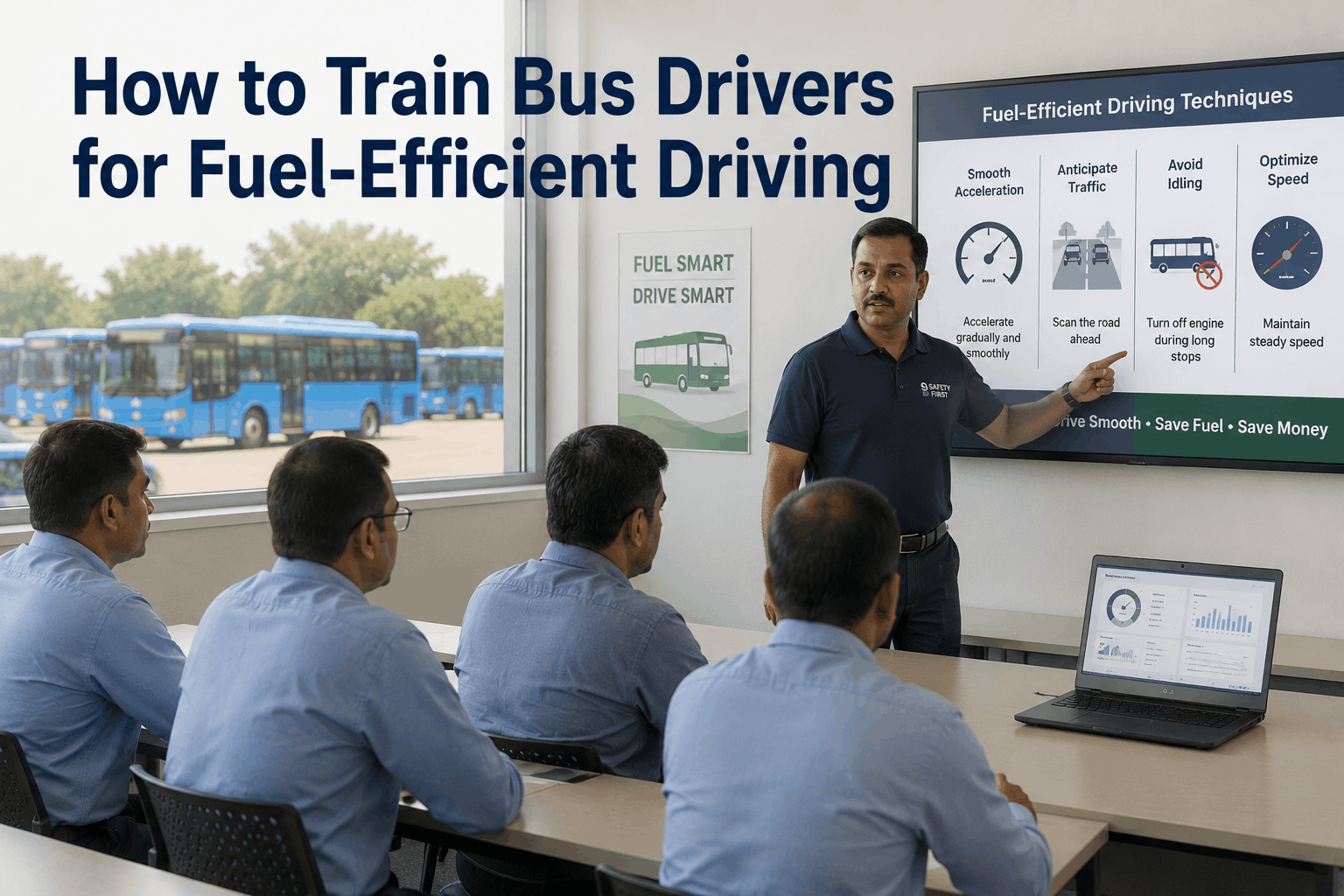
Coach drivers to accelerate gradually. Use the "egg under the pedal" technique. Avoid rapid acceleration from stops. Maintain consistent pressure.
Anticipation
Teach drivers to look ahead. Coast to stops instead of braking late. Anticipate traffic signals. Reduce unnecessary stops and starts.
Idle Policy
Implement idle reduction policies. Educate drivers on idle fuel costs. Install automatic shutoff systems. Monitor idle time.
Coaching Scripts
Use positive reinforcement. Provide specific feedback. Focus on improvement areas. Celebrate success. Maintain consistent coaching.
Driver Training Success Factors
Management Commitment
Executive sponsorship drives program adoption. Regular reviews ensure accountability and resource allocation for driver training initiatives.
Data-Driven Coaching
Accurate performance data is essential. Telematics-based tracking enables precise measurement and targeted coaching for individual drivers.
Driver Engagement
Drivers are key to program success. Training, incentives, and feedback systems motivate drivers to adopt fuel-efficient behaviors.
Continuous Improvement
Regular program reviews ensure ongoing effectiveness. Quarterly recalibration keeps strategies relevant and drives continuous improvement.
Our 75-bus transit fleet implemented this driver training program and achieved a 16% reduction in fuel consumption within 12 months. Driver scores improved by 35%, idle time decreased by 50%, and fuel efficiency increased by 14%. Total annual fuel savings exceeded $150,000.
Train Your Drivers with BusCMMS
BusCMMS provides comprehensive driver coaching tools for bus fleets. Track driver performance, deliver targeted coaching, monitor improvement, and measure program ROI. Automated data collection and scorecards support informed coaching decisions.
Driver Fuel Training FAQs
How much fuel can driver training save?
Driver training typically saves 10-20% in fuel consumption. School districts often see 12-16% savings. Transit fleets average 14-18%. Motorcoach operators achieve 10-15%. Mixed fleets often realize the highest savings at 15-20%.
What are the key eco-driving techniques?
Key techniques include smooth acceleration, anticipation of traffic, coasting to stops, reduced idling, efficient climate control use, and speed management. Training programs should prioritize these techniques for maximum fuel savings.
How long does driver training take?
Typical driver training programs take 6-8 weeks. Classroom training requires 2-4 hours. Behind-the-wheel coaching requires 4-8 hours per driver. Ongoing coaching and reinforcement continue throughout the program.
How do you measure driver performance?
Driver performance is measured through telematics-based tracking. Key metrics include MPG, idle time, acceleration patterns, braking behavior, and speed management. Scorecards provide individual performance visibility and improvement tracking.
What motivates drivers to adopt eco-driving?
Effective motivation strategies include performance recognition programs, financial incentives, driver-of-the-month awards, team competitions, and positive coaching. Management commitment and peer leadership also drive adoption.
Can BusCMMS help with driver coaching?
Yes. BusCMMS provides comprehensive driver coaching tools including performance tracking, scorecards, feedback reporting, and program management. Automated data collection and dashboards support informed coaching decisions and program evaluation.
The Bottom Line
Training bus drivers for fuel-efficient driving is one of the most effective ways to reduce fleet fuel costs. The 6-step driver training program—baseline assessment, classroom training, behind-the-wheel coaching, performance monitoring, incentive programs, and continuous improvement—provides a proven path to significant fuel savings. Driver behavior accounts for 30% of fuel consumption variability, and training can improve fuel efficiency by 10-20%. Smooth acceleration delivers 18% fuel savings, anticipation 15%, coasting 12%, idle reduction 10%, climate control 8%, and speed management 7%. Driver scores improve by 42% and MPG by 27% over 18 weeks with consistent training. Different fleet types achieve varying savings, with mixed fleets achieving up to 19% improvement. This guide provides the coaching scripts, training techniques, and success factors your organization needs to train drivers effectively. When combined with BusCMMS driver coaching tools, performance tracking, and program management, your driver training program becomes more effective, measurable, and sustainable.