Logistics and freight carriers operate mixed fleets: diesel trucks, trailers, refrigerated units, specialized equipment. Each asset class has different maintenance requirements, different failure modes, different compliance obligations. A logistics company with 200 trucks faces: regulatory compliance (DOT inspections, DVIR requirements, logbooks), operational reliability (keeping freight moving on schedule, minimizing delays), and cost control (maintenance is 15–20% of operating cost). The challenge: managing maintenance across diverse equipment types, tracking regulatory compliance, predicting failures, and optimizing costs. Most carriers use spreadsheets and reactive maintenance. A truck breaks down, they call a repair shop, fix it, move on. There's no proactive strategy. This costs them: unexpected breakdowns delay shipments, damage customer relationships, and trigger expensive emergency repairs. A proper fleet maintenance software (CMMS) designed for logistics changes this. It brings visibility, compliance, and cost control to fleet operations.
Logistics Fleet Maintenance Software for Carriers
Keep freight moving with maintenance software for logistics fleets. Manage mixed vehicles, DOT compliance, and uptime across the operation.
Logistics carriers face unique maintenance challenges: (1) Mixed fleet diversity. A 200-truck fleet might include: 100 long-haul diesel tractors, 80 trailers (flatbed, refrigerated, tanker), 20 straight trucks for local delivery. Each has different maintenance schedules, different parts, different failure patterns. (2) DOT regulatory compliance. Federal DOT requires DVIR (driver vehicle inspection reports) on every vehicle daily. Certain defects must be repaired before the vehicle operates again. Maintenance records must be kept and audited. Missing DVIRs or failed compliance audits trigger fines. (3) Operational urgency. A bus fleet runs routes; if one bus breaks down, another steps in. A logistics fleet has customers waiting for shipments. A truck breakdown means late delivery, penalty fees, customer dissatisfaction. Every hour of downtime costs the carrier money. (4) Cost pressure. Maintenance is a significant operating cost (15–20%). Carriers want to optimize (reduce unnecessary repairs) without sacrificing reliability. This requires data: which trucks fail most often? Which components are failure-prone? Where can proactive maintenance save money? (5) Driver behavior and compliance. DVIR compliance depends on drivers. Some drivers report every issue, others ignore problems. Dispatch visibility into truck status is often poor. A truck with a failing transmission might be in operation for weeks before it breaks down mid-route.
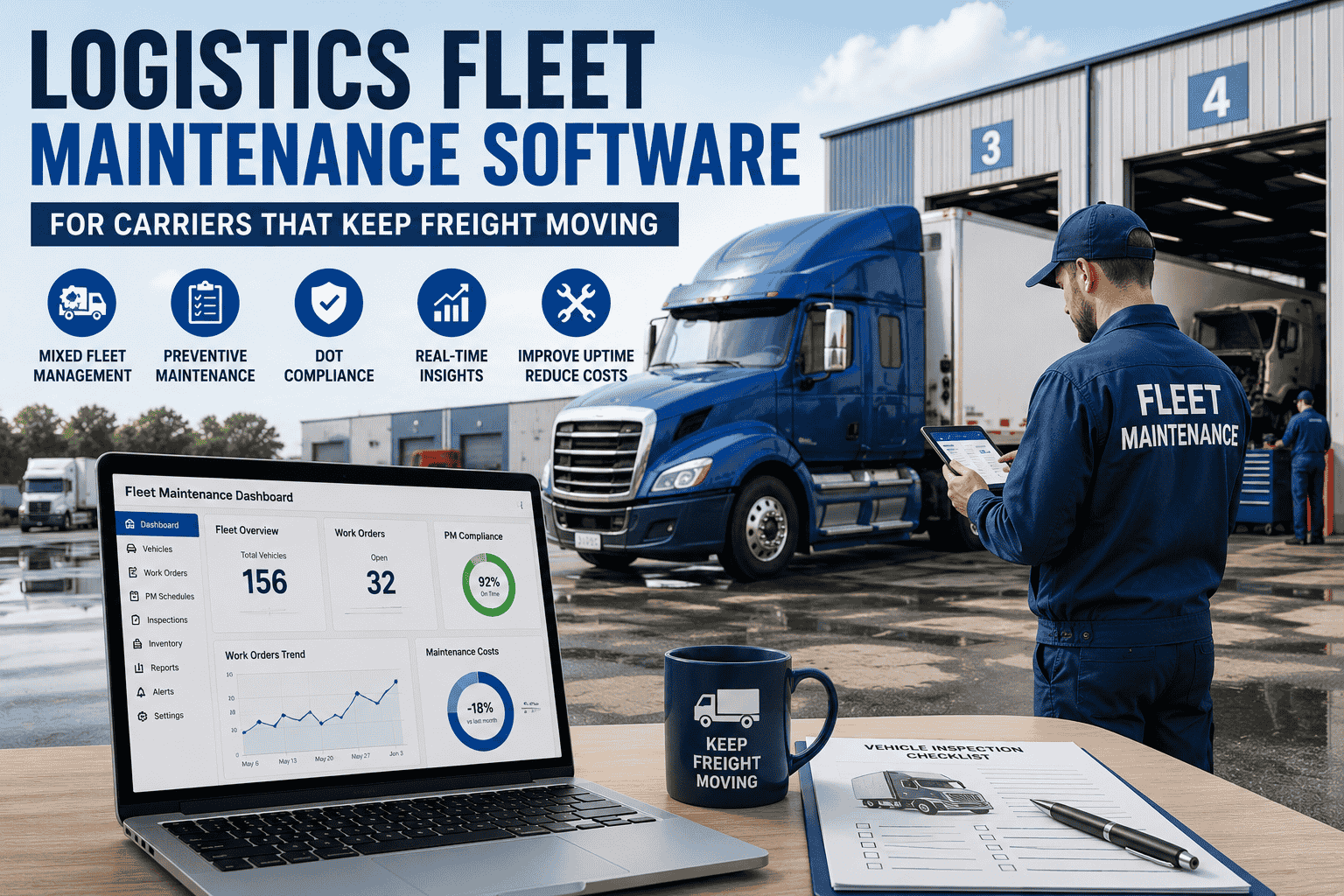
A CMMS built for logistics carriers provides: (1) Multi-vehicle-type asset management. Define different maintenance schedules for tractors vs trailers vs straight trucks. Track each separately. (2) DVIR compliance automation. Drivers enter inspections via mobile app. System tracks open defects, alerts dispatch when safety-critical issues exist. Maintenance team closes defects. System maintains compliance records. (3) Real-time fleet status. Dashboard shows which trucks are operational, which are in maintenance, which have pending repairs. Dispatch can see availability instantly. (4) Cost per mile tracking. Allocate all maintenance costs (parts, labor, materials) to each vehicle. Calculate true operating cost. Identify high-cost vs efficient trucks. (5) Predictive maintenance. Track MTBF (mean time between failures) for each vehicle. Vehicles approaching failure are flagged for preventive service before breakdown. (6) Route and shipment integration. Connect maintenance data to shipments. If a truck with a failing transmission is assigned a high-priority route, alert dispatch to either fix it first or assign a different truck. (7) Driver communication. Drivers report issues via mobile app. Issues are prioritized and assigned to technicians. Repair status is fed back to drivers. (8) Compliance reporting. Generate DOT-ready compliance reports. Audit trails for all maintenance decisions.
Logistics carriers that implement CMMS achieve 2–3 major improvements: (1) uptime increases to 95%+, reducing shipment delays; (2) maintenance costs drop 10–15% through prevention of emergency repairs; (3) DOT compliance becomes systematic rather than reactive. The competitive advantage is reliability: carriers known for on-time delivery win customer contracts. Those with frequent delays lose business. CMMS is the operational foundation for reliable logistics.
A logistics fleet with a proper CMMS operates with visibility, compliance, and predictability. Trucks are maintained proactively, reducing emergency breakdowns. Drivers have clear inspection processes and defect tracking. Dispatch knows real-time availability. Costs are tracked per vehicle. DOT compliance is systematic. The result: on-time delivery, customer satisfaction, and sustainable profitability.