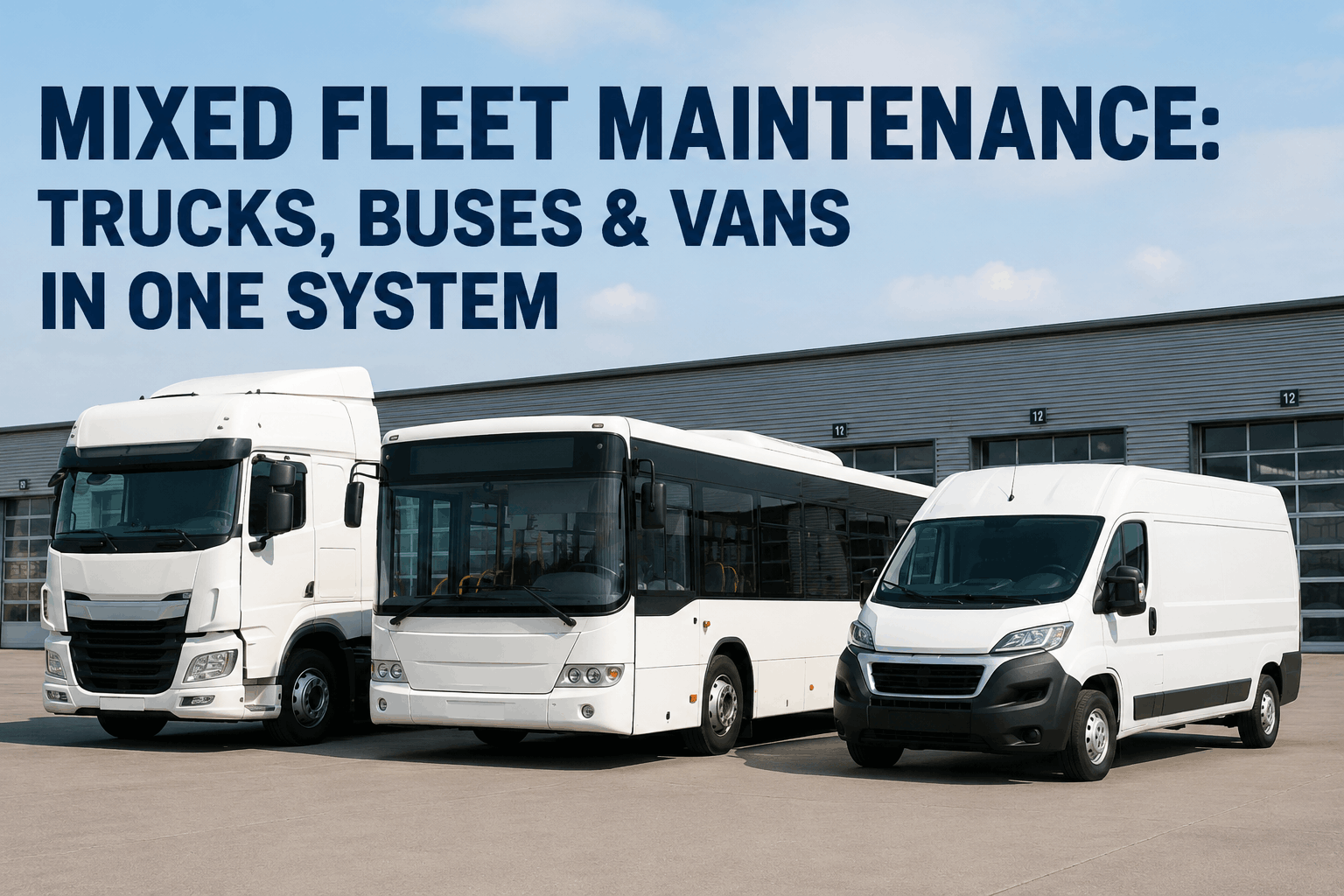
A logistics operator with 120 vehicles ran three separate maintenance systems: one for tractors, one for trailers, and one for pickup/delivery vans. Compliance requirements were different for each. Parts suppliers were different. Technicians were trained on specific equipment. The result: inconsistent record-keeping, missed inspections, higher costs, and a compliance nightmare. When DOT audits came, they found selective documentation — some vehicles over-maintained, others under. A single unified CMMS for all vehicle types changed everything. One compliance standard, one audit trail, one cost analysis. Maintenance costs dropped 18% because they could finally see which vehicle types were actually expensive. Here's how mixed fleet operators standardize across different vehicles without losing asset-specific requirements.
Different vehicles. Same compliance requirements. One system unifies trucks, buses, vans, trailers — and cuts maintenance cost 15–25%.
Mixed fleets typically start with separate systems because vendors claim specialization. "Our CMMS is built for trucking" or "This system is designed for bus operators." The reality: separate systems create separate compliance burdens, separate parts inventory, separate training, and invisible cost overruns. A tractor CMMS doesn't talk to a trailer CMMS. A van fleet system doesn't integrate with the bus system. When DOT auditors ask "show me all maintenance records for all vehicles," the fleet has to piece together data from three systems, three formats, three audit trails. Records don't match. Dates are inconsistent. Compliance violations appear even though maintenance was actually performed — it's just documented in the other system. The hidden costs: duplicate technician training, fragmented parts purchasing (no fleet-wide supplier discounts), inability to identify which vehicle types are most cost-effective, and audit risk.
Unified doesn't mean identical. A tractor has different maintenance needs than a trailer or van. A good unified CMMS supports asset profiles — templates that define maintenance rules for each vehicle type while keeping data in one place. A tractor profile might require: engine oil every 15,000 miles, transmission fluid every 50,000 miles, and annual brake inspection. A trailer profile requires: brake pad inspection every 6 months, tire rotation every 30,000 miles, and lighting check weekly. A van profile requires: engine oil every 5,000 miles, tire rotation every 20,000 miles, and driver pre-trip inspection daily. One system, multiple profiles, all tracked together. When maintenance is due on any vehicle, the system knows which rules apply. When DOT audits, the compliance officer sees that tractor followed tractor rules, trailer followed trailer rules, and van followed van rules — all in one audit trail.
A unified system reveals which vehicle types are actually expensive. A fleet running 40 tractors, 50 trailers, and 20 vans might discover: tractors cost $8,500/year to maintain (due to high engine hours), trailers cost $3,200/year (mostly brake work), and vans cost $2,800/year (light duty, low cost). These numbers now inform asset strategy. If tractors are costing 3x the fleet average, the fleet can decide: invest more in PM to extend tractor life, or replace older tractors with newer ones that cost less to maintain. Without unified cost analysis, this insight is hidden across three separate spreadsheets that never talk to each other. Fragmented systems can't answer: "Which vehicle type gives us the best ROI?" With unified systems, the answer is visible in one report.
DOT compliance for mixed fleets is straightforward: every vehicle — tractor, trailer, van — must have maintenance records proving compliance with applicable regulations. The challenge with separate systems is fragmentation. When an auditor asks "show me all maintenance for the past 12 months," a fragmented fleet has to compile data from multiple systems, each with different formats, different audit trails, different dates. Records don't match. Dates are inconsistent. The auditor concludes maintenance records are unreliable — even if maintenance was actually performed. A unified system gives one audit trail. One report showing every vehicle, every maintenance action, every compliance requirement met or unmet. Auditors appreciate clarity. Unified records = confident compliance assessment. Fragmented records = red flags and follow-up inspections.
Migrating from separate systems to unified is not a single cut-over. The safest approach is phased: start with the highest-value or highest-risk vehicle type, build templates and processes, then expand. Here's the roadmap.
Mixed fleets are the norm in modern transportation. Most operators run multiple asset types because no single vehicle solves all use cases. The operational challenge is unifying maintenance and compliance across different vehicles without losing asset-specific requirements. A good unified CMMS supports this: one platform, multiple asset profiles, one audit trail. The fleets getting the best results treat unification as a strategic project, not a software upgrade. They invest in data migration, technician training, and process standardization. The ROI is 15–25% cost savings and significantly better compliance outcomes. BusCMMS supports unlimited asset types with custom PM profiles for each, giving mixed fleets one platform that scales with their diversity.
Mixed fleets running separate CMMS for each vehicle type pay a hidden tax: fragmented compliance records, duplicate technician training, no fleet-wide cost visibility, and no data-driven asset strategy. Unifying on a single CMMS with asset-specific profiles eliminates that tax. One audit trail, multiple asset types, unified cost analysis, and consistent compliance. The migration from separate to unified takes 6 months and returns 15–25% cost savings year one. BusCMMS supports unlimited asset types and custom maintenance profiles, turning multi-vehicle fleets into single-system operations with complete visibility.