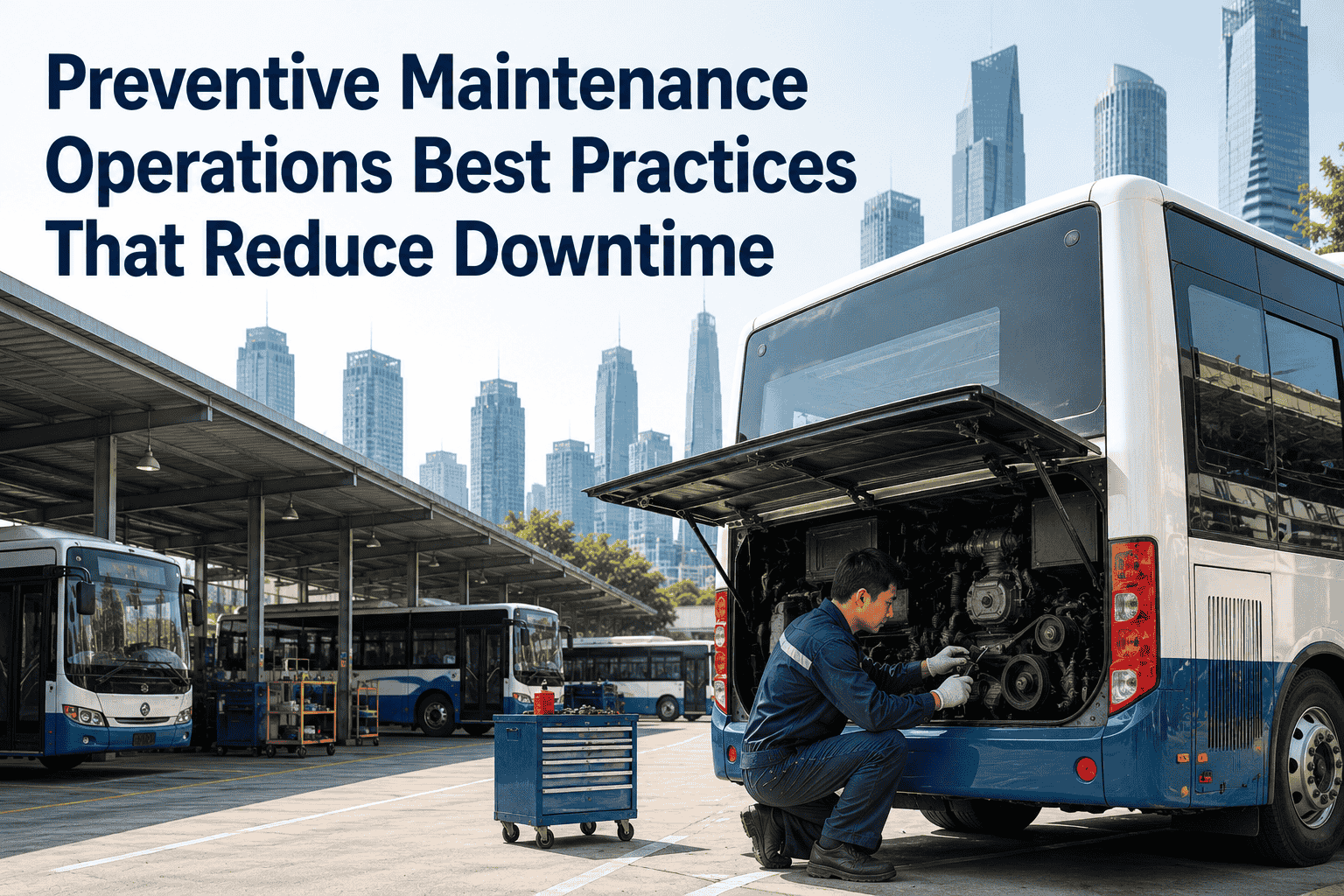
A large commercial transport operator running a fleet of 220 transit buses struggled with compounding operational bottlenecks. While their shop floors regularly logged oil changes and physical inspections, they lacked a standardized framework to process vehicle telemetry, fluid wear baselines, and active repair data. The result: an expensive 14% increase in year-over-year unscheduled engine overhauls, a growing backlog of emergency road work, and inconsistent vehicle availability that disrupted daily scheduling. After implementing a series of digital preventive maintenance operations best practices, the organization connected their driver logs, inventory rooms, and work orders into an optimized central engine. Within 90 days, unexpected roadside breakdowns plummeted by 55%, mean time to repair dropped significantly, and overall fleet availability stabilized at a perfect 96%. Optimizing preventive maintenance operations isn't about running more inspections—it's about automating your structural data to stop failures before they start.
Shop Management 2026
Preventive Maintenance Operations: Best Practices to Reduce Downtime
Stop chasing emergency breakdowns. Unify your inspection management, automate parts reordering, and stabilize your fleet availability numbers.
PM Operations Impact — 220-Bus Fleet
Unscheduled Road Failures4.8 per 10K miles
Average PM Compliance Rate71% reactive delay
Annual Overtime Repair Capital+$94K over budget
Unscheduled Road Failures1.1 per 10K miles
Target PM Compliance Rate98% proactive execution
Overtime Cost Reduction55% expense drop
The most common failure in modern fleet planning is confusing an inspection checklist with a complete preventive maintenance operation. When a garage tracks asset wear using paper clipboards, standalone spreadsheets, or isolated service desks, critical safety data updates too late. If a driver flags an air system defect on a driver vehicle inspection report (DVIR), but that log sits in a processing stack for 48 hours, the asset encounters an on-road failure. This is reactive firefighting. Shifting to digital best practices connects live inspection entries directly to shop schedules and inventory reorder paths. When a safety check reveals an anomaly, the software immediately validates parts readiness and schedules the task, protecting vehicle availability before a vehicle ever stalls.
Paper-Logged Shop Plans (High Risk)
Task DeploymentWork orders are handled via clipboards, causing manual tracking delays.
Component HistoryVehicle records are scattered across various paper binders and bills.
Parts AvailabilityGarages place emergency parts orders midway through critical repairs.
Metric AccuracyFleet KPIs are calculated by hand at month-end with high error margins.
Optimized PM Architecture
Task DeploymentDigital tasks deploy directly to mobile mechanic screens instantly.
Component HistoryUnalterable, digital logs record all repairs and signatures cleanly.
Parts AvailabilityInventory reorder points sync directly with upcoming service cycles.
Metric AccuracyLive central dashboards track active shop compliance indicators live.
Standardize your shop schedules — book a demo
To run an optimized public transit network or commercial operation, managers ground their preventive maintenance workflows in four core efficiency metrics. First: **Preventive Maintenance Compliance (PMC)**, measuring the percentage of inspections completed inside your target mileage windows. Ratings below 90% point to clear workflow bottlenecks. Second: **Mean Time Between Failures (MTBF)**, tracking the distance traveled between unscheduled repair events to lower towing costs. Third: **Mean Time to Repair (MTTR)**, which highlights active mechanic productivity. Finally: **Vehicle Availability Rate**, ensuring your asset layout consistently fulfills daily route assignments.
Preventive Maintenance Performance Benchmarks
Optimized System Target
96–98% PM Compliance Adherence (Proactive Fleet)
Industry Baseline Average
68–75% Compliance Tracking Rates (Reactive Fleet)
Labor Efficiency Gains
35–55% Drop in Weekly Shop Overtime Capital
Audit Speed Target
100% Secure, On-Demand Digital Audit Trail Retrieval
Log your core performance metrics — sign up free
A metropolitan transportation authority operating 140 public buses struggled with excessive repair backlogs during peak line shifts. Because their asset tracking models were handled on standalone databases, mechanics routinely started brake and suspension overhauls before verifying if matching components were in stock, increasing bay dwell times. To clear this bottleneck, they adopted a centralized preventive maintenance operations system. The platform linked upcoming mileage milestones, active garage tasks, and inventory balances on a single screen. This process minimized technician delays, returned wrench time to an optimal 82%, and reduced vehicle repair delays from 5.4 days to 2.1 days, saving the city $54,000 in annual overhead costs.
Traditional Fleet Environments
Fault alerts remain hidden across disjointed paper forms and spreadsheets.
Warehouse crews buy safety parts blindly with no view into active tasks.
Buses slip past critical service windows, accelerating asset decay.
Gathering historical verification logs for state audits takes weeks.
Result: Frequent road failures, extended vehicle downtime, and compliance risks.
Centralized Operational Strategy
Integrated mobile forms flag technical defects to the desk live.
Inventory turnover triggers allocate materials before repairs begin.
Predictive parameters auto-dispatch vehicles exactly on schedule.
flawless, time-stamped asset histories generate reports instantly.
Result: Maximum vehicle uptime, optimized warehouse capital, and simple audits.
See live technician dashboards — book a demo
Transitioning your workshop away from legacy tracking routines does not require halting your daily vehicle services. Implementing a structured 90-day rollout roadmap ensures an easy transition for mechanics, procurement clerks, and operations directors. Month one centers on clarifying active vehicle profiles, importing service records, and establishing core alert thresholds. Month two deploys user-friendly mobile screens directly to the bays, removing handwritten checklists from the shop floor. The final month activates automated inventory triggers, coordinating parts procurement with upcoming inspection schedules to eliminate stockout issues.
Preventive Maintenance Integration Roadmap
Days 1–30
Centralize disparate asset histories, repair categories, and baseline limits.
Days 31–60
Launch interactive mobile checklists to remove paper clipboards from the floor.
Days 61–90
Activate automated parts assignment filters and live KPI dashboard metrics.
Optimized 2026
Review high-level operational summaries to systematically trim yearly operating costs.
Secure your digital workshop profile — sign up free
Relying on scattered spreadsheets and uncoordinated paper records to monitor advanced transit fleets creates severe exposure to roadside failures and audit penalties. Shifting to an integrated preventive maintenance operations platform unifies your vehicle records, driver inspection checklists, and inventory metrics in a single workspace. Rather than addressing mechanical faults after an asset fails on a route, optimized software tracks mileage patterns and flags potential component wear early. This structural coordination maximizes vehicle availability, reduces expensive technician overtime costs, and provides clear proof of safety compliance to stakeholders. Centralizing your daily inputs is the most effective way to eliminate record-keeping gaps and improve fleet performance. BusCMMS provides the complete cloud tools required to synchronize telemetry, calculate custom baselines, automate shop queues, and protect vehicle lifetimes.
Unify your preventive maintenance — book a demo
Streamline Your PM Operations. Lower Vehicle Downtime. Maximize Shop Capacity.
Connect daily driver check-ins, real-time parts updates, and technician repair queues into one digital system. Protect your transit fleet's operating budget. Free 14-day trial.
What makes preventive maintenance operations distinct from standard vehicle repair logs?
Standard vehicle repair logs keep historical lists of fixes that already occurred. PM operations link real-world telemetry, fluid intervals, and driver safety apps to track asset wear live, enabling garages to resolve faults before an on-road failure can happen.
Can our operations team configure custom service intervals for different vehicle sub-models?
Yes. Modern CMMS software allows you to establish specific mileage, time-based, or hour-meter thresholds tailored directly to your distinct vehicle models, asset categories, and route intensity levels.
How do centralized tracking tools lower unexpected mechanic overtime costs?
By pre-allocating parts and organizing upcoming tasks before shifts begin, the platform removes structural garage delays. This allows technicians to complete repairs within normal shift hours, significantly reducing overtime requirements.
Does this platform assist in pulling documentation for federal DOT or state safety audits?
Yes. The software records all mobile DVIR submittals, component changes, and mechanic signatures into a secure, unalterable history. Fleet managers can generate comprehensive, fully compliant audit trails with a single click.
Do our shop technicians need extensive training to manage the mobile tablet interface?
No. The user interface features clear, mobile-friendly designs with straightforward checklist selectors. Mechanics can quickly capture fault images, check parts inventory, and update work progress with minimal guidance.
Which key metrics are most critical to monitor for preventive maintenance optimization?
Monitor your preventive maintenance compliance rate (PMC), mean time to repair (MTTR), and unscheduled roadside breakdown frequency. Tracking these core benchmarks indicates exactly where your garage processes are achieving maximum productivity.
Turn Complex Shop Queues Into Clean, Fully Synchronized Repair Workflows.
Standardize checklists, match tasks to inventory balances automatically, eliminate repair bottlenecks, and secure reliable vehicle availability. Free 14-day trial.