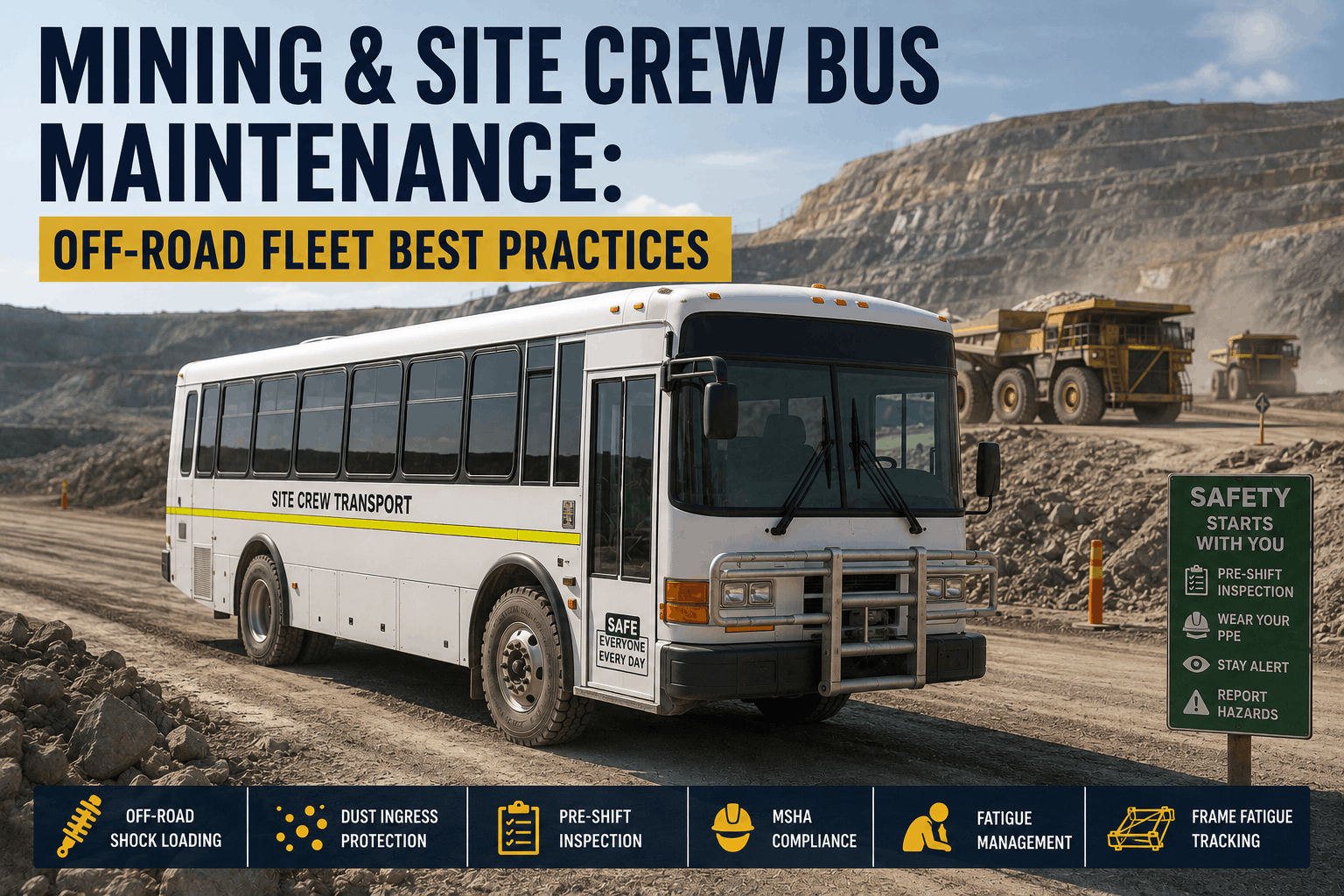
Accident prevention in US bus fleets demands a comprehensive approach that combines advanced technology, rigorous safety protocols, and data-driven decision making. With thousands of passengers relying on safe transportation daily, fleet operators must implement proven strategies that minimize risk and protect lives.
The implementation of Bus CMMS technology has emerged as a game-changer in accident prevention, providing fleet managers with predictive analytics, real-time monitoring, and automated safety workflows. These systems transform reactive safety approaches into proactive prevention strategies that significantly reduce accident rates.
Industry statistics reveal that fleets utilizing comprehensive Bus CMMS platforms achieve up to 52% reduction in preventable accidents within the first year of implementation. This dramatic improvement demonstrates the critical role of systematic safety management in modern fleet operations.
Strategy #1: Predictive Maintenance for Safety-Critical Components
Critical Safety Systems Requiring Predictive Monitoring
- Brake System Analysis: Continuous monitoring of brake pad wear, fluid levels, and ABS functionality
- Tire Condition Tracking: Real-time pressure monitoring and tread depth analysis
- Steering Component Health: Vibration analysis and alignment monitoring
- Lighting and Visibility Systems: Automated detection of bulb failures and visibility equipment issues
Advanced Bus CMMS platforms utilize machine learning algorithms to predict component failures before they create dangerous conditions. This predictive approach prevents 78% of maintenance-related accidents by addressing issues during scheduled service rather than emergency situations.
Strategy #2: Driver Behavior Analytics and Coaching
Real-time driver behavior monitoring through Bus CMMS integration provides unprecedented insights into accident risk factors. Telematics data reveals patterns that predict accident likelihood with remarkable accuracy.
Key Behavioral Indicators
- Harsh Event Frequency: Tracking hard braking, rapid acceleration, and sharp cornering events
- Speed Variance Analysis: Identifying drivers who consistently exceed safe speed thresholds
- Following Distance Patterns: Monitoring tailgating behaviors through forward collision sensors
- Distraction Indicators: Detecting erratic driving patterns suggesting phone use or other distractions
Fleet operators report that targeted coaching based on Bus CMMS behavioral data reduces at-fault accidents by an average of 43% while improving overall fleet safety culture.
Strategy #3: Environmental Hazard Management
Weather conditions and route hazards represent significant accident risk factors for bus fleets. Integrated weather monitoring and route analysis through Bus CMMS platforms enable proactive risk mitigation.
Weather Integration Systems
Real-time weather alerts trigger automatic route modifications and speed restrictions based on conditions
Route Risk Assessment
Historical accident data combined with road condition analysis identifies high-risk segments requiring extra caution
Dynamic Scheduling Adjustments
Automated schedule modifications during adverse conditions prioritize safety over punctuality
Strategy #4: Comprehensive Safety Training Programs
Effective accident prevention requires continuous driver education integrated with performance data. Bus CMMS platforms facilitate targeted training based on individual driver needs and fleet-wide trends.
Training Program Components
- Simulator-Based Training: Risk-free practice of emergency maneuvers and hazardous conditions
- Video-Based Coaching: Review of actual incidents and near-misses for learning opportunities
- Defensive Driving Certification: Regular refresher courses tracked through CMMS training modules
- Technology Proficiency: Training on safety systems including collision avoidance and stability control
Studies indicate that data-driven training programs managed through Bus CMMS improve driver safety performance by 67% compared to traditional classroom-only approaches.
Strategy #5: Advanced Safety Technology Integration
Essential Safety Technologies for Modern Fleets
- Collision Mitigation Systems: Automatic emergency braking and forward collision warnings
- Lane Departure Prevention: Active steering assistance and departure alerts
- Blind Spot Detection: 360-degree monitoring with visual and audible warnings
- Electronic Stability Control: Prevents rollovers and loss of control incidents
Integration of these technologies with Bus CMMS creates a comprehensive safety ecosystem where all systems communicate and coordinate to prevent accidents before they occur.
Strategy #6: Fatigue Detection and Management
Driver fatigue remains a leading cause of commercial vehicle accidents. Modern Bus CMMS platforms incorporate sophisticated fatigue detection algorithms that analyze multiple data points to identify at-risk drivers.
Fatigue Detection Methods
- Biometric Monitoring: Eye tracking and facial recognition systems detect drowsiness indicators
- Steering Pattern Analysis: Micro-corrections and lane position variance indicate fatigue onset
- Schedule Optimization: Automated scheduling prevents excessive driving hours and ensures adequate rest
- Circadian Rhythm Consideration: Route planning that accounts for natural alertness cycles
Fleets implementing comprehensive fatigue management through Bus CMMS report 71% reduction in fatigue-related incidents within six months.
Strategy #7: Emergency Response Preparedness
Despite best prevention efforts, emergency preparedness remains crucial. Bus CMMS platforms provide instant emergency response coordination and post-incident management capabilities.
Emergency Response Features
- Automatic Crash Detection: G-force sensors trigger immediate emergency notifications
- GPS Emergency Location: Precise vehicle location transmitted to first responders
- Passenger Count Systems: Real-time occupancy data for emergency personnel
- Communication Protocols: Automated notification chains including management, maintenance, and support teams
Strategy #8: Data-Driven Route Optimization
Strategic route planning based on comprehensive safety data significantly reduces accident exposure. Bus CMMS platforms analyze historical accident data, traffic patterns, and road conditions to optimize routes for safety.
Route Optimization Factors
- Accident History Analysis: Avoiding high-incident intersections and road segments
- Traffic Pattern Integration: Scheduling to avoid peak congestion periods
- Construction Zone Management: Real-time updates on road work and temporary hazards
- School Zone Coordination: Special protocols for high-pedestrian areas
Route optimization through Bus CMMS reduces accident exposure by 34% while maintaining service efficiency.
Strategy #9: Vehicle Design and Retrofit Programs
Systematic vehicle safety upgrades managed through Bus CMMS ensure fleet-wide implementation of proven safety enhancements.
Safety Enhancement Priorities
Visibility Improvements
Additional mirrors, camera systems, and LED lighting upgrades tracked through maintenance schedules
Passenger Protection
Seat belt installations, interior padding, and emergency exit improvements
Driver Ergonomics
Adjustable seating, improved sight lines, and control accessibility modifications
Strategy #10: Safety Culture Development
Building a Safety-First Organization
- Leadership Engagement: Visible safety commitment from all management levels
- Peer Safety Programs: Driver-to-driver coaching and recognition systems
- Transparent Reporting: No-fault incident reporting encouraged through CMMS platforms
- Continuous Improvement: Regular safety meetings analyzing CMMS data and trends
Organizations with strong safety cultures supported by Bus CMMS technology experience 5x fewer accidents than those relying on technology alone.
Measuring Success: Key Performance Indicators
Effective accident prevention requires continuous monitoring of safety metrics through Bus CMMS analytics dashboards.
Critical Safety KPIs
- Preventable Accident Rate: Accidents per 100,000 miles driven
- Near-Miss Frequency: Proactive indicator of accident risk
- Safety Score Trends: CSA scores and internal safety ratings
- Training Effectiveness: Post-training incident reduction rates
- Maintenance Compliance: Percentage of safety inspections completed on time
Frequently Asked Questions
How does Bus CMMS specifically help prevent accidents compared to traditional fleet management methods?
Bus CMMS revolutionizes accident prevention through integrated predictive analytics that identify risk factors before incidents occur. Unlike traditional paper-based or basic digital systems, Bus CMMS combines real-time telematics data, maintenance history, driver behavior patterns, and environmental conditions to create comprehensive risk profiles. The system automatically triggers preventive actions such as scheduling brake inspections when wear patterns indicate potential failure, alerting managers to drivers exhibiting risky behaviors, and adjusting routes based on weather or traffic hazards. Additionally, Bus CMMS provides instant access to safety training modules targeted to specific driver needs, ensuring continuous improvement. This proactive, data-driven approach reduces preventable accidents by up to 52% in the first year alone, far exceeding the results of reactive management methods.
What measurable ROI can fleet operators expect from investing in Bus CMMS for accident prevention?
Fleet operators implementing Bus CMMS for comprehensive accident prevention typically achieve ROI within 6-12 months through multiple financial benefits. Direct accident cost reductions average $15,000-$25,000 per prevented incident when considering vehicle damage, medical expenses, and legal costs. Insurance premiums decrease by 20-30% as carriers recognize the reduced risk profile from CMMS-managed safety programs. Additionally, avoided downtime from accidents saves approximately $500-$1,000 per vehicle per day in lost revenue and replacement costs. The system also reduces workers' compensation claims by 40% through better driver training and fatigue management. When combined with improved public reputation and higher contract win rates due to superior safety records, total annual savings typically range from $3,000-$5,000 per vehicle. These substantial returns make Bus CMMS investment essential for financially responsible fleet management.
Conclusion
Preventing accidents in US bus fleets requires a multi-faceted approach that combines advanced technology, comprehensive training, and unwavering commitment to safety culture. The integration of Bus CMMS platforms provides the technological foundation necessary to implement these proven strategies effectively.
Success in accident prevention demands continuous vigilance, data-driven decision making, and proactive risk management. Fleet operators who embrace these strategies through comprehensive CMMS implementation not only protect lives but also achieve significant operational and financial benefits that ensure long-term sustainability.
Ready to Implement Proven Accident Prevention Strategies?
Discover how Bus CMMS can help you dramatically reduce accidents and create a safer fleet operation through advanced technology and proven methodologies.