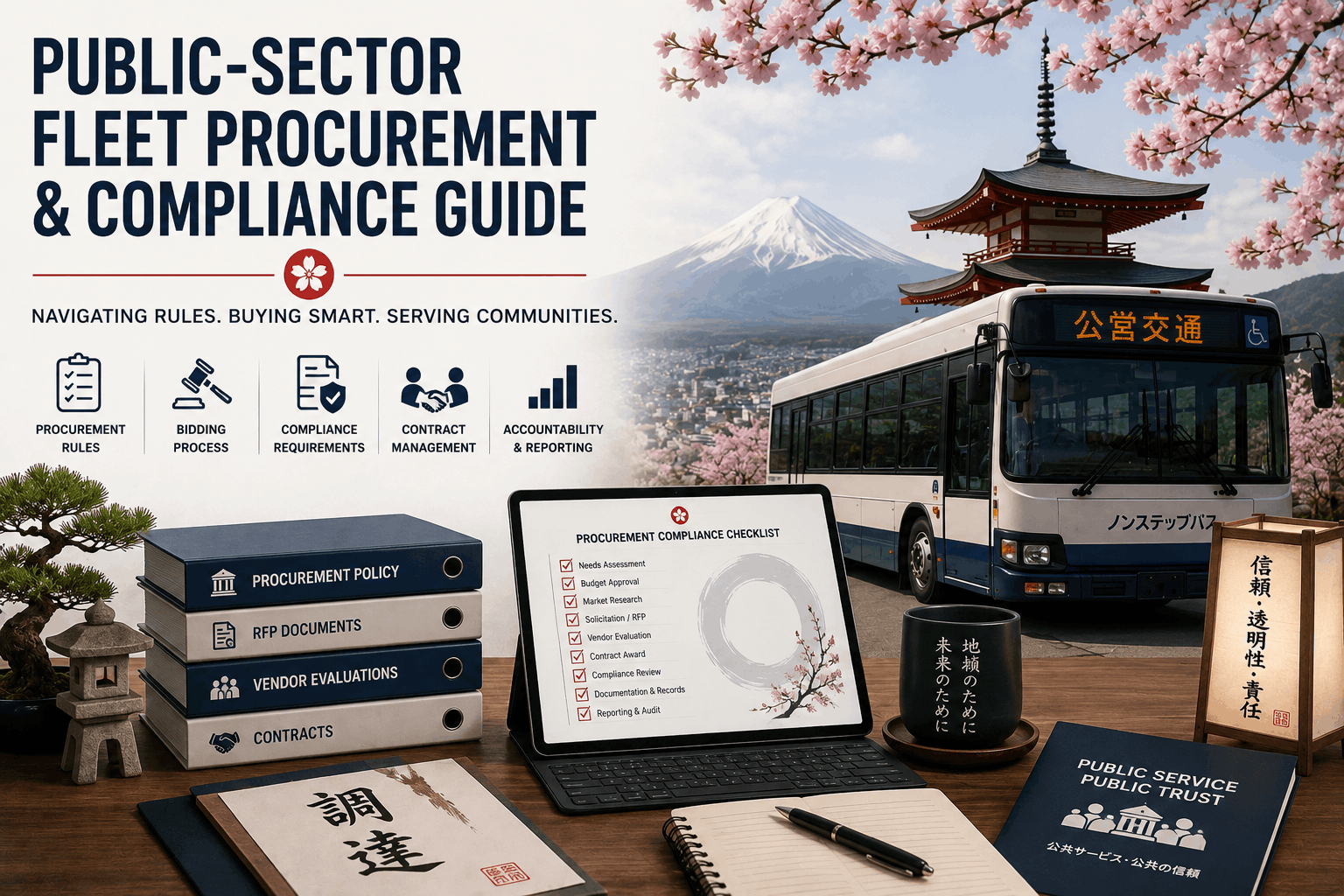
A city transportation department needed 20 new buses. They posted a request for proposals, received 7 bids, and selected the lowest bidder at $425,000 per bus. Six months later, the buses arrived and the city discovered they didn't meet specification — the specified engine option wasn't included, the safety seating configuration was different, and the paint finish wasn't the requested color. The problem: the RFP wasn't detailed enough. Public procurement rules require competitive bidding, but they don't require vendors to deliver what you actually need unless your specifications are crystal clear. The city couldn't reject the buses without proof of non-conformance. Negotiating with the vendor took four months and cost $35,000 in change orders for the missing components. A well-structured procurement process with detailed specifications, clear evaluation criteria, and compliance checkpoints prevents this. Government fleets operate under procurement rules that private fleets don't face. You can't just call a vendor and buy. You must follow bidding rules, document evaluation, and ensure compliance. This guide explains public-sector fleet procurement from RFP to delivery.
RFP, bidding, vendor selection, and compliance verification. Do it right the first time or pay later.
The RFP (Request for Proposal) is your procurement contract. Vendors bid based on what you specify in the RFP. If you specify "diesel engine, EPA Tier 4 final compliant," vendors bid on that engine option. If you forget to specify and just say "engine," vendors bid on the cheapest option that meets federal minimum. The difference: $15,000–$25,000 per bus. Specification detail matters. Your RFP must define: engine type and emissions tier, transmission type and gears, suspension type, seating capacity and configuration, safety features (collision avoidance, lane departure, etc.), interior amenities, paint color and finish, warranty terms, delivery timeline, and performance guarantees. The more detailed your specifications, the more accurate the bids and the fewer surprises at delivery. Most government fleets underspend on RFP development. They use last year's RFP with minor updates. If you're buying the same bus model as last year, that works. If you're buying a new model or adding features, a detailed new RFP prevents costly change orders. Invest 3–4 months in RFP development with input from operations, maintenance, and procurement. The time investment pays back in accurate bids and successful delivery.
Public procurement requires competitive bidding, but it doesn't require selecting the lowest bidder. You can evaluate bids on multiple criteria: price (40%), vendor experience (20%), vehicle specifications (20%), delivery timeline (10%), warranty terms (10%). This weighted evaluation allows you to reject a cheap bid if the vendor has no experience with government fleets or the specifications don't match your RFP. A bid $50,000 below others might be a warning sign. If the vendor can't deliver at that price without cutting corners, delivery will reveal problems. Evaluate vendor experience carefully. Have they supplied buses to government fleets? What's their parts and service network? Will they be in business to service the buses in 5–10 years? A slightly higher bid from an established vendor is often better than a rock-bottom bid from an unproven vendor. Document your evaluation. Scores, comments, and rationale must be recorded. If a vendor protests the award, you need to defend your decision with documented evaluation. Public procurement transparency requires this documentation.
When buses arrive, don't just sign off. Conduct delivery verification. Check every specification from the RFP: is the engine the specified model? Does the bus have the safety systems you required? Are the seating configuration and interior features correct? Are there any cosmetic defects (dents, paint runs, upholstery tears)? Document everything with photos. If anything doesn't match the RFP, create a punch list. The vendor must correct non-conformances before final acceptance. This is your leverage. Once you accept delivery and make the final payment, you've lost negotiating power. A vendor that delivers wrong specifications and you accept anyway is your problem, not theirs. Compliance verification also includes operational testing: brake system, steering response, AC/heating, electrical systems. Test-drive the bus and confirm everything works as specified. A bus that passes visual inspection but has mechanical problems discovered later is expensive to fix under warranty. Many government fleets skip this step to save time. It's a false economy. A two-day delivery verification process prevents months of warranty claims.
Public-sector fleet procurement is complex because it requires competition, documentation, and compliance. The RFP is your contract. Spend time on it. Detailed specifications prevent change orders. Vendor evaluation on value (not just price) produces better vehicles. Delivery verification catches problems before final payment. Government fleets that treat procurement as a checklist exercise get exactly what they get — sometimes good, sometimes expensive surprises. Fleets that treat procurement as a strategic process get the buses they actually need.
Public-sector fleet procurement requires RFP development, competitive bidding, documented evaluation, and delivery verification. RFP specifications must be detailed — ambiguity leads to change orders and disappointment. Bid evaluation should weight price, vendor experience, specifications match, timeline, and warranty. Don't automatically select the lowest bidder. Delivery verification ensures buses match specifications before final payment. A city that spends $3M on buses but doesn't invest in procurement process development gets expensive surprises. A city that develops detailed RFPs, evaluates on value, and verifies delivery gets what it actually needs.