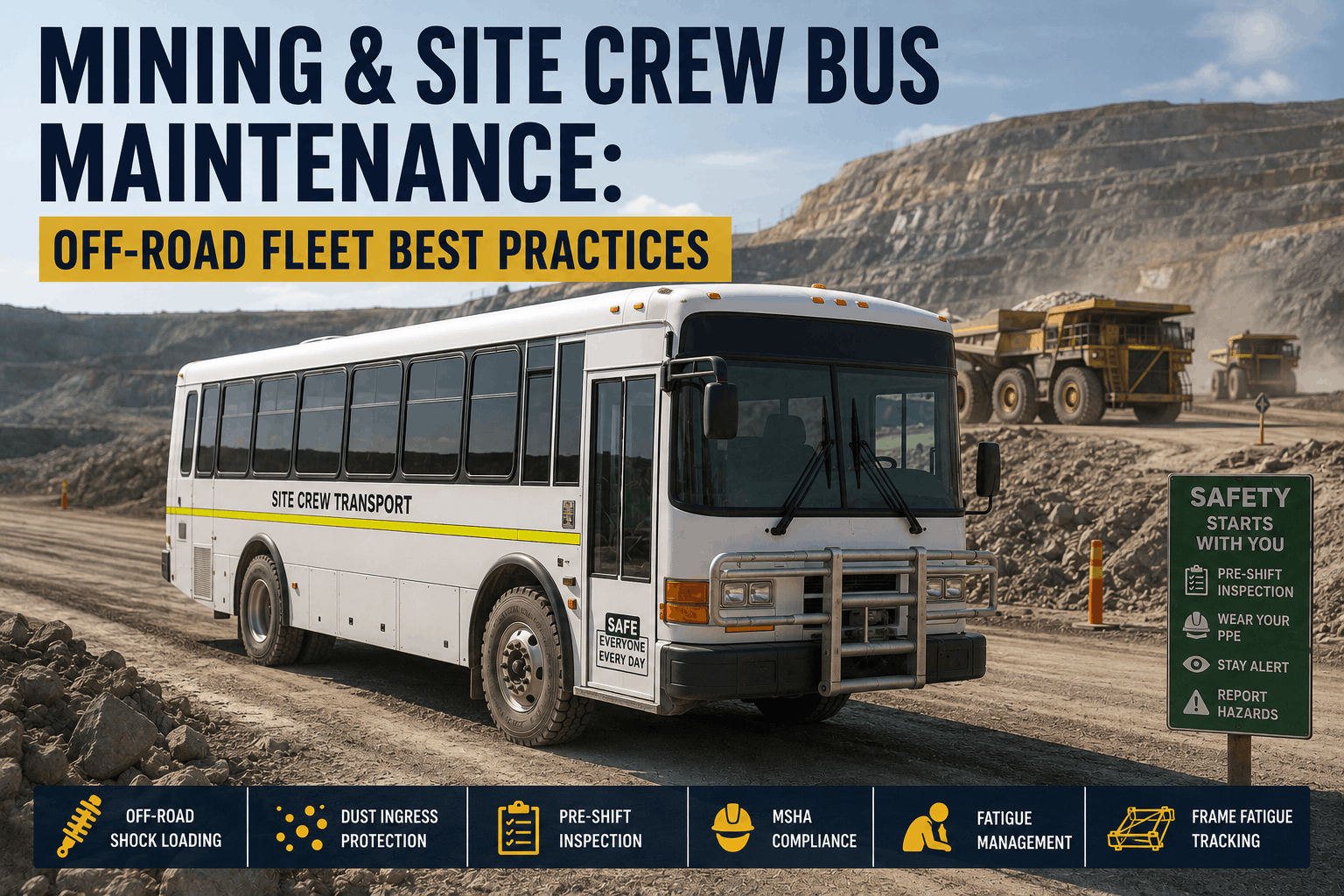
Driver fatigue represents one of the most critical safety challenges facing long-distance bus operations in the United States. With intercity and charter bus services covering millions of miles annually, managing driver alertness is essential for passenger safety, regulatory compliance, and operational sustainability. Federal studies indicate that fatigue contributes to approximately 13% of commercial vehicle crashes, making comprehensive fatigue management programs non-negotiable for responsible operators.
The complexity of fatigue management extends beyond simple hours-of-service compliance. Factors including circadian rhythms, route characteristics, traffic conditions, and individual driver physiology create multifaceted challenges that require sophisticated management approaches. Modern fleet operators must balance service demands with driver wellness while maintaining strict adherence to federal regulations.
Implementing comprehensive fatigue management through Bus CMMS platforms enables operators to track driver hours, monitor performance indicators, and optimize schedules based on fatigue risk factors. Leading operators report 45% reduction in fatigue-related incidents and 30% improvement in driver retention through systematic fatigue management programs.
Comprehensive Fatigue Management Architecture
Effective fatigue management requires integrated systems that monitor multiple data streams and provide actionable insights. Bus CMMS platforms serve as the central hub for fatigue risk assessment and mitigation strategies.
Key System Components
- Hours-of-Service Tracking: Real-time monitoring of driving hours, on-duty time, and mandatory rest periods with predictive alerts
- Biometric Monitoring: Integration with fatigue detection cameras and wearable devices for physiological monitoring
- Schedule Optimization: AI-powered algorithms that create schedules minimizing fatigue risk while meeting service requirements
- Environmental Analysis: Route difficulty scoring based on distance, terrain, traffic patterns, and weather conditions
The integration of these components within Bus CMMS creates a proactive fatigue management ecosystem that prevents violations before they occur while optimizing driver well-being.
Critical Warning Signs of Driver Fatigue
Indicators Requiring Immediate Intervention
- Microsleeps: Brief lapses in consciousness lasting 1-10 seconds, often unnoticed by the driver
- Lane Deviations: Unintentional drifting detected by telematics or lane departure warning systems
- Speed Variations: Inconsistent speed maintenance indicating reduced attention and motor control
- Delayed Reactions: Increased response time to traffic signals, passenger requests, or road hazards
Early detection of these warning signs through integrated monitoring systems within Bus CMMS enables immediate intervention, potentially preventing catastrophic accidents and saving lives.
Advanced Scheduling Strategies
Scientific schedule design represents the foundation of effective fatigue management. Bus CMMS platforms employ sophisticated algorithms to create schedules that respect human physiological limitations while meeting operational demands.
Fatigue-Optimized Scheduling Principles
Circadian Rhythm Alignment
Schedule critical driving periods during natural alertness peaks while avoiding 2-4 AM and 2-4 PM high-risk windows
Progressive Rest Requirements
Implement longer rest periods after consecutive night shifts or extended driving assignments
Route Rotation Strategies
Alternate challenging routes with less demanding assignments to prevent cumulative fatigue
Technology Solutions for Fatigue Detection
Modern fatigue management leverages cutting-edge technology integrated through Bus CMMS platforms to provide real-time monitoring and intervention capabilities.
Advanced Detection Technologies
- Driver Facing Cameras: AI-powered systems detecting eye closure frequency, yawning, and head position changes
- Steering Pattern Analysis: Algorithms identifying micro-corrections indicative of reduced alertness
- Wearable Biosensors: Heart rate variability and skin conductance monitoring for physiological fatigue indicators
- Voice Analysis: Speech pattern changes detecting cognitive impairment from fatigue
Regulatory Compliance and Documentation
Federal Motor Carrier Safety Administration (FMCSA) regulations establish strict requirements for hours-of-service compliance. Bus CMMS platforms automate compliance tracking while providing comprehensive documentation for audits and investigations.
Compliance Management Features
Electronic Logging Device (ELD) integration ensures accurate hours-of-service recording with tamper-proof documentation. Automated alerts prevent drivers from exceeding legal driving limits while predictive analytics identify potential violations before they occur. The system maintains complete audit trails demonstrating proactive compliance management.
Integration with Bus CMMS extends compliance beyond basic hours tracking to include fatigue risk assessments, training documentation, and incident correlation analysis required for comprehensive safety management systems.
Creating a Culture of Fatigue Awareness
Organizational Best Practices
- Driver Education: Regular training on fatigue recognition, countermeasures, and personal responsibility
- Open Communication: Non-punitive reporting systems encouraging drivers to declare fatigue concerns
- Wellness Programs: Supporting healthy sleep habits through education and resources
- Family Engagement: Involving driver families in understanding schedule demands and supporting rest periods
Measuring Fatigue Management Effectiveness
Successful fatigue management programs tracked through Bus CMMS demonstrate measurable improvements across multiple performance indicators.
Safety Improvements
45% reduction in fatigue-related incidents and 60% decrease in hours-of-service violations
Operational Benefits
25% improvement in on-time performance through optimized scheduling and reduced unplanned absences
Driver Satisfaction
30% increase in retention rates through improved work-life balance and fatigue consideration
Innovative Fatigue Countermeasures
Leading operators implementing Bus CMMS integrated fatigue management employ innovative countermeasures that go beyond traditional approaches.
Advanced Intervention Strategies
Strategic nap policies allowing controlled rest periods during extended layovers demonstrate 25% improvement in subsequent alertness levels. Bright light therapy installations at major terminals help reset circadian rhythms for night shift drivers. Automated fatigue risk scoring triggers mandatory rest extensions when cumulative risk factors exceed safe thresholds.
The comprehensive data collection capabilities of Bus CMMS enable continuous refinement of these countermeasures based on effectiveness metrics and driver feedback.
Economic Impact of Fatigue Management
Investment in comprehensive fatigue management through Bus CMMS delivers substantial financial returns beyond safety improvements.
Quantifiable Financial Benefits
- Insurance Premium Reductions: 15-20% discounts for operators with documented fatigue management programs
- Accident Cost Avoidance: Average savings of $500,000 per prevented fatigue-related accident
- Operational Efficiency: 10% reduction in overtime costs through optimized scheduling
- Regulatory Compliance: Elimination of DOT fines averaging $15,000 per hours-of-service violation
Frequently Asked Questions
How does Bus CMMS predict and prevent driver fatigue better than manual tracking systems?
Bus CMMS employs sophisticated algorithms that analyze multiple fatigue risk factors simultaneously, including cumulative driving hours, time-of-day effects, route difficulty, and individual driver patterns. Unlike manual systems that only track basic hours-of-service, the platform calculates dynamic fatigue risk scores incorporating circadian science and operational variables. The system automatically adjusts schedules when risk thresholds are approached, sends proactive alerts to dispatchers, and suggests optimal rest periods based on upcoming assignments. This predictive capability enables intervention before fatigue becomes dangerous, while integration with biometric monitoring provides real-time validation of driver alertness levels.
What makes Bus CMMS essential for multi-state long-distance operations?
Bus CMMS excels at managing the complex regulatory variations and operational challenges of interstate bus operations. The platform automatically applies appropriate hours-of-service rules based on operation type (passenger-carrying vs property-carrying), tracks state-specific requirements, and manages driver qualifications across multiple jurisdictions. For operators running irregular routes or charter services, the system's dynamic scheduling optimization considers factors like unfamiliar territories, varying passenger loads, and weather-related delays that increase fatigue risk. The platform's mobile accessibility ensures drivers and dispatchers can access fatigue management tools regardless of location, while cloud-based architecture provides seamless coordination across multiple terminals and time zones.
Transform Your Approach to Driver Fatigue Management
Fatigue management in long-distance bus operations demands more than regulatory compliance – it requires a comprehensive, technology-enabled approach that prioritizes driver wellness and passenger safety. The integration of advanced fatigue management capabilities within Bus CMMS platforms creates unprecedented opportunities for proactive risk mitigation and operational optimization.
As the transportation industry faces increasing scrutiny and evolving safety expectations, operators cannot afford outdated approaches to fatigue management. The proven benefits – from 45% reduction in fatigue incidents to substantial insurance savings – make comprehensive fatigue management systems essential for competitive operations.
Ready to Revolutionize Your Fatigue Management?
Discover how Bus CMMS can transform your approach to driver fatigue management and create safer operations for your long-distance fleet.