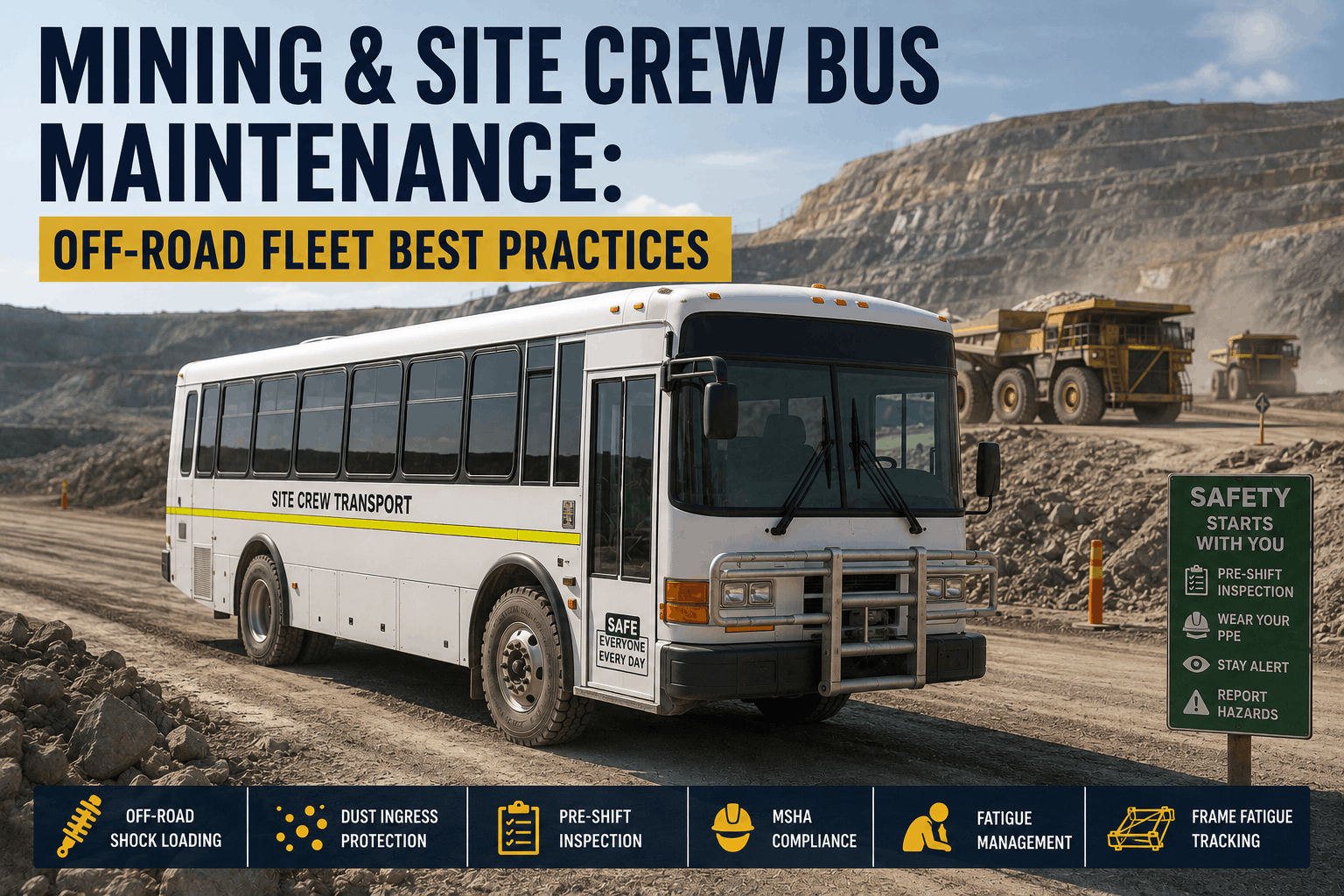
Modern bus fleets represent complex ecosystems of interconnected systems that require sophisticated maintenance approaches. Today's buses integrate advanced powertrain technologies, comprehensive diagnostic systems, smart fleet management capabilities that demand strategic preventive maintenance planning.
The evolution of bus technology has introduced hybrid and electric powertrains, advanced cooling systems, regenerative braking mechanisms, and sophisticated electronic control units. Each component requires specific maintenance protocols to ensure optimal performance and longevity.
Fleet operators utilizing Bus CMMS (Computerized Maintenance Management Systems) report up to 35% reduction in unexpected breakdowns and 28% improvement in overall fleet . This data-driven approach transforms reactive maintenance into predictive maintenance strategies.
Strategy #1: Proactive Component Monitoring
Critical Warning Signs to Monitor
- Engine Performance Degradation: Monitor fuel consumption patterns, exhaust emissions, and power output metrics
- Transmission Issues: Track shift quality, fluid temperatures, and gear engagement patterns
- Brake System Deterioration: Assess brake pad wear, fluid contamination, and ABS functionality
- HVAC System Inefficiencies: Monitor cooling capacity, refrigerant levels, and air quality metrics
Implementing comprehensive monitoring through Bus CMMS platforms enables fleet managers to identify potential issues before they escalate into costly repairs. Advanced telematics integration provides real-time data on vehicle performance, allowing for immediate intervention when parameters exceed acceptable thresholds.
Strategy #2: Scheduled Maintenance Optimization
Effective preventive maintenance relies on optimized scheduling that balances manufacturer recommendations with real-world operational demands. Modern Bus CMMS systems analyze historical maintenance data, vehicle utilization patterns, and environmental factors to create dynamic maintenance schedules.
Key Maintenance Intervals
Daily Inspections
Pre-trip and post-trip inspections focusing on safety-critical systems, fluid levels, and visible component wear
Weekly Assessments
Comprehensive system checks including tire pressure, battery condition, lighting systems, and accessibility equipment
Monthly Deep Inspections
Detailed examination of drivetrain components, suspension systems, steering mechanisms, and emission control systems
Strategy #3: Predictive Analytics Implementation
Leveraging predictive analytics through advanced Bus CMMS platforms transforms maintenance from reactive to proactive. Machine learning algorithms analyze patterns in vehicle data to predict component failures before they occur.
Analytics Applications
- Engine Health Monitoring: Oil analysis, vibration patterns, and thermal imaging data predict engine component wear
- Tire Management: Pressure monitoring, tread wear analysis, and road condition correlation optimize tire replacement timing
- Battery Performance: Charge cycle analysis and capacity degradation modeling for electric and hybrid buses
- Brake System Analytics: Pad wear prediction based on route characteristics and driving patterns
Strategy #4: Inventory Management Integration
Effective preventive maintenance requires strategic parts inventory management. Modern Bus CMMS systems integrate inventory tracking with maintenance scheduling to ensure critical components are available when needed while minimizing carrying costs.
Inventory Optimization Principles
Smart inventory management considers lead times, seasonal demand variations, and criticality levels. High-priority components like brake pads, filters, and belts require buffer stock, while specialized parts can be managed through just-in-time ordering strategies.
Integration with supplier networks through Bus CMMS platforms enables automated reordering based on consumption patterns and upcoming maintenance schedules. This approach reduces emergency procurement costs by up to 40%.
Strategy #5: Technician Training and Certification
The effectiveness of preventive maintenance programs depends heavily on technician expertise and training. Modern bus technologies require specialized knowledge and continuous education to maintain optimal performance standards.
Training Program Components
Diagnostic Technology Proficiency
Advanced diagnostic tools and software interpretation for modern bus systems
Hybrid and Electric Systems
Specialized training for alternative fuel and electric propulsion systems
CMMS Platform Utilization
Comprehensive training on Bus CMMS features and maintenance workflow optimization
Implementation Best Practices
Successful Implementation Guidelines
- Phased Rollout: Implement preventive maintenance strategies gradually to ensure smooth transition
- Data Quality Focus: Ensure accurate data entry and regular system updates for optimal Bus CMMS performance
- Performance Metrics: Establish KPIs including MTBF (Mean Time Between Failures), maintenance costs per mile, and fleet availability
- Continuous Improvement: Regular review and optimization of maintenance procedures based on performance data
Cost-Benefit Analysis
Implementing comprehensive preventive maintenance strategies through Bus CMMS systems delivers measurable returns on investment. Industry studies demonstrate average cost savings of 25-30% compared to reactive maintenance approaches.
Financial Benefits
Reduced emergency repairs, extended component life, improved fuel efficiency, and enhanced passenger safety contribute to overall operational cost reduction. Fleet operators report payback periods of 12-18 months for comprehensive preventive maintenance implementations.
Conclusion
Modern bus fleet management requires sophisticated preventive maintenance strategies that leverage technology, data analytics, and skilled technicians. The integration of comprehensive Bus CMMS platforms with these five core strategies creates a foundation for optimal fleet performance, cost control, and passenger safety.
Success in preventive maintenance depends on commitment to continuous improvement, investment in technology and training, and strategic implementation of data-driven maintenance practices. Fleet operators who embrace these approaches position themselves for long-term operational excellence and competitive advantage.
Ready to Transform Your Fleet Maintenance?
Discover how Bus CMMS can revolutionize your preventive maintenance strategy and drive significant cost savings for your fleet operations.