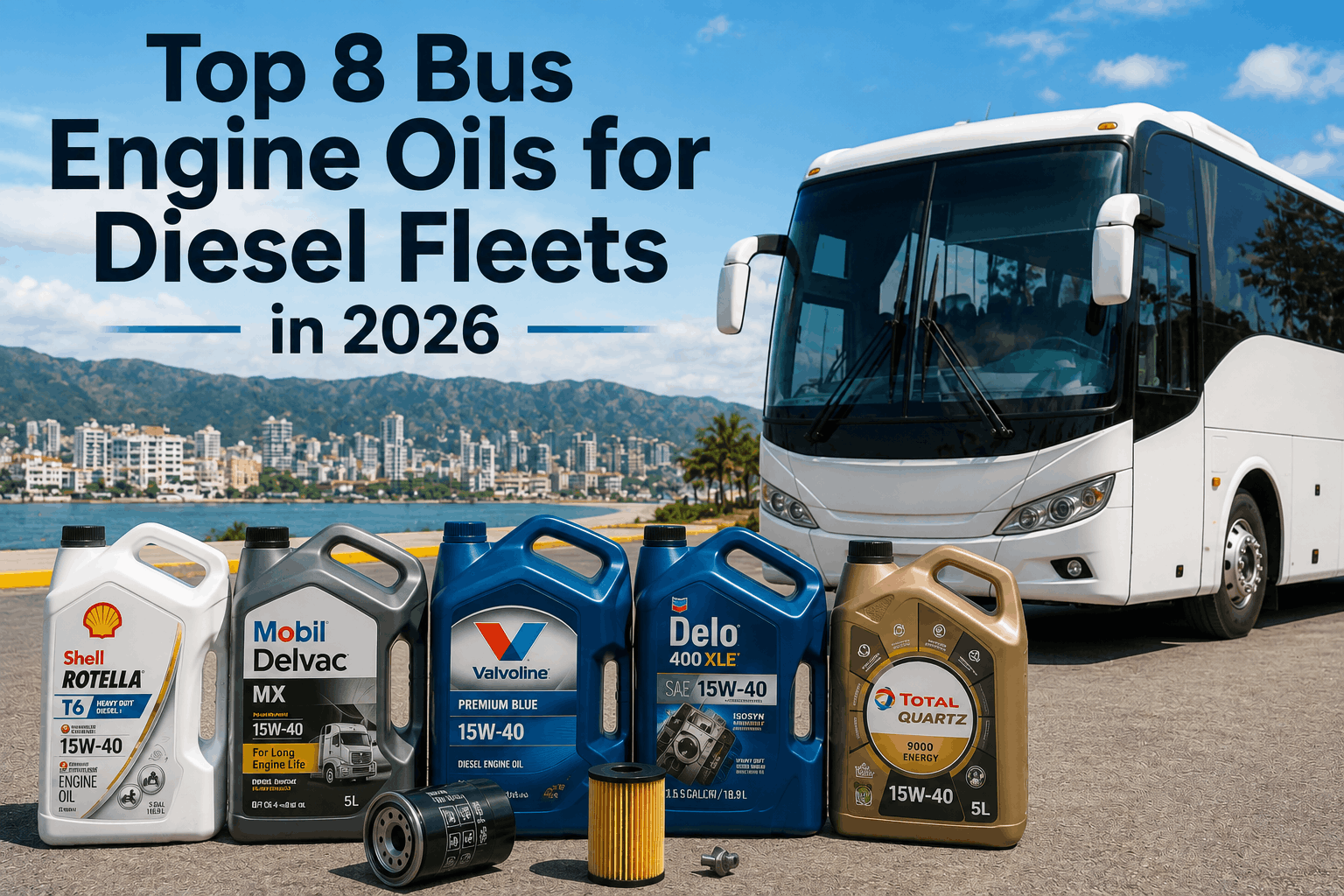
Choosing the right engine oil is critical for diesel bus fleets in 2026. The right oil protects engines, extends oil change intervals, and improves fuel efficiency. This guide compares the top 8 engine oils — Shell Rotella, Mobil Delvac, Valvoline Premium Blue, Chevron Delo, Total Quartz, and more — with performance ratings, viscosity options, and API specifications to help you select the best oil for your fleet.
Engine Oil Guide 2026
Top 8 Bus Engine Oils for Diesel Fleets in 2026
Top 8 bus engine oils for diesel fleets in 2026. Shell Rotella, Mobil Delvac, Valvoline Premium Blue, Chevron Delo, Total Quartz — performance compared.
Engine Oil Impact: The Cost of Wrong Oil Choices
Using the wrong engine oil can reduce engine life by up to 50%, increase oil consumption, and cause costly repairs. The right oil protects against wear, deposits, and oxidation while improving fuel efficiency. Choosing the right oil is critical for diesel bus fleets.
50%
Reduced engine life with wrong oil
$500-$2,000
Annual oil cost per bus
3-5%
Fuel efficiency impact
100,000+
Miles between overhauls with quality oil
Top 8 Bus Engine Oils Compared
1. Shell Rotella T6
Best For: Full synthetic protection. 5W-40, 15W-40. Excellent soot control and wear protection. API CK-4 approved. Popular in all bus types.
2. Mobil Delvac 1
Best For: Extended drain intervals. 5W-40, 15W-40. Superior oxidation resistance. API CK-4 approved. Excellent for highway coaches.
3. Valvoline Premium Blue
Best For: Cummins and Detroit engines. 15W-40, 5W-40. Cummins CES approved. Excellent wear protection. Popular in school buses.
4. Chevron Delo 400
Best For: Deposit control and soot handling. 15W-40, 5W-40. API CK-4 approved. Excellent for transit buses with DPF systems.
5. Total Quartz 9000
Best For: European engines. 5W-40, 10W-40. ACEA E9 approved. Excellent for Volvo and MAN engines.
6. Petro-Canada Duron
Best For: Cold weather performance. 5W-40, 10W-40. Excellent low-temperature flow. Popular in Canada and northern US.
7. Kendall GT-1
Best For: Mixed fleets. 15W-40. Good soot control and wear protection. Competitive pricing.
8. Amsoil Synthetic
Best For: Maximum protection and longevity. 5W-40. Extended drain intervals up to 50,000 miles. Premium synthetic.
Engine Oil Performance Comparison
All top oils offer strong performance across wear protection, soot control, and oxidation resistance. Amsoil offers the highest level of protection with extended drain intervals. Shell Rotella T6 and Mobil Delvac 1 lead in synthetic performance. Valvoline Premium Blue is popular for Cummins engines.
Oil Price & Drain Interval Comparison
Conventional oils range from $25-$30 per gallon. Synthetic oils range from $28-$55 per gallon. Shell Rotella T6 and Mobil Delvac 1 offer 25,000-35,000 mile drain intervals. Amsoil offers up to 50,000 mile drain intervals with premium protection.
Engine Oil Selection Requirements
API Rating
Ensure API CK-4 or FA-4 rating for modern diesel engines. Older engines may require CI-4 or CJ-4. Check manufacturer specifications.
Viscosity Grade
Choose 15W-40 for year-round use in most climates. Use 5W-40 for cold weather operations. Check manufacturer recommendations.
OEM Approvals
Verify oil meets engine manufacturer approvals. Cummins CES, Detroit Diesel, Volvo, and Mercedes have specific requirements.
Drain Interval
Consider oil change frequency and extended drain capabilities. Synthetics offer longer intervals but cost more per gallon.
Soot Control
Evaluate soot handling capacity for engines with EGR and DPF systems. High soot control extends DPF life.
Oxidation Resistance
Consider oxidation resistance for extended drain intervals and high-temperature operation. Synthetic oils offer superior oxidation resistance.
Engine Oil Industry Trends
Synthetic oil adoption has grown from 30% to 80% between 2019 and 2025. Extended drain intervals have increased as fleets recognize the value of premium oils. Shell, Mobil, and Valvoline lead in synthetic adoption. By 2026, most bus fleets will use synthetic oils for lower TCO.
Oil Selection Checklist for Bus Fleets
API Rating
Verify API CK-4 or FA-4 rating. Check manufacturer requirements. Ensure oil meets current emissions standards.
Viscosity Grade
Select appropriate viscosity for your climate. 15W-40 for year-round. 5W-40 for cold weather. Check OEM recommendations.
OEM Approvals
Verify oil meets engine manufacturer approvals. Cummins, Detroit, Volvo, and Mercedes have specific requirements.
Soot & Deposit Control
Evaluate soot handling for EGR-equipped engines. Check deposit control for extended drain intervals.
Drain Interval
Consider oil change frequency and extended drain capabilities. Synthetics offer longer intervals but higher upfront cost.
Total Cost of Ownership
Compare TCO including oil cost, drain interval, and engine protection. Premium oils often lower TCO despite higher price.
Engine Oil KPIs
Track these five metrics to measure your oil management program effectiveness:
Oil Analysis Results
Target: Within manufacturer specifications. Track quarterly. Regular oil analysis catches issues early.
Oil Consumption Rate
Target: Decreasing or stable trend. Track monthly. High consumption indicates wear or oil quality issues.
Oil Drain Interval
Target: At or exceeding manufacturer spec. Track by bus. Premium oils allow extended intervals.
Engine Overhaul Interval
Target: 100,000+ miles between overhauls. Track annually. Quality oil extends engine life significantly.
Oil Cost per Mile
Target: Decreasing trend. Track monthly. Premium oils often reduce cost per mile despite higher price.
Our fleet of 150 buses switched to Shell Rotella T6 synthetic oil in 2024. In the first year, oil drain intervals increased from 15,000 to 30,000 miles. Oil analysis showed 40% less wear metals. Engine overhaul intervals extended from 80,000 to 120,000 miles. Annual oil cost decreased by 15% despite higher oil price.
Digitize Your Oil Management Program
BusCMMS provides comprehensive oil management including oil change tracking, analysis scheduling, drain interval optimization, and cost analysis. Track oil consumption, analysis results, and compare brand performance. Book a demo to see how BusCMMS optimizes oil management.
Bus Engine Oil FAQs
What is the best engine oil for diesel buses?
The best oil depends on your engine type and operating conditions. Shell Rotella T6 is excellent for all-around synthetic protection. Mobil Delvac 1 offers extended drain intervals. Valvoline Premium Blue is popular for Cummins engines. Always check API ratings and OEM approvals.
What viscosity oil should I use in a bus?
Most bus engines use 15W-40 for year-round operation. In cold climates, 5W-40 provides better cold-start protection. Some newer engines require 10W-30 or 5W-30. Always follow manufacturer recommendations in your owner's manual.
How often should bus engine oil be changed?
Oil change intervals vary by oil type and engine. Conventional oils typically require 10,000-15,000 mile intervals. Synthetic oils can extend to 25,000-35,000 miles. Always use oil analysis to determine optimal intervals for your fleet.
What is the difference between CK-4 and FA-4 oils?
CK-4 oils are designed for high-speed, high-load diesel engines with EGR and DPF systems. FA-4 oils offer improved fuel economy but are not compatible with all engines. Check manufacturer recommendations before using FA-4.
Is synthetic oil worth the extra cost for bus fleets?
Yes. Synthetic oils offer superior protection, longer drain intervals, and better fuel economy. While synthetic oil costs more per gallon, the extended drain interval and reduced engine wear typically lower total cost of ownership. Most fleets save money with synthetics.
Can BusCMMS track oil management?
Yes. BusCMMS tracks oil changes, oil analysis results, consumption rates, and drain intervals. The system generates alerts for scheduled oil changes, tracks oil inventory, and compares brand performance. This helps optimize oil selection and maintenance schedules.
The Bottom Line
Choosing the right engine oil is critical for diesel bus fleet performance and longevity. Shell Rotella T6 leads in all-around synthetic protection. Mobil Delvac 1 offers extended drain intervals. Valvoline Premium Blue is popular for Cummins engines. Chevron Delo excels in soot control. Total Quartz is ideal for European engines. When selecting oil, prioritize API rating (CK-4/FA-4), viscosity (15W-40 or 5W-40), OEM approvals, soot control, and oxidation resistance. The right oil can reduce engine wear, extend oil change intervals, and improve fuel efficiency. When combined with proper oil analysis through CMMS, fleets can optimize oil selection and intervals for maximum value.