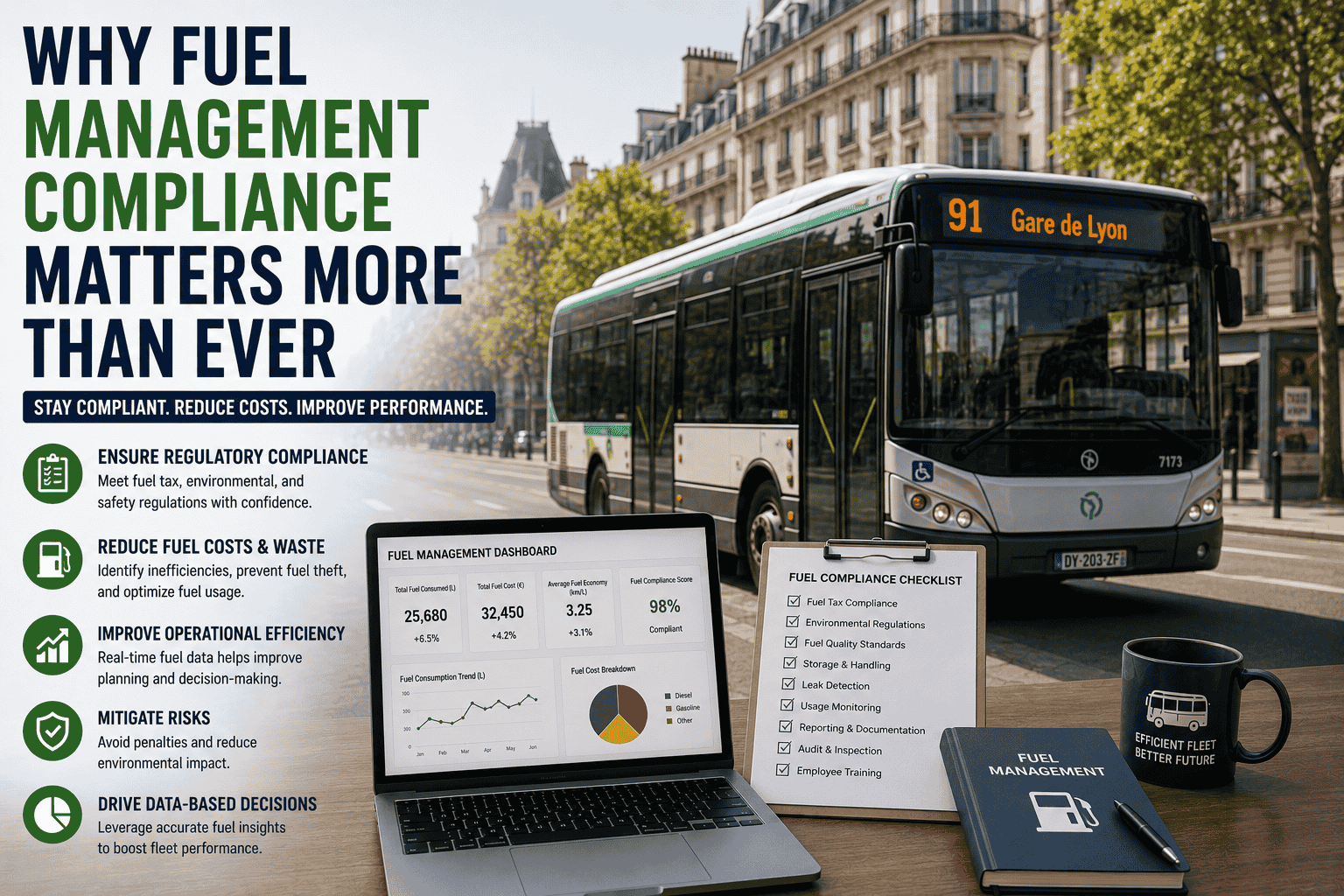
Fuel management compliance is no longer just an accounting task. For transit agencies, school bus fleets, charter operators, and public transportation teams, fuel records now connect directly to audit readiness, cost control, emissions reporting, vehicle utilization, and maintenance planning. A fleet that cannot prove where fuel was purchased, which vehicle received it, how many gallons were used, whether the odometer matched the fill-up, and whether fuel consumption is trending normally creates compliance risk and financial leakage. Fuel card statements, paper receipts, spreadsheets, and disconnected maintenance records are not enough when auditors, leadership teams, or grant reviewers ask for clean fleet performance data. In 2026, effective fuel management compliance means tracking fuel by vehicle, route, driver, odometer, cost center, and exception pattern. This page explains why fuel compliance matters more than ever and how fleets can use CMMS workflows to improve efficiency, reduce operating risk, and keep buses available for service.
See how transit and school bus fleets use fuel management compliance to improve audit readiness, reduce waste, control costs, and protect vehicle availability.
Fuel is one of the largest recurring operating costs in bus fleet management. But the compliance risk is just as important as the cost. If fuel data is incomplete, inaccurate, or disconnected from maintenance records, managers cannot verify vehicle usage, spot abnormal consumption, justify budgets, detect fraud, or support emissions reporting. A bus that suddenly consumes 20% more fuel may have a mechanical issue, a route assignment problem, a driver behavior issue, or a fuel card misuse problem. Without connected records, the fleet only sees the cost after the money is already spent.
Fuel management compliance means every fuel event is traceable. The record should include vehicle ID, driver, date, gallons, fuel type, cost, station, odometer, route or department, and exception status. When this data is connected to work orders, PM schedules, and fleet analytics, fuel stops being a receipt archive and becomes a reliability signal.
A fuel compliance program should not depend on paper receipts or manual spreadsheet updates. The system should capture fuel events consistently and validate them against vehicle and route data. That means every transaction should be tied to a vehicle profile, odometer reading, driver assignment, fuel type, and cost center. Missing or mismatched fields should trigger alerts before reports are finalized.
The most important compliance records include fuel card transactions, bulk tank dispenses, mobile fueling logs, odometer history, driver assignments, fuel cost by vehicle, MPG or energy efficiency trends, exception reports, and fuel-to-maintenance correlations. When these records are organized inside a CMMS, managers can quickly answer audit questions and leadership cost questions without searching through multiple systems.
Fuel compliance is not separate from maintenance. Fuel consumption often changes before a breakdown happens. A sudden MPG drop can indicate tire pressure issues, brake drag, fuel injector problems, engine tuning issues, air filter restriction, route changes, or idling behavior. When fuel data is connected to work orders, the maintenance team can investigate early instead of waiting for a road call.
For example, if Bus 42 normally averages 7.8 MPG but drops to 6.1 MPG for two weeks, the CMMS should flag that trend and create an inspection task. The technician can check tire pressure, brakes, filters, engine codes, and fuel system performance. This turns fuel analytics into a preventive maintenance trigger.
Fuel compliance improves when managers review the right KPIs on a weekly basis. Monthly reviews are useful for budgets, but weekly monitoring catches problems before they become expensive. The dashboard should show fuel cost per mile, gallons per vehicle, MPG variance, odometer mismatch count, fuel exceptions, idle-related waste, unauthorized fuel events, and maintenance alerts triggered by fuel trends.
These KPIs should be shared with maintenance, operations, dispatch, and leadership. Fuel waste often crosses departments. Operations controls routes and idling. Maintenance controls vehicle condition. Finance tracks cost. Compliance needs documentation. A shared fuel dashboard keeps everyone aligned.
Most fuel compliance failures are not caused by one major mistake. They come from small gaps repeated across months: missing odometer readings, fuel cards assigned to the wrong bus, paper receipts never entered, fuel purchases not tied to work orders, or bulk tank usage tracked separately from fleet software. These gaps make reporting slow and weaken audit confidence.
Fuel management compliance is strongest when fuel data is connected to vehicles, drivers, routes, odometers, work orders, and cost centers. Fleets should treat every fuel event as an operational record, not just a finance transaction. When data is validated automatically and reviewed weekly, managers can reduce waste, improve maintenance planning, strengthen audit readiness, and make fuel costs easier to explain to leadership.
Fuel management compliance matters because fuel records now support more than expense tracking. They help prove vehicle usage, detect abnormal consumption, support maintenance decisions, reduce fraud risk, improve audit readiness, and explain operating costs. A CMMS turns fuel data into a connected fleet workflow by linking fuel transactions to vehicles, drivers, odometers, work orders, routes, and reports. Transit and school bus fleets that improve fuel compliance gain better visibility, lower waste, and stronger vehicle availability.