Managing a city or transit bus fleet isn't just about keeping vehicles running—it's about maximizing efficiency, ensuring passenger safety, and maintaining regulatory compliance while controlling costs. For US manufacturing professionals overseeing these complex operations, a robust Computerized Maintenance Management System (CMMS) isn't just helpful—it's essential.
The right CMMS can transform your fleet maintenance from reactive firefighting to proactive optimization. With the average transit bus costing over $500,000 and serving thousands of passengers daily, every minute of downtime directly impacts your bottom line and community service. Let's explore the core-city-transit features that separate basic maintenance software from true fleet management solutions.
Ready to Transform Your Fleet Management?
See how the right CMMS can revolutionize your bus fleet operations
Getting Started Book a Demo1. Predictive Analytics and Diagnostic Systems Integration
Modern bus fleets generate massive amounts of data through onboard diagnostic systems, and your CMMS should harness this information for predictive maintenance. Instead of waiting for breakdowns, predictive analytics help you identify potential issues before they become costly problems.
Key features to look for include:
- Real-time integration with vehicle diagnostic systems
- Trending analysis for engine performance, brake wear, and transmission health
- Automated alerts for abnormal operating conditions
- Historical data analysis to predict component failure patterns
- Integration with manufacturer diagnostic protocols
2. Comprehensive Telematics Integration
Telematics integration transforms your CMMS from a simple maintenance tracker into a comprehensive fleet insights platform. This feature bridges the gap between vehicle operations and maintenance planning, providing the complete picture needed for informed decision-making.
Essential telematics capabilities include:
- Real-time vehicle location and performance monitoring
- Fuel efficiency tracking and optimization recommendations
- Driver behavior analysis affecting maintenance needs
- Route optimization data for maintenance scheduling
- Environmental impact monitoring and reporting
This integration enables maintenance scheduling based on actual usage patterns rather than arbitrary time intervals. A bus running city routes with frequent stops will have different maintenance needs than one on highway routes, and your CMMS should account for these differences automatically.
3. Advanced Compliance Tracking and Regulatory Management
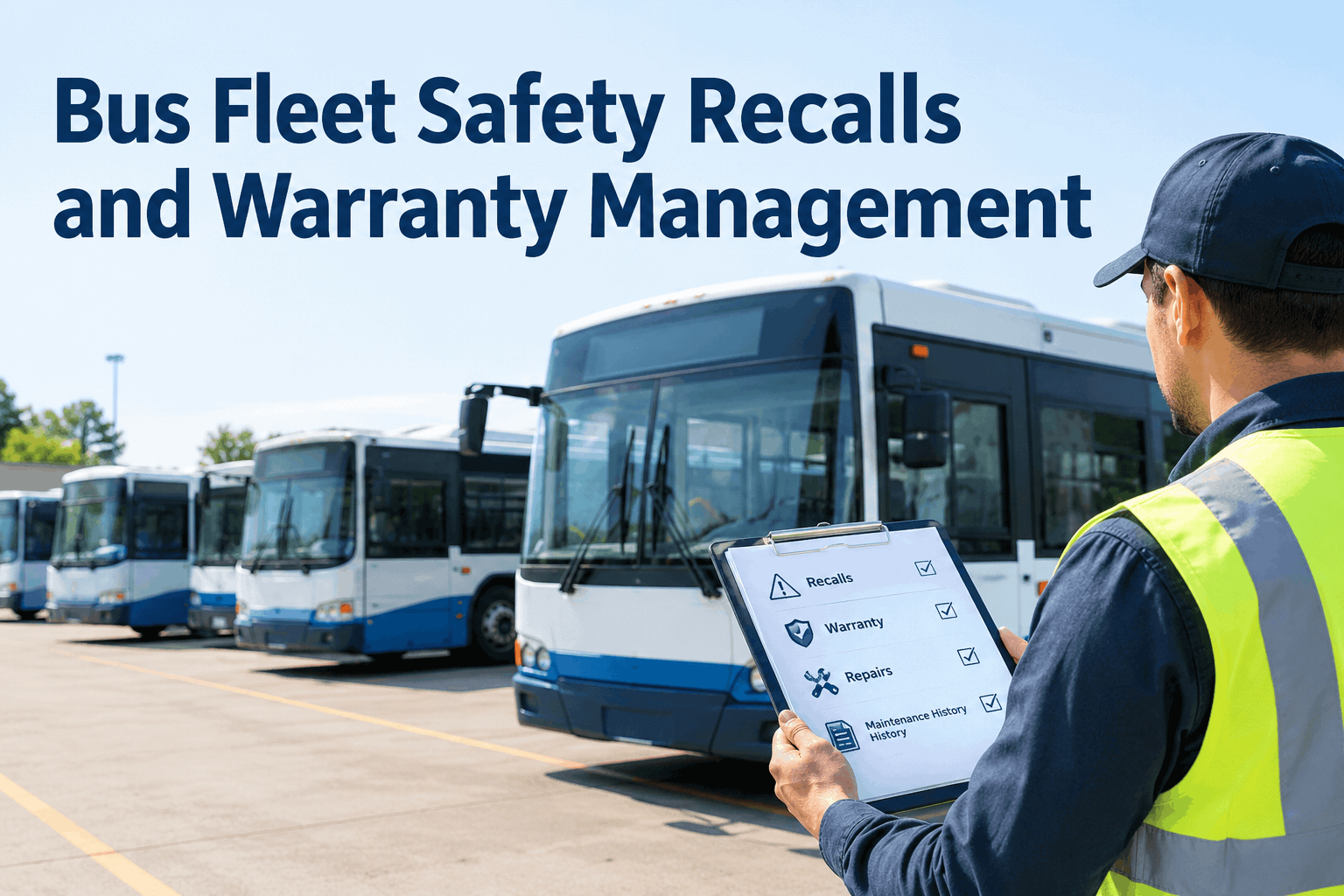
Bus fleets operate under strict federal, state, and local regulations. Your CMMS must go beyond simple reminder systems to provide comprehensive compliance tracking that reduces regulatory risk and ensures audit readiness.
Critical compliance features include:
- Automated DOT inspection scheduling and tracking
- EPA emissions compliance monitoring
- State-specific inspection requirements management
- Driver qualification and certification tracking
- Audit trail maintenance with digital documentation
- Regulatory change notifications and updates
The system should automatically generate compliance reports, track certification renewals, and provide early warnings for upcoming requirements. This proactive approach prevents costly violations and ensures continuous regulatory compliance.
4. Intelligent Maintenance Scheduling and Fleet Automation
Effective maintenance scheduling goes beyond simple calendar reminders. Your CMMS should intelligently balance maintenance needs with operational requirements, optimizing both vehicle availability and maintenance efficiency.
Advanced scheduling features should include:
- Multi-factor scheduling considering usage, time, and condition
- Automatic work order generation and assignment
- Resource allocation optimization (technicians, parts, bays)
- Maintenance window optimization to minimize service disruption
- Emergency maintenance prioritization and rescheduling
- Seasonal maintenance planning and preparation
The system should learn from historical patterns to improve scheduling accuracy over time, reducing both over-maintenance and unexpected failures. Fleet automation capabilities should extend to inventory management, automatically reordering parts based on usage patterns and scheduled maintenance.
5. Comprehensive Fleet Efficiency Analytics and Reporting
Data without insights is just noise. Your CMMS should transform maintenance data into actionable intelligence that drives continuous improvement across your fleet operations.
Essential analytics capabilities include:
- Total Cost of Ownership (TCO) analysis by vehicle and fleet
- Maintenance cost trending and budget forecasting
- Vehicle lifecycle analysis and replacement planning
- Technician productivity and efficiency metrics
- Parts usage optimization and inventory turnover analysis
- Comparative performance analysis across vehicle types and routes
The reporting system should provide both operational dashboards for day-to-day management and strategic reports for long-term planning. Custom reporting capabilities allow you to focus on metrics most relevant to your specific operation.
Experience These Features in Action
Don't just read about these capabilities—see them working for fleets like yours
Getting Started Book a DemoConclusion: Building Your Fleet Management Foundation
The right CMMS tools transform bus fleet management from a cost center into a strategic advantage. By implementing these essential features—predictive analytics, telematics integration, compliance tracking, intelligent scheduling, and comprehensive analytics—you're not just maintaining vehicles; you're optimizing entire transportation systems.
For US manufacturing professionals managing city and transit bus fleets, these capabilities represent the difference between reactive maintenance and proactive fleet optimization. The investment in advanced CMMS features pays dividends through improved vehicle uptime, reduced maintenance costs, enhanced regulatory compliance, and ultimately, better service to your community.
As transportation technology continues evolving, your CMMS should evolve with it. Choose a solution that not only meets today's needs but scales with tomorrow's challenges. Your fleet, your budget, and your passengers will thank you.
Ready to Optimize Your Fleet Operations?
Take the first step toward more efficient, reliable bus fleet management
Getting Started Book a Demo