Your diesel maintenance playbook is worthless for electric bus batteries. That 155 kWh battery pack sitting under your electric bus represents up to 50% of the vehicle's value—and it degrades invisibly until the day you can't complete your routes. By then, you've already lost tens of thousands in preventable capacity loss.
Transit fleet managers are discovering that battery maintenance isn't about scheduled interventions—it's about continuous monitoring, predictive analytics, and operational adjustments that extend battery life by years. Real-world data from 847 electric school buses shows actual degradation of just 7.2% over five years—far better than the 40% horror stories circulating online. But achieving those results requires fundamentally different maintenance approaches than diesel fleets have ever used.
By 2026, transit authorities operating electric buses will need battery-aware CMMS platforms that track State of Health in real-time, optimize charging patterns to minimize degradation, and predict failures months before they strand passengers. This guide explains what's changing and how to prepare your fleet operations.
Why Battery Maintenance Is Mission-Critical for Electric Buses
Electric bus batteries aren't like diesel engines—they don't announce their problems with warning lights and strange noises. Degradation happens silently, cycle by cycle, until one day your 150-mile range becomes 100 miles and you can't complete routes without midday charging.
The Financial Reality:
Battery packs represent 30-50% of an electric bus's total cost. For a typical transit bus with a 350-450 kWh pack, that's $100,000-$150,000 in battery value alone. Every 1% of unnecessary degradation represents $1,000-$1,500 in lost asset value. Over a 10-year bus lifecycle, poor battery maintenance practices can cost $30,000-$50,000 per vehicle in accelerated replacement needs.
The Operational Reality:
When battery capacity drops below 70-80% of original—the industry threshold for "end of life"—buses can no longer complete their assigned routes. Transit authorities face a choice: reroute to shorter runs, add midday charging stops, or replace the battery pack. None of these options are cheap or convenient.
The Warranty Reality:
Electric bus manufacturers typically warrant batteries for 6-12 years with 70% capacity retention guarantees. New Flyer offers 6-year standard with 12-year extension options. But warranty claims require documentation—proof that the battery was maintained according to specifications, charged correctly, and operated within thermal limits. Without proper monitoring and records, warranty coverage can be denied.
Battery Degradation: What Actually Happens (And What Doesn't)
The myths about electric bus battery degradation are costing transit authorities millions in delayed adoption and unnecessary anxiety. Here's what real-world data actually shows:
MYTH
"Batteries lose 40% capacity in 3 years"
REALITY
Data from 847 electric school buses shows average capacity loss of 7.2% after five years. At this rate, batteries retain over 80% capacity after 12-15 years—well beyond typical bus replacement cycles.
MYTH
"Cold weather permanently damages batteries"
REALITY
Cold weather causes temporary capacity reduction, not permanent degradation. A bus showing 85% capacity at -10°F returns to 98% capacity at 70°F. The permanent degradation rate is 1.8% per year regardless of climate.
MYTH
"Battery replacement costs $150,000+"
REALITY
Battery prices dropped 89% since 2010. In 2024, pack costs average $115/kWh. A 155 kWh school bus battery costs $70,000-$85,000 to replace. By 2030, costs projected at $69/kWh—roughly $50,000 per pack.
The 6 Factors That Actually Cause Battery Degradation
High Temperature Exposure
Battery temperatures above 95°F accelerate chemical degradation. Thermal management system failures or prolonged high-ambient operation can reduce battery life by 20-30%.
Mitigation: Monitor thermal system health, ensure coolant levels, precondition batteries before heavy use
High-Power Fast Charging
Frequent DC fast charging at rates above 1C (full charge in under 1 hour) stresses battery cells. Depot charging at 0.2C (5-hour charge) extends life significantly.
Mitigation: Use opportunity charging for top-ups only, depot charging for full cycles
Deep Discharge Cycles
Regularly discharging below 20% State of Charge stresses cells. Operating in the 20-80% SoC range can extend battery life by 2-3x compared to 0-100% cycles.
Mitigation: Set charging rules to avoid overcharging (>80%) and over-depleting (<20%)
Calendar Aging
Batteries degrade even when not used—approximately 1-2% annually just from time. Storing at high SoC accelerates calendar aging.
Mitigation: Store vehicles at 50-60% SoC when idle for extended periods
Unbalanced Cell Modules
Individual cells within a pack age at different rates. Without active balancing, weak cells limit total pack capacity and can cause premature failures.
Mitigation: Regular BMS diagnostics, cell balancing procedures
Coolant System Failures
Coolant leaks inside battery packs are an emerging concern. Internal leaks can damage cells and create safety hazards requiring pack replacement.
Mitigation: Regular coolant system inspections, pressure testing, leak detection sensors
Ready to track EV battery health across your fleet? See how predictive maintenance prevents costly failures.
Request Demo Start Free TrialPredictive Battery Maintenance Strategies for 2026
The shift from reactive to predictive battery maintenance is the defining change in electric bus fleet operations. Here's what leading transit authorities are implementing:
Real-Time State of Health Monitoring
Modern battery management systems track SoH continuously, but most transit fleets don't aggregate this data for fleet-wide analysis. CMMS platforms that connect to BMS data can identify outliers—buses degrading faster than fleet norms—enabling targeted intervention.
What to track: SoH trends by vehicle, deviation from fleet average, correlation between SoH decline and operational patterns (routes, charging behavior, driver assignments).
AI-Powered Failure Prediction
Advanced analytics platforms now detect battery anomalies and predict failures up to 3 months in advance. EVE-Ai and similar systems analyze thousands of data points to identify subtle patterns that precede cell failures, thermal runaway risks, and capacity cliff events.
Documented results: 143% ROI increase, 3 extra years of battery life, 40% less downtime in validated deployments.
Optimized Charging Protocols
Smart charging optimization delivers dual benefits: lower energy costs (20%+ savings through time-of-use management) and extended battery life (reduced degradation from controlled charging rates). Research shows coordinated charging strategies achieve 12-37% cost reductions compared to unmanaged charging.
Key practices: Depot charging at 0.2C rates, opportunity charging limited to top-ups, avoid charging above 80% unless operationally required.
Thermal Management Monitoring
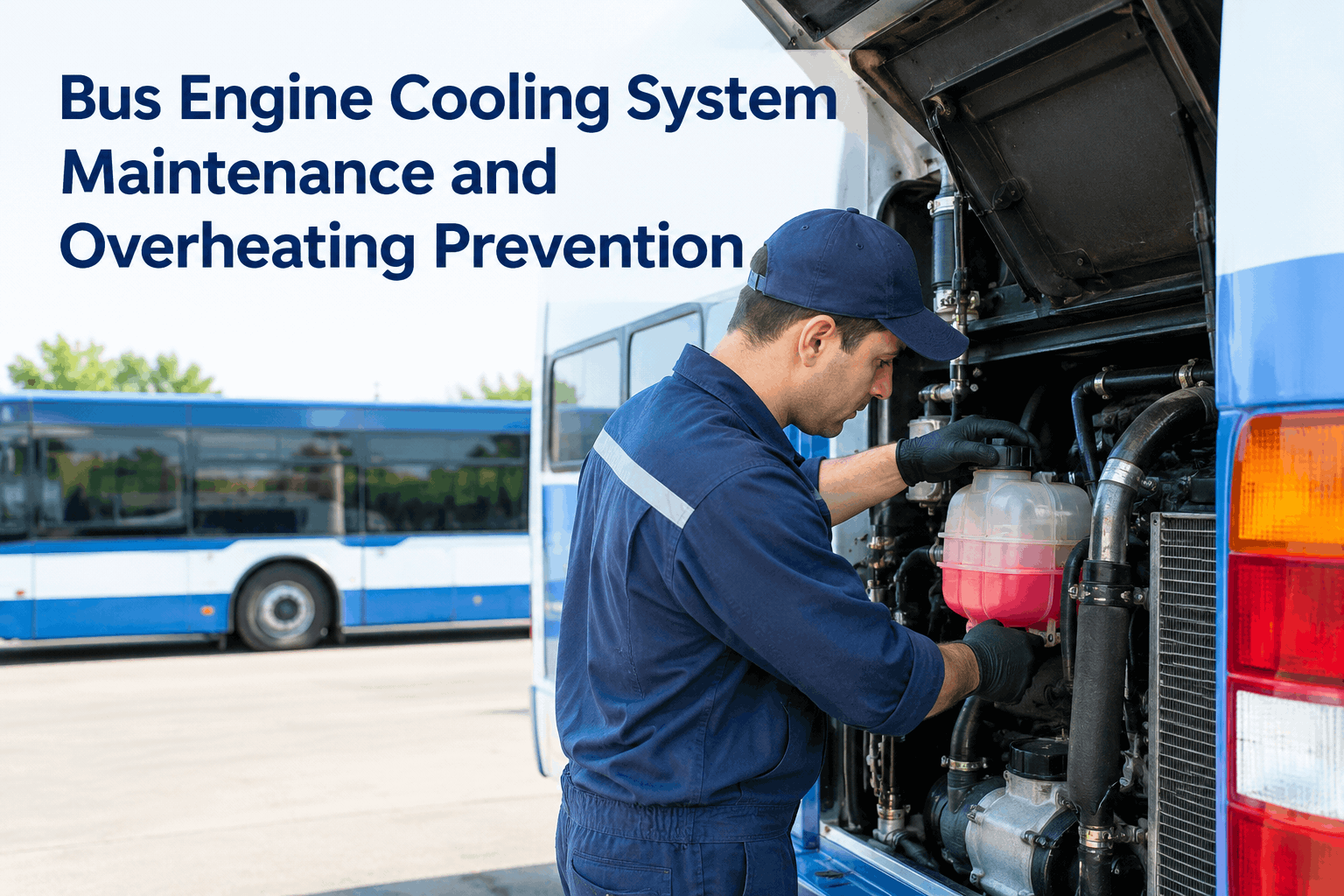
Battery cooling systems are the silent guardian of battery health. Thermal management failures can accelerate degradation by 20-30% before symptoms become obvious. Continuous monitoring of coolant temperature, pump efficiency, and thermal distribution identifies issues early.
Warning signs: Rising average battery temperature, increased temperature variance across modules, coolant pressure drops, fan/pump duty cycle increases.
Monitoring Battery Lifecycle and Warranties
Warranty Coverage Reality:
Electric bus battery warranties typically guarantee 70% capacity retention for 6-12 years. This means if your battery drops below 70% of original capacity during the warranty period, the manufacturer is responsible for repair or replacement. But there's a catch: you must prove proper maintenance and operation.
Documentation Requirements:
• Complete charging history with timestamps and power levels
• Thermal event logs showing battery temperatures during operation
• Maintenance records for cooling system service
• SoH trending data demonstrating abnormal degradation
• Proof of software updates and BMS calibrations
What Gets Warranties Denied:
• Undocumented third-party charging equipment usage
• Evidence of operation outside thermal specifications
• Missed software updates that would have addressed known issues
• Physical damage from impacts or improper handling
• Insufficient maintenance records
Lifecycle Planning by the Numbers:
• Years 1-5: Expect 5-8% capacity loss with proper maintenance. Focus on establishing baseline data and optimizing charging patterns.
• Years 6-10: Degradation may accelerate slightly. Plan for potential route adjustments or midday charging additions. Warranty claims for premature degradation should be filed.
• Years 10-15: Evaluate replacement vs. second-life applications. Batteries at 70-80% capacity may still serve shorter routes or stationary storage.
• Replacement Planning: Budget for battery replacement at year 10-12, but actual need may be year 12-15 depending on application and maintenance quality.
Using CMMS to Reduce Battery-Related Downtime
Traditional CMMS platforms were built for diesel—oil change intervals, transmission service, exhaust repairs. Electric bus batteries require fundamentally different tracking capabilities:
Essential CMMS Capabilities for EV Battery Management
☐ BMS Data Integration: Direct connection to battery management system for real-time SoH, SoC, cell voltages, and thermal data
☐ Charging System Monitoring: Track charger uptime, session success rates, power delivery, and fault codes
☐ Degradation Trending: Visualize capacity loss over time by vehicle, compare against fleet averages, identify outliers
☐ Predictive Alerts: AI-generated warnings for predicted failures, thermal events, and abnormal degradation
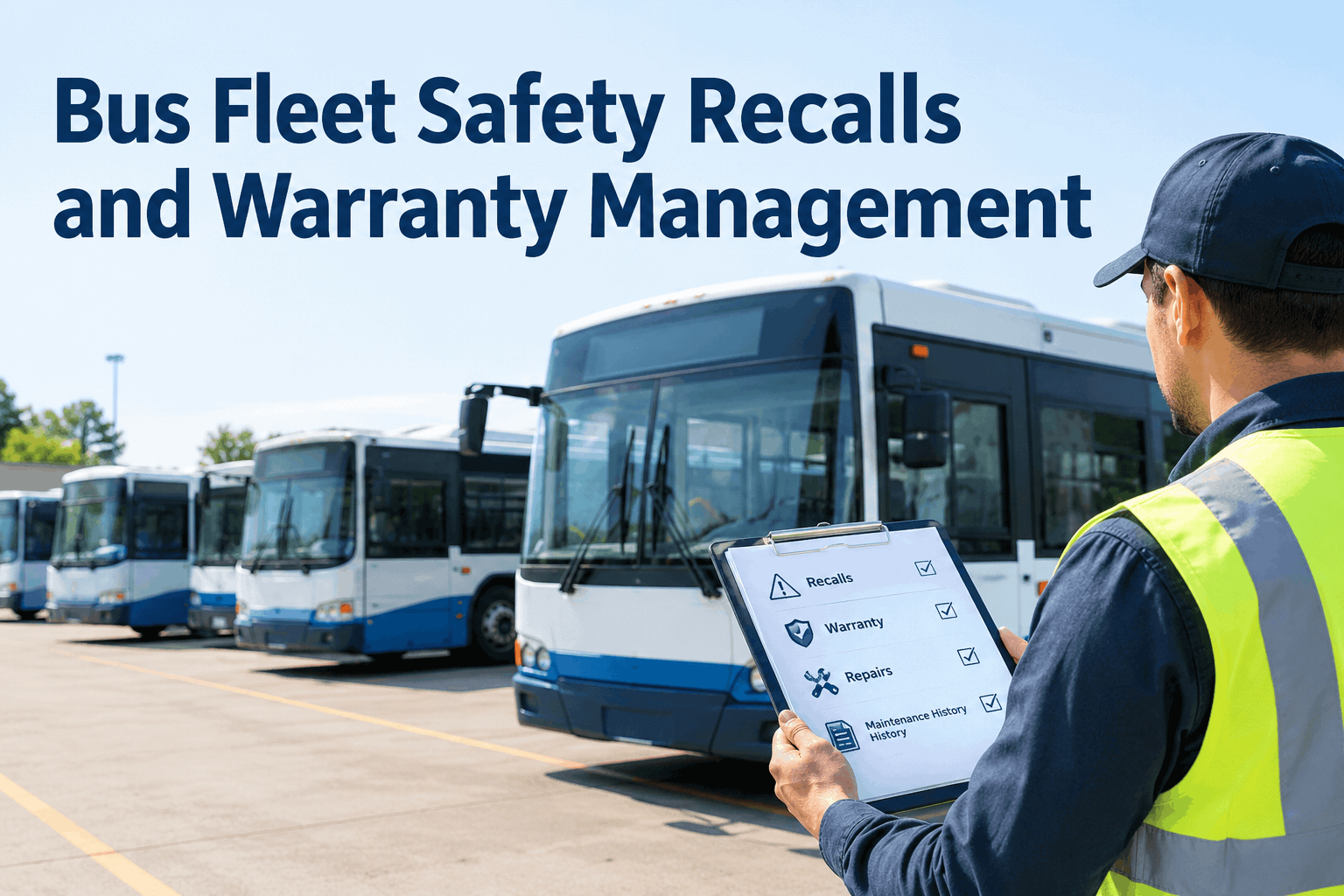
☐ Warranty Tracking: Automatic documentation of maintenance activities, charging patterns, and operational data for warranty claims
☐ Thermal System PM: Scheduled maintenance for coolant systems, pumps, fans, and heat exchangers
The Downtime Equation:
Transit authorities report that phantom energy use—unexplained consumption that doesn't show up in vehicle data—can add 50% to utility bills. Integrated CMMS systems that correlate vehicle energy consumption with utility billing can identify efficiency losses and equipment problems before they cause operational issues.
Zero Stranded Passengers:
Of 847 electric school buses tracked in 2025 fleet studies, zero reported instances of students stranded due to range degradation. This wasn't luck—it was the result of continuous monitoring, predictive route planning, and proactive maintenance that caught issues before they became service failures.
2026 Implementation Roadmap for Transit Fleets
Assessment & Baseline
Audit current battery health across fleet. Establish SoH baselines for each vehicle. Document existing charging patterns and thermal system maintenance. Identify data gaps in current monitoring.
System Integration
Deploy CMMS with BMS integration. Connect charging infrastructure monitoring. Set up automated data collection for warranty documentation. Train maintenance staff on EV-specific procedures.
Optimization & Tuning
Implement optimized charging protocols (SoC limits, rate management). Activate predictive maintenance alerts. Begin trending analysis to identify degradation outliers. Review warranty coverage and documentation completeness.
Full Operations
Measure results: degradation rate improvement, downtime reduction, energy cost savings. File warranty claims for any premature degradation identified. Plan year-two optimization based on collected data. Expand program to full fleet if piloted.
Ready to transform your electric bus battery maintenance? Get started with a platform built for EV fleet operations.
Track EV Battery Health Start Free TrialElectric bus battery maintenance in 2026 isn't about scheduled service intervals—it's about continuous intelligence. Transit fleets that implement real-time SoH monitoring, predictive failure detection, and optimized charging protocols are achieving 12-15 year battery lifespans with less than 8% degradation at the five-year mark. The technology exists. The data proves it works.
The gap between leading transit authorities and laggards will be defined by battery management sophistication. Organizations still treating electric buses like diesel—reactive maintenance, manual tracking, no predictive analytics—will face premature battery replacements costing $100,000+ per vehicle. Those with integrated CMMS platforms and AI-powered battery intelligence will extend asset life, reduce downtime, and prove the business case for electric transit.
Frequently Asked Questions
Q: How fast do electric bus batteries actually degrade?
A: Real-world data from 847 electric school buses shows average capacity loss of just 7.2% after five years of operation. This translates to batteries retaining over 80% capacity after 12-15 years—well beyond typical bus replacement cycles. The 40% degradation horror stories are myths based on outdated technology or misinterpretation of temporary cold-weather capacity reduction (which is reversible, not permanent degradation).
Q: What are the main factors that cause battery degradation?
A: Six primary factors: (1) High temperature exposure above 95°F, (2) Frequent high-power fast charging above 1C rate, (3) Deep discharge cycles below 20% SoC, (4) Calendar aging from time alone, (5) Unbalanced cell modules within the pack, and (6) Coolant system failures. Most can be mitigated through monitoring and operational adjustments—keeping batteries in 20-80% SoC range, using depot charging when possible, and maintaining thermal management systems.
Q: How much does it cost to replace an electric bus battery?
A: Battery pack costs have dropped 89% since 2010. In 2024, pack costs average $115/kWh. A typical transit bus battery (350-450 kWh) costs $40,000-$52,000 for the pack, plus $10,000-$20,000 for labor—roughly $50,000-$70,000 total. By 2030, costs are projected to reach $69/kWh, reducing replacement costs further. Warranties covering 6-12 years with 70% capacity guarantee often mean replacement isn't needed during the bus's service life.
Q: What documentation is needed for battery warranty claims?
A: Successful warranty claims require: complete charging history with timestamps and power levels, thermal event logs showing battery temperatures, maintenance records for cooling system service, SoH trending data demonstrating abnormal degradation, and proof of software updates. CMMS platforms that automatically capture this data protect your warranty rights and simplify claims processing when manufacturers require proof of proper maintenance.
Q: How can CMMS reduce battery-related downtime?
A: Modern CMMS platforms integrated with battery management systems provide: real-time SoH monitoring across the fleet, AI-powered failure prediction up to 3 months in advance, charging optimization that extends battery life and reduces energy costs by 20%+, thermal system monitoring to catch cooling failures early, and automated warranty documentation. Transit fleets using integrated platforms report zero instances of passengers stranded due to battery issues—the result of predictive maintenance catching problems before service failures.