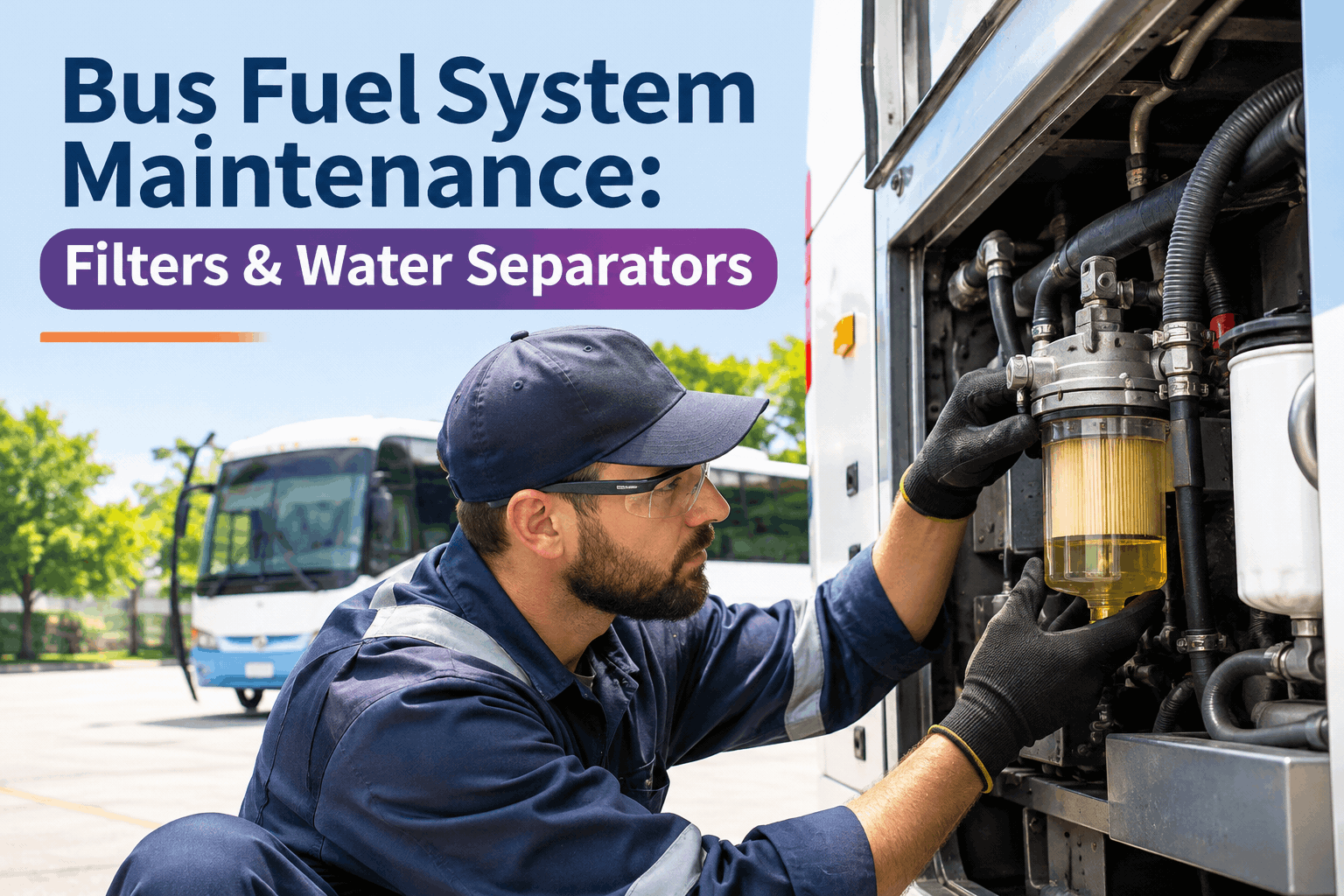
A bus loses power on the hill, stumbles, and limps back to the yard — the tank was full of diesel, water, and a plugged filter that finally gave up. Bus fuel system maintenance is the cheapest insurance a diesel carries, because the $100 filter protects injectors that cost four figures each. Want it scheduled on every bus? See it in a quick demo.
Bus Fuel System Maintenance: Filters & Water Separators
Clean fuel is the whole job. Follow it from the tank to the injectors and you see exactly where the filters and the water separator earn their keep — and what a skipped drain costs.
Why Clean Fuel Decides Everything Downstream
Modern diesel injection runs at enormous pressure through openings finer than a human hair. Contamination that slips past the filters does not cause a slow decline — it wears and scores the pump and injectors, and when water reaches that high-pressure stage the damage is immediate and expensive. The filters are not a formality; they are the whole defense.
Water is the main enemy
Ultra-low-sulfur and bio-blended diesel pull moisture from the air. Water rusts components, feeds microbial growth, and destroys injectors under pressure.
Microbes grow in the water
Where water and fuel meet, algae and bacteria thrive, giving diesel a sour smell and plugging filters early with a slimy growth.
Dirt and debris score parts
Rust, scale, and sediment from tanks are abrasive. Once past the filter they erode injector tips and pump surfaces for good.
A neglected fuel filter does not just restrict flow — it lets contamination reach a high-pressure pump and injectors that cost four figures each, turning a $100 filter into a five-figure repair.
Two Filters, Two Jobs: Primary and Secondary
Most bus diesels run staged filtration, and the two stages are not interchangeable. The primary filter and water separator take the brunt of bulk water and large debris; the fine secondary filter polishes the fuel just before the injectors. Skip the primary and the secondary gets overwhelmed and plugs early.
Primary filter + water separator
Mounted between the tank and engine, often on the frame rail. It pulls out bulk water and the larger contaminants before they ever reach the engine.
- Coarser media, high capacity
- Separates and collects water
- Has a bowl to drain — and often a clear cover to read
Secondary fine filter
On the engine, on the pressure side. It does the final fine filtration that protects the high-pressure pump and injectors.
- Fine media, 4-5 micron
- Protects pump and injectors
- Often a tighter interval than the primary
Run both. Without the stage-1 separator, the fine stage-2 filter takes the brunt of all contamination and plugs long before its rated interval — and you are back in the shop early.
Change them on the right cadence and each does its job for its full life. You can sign up free and track each filter's interval per bus so neither one slips.
Read the Water Before It Reaches the Injectors
The single highest-value habit in fuel maintenance is draining the water separator on schedule — and a clear-bowl separator lets a tech read fuel condition at a glance. In a settled sample, water sits apart from diesel because the two do not mix, so a cloudy layer at the bottom is water you need to drain before it moves downstream.
Many buses have a water-in-fuel dash lamp — when it lights, drain the separator right away. A logged drain on a schedule means the lamp rarely has to.
A two-minute drain beats an injector replacement every time — the trick is making sure it actually happens, on every bus, on a schedule a driver or tech signs off.
Contamination Symptoms, and What They Point To
A fuel problem rarely announces itself cleanly, but the symptoms map to causes. Catch the pattern early and you change a filter; miss it and you rebuild an injection system. Here is the quick read.
Swipe sideways to see all columns.
Every one of these is cheaper to catch at a scheduled inspection than on the side of a route. A demo shows how a fuel flag becomes a work order before the bus goes back out.
Your Fuel System PM Checklist
Build these into your PM schedule, not your memory. The red items protect the expensive injection parts; the amber ones keep intervals honest and the fuel clean. Cadence varies by engine and duty cycle — always confirm against your OEM schedule.
- Drain the water separator on a set intervalWeekly, by mileage, or whenever the water-in-fuel lamp lights — more often in humid climates and with bio-blends.CRITICAL
- Replace the primary filter / separator on schedulePre-fill the new filter with clean diesel before install to avoid air and a dry start; follow the OEM interval.CRITICAL
- Replace the secondary fine filter on its own intervalOften tighter than the primary. Never substitute a coarser filter to chase a problem — it only lets more through.CRITICAL
- Cut open or inspect the old filterDark, sludgy, or slimy media tells you the fuel is contaminated — and whether your interval still fits your fuel.INSPECT
- Watch bulk-tank and fuel qualityOn-site storage breeds water and microbes. Keep tanks maintained and consider an additive or biocide if water recurs.PREVENT
- Log every change and drain per busRecord intervals, water found, and filter condition so you can tune the schedule to your actual fuel.TRACK IT
Run the cadence and the fuel system quietly does its job for years. You can see this checklist run as a scheduled PM in a demo.
How BusCMMS Keeps the Fuel System on Schedule
BusCMMS does not drain a bowl or change a filter — it makes sure the drain and the change happen on time, on every bus, and get recorded. The checklist above becomes a schedule that fires on its own instead of a task that waits to be remembered.
Filter and drain PM by mileage or date
Primary, secondary, and separator-drain each on their own trigger, so no interval slips on any bus in the fleet.
Water-in-fuel flag to work order
A water-lamp or restriction note on the DVIR becomes a work order, so a fuel warning is acted on, not forgotten.
Right filter, logged history
Parts tied to each unit and a record of water found let you tune intervals to your real fuel, not a generic guess.
The result is clean fuel, protected injectors, and a fuel-service history you can prove. Book a demo and bring your fuel intervals.
A Maintenance Supervisor's Take
Key Takeaways on Bus Fuel System Maintenance
Clean fuel is cheap; a wrecked injection system is not. Four things to hold onto.
The filter protects the expensive parts
A $100 filter stands between your fuel and injectors that cost four figures each.
Water is the enemy — drain it
Draining the separator on schedule is the highest-value habit in fuel maintenance.
Run both filter stages
Skip the primary separator and the fine secondary filter plugs long before its interval.
Schedule it, do not remember it
A fuel PM that fires on its own beats a drain that lives in someone's head.
Keep the water drained, the filters changed on the right cadence, and every service logged — and bus fuel system maintenance turns from a breakdown risk into a quiet, cheap routine that protects your most expensive engine parts. The filter is the bargain; the injectors are the bill you avoid.