Your fleet's Bus 34 makes it 12 miles into the AM route before losing power on a hill. The driver pulls over, calls dispatch, and 40 minutes later a tow truck confirms what any shop foreman already suspected: water in the fuel, primary filter clogged, water separator full and untouched for 3 weeks. A five-minute drain-and-inspect on the previous PM would have caught it. Fuel filter and water separator inspection is the single most-neglected item on diesel bus PM sheets -- and it accounts for a disproportionate share of on-route breakdowns. This checklist gives you the field procedure that stops those breakdowns before they start.
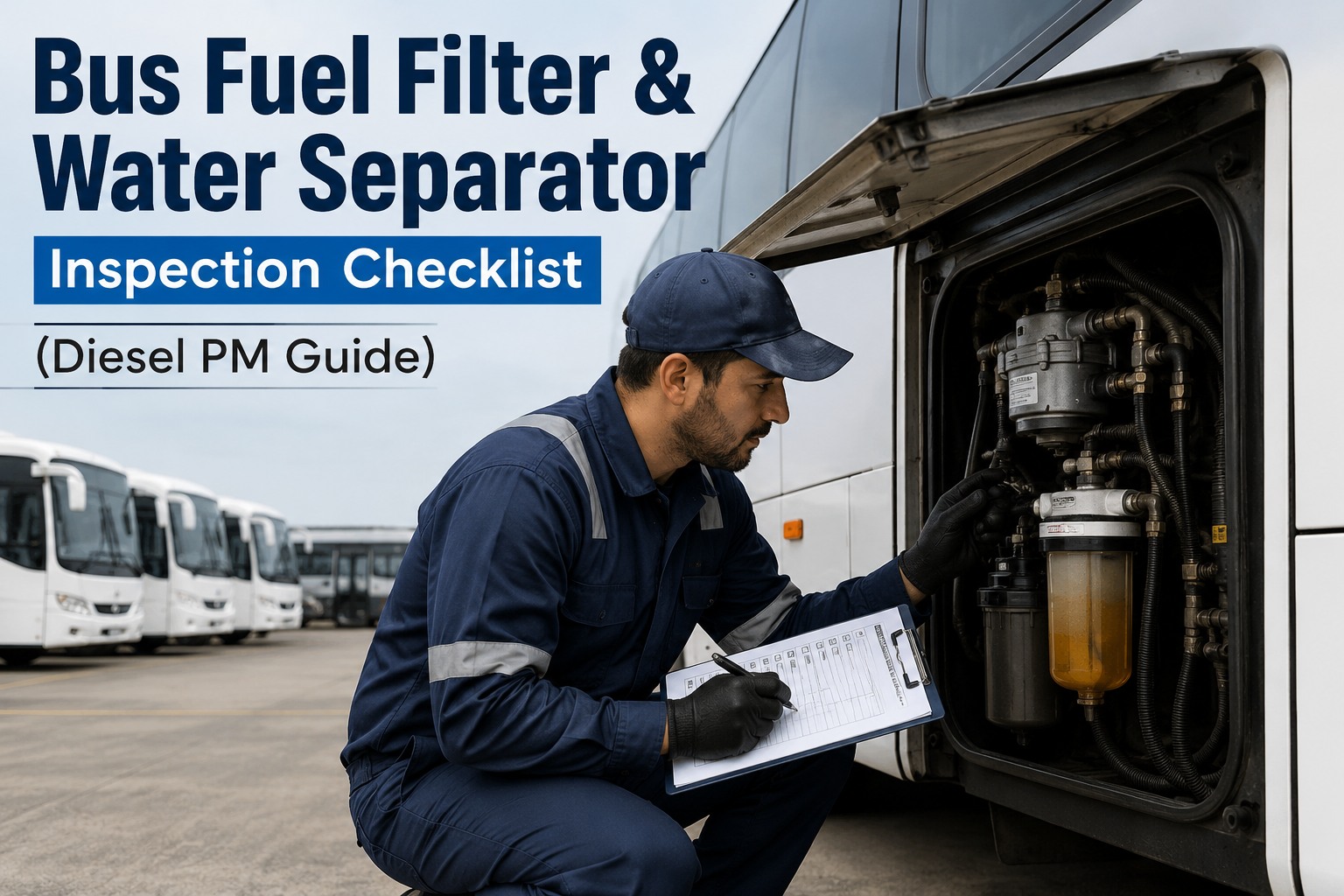
Bus Fuel Filter & Water Separator Inspection Checklist (Diesel PM Guide)
The complete inspection procedure for diesel bus fuel systems -- primary and secondary filters, water separator bowls, WIF sensors, fuel restriction gauges, cold-weather heater operation, and contamination response steps. Everything a bus tech needs on the shop floor.
The Real Cost of Fuel System Neglect
Fuel filter and water separator issues are the least glamorous PM items and the most common cause of on-route breakdowns. The economics of skipping them are terrible.
Injector cleaning
Water-contaminated fuel destroys diesel injectors. A single set can run $300-$800 per bus to clean or replace, plus 3-6 hours of labor.
Injection pump damage
Sustained water contamination or particulate ingestion damages high-pressure injection pumps. This is where the fleet actually loses money.
On-route breakdown
Clogged fuel filter means power loss, then engine shutdown. Tow, substitute bus, missed route, and driver overtime add up fast.
Prevention time
A drain-and-inspect on the water separator takes 5 minutes at PM. Skipping it to save that time is the false economy that costs $3,000+ later.
6 Fuel System Components That Get Inspected
Modern diesel bus fuel systems layer multiple filtration stages plus contamination monitoring. Each component has a specific inspection approach.
Primary Fuel Filter
10-30 micron pre-filter that catches larger contaminants. Often integrated with the water separator function. First line of defense.
Water Separator Bowl
Transparent or drain-equipped chamber where water settles below the fuel (water is denser). Visual inspection and drain intervals critical.
WIF Sensor
Water-in-Fuel sensor triggers dashboard warning when the water level in the separator reaches threshold. Requires testing every PM cycle.
Secondary Fuel Filter
2-5 micron final filter protecting the injection system. Finer filtration, shorter service life. Change interval is stricter than primary.
Fuel Restriction Gauge
Mechanical or electrical gauge showing filter restriction level. Green (OK) / Yellow (change soon) / Red (change now).
Fuel Heater (Cold Climates)
Electric heater in the filter housing prevents diesel gelling in cold weather. Critical for northern fleets during winter operation.
Complete Fuel Filter + Water Separator Inspection
Organized by system zone. Each item shows the priority tag, description, PM interval, and fail threshold that triggers action.
Primary Filter Inspection
-
A1 · Primary filter housing checkCritical Visually inspect the primary fuel filter housing for leaks, cracks, and secure mounting. Feel the housing for fuel weeping around the seal.
PM IntervalEvery PMFail ThresholdAny wet seal or crack -
A2 · Primary filter replacementCritical Verify last change date and mileage against manufacturer PM schedule. Replace at interval regardless of visual condition.
PM Interval10K-15K mi / 250-500 hrFail ThresholdBeyond OEM interval -
A3 · Fuel restriction gauge readingStandard With engine at operating temp and normal fuel demand, read the restriction gauge. Green = OK, Yellow = change soon, Red = change now.
PM IntervalEvery PMFail ThresholdYellow or Red zone
Water Separator Inspection
-
B1 · Visual water level checkCritical Look at the transparent bowl (or check the sight line) for water separation. Water sits below fuel and looks darker or has a distinct interface line.
PM IntervalDaily DVIR + Every PMFail ThresholdAny visible water -
B2 · Drain water from separatorCritical Open the drain valve at the bottom of the separator bowl. Drain into a clean container until only fuel comes out. Capture and dispose of water properly.
PM IntervalEvery PM (more if wet)Fail ThresholdDrain valve stuck / leak -
B3 · WIF sensor operation testCritical With water in the drain container, immerse the WIF sensor tip to confirm the dashboard warning light illuminates. Reinstall and verify light clears.
PM IntervalEvery PMFail ThresholdNo dash light on test -
B4 · Fuel appearance + odorStandard Inspect the drained fuel sample. Clean diesel is amber and clear. Cloudy, dark, or foul-smelling fuel indicates contamination or biological growth ("diesel bug").
PM IntervalEvery PMFail ThresholdCloudy, dark, or foul
Secondary Filter Inspection
-
C1 · Secondary filter housing checkCritical Visually inspect the secondary/final fuel filter housing for leaks and secure mounting. This filter protects the injection system directly.
PM IntervalEvery PMFail ThresholdAny wet seal or crack -
C2 · Secondary filter replacementCritical Verify last change date and mileage against manufacturer PM schedule. Secondary filters have finer media and shorter service life than primaries.
PM Interval15K-30K mi / 500-750 hrFail ThresholdBeyond OEM interval -
C3 · Post-change primingStandard After filter replacement, use the hand primer or electric priming pump to purge air from the system. Verify no soft/spongy pumping (indicates air leak).
PM IntervalAfter every filter changeFail ThresholdSoft primer / long crank
Cold Weather + System Health
-
D1 · Fuel heater operation (cold climates)Cold-Weather On northern fleets, verify the fuel filter heater energizes when ambient temp drops below trigger point (typically 40F). Feel housing for warmth or use ammeter on heater circuit.
PM IntervalFall pre-winter PMFail ThresholdNo current / cold housing -
D2 · Fuel line + connection inspectionStandard Visually trace fuel lines from tank to injection pump. Look for chafing, dry rot, loose connections, and air leak points. Air leaks cause hard start and rough idle.
PM IntervalEvery PMFail ThresholdAny leak or chafe -
D3 · System pressure testStandard With engine at operating temp and full-load fuel demand, monitor fuel pressure. Low pressure indicates restriction or lift pump wear.
PM IntervalAnnual + as neededFail ThresholdBelow OEM minimum
What to Do When You Find Water or Contamination
Water in the separator, cloudy fuel, or restriction gauge in the red zone all trigger a specific response sequence. Follow the steps in order to protect the injection system.
-
01
Do not restart until fuel is clean
Cranking with contaminated fuel pushes water and particles into the injection pump and injectors -- the most expensive fuel system components. Wait until the system is verified clean.
-
02
Drain the water separator completely
Open the drain valve, catch water into a container, continue until only clean fuel flows. If more than 1/2 cup of water drains, escalate to Step 3.
-
03
Sample the fuel tank
Use a hand pump or dipstick to sample fuel from the bottom of the tank. If water is present in the tank, the tank must be pumped, cleaned, and refilled with fresh fuel.
-
04
Change both filters
Replace primary and secondary filters, even if they are not at interval. Contamination compromises filter capacity regardless of mileage.
-
05
Prime the system + test
Use hand primer or electric priming pump to purge air. Start the engine and monitor at idle for 10 minutes. Watch for smoke, rough running, or restriction gauge climb.
-
06
Document everything in the DVIR
Log the amount of water drained, filter serial numbers, tank sample result, and post-service test observations. This becomes the evidence trail if injection damage shows up later.
Common Fuel System Failures + Root Causes
Six failure patterns cover the majority of fuel-related shop tickets. Recognize the symptom and the diagnosis is usually straightforward.
Water in fuel warning intermittent
WIF sensor triggering off and on. Usually water accumulating in the separator between drains, or a sensor contamination issue. Drain the separator, clean the sensor, retest.
Hard start after filter change
Air trapped in the fuel system after filter replacement. Prime the system fully with the hand pump until firm, then attempt start. Repeated priming may indicate an air leak upstream.
Restriction gauge in yellow / red
Filter approaching capacity. Change primary and secondary filters. If gauge stays yellow / red after change, contamination is heavier than the filter can handle -- investigate the tank.
Cloudy or dark fuel in bowl
Biological contamination ("diesel bug") from long-term storage water. Treat the tank with biocide, drain and clean, refill with fresh fuel, replace all filters.
Cold-weather no-start
Diesel gelling in the filter blocks fuel flow. Fuel heater failure or wrong fuel blend for temperature. Add anti-gel additive, verify heater operation, use winter blend fuel.
Fuel leak at housing seal
Filter seal not seating correctly, damaged O-ring, or cross-threaded housing. Remove filter, inspect seal groove, replace O-ring, re-torque to spec.
Book a demo to see how BusCMMS logs fuel system events + parts replacement history per bus.
Turning the Checklist Into Fuel Breakdown Prevention
Every fuel-related on-route breakdown traces back to a PM cycle where the water separator was not drained or the restriction gauge was not read. Digital DVIRs make sure that never happens quietly.
Bus-specific fuel system items
Fuel filter change intervals, water separator drain events, WIF sensor tests, and restriction gauge readings pre-loaded into the digital DVIR alongside other bus-specific inspection items.
PM interval tracking per bus
Primary and secondary filter change intervals tracked per bus by mileage + hours + calendar date. Alerts fire before the interval expires, not after the filter clogs.
Contamination event logging
When water is found in the separator, quantity + response actions logged against the bus. Repeat contamination surfaces as a fleet-wide fuel-source investigation trigger.
Parts + labor cost per bus
Every filter change, seal replacement, and contamination response tracked with cost per bus. Fleet reports surface the buses that keep drinking fuel repair dollars for proactive review.
A five-minute drain and inspect on the PM sheet prevents a $3,000 injection pump replacement six months later. Book a demo to see the fuel system + PM tracking workflow live.
How often should the water separator be drained?
Best practice is to drain the water separator every preventive maintenance cycle at minimum, and check daily as part of the driver DVIR pre-trip. If any water is found on a check, the drain frequency should be increased on that specific bus until the source of water contamination is identified. Buses running high-humidity routes, older tanks with condensation issues, or fuel from questionable sources often need more frequent drain intervals than the fleet standard.
What are typical fuel filter change intervals for a diesel bus?
Primary fuel filters typically run 10,000-15,000 miles or 250-500 engine hours between changes, depending on OEM specification and fuel quality. Secondary/final filters run 15,000-30,000 miles or 500-750 hours. Fleets running dusty routes, older equipment, or purchased fuel with variable quality should shorten these intervals. Always follow the specific OEM PM schedule for the engine, and adjust based on actual restriction gauge behavior between changes.
What does it mean if I find water in the fuel filter bowl every check?
Recurring water in the separator points to one of three sources: (1) condensation in the fuel tank from temperature swings and low fuel levels, (2) water in the fuel supply from the source (tank truck or storage tank), or (3) failed tank fill cap seal letting rainwater into the tank. Sample the tank directly to distinguish tank water from source water. If the tank is clean but water keeps appearing, check the fill cap seal and consider tank fuel bug treatment.
What is "diesel bug" and how do I get rid of it?
"Diesel bug" is a slang term for microbial contamination -- bacteria and fungi that grow at the fuel/water interface in the tank. It produces sludge that clogs filters, corrodes tank interiors, and releases acids that damage components. Prevention starts with keeping water out of the tank and using biocide treatment when contamination is suspected. Removal requires tank pumping, mechanical cleaning, biocide treatment of any remaining fuel, and replacement of all filters.
How does BusCMMS help with fuel system PM tracking?
BusCMMS includes fuel filter and water separator inspection items in the bus-specific digital DVIR forms. Every drain event, WIF sensor test, restriction gauge reading, and filter change is logged per bus with date, technician, and photo evidence for issues. PM intervals tracked by mileage, hours, and calendar date with alerts firing before the interval expires. Contamination events, filter part numbers, and cost per bus tracked for fleet-wide reporting. Book a 20-minute demo to see the workflow live, or start a 30-day free trial.