Most home-to-school routes never touch FMCSA's hours-of-service rules at all — but the charter run, the athletic trip across the state line, or the activity bus that strays past 150 air miles can put a driver squarely under the ELD rule. Knowing which trip is which is the whole compliance question. See how trip and driver records come together in a demo.
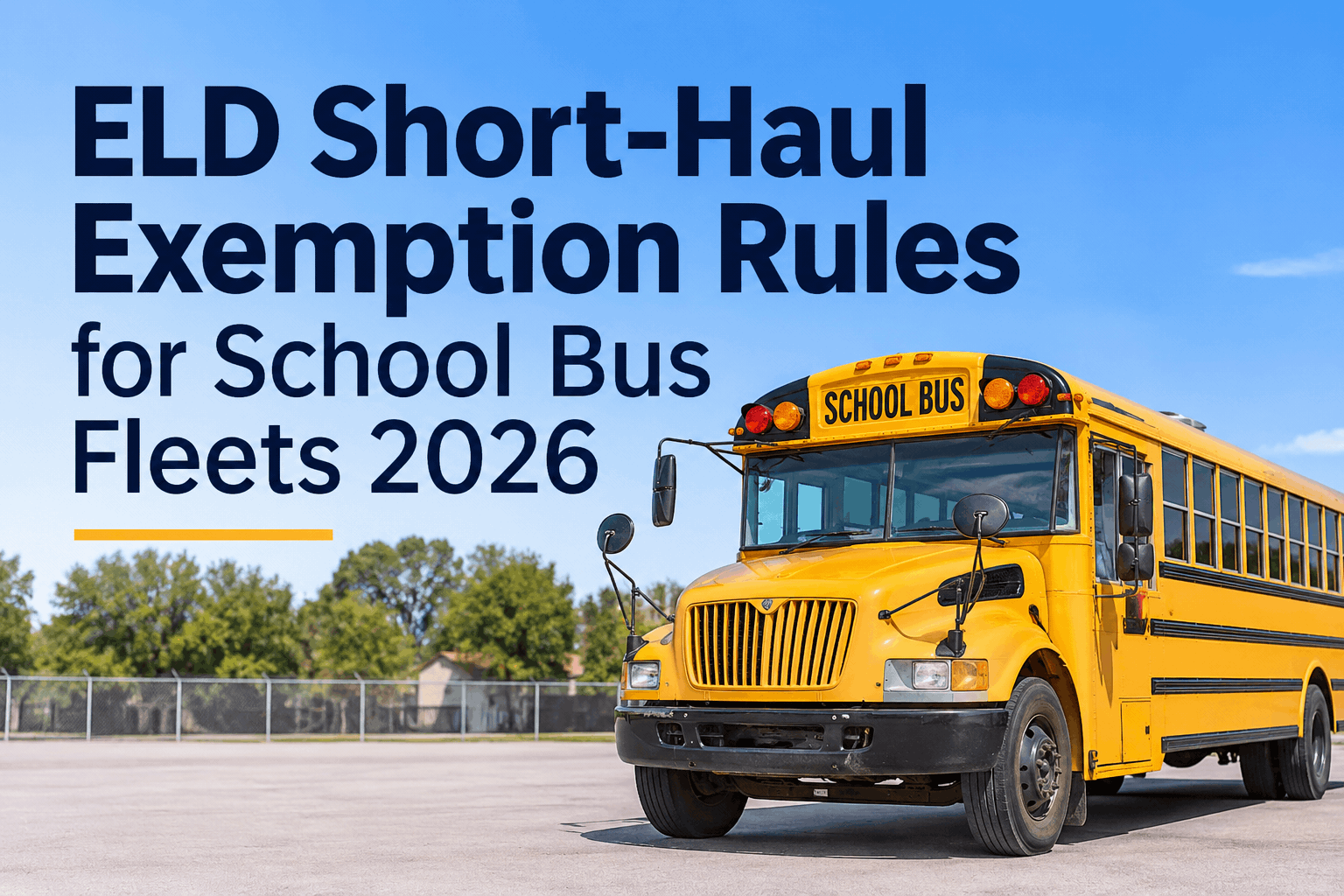
ELD Short-Haul Exemption Rules for School Bus Fleets
Not every trip a school bus makes is governed by the same rulebook. Here's how to tell which runs are exempt from federal hours-of-service rules entirely, which ones fall under the ELD short-haul exemption, and which ones need a full electronic log.
FMCSR, HOS, and the ELD rule only apply once a trip is subject to federal rules in the first place — most daily home-to-school routes never get there.
School Bus Operations Are Often Exempt From FMCSR Entirely
Under 49 CFR 390.3(f)(1), a "school bus operation" — transporting students or school personnel between home and school, carrying more than 10 passengers not counting the driver — is exempt from the Federal Motor Carrier Safety Regulations, including hours-of-service and ELD rules. This exemption covers school district contractors, not just government-operated buses. That said, two requirements still apply regardless of the exemption: a driver needs a CDL with a school bus endorsement, and must follow drug and alcohol testing rules, if the bus seats 16 or more people (including the driver) or has a GVWR of 26,001 pounds or more.
When FMCSR — and the ELD Rule — Actually Apply
The home-to-school exemption doesn't cover everything a school bus does. Field trips, athletic events, and other activity runs fall back under FMCSR when the bus carries 16 or more people or has a GVWR of 10,001 pounds or more, neither home-to-school nor government exemption applies, and the trip crosses state lines. That's where hours-of-service, driver qualification files, and the ELD rule come into play — and where the short-haul exemption becomes relevant.
150 air-mile radius
The driver must stay within 150 air miles of the normal work reporting location for the entire trip.
14-hour duty window
The driver must report and be released from work within 14 consecutive hours, driving no more than 11 of those.
8 hours off-duty
Passenger-carrying drivers need 8 consecutive off-duty hours between each 14-hour on-duty period.
8-day-in-30 limit
A driver can exceed the short-haul limits on up to 8 days in a rolling 30-day window using paper logs. The 9th day requires an ELD.
The short-haul exemption only removes the ELD, detailed-log, and 30-minute-break requirements — drivers still have to meet the underlying hours-of-service limits. Start tracking trip and driver data to stay ahead of this.
What You Still Have to Record Under the Exemption
Swipe sideways to see all columns.
See how these records get generated automatically in a demo instead of pulled together by hand.
Expert Review: Paper Timecards vs. Trip Data Tracked Automatically
Swipe sideways to see all columns.
This guidance reflects the short-haul exemption as widely documented by FMCSA-focused compliance resources — it's a general overview, not legal advice, and fleets running mixed home-to-school, charter, and interstate trips should confirm specific scenarios with FMCSA or qualified counsel. Walk through how your current trips would sort into this flow.
The Bottom Line
Most school bus driving never touches the ELD rule — but the exceptions are exactly the trips most likely to get missed: the field trip that crosses a state line, the charter that runs long, the activity bus that drifts past 150 air miles. Knowing which rule applies to which trip, and keeping the records that back it up, is what keeps a routine audit routine.