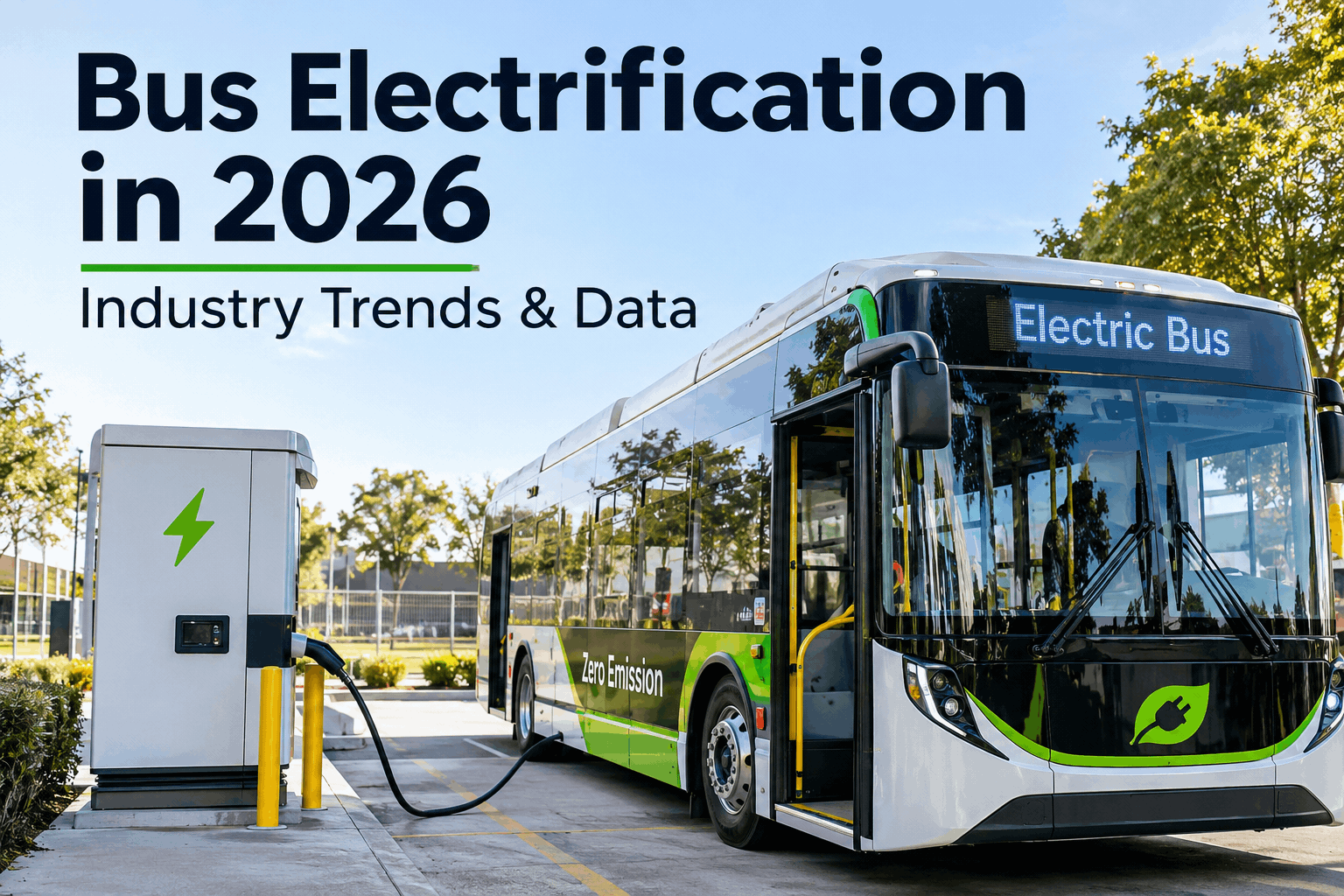
Ask ten transit agencies where bus electrification stands in 2026 and you'll get ten answers — the reality is a patchwork. The zero-emission fleet keeps growing, a few states carry most of it, and many agencies quietly admit they are not ready for the maintenance side. This is where bus electrification stands in 2026, by the numbers — and what the data means if you run a fleet. See mixed-fleet management in a demo.
Bus Electrification in 2026: Where the Industry Stands
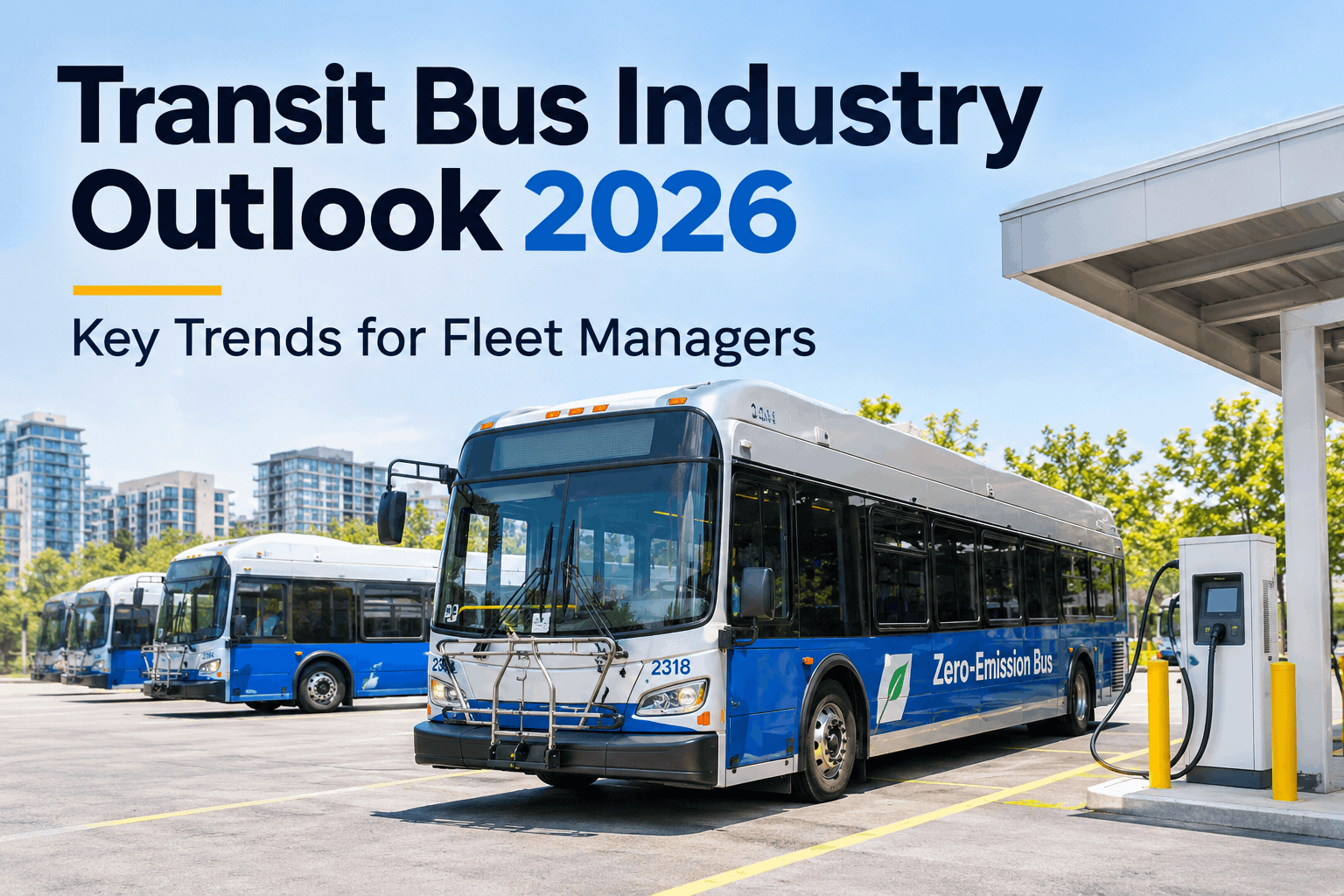
Zero-emission bus adoption is still climbing, but the story in 2026 is nuance: concentrated adoption, a pragmatic multi-fuel pivot, and a real readiness gap on infrastructure and maintenance. Here are the numbers that matter.
Sources: CALSTART, Zeroing in on Zero-Emission Buses (March 2026); federal funding allocations 2025-26.
The Big Picture: Still Growing, Still Concentrated
The headline is genuine momentum. The national zero-emission bus pipeline crossed 8,000 full-size vehicles in 2026 — funded, ordered, delivered, or already on the road — a double-digit jump over the prior year. But that growth is not evenly spread, and understanding the concentration is the first step to reading the market honestly.
Adoption keeps climbing
More than 8,000 full-size zero-emission buses are now in use or on the way nationwide, a roughly 16% increase year over year despite supply-chain headwinds.
Battery-electric leads
Battery-electric buses are the large majority at 7,261 vehicles, up about 13% — while fuel-cell buses are the fastest-growing slice, surging nearly 49%.
A few states carry it
California alone accounts for thousands of vehicles, with New York, Washington, and Florida following — though adoption is now spreading beyond the early coastal markets.
The concentration cuts both ways: the leaders prove electrification works at scale, but a fleet in a less-mature state is building the playbook as it goes — which makes planning and data discipline matter even more.
Wherever your state sits on that curve, the fleet-side discipline is the same — you can sign up free and start tracking your fleet's PM and readiness today.
The 2026 Pivot: From Electric-Only to Multi-Fuel
The biggest shift in 2026 is not a number, it is a posture. Federal priorities moved toward a technology-neutral, cost-focused approach — and agencies responded with pragmatic, mixed-fuel strategies rather than betting everything on battery-electric. The result is a transition that now runs on several tracks at once.
Still the long-term backbone of decarbonization plans and the dominant share of the pipeline — favored for its maturity and expanding charging support.
Increasingly deployed as transitional solutions to hold service reliability and manage costs, with recent federal grants broadening eligibility to include them.
The fastest-growing slice, gaining traction for longer routes and demanding duty cycles where battery range or charging time is a constraint.
We cover the procurement side of this shift in depth — why some agencies are choosing hybrids — in our look at hybrid buses overtaking electric in 2026 and what it means for your maintenance plan.
The Readiness Gap Nobody Puts on the Brochure
Here is the part of the 2026 story that gets less airtime than the shiny new buses: a lot of agencies are not ready for what electrification demands behind the scenes. The vehicles arrive, but the infrastructure planning, the charger lead times, and the technician training lag — and that gap is where new electric buses end up parked instead of earning.
The expensive lesson fleets keep learning: a new electric bus that cannot be charged or serviced is a parked asset, not a saving. Readiness is the work you do before delivery day.
The agencies doing this well treat the transition as a project with a deadline — booking technician training early, starting utility coordination well ahead, and piloting before scaling. You can sign up free and track tech certifications and EV readiness per bus.
What It Means for Your Fleet
Whether you are piloting five electric buses or planning a full transition, the 2026 data points to the same handful of practical moves. None of them is about the buses themselves — they are about running the mixed, transitioning fleet you will actually have for years.
You will run diesel, hybrid, CNG, and electric side by side for years. Your maintenance system needs fuel-type-specific PM logic, not one generic schedule.
Charger lead times and technician training are the long poles. Start utility coordination and high-voltage certification well before the buses land.
Pilots build the case with real numbers — fuel savings, uptime, winter range. Capture per-bus cost and availability data to justify the next phase.
The fleets that win the transition are the ones that treat data and readiness as seriously as the vehicle order. A demo shows fuel-type PM and EV readiness tracked in one place.
How BusCMMS Fits the Transition
BusCMMS does not buy buses, build chargers, or pour concrete — those are your capital projects. What it does is manage the maintenance of whatever mix you run through the transition, which the 2026 data says is exactly where agencies feel least prepared.
Fuel-type-specific PM
Separate preventive-maintenance logic for diesel, CNG, and electric buses on one dashboard, so each gets the right schedule as your mix changes.
Technician certification tracking
High-voltage qualifications tracked per tech, so EV work is only routed to qualified people — the readiness gap the data flags most.
Per-bus cost and uptime data
Cost per mile, availability, and PM compliance by bus — the real numbers that justify the next phase of your transition to a board.
The result is a transition you can run on evidence, with a maintenance operation that keeps pace with the vehicles. Book a demo and bring your current fleet mix.
A Fleet Planner's Take
Key Takeaways on Bus Electrification in 2026
The 2026 picture is optimistic and realistic at once. Four things to carry into your own planning.
Growth is real but concentrated
Over 8,000 ZEBs and climbing, but a few states still carry most of the adoption.
The pivot is to multi-fuel
Battery-electric leads long-term, but hybrid, CNG, and hydrogen are all in the 2026 mix.
Readiness is the real bottleneck
Infrastructure, charger lead times, and technician training lag the vehicle orders.
Manage the mixed fleet well
Fuel-type PM, tech certs, and per-bus data are what keep the transition on track.
Where bus electrification stands in 2026 is: moving, pragmatic, and unevenly ready. The agencies that thrive are not the ones that buy the most electric buses — they are the ones that close the readiness gap, run a disciplined mixed fleet, and prove the ROI with data. Get those right, and the vehicles take care of the rest.