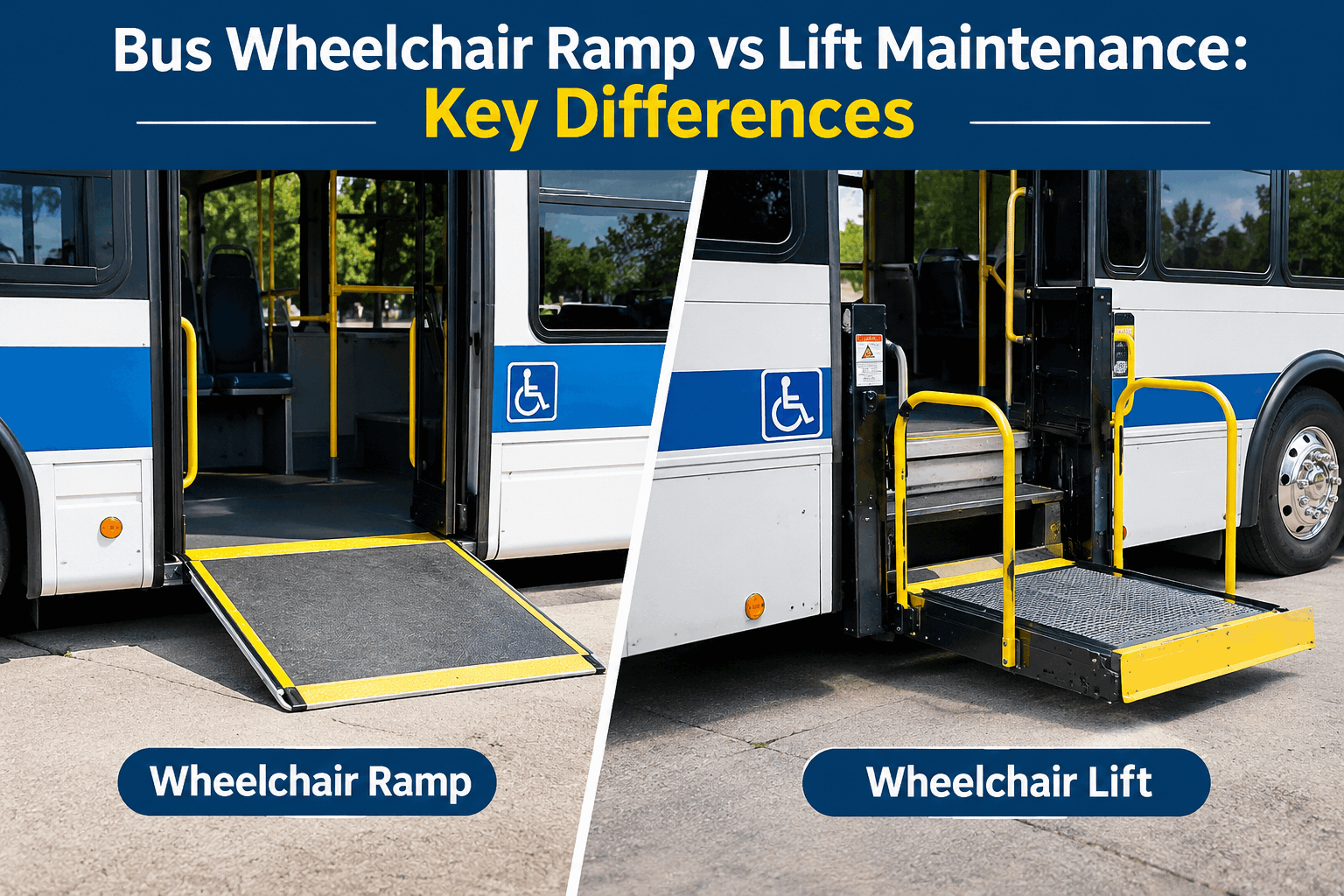
Two buses, two accessibility defects: one ramp that won't latch, one lift stuck half-deployed. Same compliance stakes, very different repairs. Bus wheelchair ramp vs lift maintenance comes down to complexity, cost, and the same hard ADA rules that bind both. Want every ramp and lift inspection scheduled and logged for your next FTA review? See it in a quick demo.
Bus Wheelchair Ramp vs Lift Maintenance: Key Differences
A ramp and a lift do the same job and carry the same ADA weight — but they fail, cost, and get serviced very differently. Here is the side-by-side every accessible-fleet manager needs.
Same Rider, Same Rules — Different Machine
A ramp and a lift both exist to board a rider who uses a wheelchair, and both carry identical ADA obligations. Where they part ways is the hardware: a ramp is close to a simple inclined plane, while a lift is a powered platform with hydraulics or electrics and far more to go wrong. That difference drives everything about how you maintain each.
Ramp: simpler, fewer failures
Common on low-floor buses, a fold-out ramp has few moving parts. It still must carry a 600-pound load and have edge barriers, but there is less to break.
Lift: complex, more to service
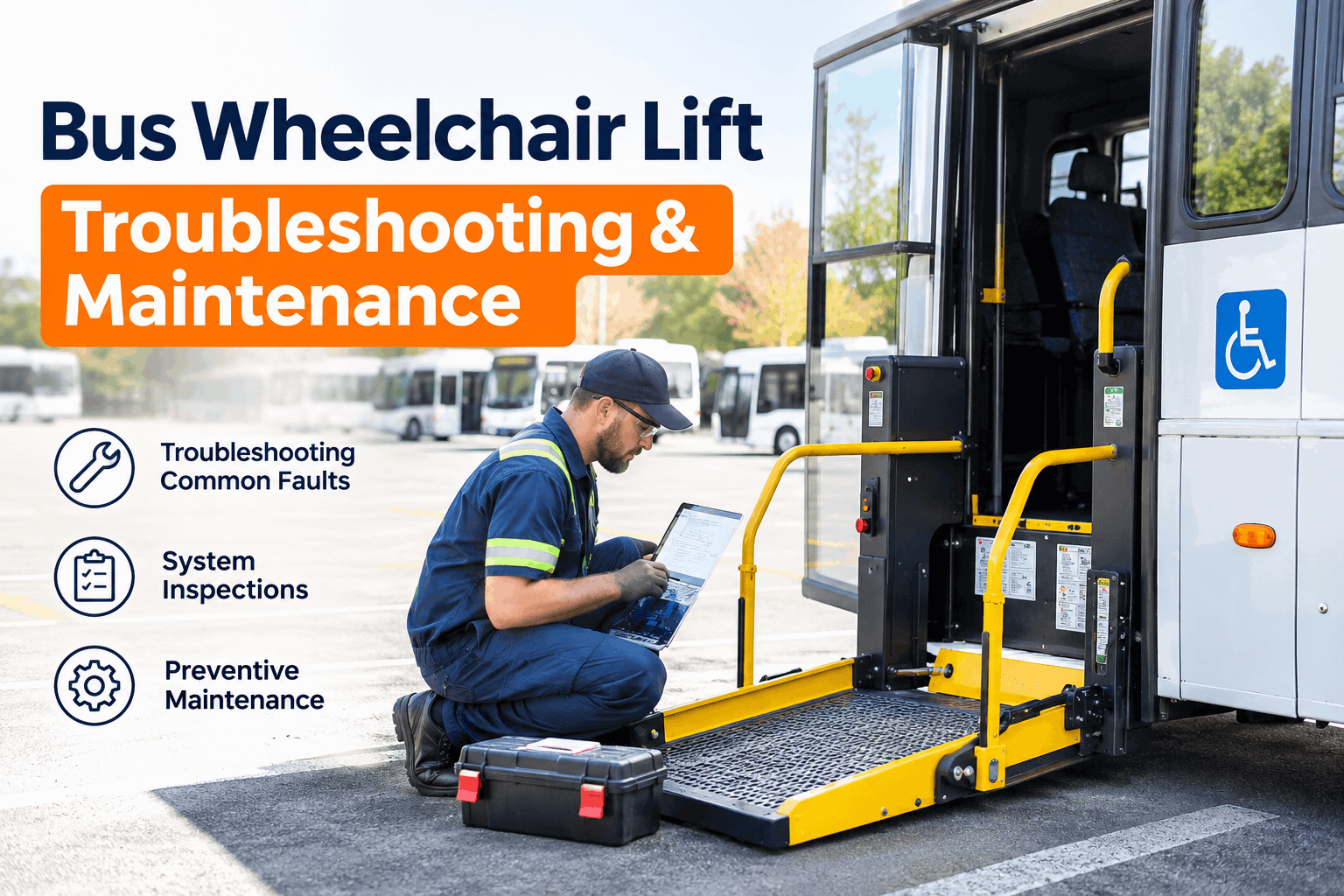
A hydraulic or electric platform raises and lowers the rider. It is mechanically complex, has more moving parts, and needs its own hydraulic and electrical inspection cycle.
Both: a civil-rights obligation
Under the ADA, an inoperable lift or ramp is not just a defect — it is a compliance event. The equipment must be kept in operative condition, period.
Federal rule sets the same floor for both: the design load is at least 600 pounds, and both must be kept operative through regular, frequent maintenance checks.
Ramp vs Lift, Side by Side
The clearest way to plan maintenance is to put the two next to each other. The ADA obligations match; almost everything about the hardware and the service effort does not.
Swipe sideways to see both columns.
The takeaway: a lift is not a worse ramp, it is a different machine with a heavier service load — plan parts, labor, and inspection time accordingly. You can sign up free and set the right inspection plan for each bus's equipment type.
The ADA Rules That Apply to Both
Whatever the hardware, the federal obligations are the same — and they are strict. These are the rules that turn a maintenance miss into a compliance problem, so they belong in your process for ramps and lifts alike.
Cycle it at every pre-trip
The equipment must be kept operative through regular, frequent checks — which in practice means cycling the ramp or lift as part of each pre-trip inspection.
Pull it from service if inoperable
A bus with an inoperable ramp or lift must be taken out of service as soon as a replacement is available, and cannot return until the equipment is repaired.
Document it defensibly
FTA reviewers ask for pre-trip and repair records. A clean, timestamped inspection trail is what separates a good-faith agency from a finding.
The ADA accepts that equipment breaks — what it does not accept is a lift or ramp left inoperative without a system of checks, repair, and records behind it.
These rules do not care whether you run ramps or lifts — both need the cycle, the pull, and the paper trail. A demo shows the pre-trip cycle and out-of-service clock tracked automatically.
Where Each One Needs Your Attention
Because the hardware differs, the inspection effort lands in different places. A ramp program is lighter and more about structure and latching; a lift program adds the hydraulic and electrical depth that comes with a powered platform.
Deploy and fold function, latch and hinge wear, edge barriers, surface and slope, and the kneeling function that pairs with it on low-floor buses.
All of the above plus hydraulic fluid and leaks, electrical controls and interlocks, platform and roller wear, and the full raise-lower cycle under load.
Pre-trip cycle, securement system and tie-downs, the 600-pound load path, and a timestamped record for every check — the same for both.
Set the plan to the equipment and nothing gets over- or under-inspected — the ramp buses get a lighter routine, the lift buses get the deeper one, and each bus is matched to the checks its hardware actually needs.
Your Ramp & Lift Inspection Checklist
Build these into the PM for each equipment type. The red items are ADA-critical — a miss is a compliance event; the amber ones catch wear before it becomes a failure. Exact items and intervals vary by equipment and OEM, so confirm against your manuals and FTA guidance.
- Cycle the ramp or lift at every pre-tripDeploy and stow fully and confirm it operates. This is the core ADA maintenance check and applies to both equipment types.ADA-CRITICAL
- Pull any bus with inoperable equipmentIf the ramp or lift fails, take the bus out of service as soon as a replacement is available and do not return it until repaired.ADA-CRITICAL
- Check securement, tie-downs, and the 600-lb load pathBoth systems feed a securement area. Verify tie-downs and that the ramp or lift carries its rated load safely.ADA-CRITICAL
- Ramp: inspect latch, hinges, edge barriers, slopeLook for latch and hinge wear, a bent or worn surface, and intact edge barriers; confirm the kneeling function pairs correctly.RAMP
- Lift: check hydraulics, electrics, rollers, interlocksInspect for hydraulic leaks and fluid level, electrical faults, worn rollers and arms, and that interlocks hold through the full cycle.LIFT
- Log every check and repair by bus and equipmentKeep a timestamped, driver-identified record so a chronic unit stands out and an FTA review is a quick export, not a reconstruction.TRACK IT
Run the right list for each bus and your accessibility program is provable, not hopeful. You can see these checklists run as scheduled PMs in a demo.
How BusCMMS Handles Ramps and Lifts
BusCMMS does not bleed a hydraulic line or replace a ramp latch — it makes sure each bus gets the right inspection for its equipment, the pre-trip cycle gets logged, and an inoperable unit triggers the out-of-service clock with a provable record behind it.
Equipment-specific PM
A lighter ramp template or a deeper lift template assigned by bus, so each gets the inspection its hardware actually needs.
Pre-trip cycle logged
The driver's pre-trip ramp or lift cycle is captured, so the ADA check is recorded every day, not assumed.
Audit-ready history
Every inspection and repair timestamped by unit, so an FTA review is a five-minute export instead of weeks of reconstruction.
The result is an accessibility program you can run and prove, whichever equipment you field. Book a demo and bring your mix of ramps and lifts.
A Paratransit Maintenance Lead's Take
Key Takeaways: Ramp vs Lift Maintenance
Same job, same rules, different machine. Four things to hold onto.
A lift is complex, a ramp is simple
More moving parts mean more failure modes, higher cost, and a deeper inspection for the lift.
The ADA rules are identical
Both must cycle at pre-trip, carry 600 pounds, and be pulled from service if inoperable.
Match the plan to the machine
A light ramp routine and a deeper lift routine beat one generic check for both.
The record is the compliance
Timestamped pre-trip and repair logs are what an FTA review actually asks for.
Treat the ramp and the lift as the different machines they are — a lighter routine for one, a deeper one for the other, both cycled at pre-trip and logged — and your accessible fleet stays both reliable and provably compliant. The rider does not care which one boards them; they care that it works, every time.