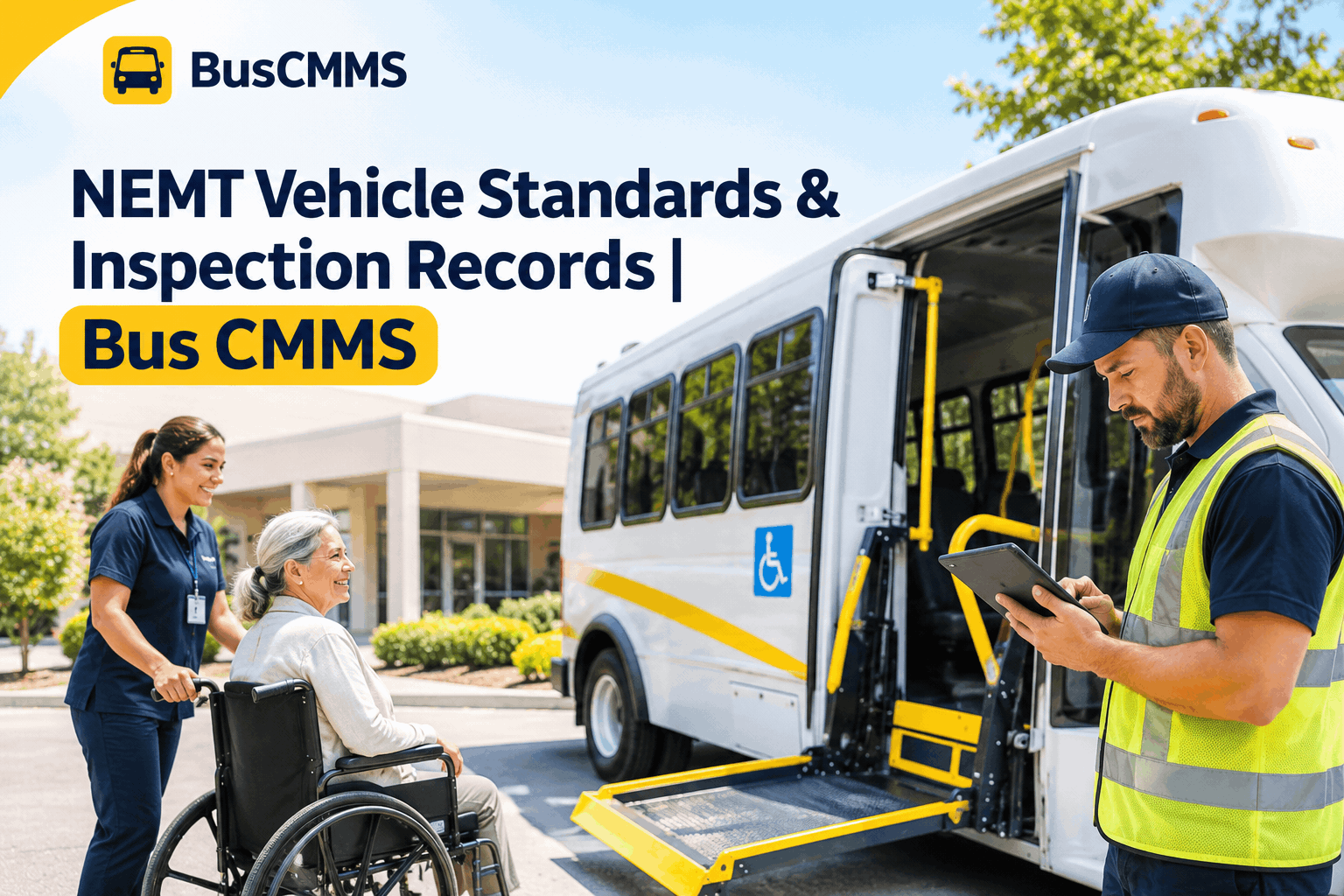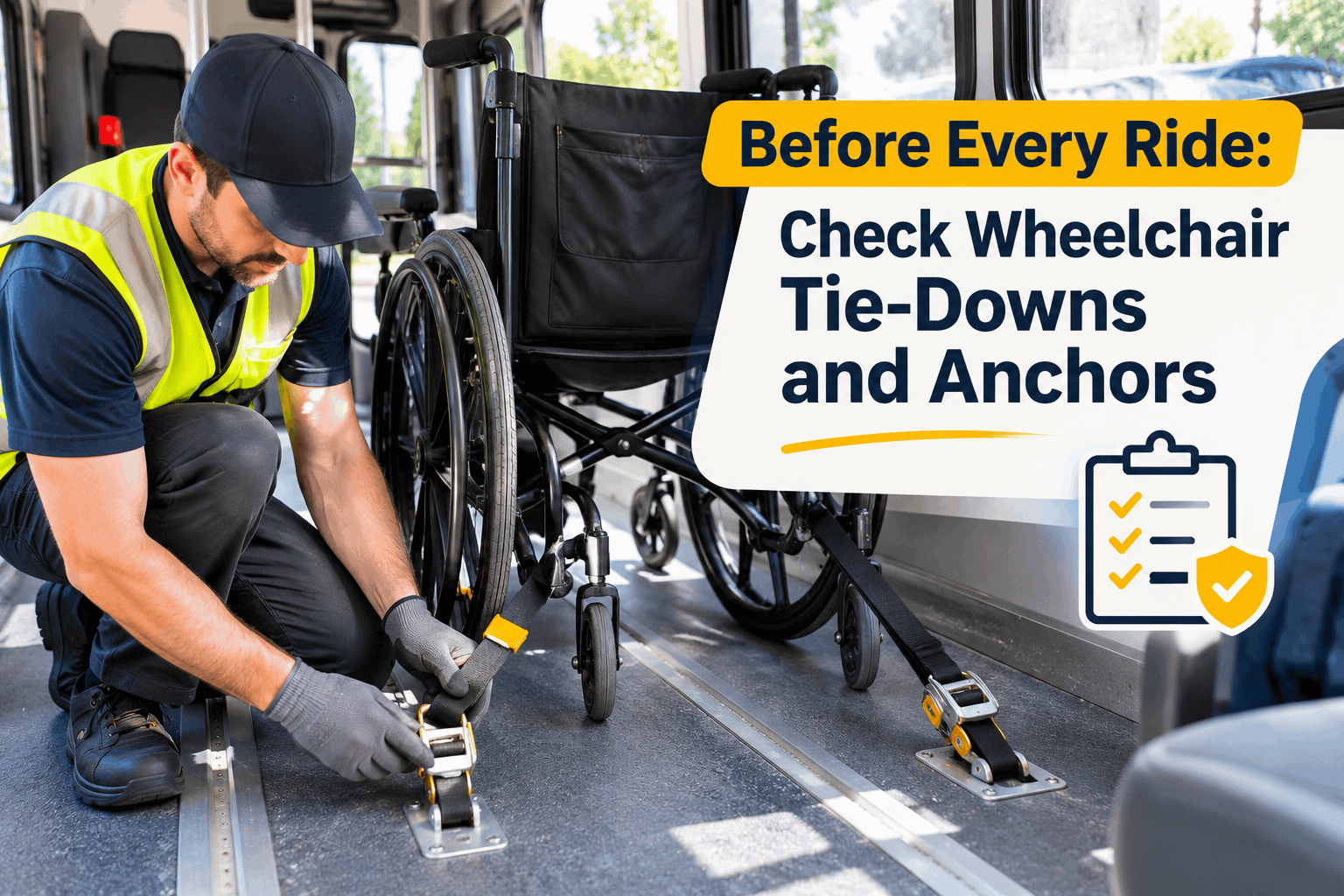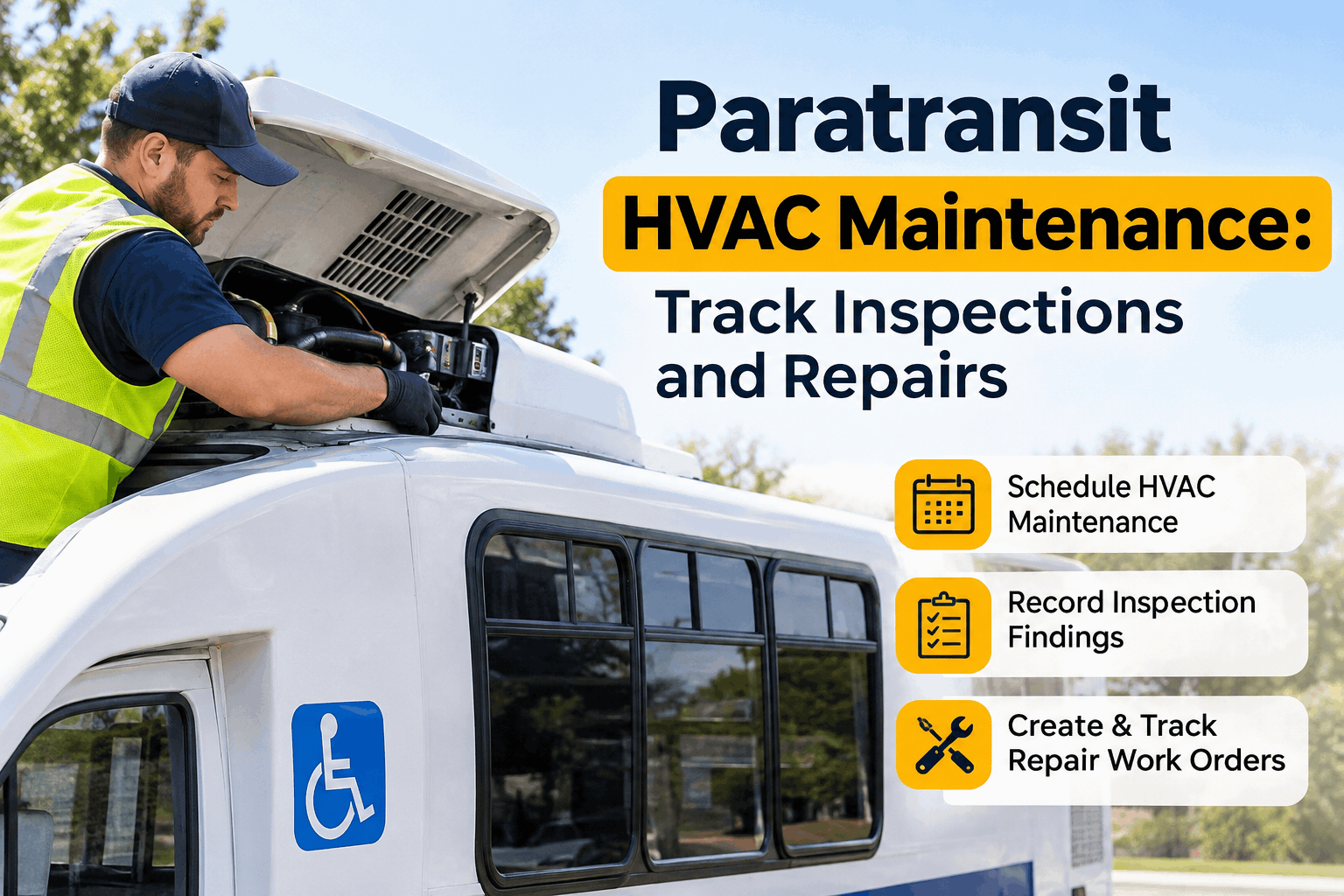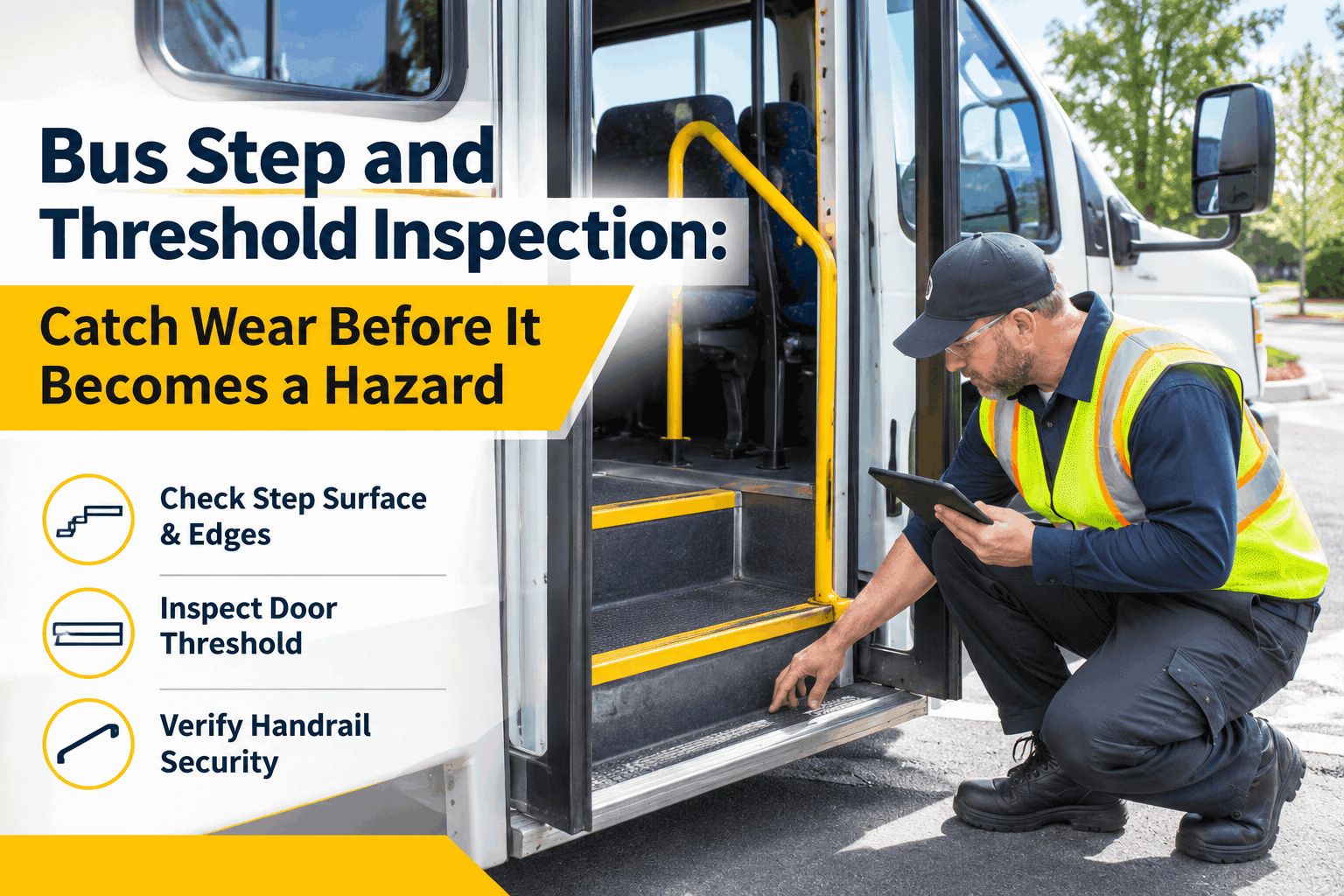
A wheelchair lift is the one system on a paratransit van that can strand a rider all by itself. It cycles hundreds of times a month, runs on hydraulics that weep and wear, and carries a safety interlock that's supposed to keep the bus from rolling while someone's on the platform. A proper paratransit wheelchair lift inspection is what keeps those two systems honest, and a BusCMMS demo shows how to schedule and track every lift check.
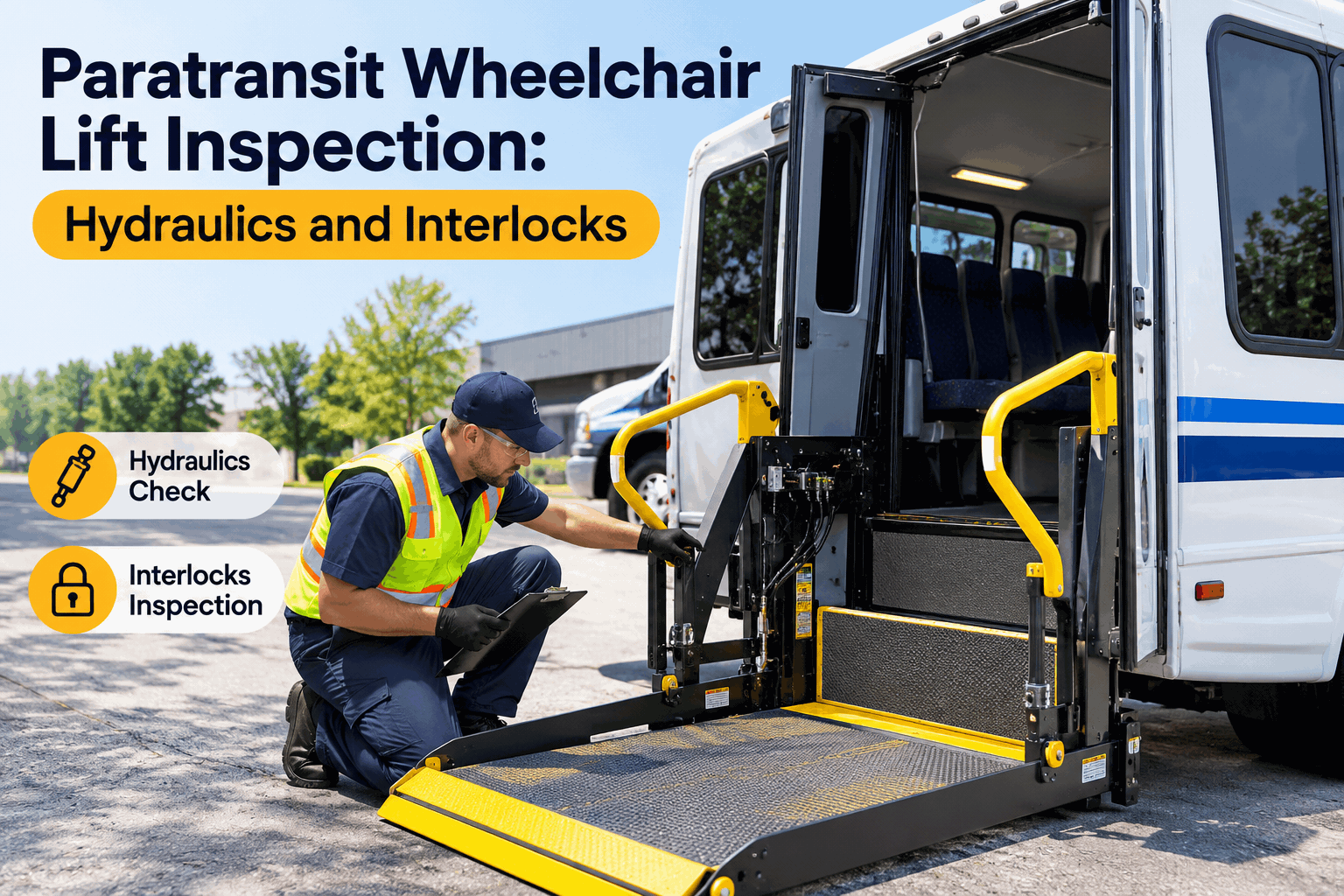
Paratransit Wheelchair Lift Inspection: Hydraulics and Interlocks
Two systems decide whether a lift is safe: the hydraulics that move it and the interlock that stops the bus while it's in use. Here is what to inspect on each, and the cycle-based rhythm that keeps them reliable.
A Lift Inspection Is Really Two Inspections
Treat the lift as one thing and you'll miss half of it. The hydraulics move the platform; the interlock protects the rider and the bus. They fail in different ways, so inspect each on its own terms.
The hydraulic system
Moves the platform up, down, out, and in — and leaks slowly until it can't.
- Fluid level & condition — low or contaminated fluid is the first warning.
- Cylinders & seals — check for weep, drift, and worn bushings.
- Hoses & fittings — scan for seepage, chafing, and loose connections.
- Pump & backup — confirm the power pump and the manual hand pump both work.
The interlock system
Keeps the bus from moving while the lift is deployed — the safety that can't be optional.
- Movement lockout — the bus must not drive unless the lift is stowed and door closed.
- Stowed signal — verify the lift-stowed signal reaches the interlock correctly.
- Threshold warning — the edge sensor and audible warning fire as designed.
- Roll-stop & sensors — the outboard roll-stop and load sensor engage every cycle.
Each line is a check with its own defect and photo if it fails. See how BusCMMS turns both systems into tracked inspection items in a demo.
Lift Service Runs on Cycles, Not Just the Calendar
Here's what separates lift maintenance from the rest of the van: the manufacturers schedule it by how many times the lift has cycled. A busy route hits a service interval far sooner than a quiet one, so counting cycles — not just months — is what keeps you ahead of a failure, and you can set cycle-based lift schedules for free.
You can't count cycles in your head. BusCMMS schedules lift PM by cycle count and calendar together, so a high-use van is flagged for its 1,500-cycle service before the hydraulics start to drift.
Your Paratransit Wheelchair Lift Inspection Checklist
Run this at each cycle interval and daily pre-trip. The CRITICAL items pull the lift — and often the van — out of service until fixed; the PLAN items are the wear you catch before it becomes critical.
-
Interlock stops the bus when deployedThe vehicle cannot move unless the lift is stowed and the door closed — test it, don't assume it.CRITICAL
-
No hydraulic leak, fluid at levelCylinders, hoses, and fittings dry; fluid full and clean — a low level means inspect the whole system.CRITICAL
-
Roll-stop and threshold warning fireThe outboard roll-stop engages and the edge sensor and warning work every cycle — no rider rolls off.CRITICAL
-
Full cycle runs smooth, platform levelUp, down, out, in with no jerk, bind, or drift; the platform sits level at the floor and the ground.PLAN
-
Manual backup pump worksThe hand pump can lower a loaded platform in a power loss — the fallback that gets a rider down safely.PLAN
-
Cycle count tracked, PM scheduledYou know each lift's cycle count and the next service interval — not a guess from the calendar alone.PLAN
If a CRITICAL item fails, that lift is down — and an accessible trip can't run on it. Start scheduling lift PM and logging defects free.
Reading the Symptom: What a Lift Fault Is Telling You
Most lift problems announce themselves before they strand anyone. Match the symptom to its likely cause and you fix the right thing the first time — and know whether it's a shop job or a certified-tech call — a demo shows how each fault becomes a tracked repair.
Swipe sideways to see all columns →
Lift upkeep sits with lifts, ramps, and securements as core accessible-fleet work — see where it fits the wider paratransit and ADA maintenance picture, then track it per van.
"The lift that strands you isn't the one that's broken — it's the one at 1,400 cycles that nobody serviced because the calendar said next month. Counting cycles is the whole game. Now the high-use vans get flagged before the hydraulics ever drift."
The Short Version on Lift Inspection
It's two systems, not one
Inspect the hydraulics that move the lift and the interlock that holds the bus as separate systems with separate failures.
Service by cycles
Makers schedule lift PM by cycle count — a busy van hits its interval far sooner than the calendar suggests.
The interlock is non-negotiable
A bus that can move with the lift deployed is an out-of-service defect, full stop — test it every inspection.
Symptoms point to the cause
Drift, weak lift, or a leak each name their likely fix — and whether it's a shop job or a certified-tech call.