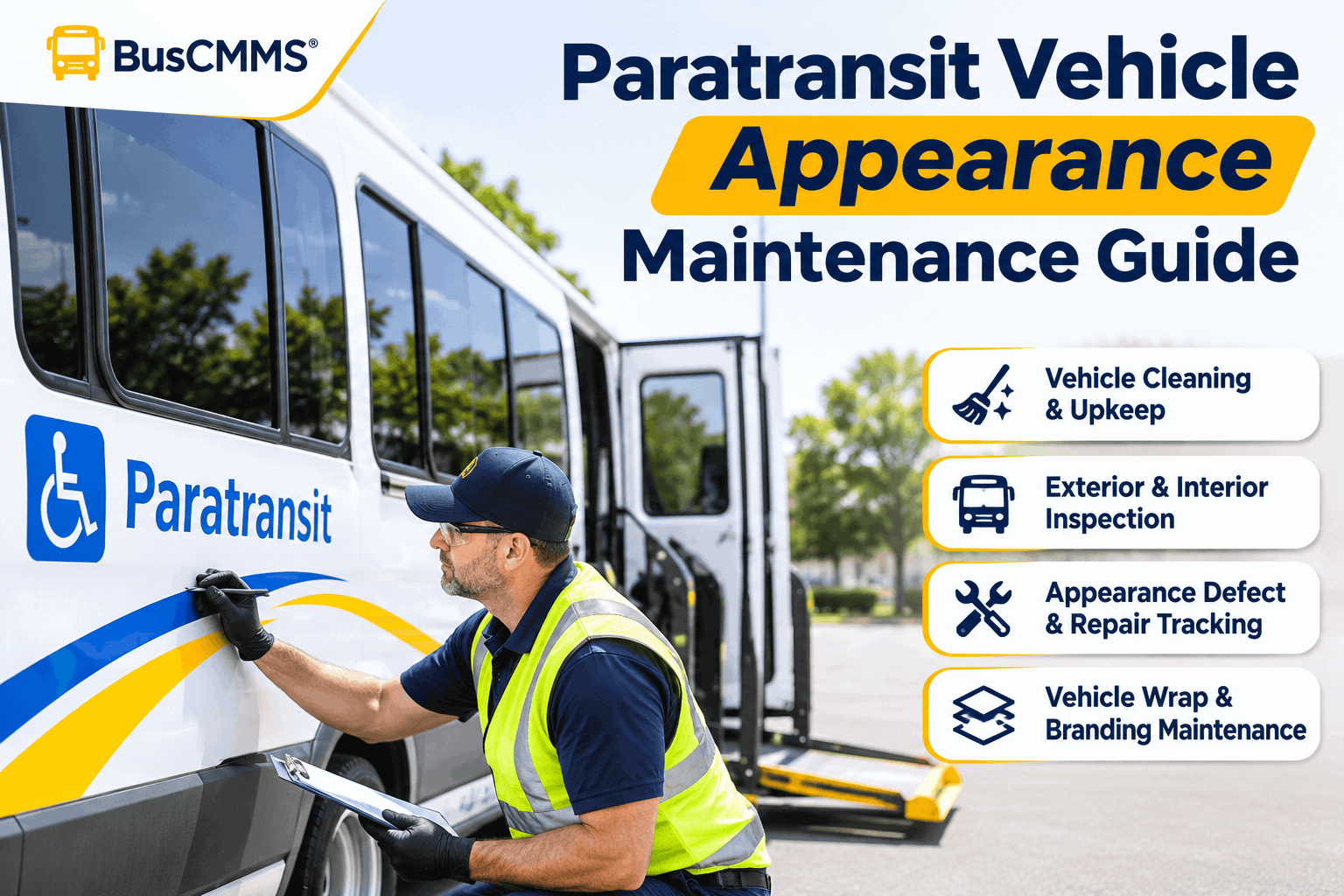
A paratransit van is the most visible thing your agency puts on the street. Riders, their families, and the public form an opinion of your whole operation from a faded wrap, a dirty window, or a torn seat long before they judge your on-time rate. Strong paratransit vehicle appearance isn't vanity — it is the public face of the service, and a BusCMMS demo shows how appearance defects get caught and fixed instead of ignored.
Keep Paratransit Vans Clean, Branded & Ready for Service
Clean body, intact wrap, decent seats, readable decals. The things riders notice first are the easiest to let slide — until the fleet looks tired. Here is how to keep appearance consistent across every van.
Paratransit Vehicle Appearance Is Your Agency's Public Face
A rider waiting at the curb, a parent helping a child board, a board member who passes your vans downtown — they all read the same thing from a dirty, dinged, faded van: an operation that has stopped paying attention. Appearance is the one maintenance item every member of the public can grade.
First impression of the whole service
A clean, branded van signals a well-run agency; a tired one makes riders wonder what the brakes look like.
Clean outside suggests clean inside
The exterior is a promise about the cabin — and it quietly drives whether people choose to ride.
Branding only works if it's intact
A peeling wrap or faded logo markets neglect, not your service — the opposite of what it was paid for.
Riders with disabilities notice detail
A worn lift surface or an unreadable accessibility decal reads as careless to the people who depend on it most.
The Four Zones of Paratransit Appearance Upkeep
"Appearance" is not just a wash. It spans four zones, and each one has items that slip at a different pace — so each needs its own line on the inspection.
Exterior body
Wash, scratches, dents, rust, and road grime — the first thing seen and the fastest to show neglect.
Branding & wrap
Vinyl wrap, agency logo, and decals — peeling, fading, or bubbling turns your marketing into a liability.
Interior & seats
Seat tears, stains, floor condition, and odor — what the rider lives with for the whole trip.
Accessibility surfaces
Lift platform, ramp, securement points, and accessibility decals — appearance that doubles as a safety signal.
Each zone is an inspection line, not a vague "looks fine." See how BusCMMS captures each one as a checked item in a demo so nothing is left to memory.
From "Someone Noticed" to a Fixed Defect, With a Photo
The reason appearance slips is that noticing isn't fixing. A driver sees a torn seat, means to mention it, and forgets. The fix is to make noticing create a record — photographed, assigned, and tracked until it's closed.
A photo on the defect is what makes appearance stick. BusCMMS lets an inspector snap the torn seat or faded wrap, open a work order against that van, assign a tech, and keep it in the repair history — so it's closed, not forgotten.
Why Fleet Appearance Degrades Without a System
No one decides to let the fleet look tired. It happens one unlogged defect at a time — and every reason below has the same fix: a tracked record instead of a mental note.
Swipe sideways to see all columns →
Your Paratransit Appearance Inspection Checklist
Run this on every van on a set rhythm. The CRITICAL items are the ones the public and your riders judge you on first; the PLAN items keep the fleet from aging before its time.
-
Exterior washed, windows and mirrors clearNo road grime, streaks, or film — the first thing every rider and passerby sees.CRITICAL
-
Wrap and agency branding intactNo peeling, bubbling, or fading on the logo or wrap — the branding you paid for still working.CRITICAL
-
Accessibility decals readable, lift surface cleanThe wheelchair symbol and lift markings are legible — appearance that is also a safety cue.CRITICAL
-
Seats, floor, and cabin clean and intactNo tears, stains, trash, or odor — what the rider lives with for the entire trip.PLAN
-
Defects photographed and work-orderedAnything flagged gets a photo and a work order on the spot — noticing becomes fixing.PLAN
-
Appearance history kept per vehicleEach van's record shows recurring issues — the data to re-wrap or reupholster on time.PLAN
If the top three aren't checked on a schedule, your fleet is aging in public view. Start tracking appearance by van free and keep it sharp.
Mental Note vs. a Photographed Defect
The difference between a fleet that looks cared-for and one that looks tired is whether appearance issues become records.
Swipe sideways to see all columns →
"A board member called about a van with a peeling wrap and a cracked decal. It had looked that way for weeks — everybody saw it, nobody wrote it down. Now the inspector photographs it and it's a work order before the van leaves the yard."
The Short Version on Paratransit Appearance
Appearance is the public face
Riders and the public judge the whole service from the van's condition — often before they ever step on board.
It spans four zones
Exterior, wrap and branding, interior, and accessibility surfaces — each needs its own inspection line.
Noticing isn't fixing
Appearance slips when a spotted defect stays a mental note — a photo and a work order is what closes it.
A record keeps it consistent
One checklist and per-van history hold every van to the same standard and flag re-wrap or reupholster on time.