You tell the board you have four spare vans. Then a frontline cutaway drops on a Tuesday morning, you go to grab a backup — and two of your four spares have an overdue service or an open repair sitting on them. On paper you had coverage; in the yard you had two. Real paratransit spare vehicle readiness is the gap between the spares you own and the ones that can actually roll — start tracking which spares are truly ready for free.
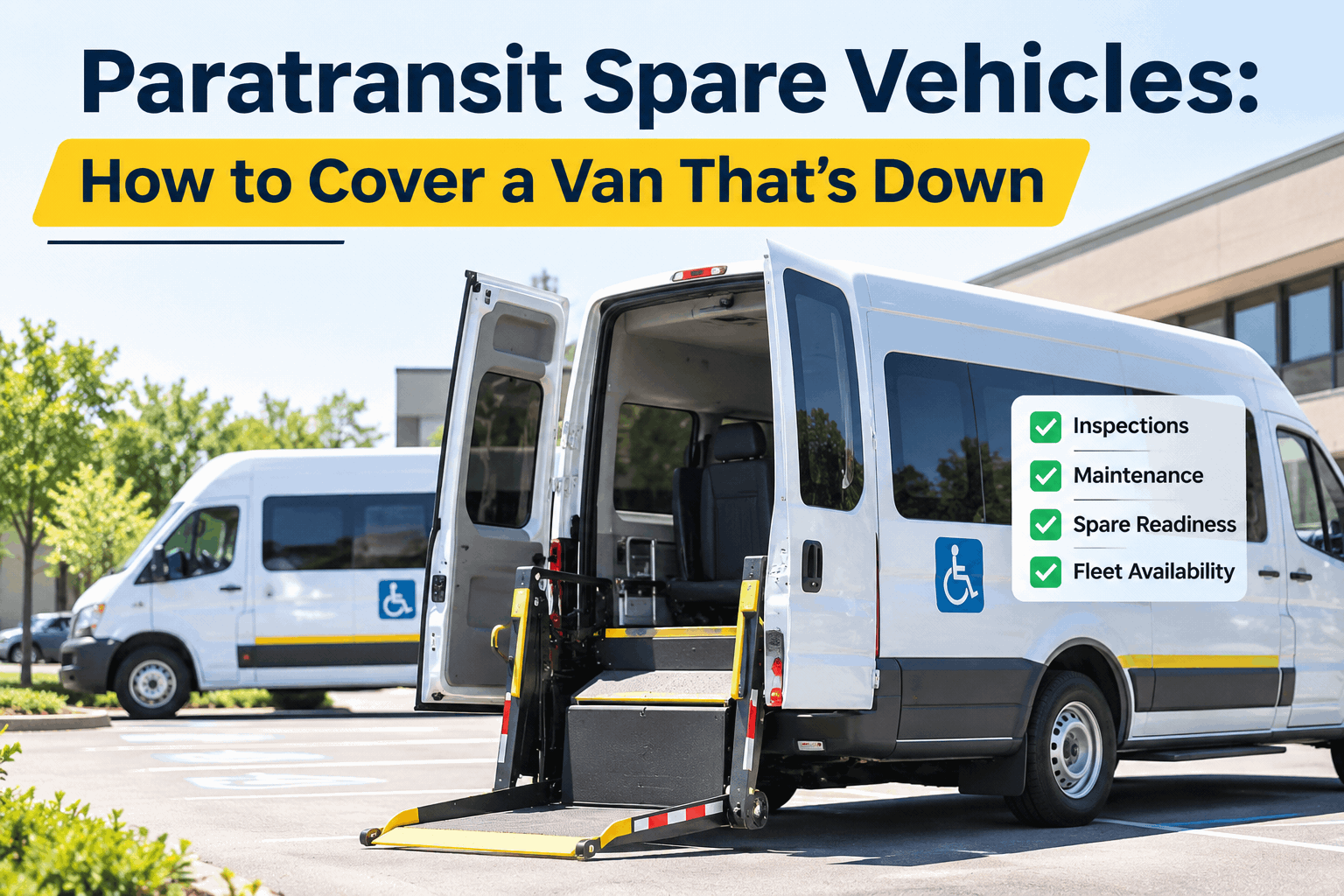
Paratransit Spare Vehicles: How to Cover a Van That's Down
A spare only counts if it can roll. Half the backups in a typical yard have an overdue PM or an open work order — parked, not ready. Here is how to know your real coverage before you need it.
How Many Paratransit Spare Vehicles Do You Actually Need?
The transit benchmark most people quote is the FTA spare ratio — but it was written for fixed-route fleets, not demand-response. Use it as a starting point, then adjust for the realities of an aging cutaway fleet that breaks down more, not less.
The FTA's roughly 20% guideline applies to fixed-route fleets of 50+ vehicles, and judgment is applied for smaller operators — it is not a paratransit mandate. Older cutaways and will-call demand often push the practical number higher, so treat 20% as a floor to reason from, not a ceiling. Once you know the number, you can track every spare's readiness for free and see how many of them actually count.
A Spare Only Counts If It's Maintenance-Ready
A van parked in the back lot is not automatically coverage. For a spare to actually sub in on a moment's notice, four things have to be true — and each one is a maintenance record, not a hope.
No open work order
Nothing is sitting unrepaired on it — an open defect means the spare is a project, not a backup.
Preventive maintenance current
PM is not overdue by mileage or calendar — a spare behind on service fails the day you finally need it.
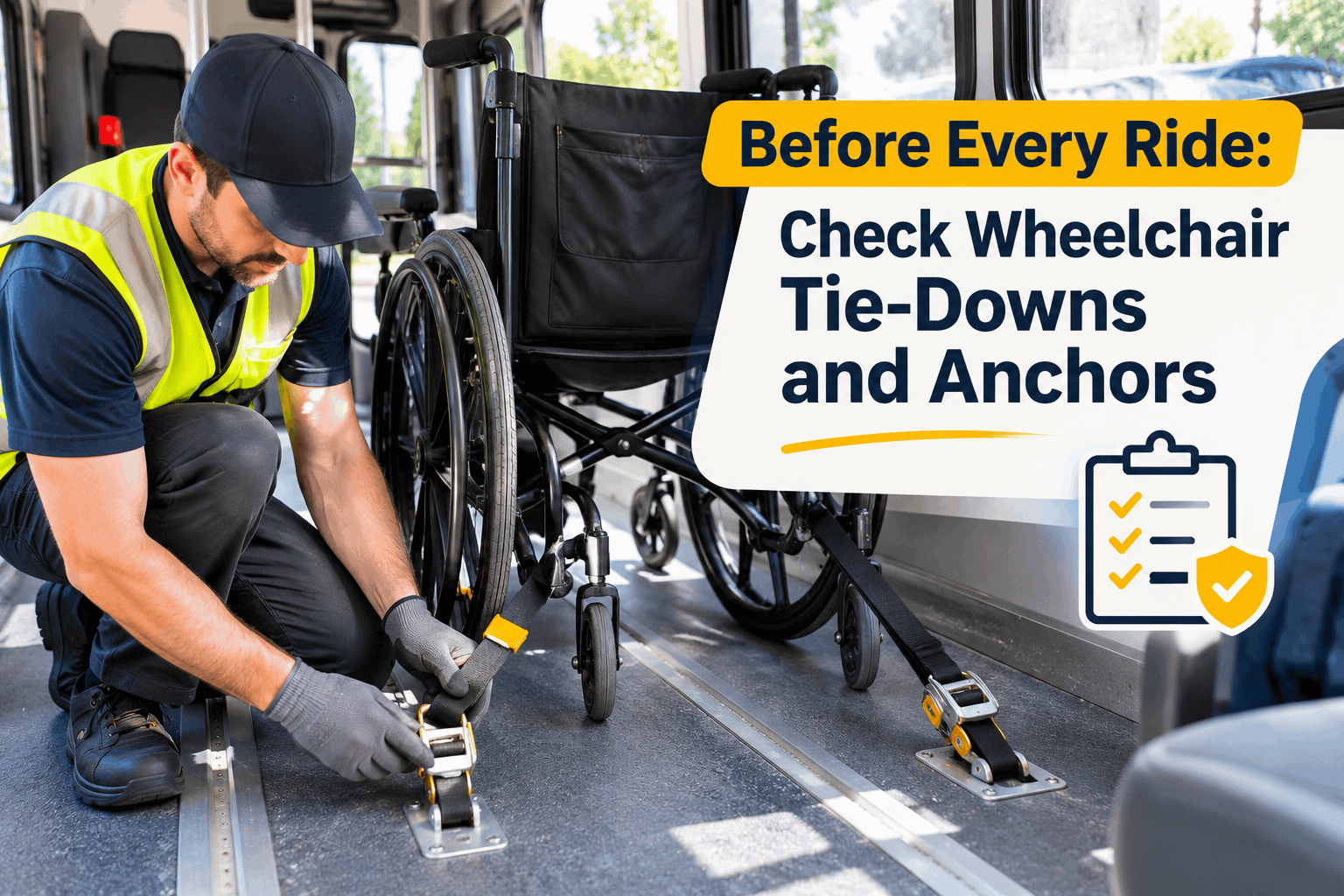
Lift and securements work
The wheelchair lift cycles and the tie-downs are intact — or the spare can't cover an accessible trip.
Recent inspection on record
A spare that's sat for weeks still needs a current check before it carries a rider — not a last-used guess.
When those four live in one place, "ready spare" is a fact, not a hope. Start tracking spare readiness free and know your real number before Tuesday morning.
When a Frontline Van Goes Down, What Happens Next?
Everything comes down to one moment: a van breaks, and you reach for a spare. Whether that ends in a clean swap or a cut route depends entirely on whether a ready spare is sitting there — something you decide long before the breakdown.
The gate is won in the shop, not in dispatch. BusCMMS keeps every spare's inspection, PM status, and open work orders visible, so when a van goes down you already know which backup can roll — no yard walk, no surprise. You can walk through that readiness view in a quick demo to see it on your own fleet.
Why Spare Vans Quietly Stop Being Ready
Spares don't fail on purpose — they fall out of readiness because they're out of sight. Every reason below has the same fix: track the spare like it's in service, even when it's parked.
Swipe sideways to see all columns →
Your Spare Vehicle Readiness Checklist
Run this on every spare on a set rhythm — not just before you need it. The CRITICAL items decide whether a spare can roll today; the PLAN items keep your coverage honest over time.
-
No open work order on the spareNothing is sitting unrepaired — the spare is a backup, not a half-finished project.CRITICAL
-
Preventive maintenance not overduePM current by mileage and calendar, even though it's been parked — the trap that sinks most spares.CRITICAL
-
Lift cycles and securements intactThe accessible van can actually cover an accessible trip — the whole reason it's a paratransit spare.CRITICAL
-
Current inspection on recordA fresh check before it carries a rider — not a last-used date from three weeks ago.PLAN
-
Battery and fluids ready-checkedA periodic start-and-check so a weeks-parked spare doesn't crank dead the morning you need it.PLAN
-
Real spare count tracked, not nominalYou know how many spares are truly ready right now — the number that matters when a van drops.PLAN
If two CRITICAL items are a "maybe," your real coverage is lower than your count says. Sign up free and make every spare a known quantity.
Nominal Count vs. Real Coverage
The difference between a swap and a stranded rider is whether your spare count reflects what can actually roll.
Swipe sideways to see all columns →
"I used to say we had four spares. The morning two vans went down at once, I found out we really had one — the others were behind on service. Now the system tells me the real number every morning, before I need it."
The Short Version on Spare Coverage
Count isn't coverage
Owning four spares means nothing if two have an overdue PM or an open repair — real coverage is what can roll.
20% is a floor, not a rule
The FTA ratio is a fixed-route guideline; aging cutaways and will-call demand often need more, not less.
Parked spares still age
Calendar PM, batteries, and fluids come due whether a van drives or sits — track spares like they're in service.
The gate is won in the shop
Whether a down van means a clean swap or a cut route is decided by readiness tracking long before the breakdown.