The lift gets the rider on board. The tie-downs are what keep them safe once the bus moves. A frayed strap or a cracked floor anchor is invisible until the one moment it has to hold — a hard stop, a swerve, a crash — and by then it's too late to check. A proper wheelchair tie-down inspection checklist catches that wear before a ride, and a BusCMMS demo shows how each securement defect gets logged and fixed.
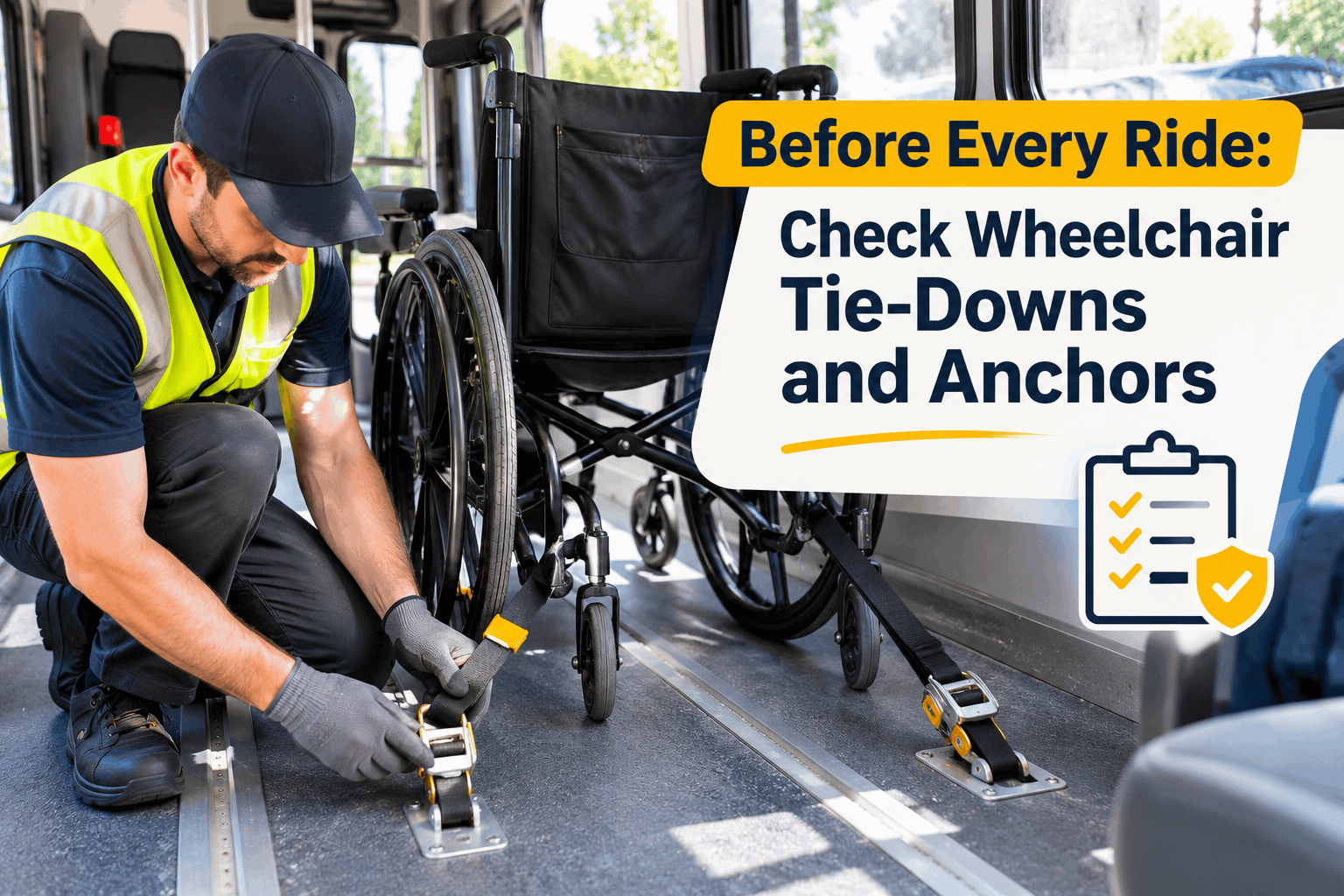
Before Every Ride: Check Wheelchair Tie-Downs and Anchors
Four straps, four floor anchors, and the occupant belt — the system that holds a rider in a crash. Here is exactly what to inspect on each before the wheels turn, and what makes a strap an instant replace.
Securement Is the One System With No Backup
A failed lift strands a rider at the curb — frustrating, but safe. A failed tie-down lets a wheelchair move in a crash, which is a different kind of problem entirely. That's why securement gets inspected before every ride, not on a monthly schedule — and a demo shows how to make that pre-trip check a tracked record.
It only matters in the worst moment
Straps and anchors do nothing on a smooth ride — then everything in a hard stop or collision. You can't test them after the fact.
Wear hides in plain sight
A strap frays a thread at a time and webbing weakens from oil or sunlight long before it looks unsafe. A glance isn't an inspection.
Every part shares the load
Four straps, four anchors, and a belt work as one system — one weak hook or cracked anchor undercuts all the others.
The rider can't check it themselves
The passenger depends entirely on the operator getting securement right — the trust is total, so the inspection has to be too.
When to Replace the Whole Assembly — No Exceptions
Securement webbing and hardware don't get repaired in the field. The industry rule is simple and absolute: if you find any of these, the entire strap or belt assembly comes out of service and gets replaced.
There's no "watch it for a week" with securement — it's pass or replace. See how BusCMMS logs a failed strap and opens a replacement order in a demo.
What to Inspect on Each Securement Part
The system has four parts, and each has its own tell. Check each one on its own terms — and know the exact trigger that pulls it from service, so you can log each failed part for free as you go.
Swipe sideways to see all columns →
Your Wheelchair Tie-Down Inspection Checklist
Run this before every ride that carries a wheelchair, and in full at each scheduled service. The CRITICAL items stop the trip until fixed; the PLAN items keep the system from drifting toward a failure.
-
All four straps intact, webbing soundNo cuts, fraying, burns, or contamination on any of the four tie-down straps — run each full length.CRITICAL
-
Buckles and hooks latch and holdEvery buckle latches and releases; hooks and fittings are not bent, cracked, or worn.CRITICAL
-
Floor anchors seat and lock positivelyFittings lock into the track or pocket, the mount is tight, and the track is clear of debris.CRITICAL
-
Retractors lock on a sharp pullEach retractor grabs when pulled quickly and retracts smoothly when released — test, don't assume.CRITICAL
-
Occupant lap and shoulder belt workThe belt is separate from the tie-downs, sits on the body not the chair, and buckles and adjusts cleanly.PLAN
-
Defects logged, worn parts replacedAny failed component is recorded and the whole assembly replaced — not patched or set aside for later.PLAN
If any CRITICAL item fails, that securement station is out of service — and the trip can't carry a wheelchair on it. Start logging securement defects free.
A Verbal "Looks Fine" vs. a Logged Inspection
With a safety system this critical, the difference between a prevented injury and a liability is whether the check is a record, not a memory.
Swipe sideways to see all columns →
Securement sits with lifts, ramps, and accessibility checks as core work on an accessible fleet — see where it fits the wider paratransit and ADA maintenance picture, then track it per van.
"A strap doesn't fail all at once — it fails the day after the day you should have replaced it. The whole job is catching it the day before. Now a frayed strap is a photo and a replacement order before that van carries another rider."
The Short Version on Tie-Down Inspection
It's the system with no backup
Securement only matters in a crash, and you can't test it afterward — so it's checked before every ride, not monthly.
Four parts, one load path
Straps, buckles, retractors, and floor anchors share the load — one weak link undercuts the whole system.
Pass or replace, never repair
Cut, frayed, or contaminated webbing and failed hardware mean replacing the whole assembly — no field fix.
A check you can't prove didn't happen
A logged, photographed inspection with replacement dates turns a verbal "looks fine" into a record that protects everyone.