Fuel is one of your biggest line items, but on a demand-response fleet it is also the hardest to pin down. No fixed loop, will-call deadheading, vans fueling at different cards on different days — and at month end, a pile of transactions that don't tie to any one van's miles. Clean paratransit fuel tracking turns that pile into a cost-per-mile you can act on, and a BusCMMS demo shows how fuel and mileage get matched per van.
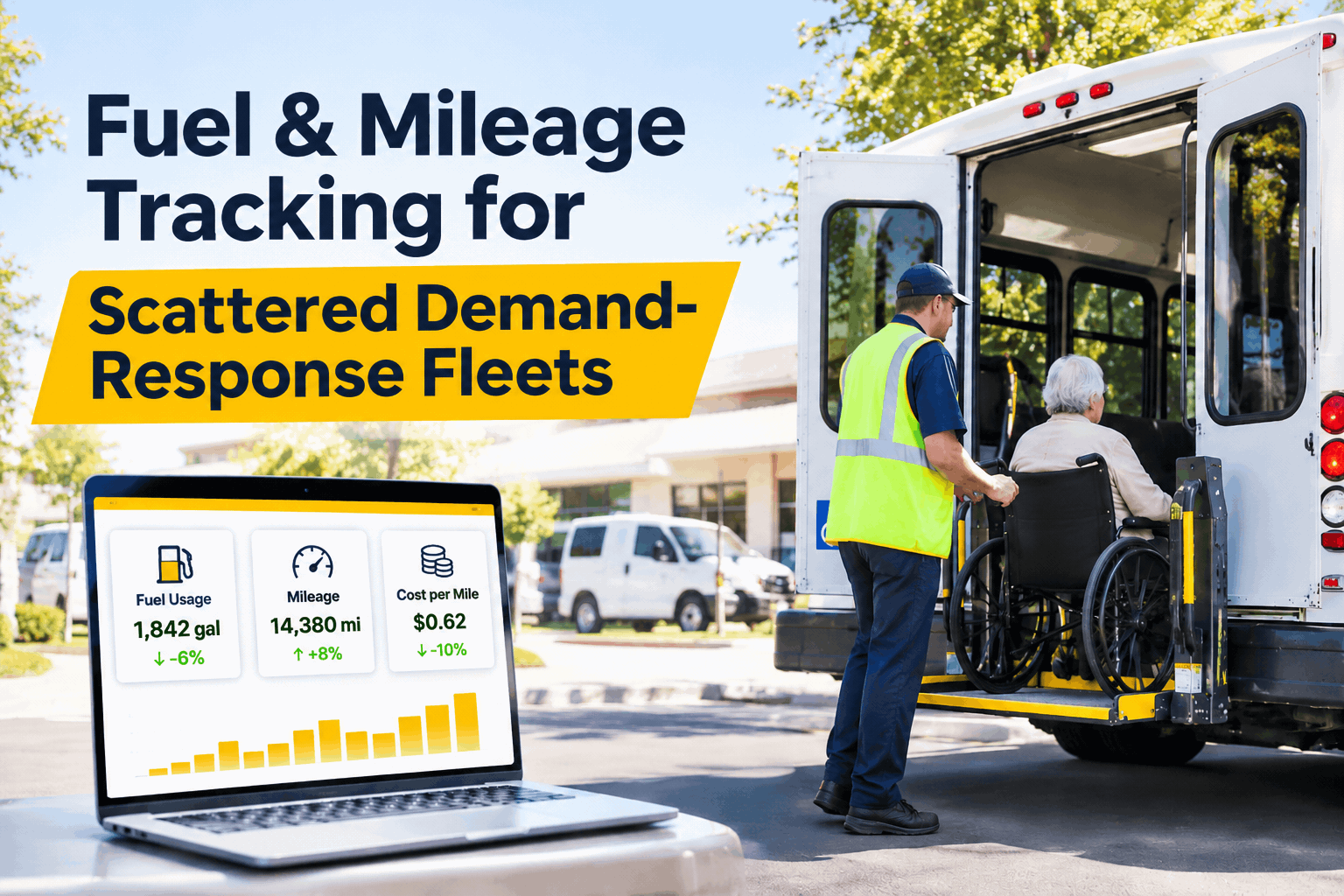
Fuel & Mileage Tracking for Scattered Demand-Response Fleets
Fuel card charges on one side, odometer readings on the other. The number that matters — cost per mile by van — only appears when the two are matched. Here is how to do it across a scattered paratransit fleet.
Why Paratransit Fuel Tracking Breaks Down on Scattered Fleets
A fixed-route bus runs the same loop, fuels at the same yard, and its miles are predictable. A paratransit van does none of that — and that is exactly why fuel data on demand-response fleets is so often incomplete or guessed. Four things make it messy.
No fixed route
Miles swing day to day with demand, so you can't estimate a van's fuel from a schedule — you have to measure it.
Will-call deadheading
Empty miles between pickups burn fuel that never shows up as a completed trip, quietly inflating cost per mile.
Many cards, many sites
Drivers fuel at whatever station is closest, so transactions scatter across cards and days instead of one yard pump.
No odometer at fill-up
If miles aren't captured with the gallons, you have spend with no denominator — and cost per mile can't be computed.
The One Number: Fuel Cost Per Mile By Vehicle
Blended fleet MPG hides the vans that are costing you. The fair comparison is cost per mile, computed per vehicle — and it is a simple division once fuel spend and miles live in the same place.
A van sitting well above the fleet line isn't random — it points to routes, tires, or a developing mechanical issue. See how BusCMMS surfaces the outlier van in a demo before it quietly burns a season of fuel.
Where Fuel Tracking Meets Preventive Maintenance
This is what a fuel-card app alone can't do. When the same system holds fuel, mileage, and maintenance, the odometer reading you capture at fill-up does double duty — and a falling MPG becomes an early maintenance signal, not just a budget line.
A fuel card tells you what you spent. BusCMMS ties that spend to miles and to the van's maintenance, so a creeping MPG drop becomes a work order before it becomes a breakdown.
What Per-Van Fuel Tracking Actually Surfaces
Once fuel and miles are matched per vehicle, patterns you used to feel but couldn't prove become visible — and most point to a fixable cost.
Swipe sideways to see all columns →
Your Paratransit Fuel-Tracking Checklist
Run this before you trust a single cost-per-mile number. The CRITICAL items are what make the metric real; the PLAN items are what turn it into savings.
-
Every fuel transaction ties to a vehicleCard charges and receipts land against a specific van — no orphan gallons.CRITICAL
-
Odometer is captured with the gallonsMiles recorded at or near fill-up — the denominator cost per mile can't exist without.CRITICAL
-
Fuel card data flows in automaticallyIntegration pulls transactions in — no manual receipt entry, no month-end scramble.CRITICAL
-
Cost per mile reports per vehicleYou can rank vans and see the outliers, not just a blended fleet average.PLAN
-
MPG trend is watched over timeA falling line flags a maintenance issue before it becomes a road call.PLAN
-
Mileage feeds preventive maintenanceThe odometer you log for fuel also triggers PM on time — one reading, two jobs.PLAN
If the first three are a "no," your cost per mile is a guess no matter how good the spreadsheet looks. Start tracking fuel by van free and make it real.
Receipt Pile vs. Matched Fuel Data
The difference between a fuel budget you defend and one you guess at is whether spend and miles meet in one place.
Swipe sideways to see all columns →
"I always suspected one or two vans were drinking fuel. I couldn't prove it until the spend sat next to the miles. One van was thirty cents a mile over the others — turned out to be a brake dragging for weeks."
The Short Version on Paratransit Fuel Tracking
Scattered fleets need measured miles
No fixed route means you can't estimate fuel from a schedule — cost per mile has to be tracked per van.
Cost per mile beats blended MPG
A fleet average hides the thirsty van; per-vehicle cost per mile is the number that finds it.
Spend and miles must meet
Fuel card data plus odometer readings in one system is what makes the metric real instead of a guess.
MPG is a maintenance signal
A falling trend flags a developing fault early — fuel tracking and preventive maintenance belong together.