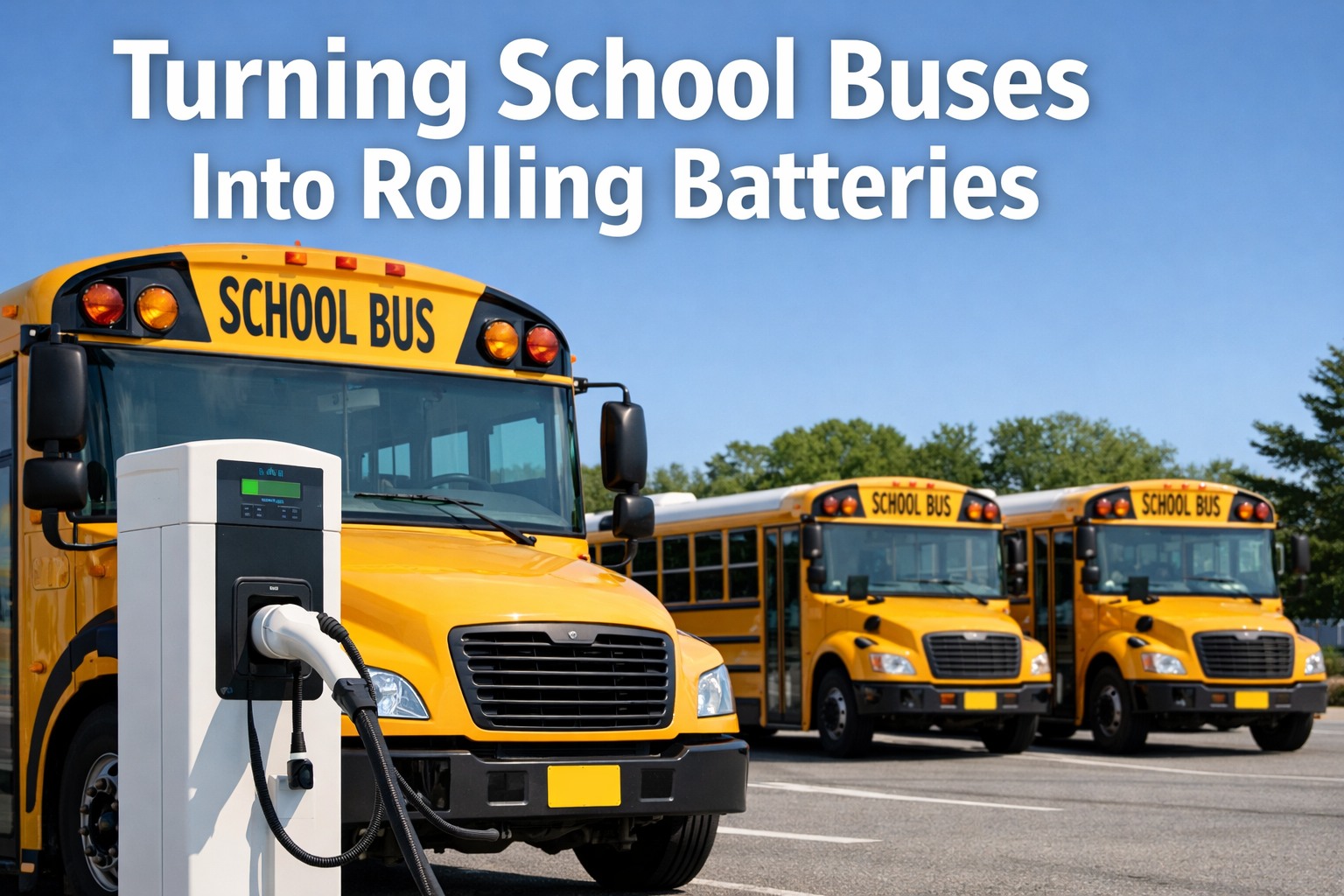
American school districts are discovering that their electric bus fleets can do more than just transport students safely—they are becoming mobile power plants that strengthen our electrical grid while generating revenue. This revolutionary Vehicle-to-Grid (V2G) technology transforms school buses into rolling batteries, creating a win-win scenario for education budgets and energy sustainability. For manufacturing professionals in the transit sector, this represents a paradigm shift that's reshaping how we think about fleet management, energy storage, and sustainable transportation infrastructure.
The timing couldn't be better. With federal funding programs like the EPA's Clean School Bus Program allocating $5 billion toward electrification, and companies like Blue Bird reporting 700 electric bus sales in 2024 alone—a 30% increase from the previous year—the foundation for this energy revolution is already in place. Modern electric school buses aren't just vehicles; they're sophisticated energy management systems equipped with advanced CMMS tools, telematics integration, and predictive analytics that make grid interaction seamless and profitable.
Understanding Vehicle-to-Grid Technology in School Bus Applications
Vehicle-to-Grid technology enables electric school buses to store energy during off-peak hours when electricity rates are low, then discharge that power back to the grid during peak demand periods when rates are highest. This bidirectional energy flow turns each bus into a mobile battery bank capable of supporting grid stability while generating revenue for school districts.
A typical electric school bus battery pack ranges from 155 kWh to 220 kWh, enough to power 10-15 average American homes for a full day. When you multiply this by an entire district fleet—some operating hundreds of buses—the collective energy storage capacity becomes substantial. Modern fleet software systems can coordinate these energy transactions automatically, optimizing charge and discharge cycles based on electricity prices, grid demand, and transportation schedules.
The integration of advanced CMMS systems ensures that V2G operations don't compromise vehicle reliability or student safety. These systems monitor battery health in real-time, track charging cycles, and schedule maintenance proactively to maintain optimal performance for both transportation and energy storage functions. Route optimization algorithms work in tandem with energy management systems to ensure buses are always ready for their primary mission while maximizing grid support opportunities.
Economic Benefits and Revenue Generation for School Districts
The financial case for V2G-enabled school buses is compelling. School districts can generate between $3,000 and $6,000 per bus annually through grid services, effectively reducing the total cost of ownership while supporting community energy resilience. This revenue stream helps offset the higher upfront costs of electric buses, making electrification more accessible for budget-conscious districts.
Beyond direct revenue, V2G technology provides additional economic benefits through demand charge reduction. Schools can use their bus batteries to reduce peak energy consumption during expensive rate periods, lowering their overall electricity costs. Advanced predictive analytics built into modern fleet automation systems can optimize these savings automatically, requiring minimal human intervention while maximizing financial benefits.
Manufacturing Insight: The most successful V2G implementations integrate sophisticated fleet compliance tracking and maintenance scheduling systems. This ensures grid support activities never compromise student transportation reliability while maximizing revenue opportunities through intelligent energy management.
School districts implementing V2G technology also benefit from enhanced energy independence and resilience. During power outages or emergencies, their bus fleets can serve as backup power sources for critical facilities like emergency shelters or medical centers. This dual-purpose capability adds tremendous value to the community while justifying the investment in advanced fleet technology.
Technology Integration and Fleet Management Systems
Modern V2G-enabled school buses rely on sophisticated integration between transportation and energy management systems. GPS systems track vehicle locations and predict return times, while AI fleet tools optimize charging schedules based on route requirements, electricity prices, and grid demand signals. This level of automation ensures seamless operation without disrupting transportation services.
The backbone of effective V2G implementation is robust CMMS systems that monitor every aspect of bus and battery performance. These systems track battery state of health, predict maintenance needs, and ensure compliance with both transportation safety regulations and grid interconnection standards. Driver safety remains paramount, with automated systems preventing V2G operations that could compromise vehicle availability for student transportation.
School bus tracking systems integrated with energy management platforms provide real-time visibility into both transportation and energy operations. Fleet managers can monitor which buses are available for grid support, track revenue generation, and ensure optimal battery conditioning for long-term performance. This comprehensive approach to fleet automation represents the future of multi-purpose vehicle deployment.
Leading manufacturers like Blue Bird and Gillig are incorporating these advanced systems directly into their vehicles, providing turnkey solutions that simplify V2G deployment. Their platforms support telematics integration, predictive maintenance, and comprehensive fleet insights that make managing dual-purpose fleets straightforward for school district personnel.
Implementation Challenges and Solutions
While V2G technology offers significant benefits, implementation requires careful planning and robust support systems. The primary challenge is ensuring student transportation reliability is never compromised by grid support activities. Advanced maintenance scheduling systems address this by prioritizing transportation needs and automatically managing energy commitments based on operational requirements.
Grid interconnection requirements can be complex, requiring specialized equipment and utility coordination. However, modern fleet software platforms increasingly include built-in compliance tracking tools that streamline the approval process and ensure ongoing regulatory compliance. These systems automatically generate required reports and monitor performance metrics that utilities need for grid integration approval.
Ready to explore how V2G technology can transform your school bus fleet into a revenue-generating asset? Discover advanced fleet management solutions that make dual-purpose transportation profitable and reliable.
Getting StartedBook a Demo
Training and change management represent another implementation consideration. Fleet personnel need to understand both transportation and energy management aspects of V2G operations. Comprehensive training programs and intuitive software interfaces help ensure smooth transitions from traditional fleet management to integrated energy and transportation operations.
Future Outlook and Industry Transformation
The convergence of electric vehicle technology, smart grid infrastructure, and advanced fleet management systems is creating unprecedented opportunities for school transportation. Industry analysts predict that V2G-enabled school bus fleets will become standard within the next decade, driven by both economic incentives and environmental mandates.
Emerging technologies like improved battery chemistry, faster charging systems, and more sophisticated AI fleet tools will further enhance V2G capabilities. Route optimization algorithms are becoming more sophisticated, enabling even better coordination between transportation needs and grid support opportunities. Student safety enhancements continue to evolve, with next-generation systems providing even more comprehensive monitoring and automated safety protocols.
The future of school transportation lies in multi-purpose vehicle platforms that serve educational, environmental, and energy infrastructure needs simultaneously. This transformation represents one of the most significant opportunities for operational innovation in the school transportation sector since the introduction of safety regulations in the 1970s.
Turning school buses into rolling batteries represents more than just technological innovation—it's a fundamental reimagining of how transportation assets can serve multiple community needs while generating revenue and supporting sustainability goals.
For US manufacturing professionals, this transformation highlights the importance of integrated systems thinking, where vehicles become platforms for multiple services rather than single-purpose transportation devices. The companies that succeed in this new landscape will be those that combine traditional manufacturing excellence with advanced technology integration and comprehensive service delivery.
Frequently Asked Questions
Q: How does V2G technology affect school bus reliability and student safety?
A: Modern V2G systems prioritize transportation needs above grid support. Advanced CMMS and fleet management systems ensure buses are always available for student routes by automatically managing energy commitments, monitoring battery health, and maintaining required charge levels for transportation duties. Student safety remains the top priority with automated systems preventing any V2G operations that could compromise vehicle availability.
Q: What kind of revenue can school districts expect from V2G-enabled buses?
A: School districts typically generate $3,000-$6,000 per bus annually through V2G grid services, plus additional savings from demand charge reduction. Revenue varies based on local electricity rates, grid demand patterns, and the extent of participation in utility programs. These earnings help offset the higher upfront costs of electric buses while providing ongoing operational benefits.
Q: What infrastructure is required to implement V2G technology in school bus fleets?
A: V2G implementation requires bidirectional charging stations, grid interconnection equipment, and advanced fleet management software. Most modern electric school buses can be V2G-enabled with proper charging infrastructure. The system also needs robust CMMS tools, telematics integration, and automated scheduling systems to coordinate transportation and energy operations effectively.
Q: How do utility companies benefit from school bus V2G programs?
A: Utilities gain distributed energy storage that helps balance grid demand, reduce peak load stress, and integrate more renewable energy sources. School bus fleets provide predictable, schedulable energy resources that can respond quickly to grid needs. This relationship is mutually beneficial, with utilities paying for grid services while gaining improved system reliability and flexibility.
Q: What role do fleet management systems play in successful V2G operations?
A: Advanced fleet management systems are crucial for V2G success, coordinating transportation schedules with energy commitments, monitoring battery health, ensuring compliance with regulations, and optimizing revenue generation. These systems integrate route optimization, maintenance scheduling, GPS tracking, and energy management to provide seamless dual-purpose operations without compromising transportation reliability or student safety.