Someone in your district says school buses are exempt from FMCSA rules, so why worry about federal compliance? It is one of the most repeated half-truths in pupil transportation. The school bus FMCSA exemption is real, but it is narrow, it has carve-outs that never go away, and it can evaporate the moment a bus leaves a home-to-school route or crosses a state line. This guide walks through exactly what § 390.3(f)(1) exempts, what always applies anyway, and how the same bus can sit under different rules on the same day depending on the trip. See how BusCMMS keeps school-bus compliance records organized by vehicle and operation.
Updated September 2026 · Reviewed against 49 CFR 390.3(f), 390.5, and FMCSA regulatory guidance (eCFR)
When FMCSRs Apply to School Bus Operations
The real scope of the school bus exemption, the rules that always apply, and how activity trips, contractors, and interstate travel change the answer.
"School buses are exempt from all FMCSA safety rules, so federal compliance does not apply to us."
Home-to-school operations are largely excepted from the FMCSRs, but CDL, drug and alcohol testing, and distracted-driving rules always apply, and activity or interstate trips can pull the full rules back in.
What the School Bus Exemption Actually Says
Start with the exact language, because the misunderstanding lives in the gap between what people say and what the rule says. Under 49 CFR 390.3(f)(1), all school bus operations as defined in the regulations are excepted from the Federal Motor Carrier Safety Regulations, except for a specific short list of provisions that still apply. That "except for" is the whole story. This is a targeted exception, not a blanket pass on federal safety law.
The definition matters just as much. A "school bus operation" under the regulations means using a school bus to transport school children and school personnel between home and school, and school and home. Not to a game. Not to a field trip. Home to school and back. The instant a bus is doing something else, you are potentially outside the definition that the exemption is built on. And separately, under 390.3(f)(2), transportation performed by a government entity such as a school district is also generally excepted, with its own carve-outs. Book a demo to record which operation each bus is running and under what rule.
- Home-to-school and school-to-home routes
- Operated by the school district itself (government entity)
- Using a vehicle meeting the school bus definition
- CDL requirements (Part 383)
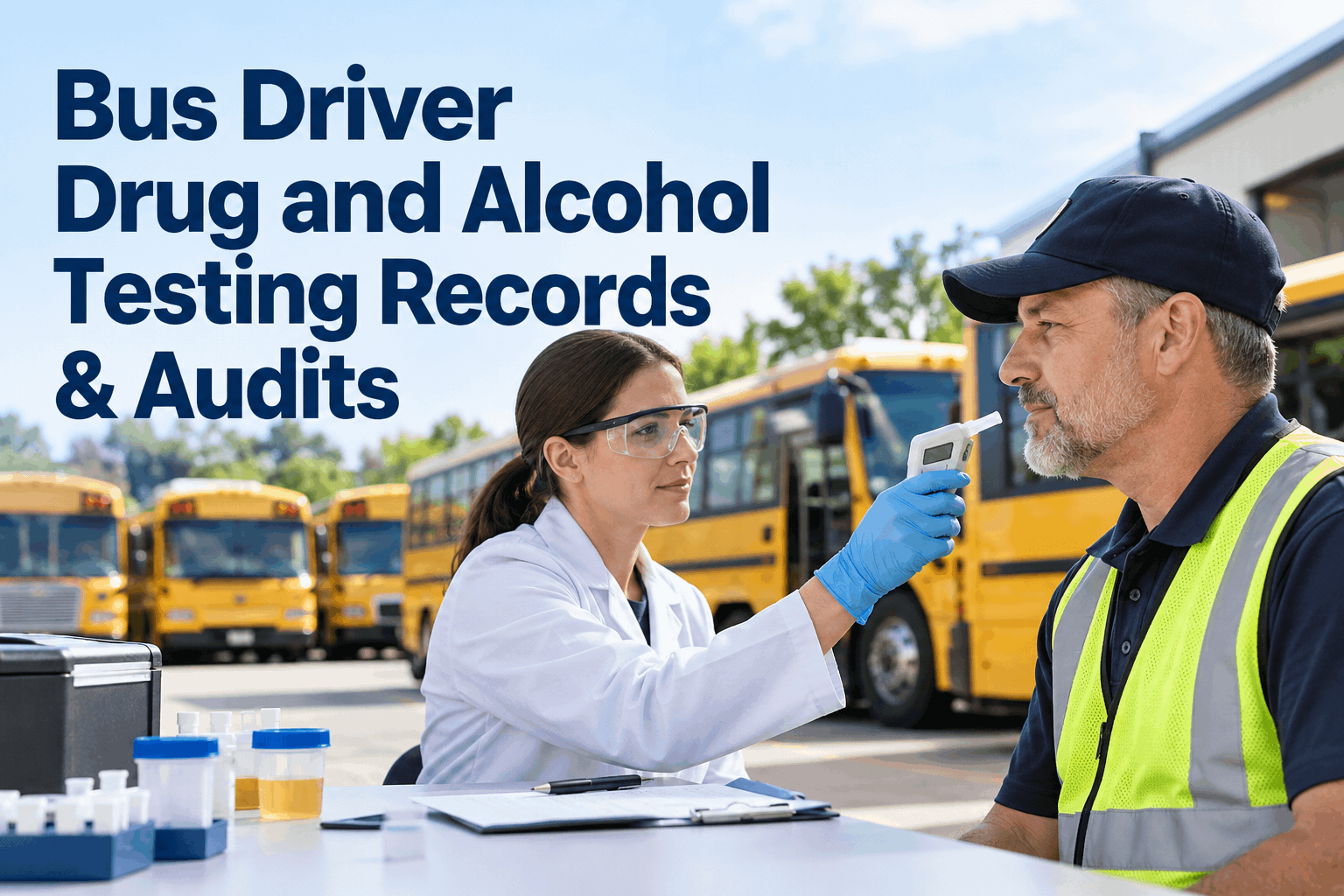
- Drug and alcohol testing (Part 382)
- Texting and hand-held phone bans
The Rules That Apply No Matter What
Before getting into when the full FMCSRs come back, be clear about the requirements that never left. These apply to school bus drivers whether the bus is on a morning route or parked, because they attach to the driver of a commercial motor vehicle, not to the trip type.
Commercial Driver's License
Part 383 applies to drivers of commercial motor vehicles including school buses. A qualifying school bus driver needs the CDL with the appropriate passenger and school bus endorsements.
Drug and Alcohol Testing
Part 382 testing requirements apply to CDL drivers, school bus drivers included. The exemption does not touch the testing program.
Distracted-Driving Bans
The federal bans on texting and hand-held cellphone use are named directly in the exemption as still applying to school bus drivers.
This is why "we are exempt, so none of this applies" is the dangerous version of the story. The most safety-critical driver requirements, licensing and testing and distracted driving, are exactly the ones the exemption leaves in place. A district that treated the exemption as blanket and skipped CDL or testing compliance would not be saving effort; it would be out of compliance on the rules that matter most. Book a demo to keep driver credentials and testing status on each driver record. Or start free and set it up yourself.
Activity Trips, For-Hire, and Interstate Travel
Here is where the same bus with the same driver can move from exempt to regulated. Because "school bus operation" means home to school only, a trip that is not home to school, an athletic event, a field trip, a charter, falls outside the definition, and the full FMCSRs may apply depending on the facts. Three factors drive the analysis.
Trip purpose
Home-to-school is the exempt operation. An activity or extracurricular trip is not a "school bus operation" under the definition, so the exemption's basis may not hold.
Who operates it
A school district gets the government exception. A private contractor hauling students under contract is a for-hire motor carrier, and the government exception does not extend to it.
Interstate or intrastate
Crossing state lines pulls a trip into interstate commerce, where FMCSR applicability broadens. A trip wholly within one state is analyzed differently.
A useful rule of thumb used in the industry: for a non-home-to-school trip, the FMCSRs are more likely to apply when the bus carries 16 or more passengers or weighs 10,001 pounds or more, the school bus and government exceptions do not apply, and the bus is crossing state lines. And note two specific points from FMCSA guidance: charging a fee to defer a government entity's own costs does not by itself break the government exception, but a government entity engaging in interstate charter transportation of passengers must comply with the accident-report retention requirements of Part 390. Details matter, and they are trip-specific. Book a demo to flag which trips need the full compliance workflow.
Why Contracted Operators Are a Different Story
This distinction catches districts off guard more than any other. When a school district operates its own buses, it leans on the government exception. But the moment a private company operates school buses under contract with the district, that company is a for-hire motor carrier, and it does not inherit the district's government exception. Anyone operating school buses under contract with a school is treated as a for-hire carrier under FMCSA guidance.
The practical consequence: a contracted operator generally has a broader compliance footprint than the district it serves, particularly once trips move beyond home-to-school and especially across state lines. If your district uses contractors, the compliance question is not only "what applies to us" but "what applies to them," and your contracts and records should reflect that split cleanly. This is not a reason to avoid contractors; it is a reason to document who is running what. Book a demo to keep district and contractor operations on separate, clear records.
District-Operated
- Leans on the government exception
- Home-to-school largely excepted
- CDL, testing, distracted-driving still apply
- Interstate charter triggers Part 390 accident-record retention
Contractor-Operated
- Treated as a for-hire motor carrier
- Does not inherit the government exception
- Broader FMCSR footprint, trip-dependent
- Interstate and non-home-to-school trips raise applicability
One District, One Bus, Three Different Analyses
Here is an illustrative scenario. A district owns bus 14 and runs it for three very different purposes in a single week. Same vehicle, same driver, three different regulatory pictures, which is exactly why a single blanket assumption fails.
A classic school bus operation, intrastate, district-operated. Squarely inside 390.3(f)(1). CDL, testing, and distracted-driving rules still apply to the driver.
Not a home-to-school operation, so outside that definition, but still district-operated and intrastate. Analyzed on the government exception and state rules rather than assumed exempt.
Crosses state lines for a non-home-to-school trip. Broadest applicability, and if it is charter passenger transportation, Part 390 accident-record retention comes into play.
The point is not that any single answer is hard. It is that the answer changes by trip, and a fleet running one blanket assumption across all three will be wrong on at least two of them. What protects the district is a clean operational record showing what bus 14 was doing, for whom, and where, on each date. That record is what turns a compliance question into a lookup. Book a demo to see per-trip operation records attached to each bus.
State Rules Fill the Gaps the Exemption Leaves
One more layer, and it is the one the FMCSR conversation tends to bury. Even where the federal FMCSRs do not apply, state pupil-transportation rules almost always do, and they are frequently stricter than anything federal. State inspection programs, driver requirements, equipment standards, and recordkeeping obligations operate independently of the federal exemption. Being outside the FMCSRs is not the same as being outside regulation.
So the complete picture for any given bus and trip has three layers: the FMCSRs that always apply (CDL, testing, distracted driving), the FMCSRs that may apply depending on trip and interstate status, and the state rules that apply on top regardless. A fleet that tracks only the federal question and ignores the state layer is exposed exactly where enforcement is most active for school buses. BusCMMS is built to hold all three layers per vehicle, so the compliance workflow matches the operation instead of assuming one rule set covers everything. Book a demo to layer federal and state requirements on the same bus record.
The Bottom Line on the School Bus FMCSA Exemption
The school bus FMCSA exemption is genuine but narrow. Under 390.3(f)(1), home-to-school operations are largely excepted from the FMCSRs, and government-operated transportation gets its own exception, but CDL, drug and alcohol testing, and distracted-driving rules always apply, and activity trips, for-hire contractors, and interstate travel can pull the broader rules back in. Treat it as a blanket exemption and you will be wrong on the trips that carry the most risk. The fleets that get this right do not memorize every provision; they keep clean records of which bus ran which operation, for whom, and where, and let the right workflow follow the trip. Do that and the exemption becomes a manageable analysis instead of a liability. See how BusCMMS keeps school-bus compliance records organized by vehicle and operation.
Are school buses exempt from FMCSA regulations?
Not entirely. Under 49 CFR 390.3(f)(1), school bus operations are largely excepted from the Federal Motor Carrier Safety Regulations, but not from all federal requirements. The commercial driver's license rules (Part 383), drug and alcohol testing (Part 382), and the federal texting and hand-held phone bans still apply to school bus drivers. Government-operated transportation has its own exception under 390.3(f)(2) with similar carve-outs. So it is a targeted exception, not a blanket exemption from federal safety law.
When does the school bus FMCSA exemption apply?
It applies to a "school bus operation" as defined in the regulations, which means using a school bus to transport school children and personnel between home and school and school and home. The vehicle must meet the school bus definition, and district-operated transportation also draws on the government exception. The exemption is built specifically around home-to-school service. When a bus is used for something other than that, the basis for the exemption may not hold and a different analysis is needed.
Do activity trips fall under the exemption?
Generally no, because an activity, athletic, or field trip is not a home-to-school operation and therefore falls outside the "school bus operation" definition the exemption relies on. Whether the full FMCSRs apply then depends on the facts: the vehicle size and weight, whether the government or school bus exceptions still apply, and especially whether the trip crosses state lines. A district-operated in-state activity trip is analyzed differently from an interstate charter. The safe approach is to evaluate activity trips separately rather than assume the home-to-school exemption carries over.
Does an interstate school bus trip change the requirements?
It can significantly. Crossing state lines brings a trip into interstate commerce, where FMCSR applicability is broader, particularly for non-home-to-school trips. FMCSA guidance also notes that a government entity engaging in interstate charter transportation of passengers must comply with the accident-report retention requirements of Part 390, even though charging a fee to defer the entity's own costs does not by itself break the government exception. Interstate status is one of the biggest factors that can pull the fuller rules back into play.
Are contracted school bus operators subject to the FMCSRs?
A private company operating school buses under contract with a school is treated as a for-hire motor carrier under FMCSA guidance, and it does not inherit the school district's government exception. That generally gives a contractor a broader compliance footprint than the district it serves, especially for non-home-to-school and interstate trips. If your district uses contractors, the compliance analysis has to cover both what applies to the district and what applies to the contractor, and your contracts and records should make that split clear.