Choosing bus fleet management software is less about finding the longest feature list and more about matching the system to the way your buses are inspected, repaired, scheduled and reviewed. A school bus contractor, transit agency, and shuttle operator may share maintenance needs but have different reporting and approval processes. Use this six-step buyer framework to compare options fairly, then Book a BusCMMS software selection demo to test your highest-priority workflows.
How to Choose Bus Fleet Management Software
Make a confident purchase decision with clear requirements, realistic workflows and a repeatable vendor score.
Start with the problems your fleet actually needs to solve
Write down what happens today, who owns each task, and where delays or missing records appear. This keeps the buying process grounded in operational needs.
Ask these five questions first
- How many buses, yards and maintenance teams will use the system?
- Are inspections paper-based, digital, or a mixture?
- Who approves repairs and decides when a bus returns to service?
- How are preventive maintenance intervals tracked?
- Which reports do managers and auditors actually need?
Turn pain points into requirements
Separate mandatory requirements from conveniences. A polished interface cannot compensate for a missing critical workflow.
Evaluate the maintenance workflow end to end
Instead of asking whether a vendor “has work orders,” ask them to show how an actual defect moves through the shop and into a permanent vehicle record.
Driver records the door concern with bus identification.
Shop reviews the defect and determines the next action.
Technician documents labor, parts and completed work.
Authorized staff confirm readiness before service.
Inspections & defects
Usable checklists, defect notes, vehicle identification and follow-up visibility.
Preventive maintenance
Intervals, upcoming service, overdue work and completion history.
Work orders
Repair status, technician notes, parts usage and accountability.
Records & reporting
Searchable vehicle history and exports suited to your review process.
Maintenance software is not the same as routing software
“Fleet management” covers several software categories. Confirm which job you are purchasing for before comparing vendor prices.
Maintenance-focused CMMS
Best for keeping buses roadworthy and maintenance work traceable.
- Vehicle inspections and defects
- Preventive maintenance schedules
- Repair work orders and histories
- Maintenance costs and parts records
Routing & dispatch systems
Best for planning and coordinating daily transportation service.
- Route design and stop assignments
- Driver and trip scheduling
- Dispatch communication
- Passenger and service logistics
Some organizations need both categories. Confirm integrations, data exchange and scope during procurement rather than assuming a maintenance platform also optimizes routes.
Use a weighted scorecard, not a sales impression
Agree on scoring criteria before demos. The example below totals 100%; adjust weights to match your fleet, contracts and team capacity.
| Selection criterion | Weight | What to verify | Vendor score (1–5) |
|---|---|---|---|
| Inspection & defect management | 20% | Complete defect-to-resolution trail | ___ |
| PM scheduling | 20% | Due, overdue and completed service | ___ |
| Work orders & repair history | 20% | Shop process and searchable records | ___ |
| Ease of use & rollout | 15% | Driver, technician and manager tasks | ___ |
| Reporting & data access | 15% | Useful reports, exports and permissions | ___ |
| Cost & vendor support | 10% | Full pricing and support terms | ___ |
Compare total cost of ownership—not just the subscription
Two quotes can look similar until onboarding, user access, data migration and future expansion are included.
Total ownership estimate
Year 1 setup + three years of recurring fees + expected training and support costs.
Ask each vendor to document what is included, what is optional, and what triggers an additional charge.
Run a short, evidence-based selection process
Use the same scenarios and questions for every shortlisted vendor so the comparison stays fair.
Shortlist
Eliminate products that miss essential requirements.
Demonstrate
Test your inspection, repair and PM scenario.
Verify
Review data export, permissions, training and support.
Pilot & decide
Confirm real-user adoption and a practical rollout plan.
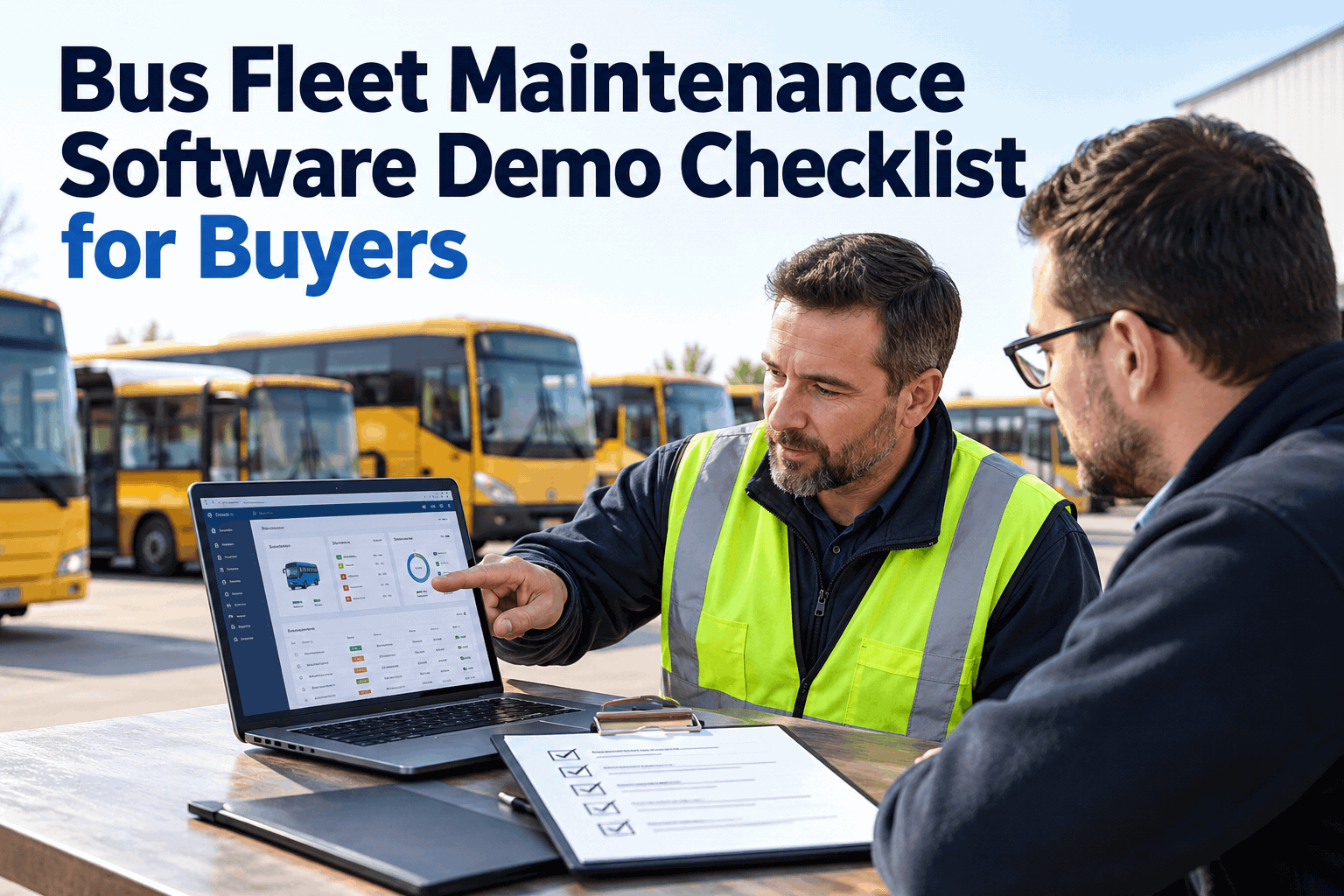
Final buyer checklist
Evaluate BusCMMS against your maintenance requirements
BusCMMS is relevant when your buying priorities center on inspections, preventive maintenance, work orders and accessible bus maintenance histories. Use your own workflow during a demo to verify configuration, reporting and usability for your fleet.
Inspection visibility
Review how digital inspection information supports maintenance follow-up.
PM planning
Assess how scheduled maintenance is organized across vehicles.
Repair documentation
Follow work orders and vehicle-specific service histories.
Maintenance oversight
Evaluate the information available for fleet and shop review.
For a hands-on comparison, Book a BusCMMS demo using your fleet software selection checklist, or Sign up to explore bus maintenance management tools.
Frequently asked questions
What is the most important feature in bus fleet management software?
There is no universal single feature. For maintenance-focused buyers, a connected process from inspection and defect reporting to work orders, PM schedules and vehicle history is a strong starting point.
How do I compare bus fleet software vendors fairly?
Use the same real-world scenarios, weighted criteria and total-cost questions for each vendor. Record what was demonstrated, what requires configuration and what is not supported.
Does bus fleet maintenance software include route planning?
Not necessarily. Maintenance CMMS products focus on vehicle condition and repair workflows, while routing systems handle trips and dispatch. Ask vendors to clarify their scope and any integrations.
What costs should I ask about before buying a fleet CMMS?
Ask about subscription pricing, onboarding, data migration, training, user limits, reporting, support and future expansion. Request a written total-cost estimate over a consistent time period.
Should a small bus fleet use the same software as a large transit agency?
Both need reliable inspections and maintenance records, but the right configuration, pricing and approval workflows can differ. Choose based on operational fit, user adoption and cost—not fleet size alone.