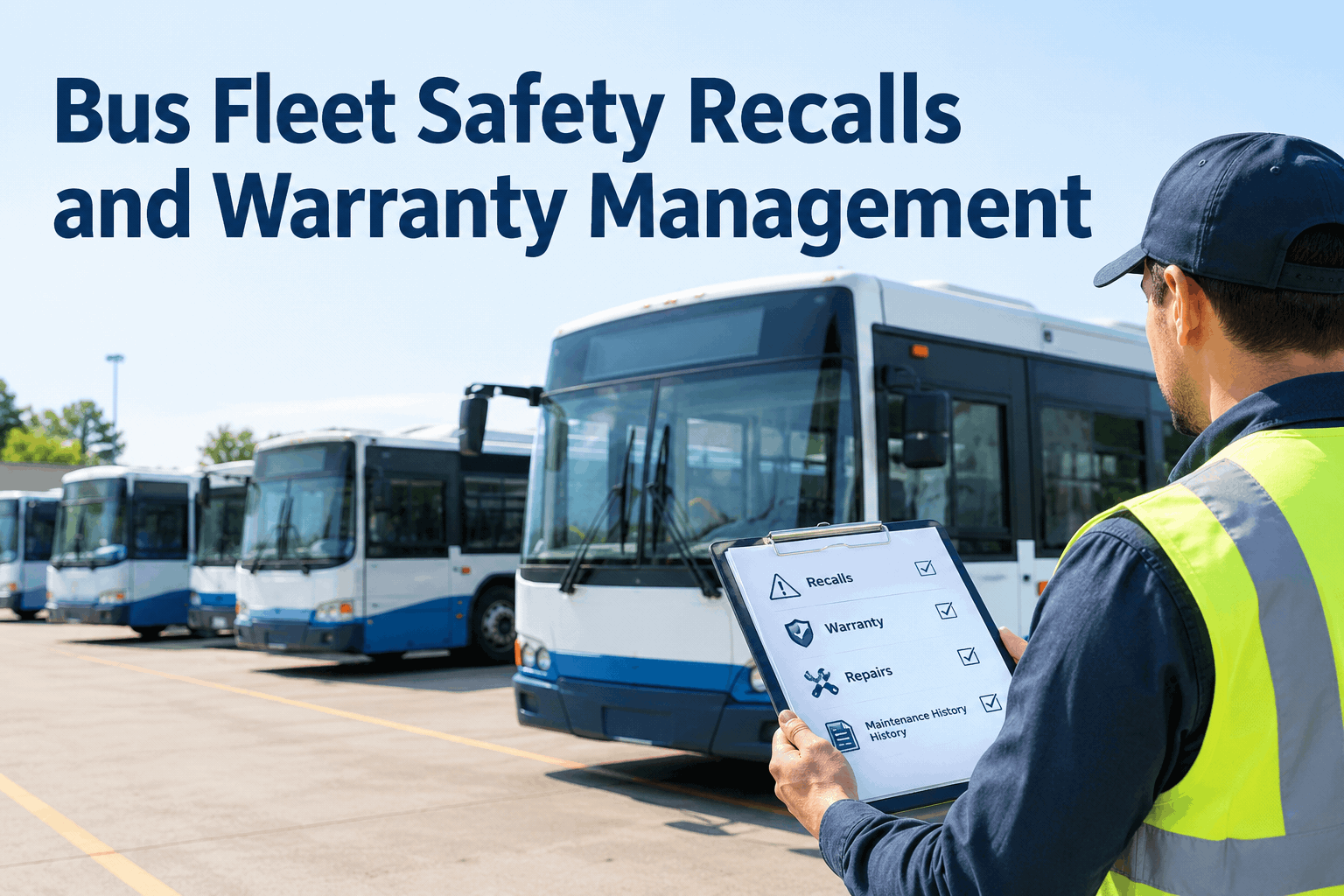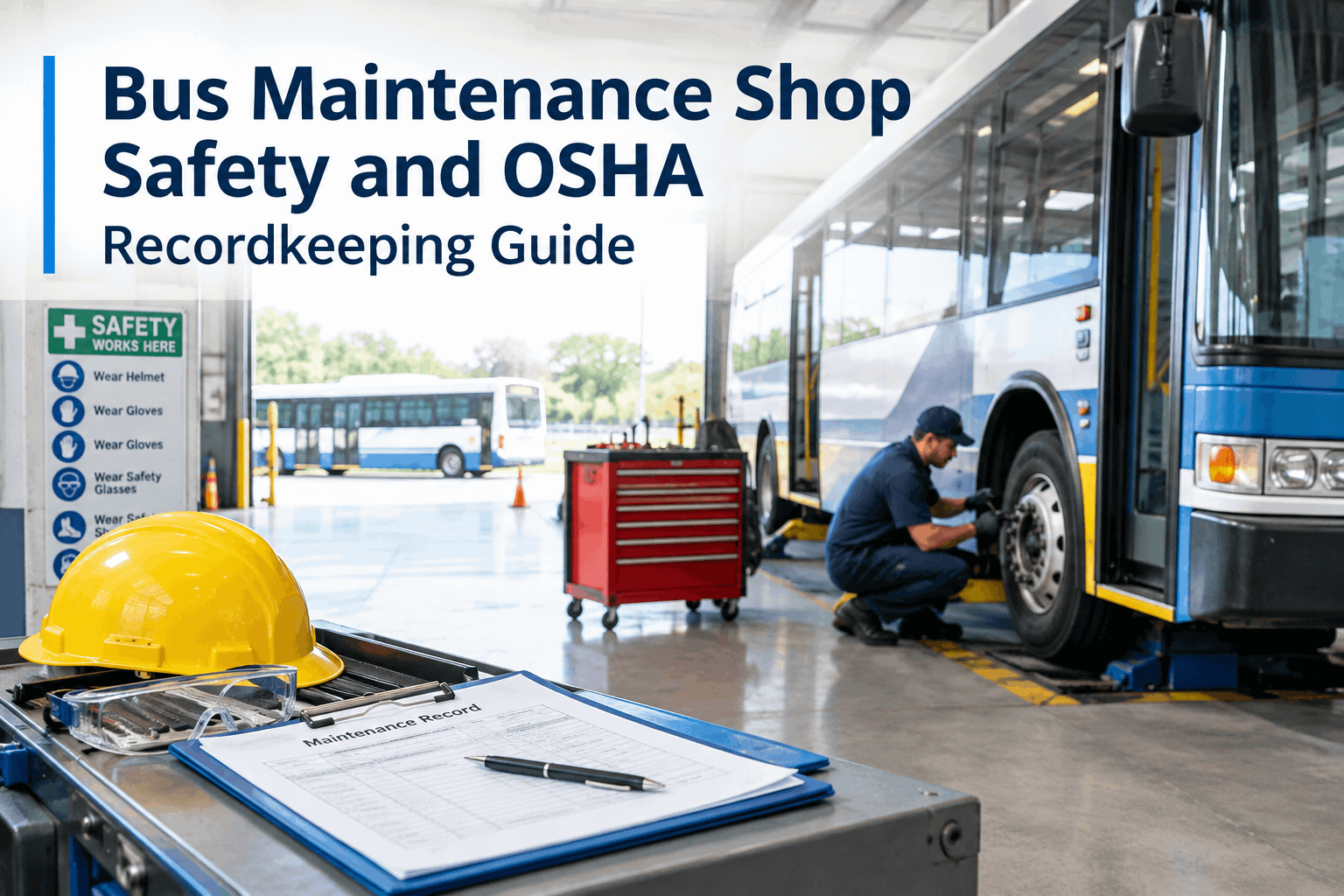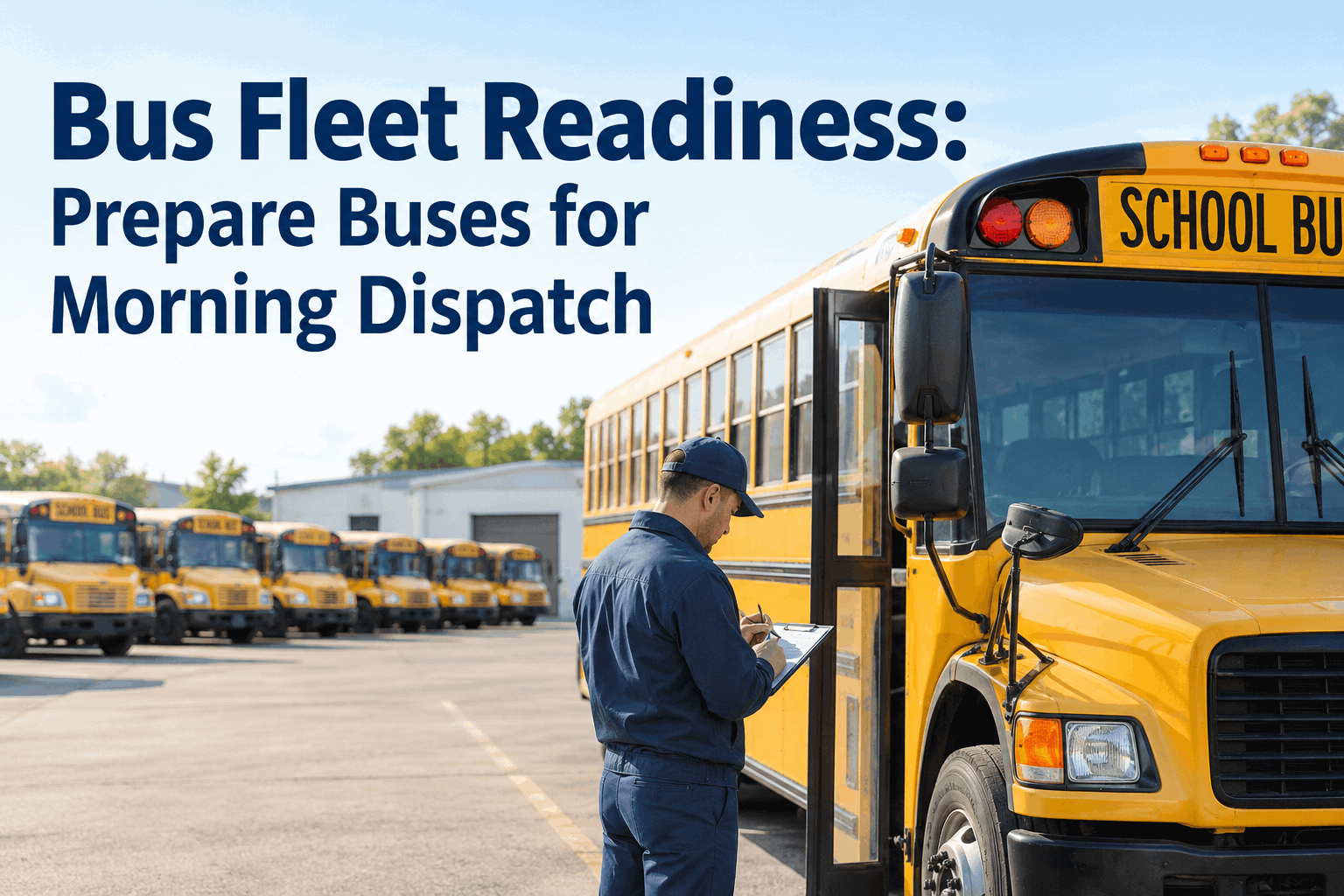
It is 6:10 a.m., routes pull out in forty minutes, and dispatch needs one number: how many buses are good to go? Three have open defects, one skipped its PM, two are still on lifts. Bus fleet readiness is not a gauge you glance at — it is a morning you work, a sequence that turns a yard of parked buses into a line-up covering every route on time. You can see the morning readiness picture in a demo.
Bus Fleet Readiness: Prepare Buses for Morning Dispatch
Every route that rolls on time starts hours earlier, in the yard and the shop. Here is the morning readiness sequence — from the night-before handoff to pull-out — that gets buses route-ready and gives dispatch a straight answer.
- Night beforeLast night's defects logged, PM due list set for the morning
- Shop opensOpen work orders worked first, parts pulled, quick fixes closed
- Pre-tripsDrivers run pre-trip DVIRs; a fail becomes a work order on the spot
- HandoffShop tells dispatch which buses are cleared and which are held
- Pull-outCleared buses cover routes; any gap is filled from spares early
Each stage feeds the next. A defect missed the night before is a scramble at pull-out.
Fleet Readiness Is a Morning You Work, Not a Moment You Check
The temptation is to treat readiness as a single number you read at 6 a.m. But by 6 a.m. it is too late to change it — the buses that are ready got ready the night before and in the first hours of the shift. Morning dispatch readiness is really the quality of a sequence: defects logged, work orders worked, pre-trips run, and a clean handoff to dispatch. Where that sequence breaks, routes run late or short, and on a school run that means kids waiting in the cold.
The buses that strand a route at pull-out are almost never a surprise — they are the open defect or overdue PM nobody surfaced in time to fix before the morning.
Surfacing those in time is exactly what a live readiness view does — you can walk through the night-before-to-pull-out sequence in a demo.
From Parked to Route-Ready: What the Morning Actually Clears
Not every bus in the yard is a bus you can dispatch. Readiness is what is left after you subtract the ones held back for a real reason. Seeing that drop-off clearly is how you know — before pull-out, not during — whether you can cover every route.
Illustrative. The point is the readiness number is the one that survives every subtraction — and you want it before the routes roll.
If you only learn that number when a driver reports a no-start at pull-out, you are already behind. A live view of what is ready, held, and due is what turns a 6 a.m. scramble into a 6 a.m. glance — start free and see your route-ready count before pull-out.
What Actually Holds a Bus Out of the Morning Line-Up
A bus comes off the ready list for one of four reasons — and each one is catchable before the morning if it is surfaced in time. Knowing the four is how a dispatcher turns "is it ready?" into a clear yes or no.
An open safety defect
A reported brake, steering, or lift issue holds the bus until it is fixed and verified. Safety is never a judgment call at pull-out.
Overdue preventive maintenance
A bus past its PM is a breakdown waiting to happen on a route. Better to hold it in the yard than lose it mid-run with riders aboard.
A failed pre-trip item
The driver's walkaround finds a problem — a light, a tire, a wiper — that has to clear before the bus can carry students.
A work order waiting on a part
The fix is known but the part is not in. Knowing this the night before lets you plan a spare instead of discovering it at 6 a.m.
All four are visible in advance if the defects, PM, and work orders live in one place instead of a clipboard and a tech's memory. Book a demo to see what is holding each bus, before the morning.
The Shop-to-Dispatch Handoff That Makes or Breaks the Morning
The single point where readiness is won or lost is the handoff from the shop to dispatch. If it happens by shouting across the yard or a scribbled list, buses fall through the cracks. A clean handoff answers three questions for every bus, in one place, before pull-out.
Which buses are cleared?
The green list — PM current, no open safety defects, pre-trip passed. These are the buses dispatch can assign to routes with confidence.
Which buses are held, and why?
The hold list with the reason — open defect, overdue PM, waiting on a part — so dispatch knows what to plan around instead of guessing.
Where are the gaps, and the spares?
If held buses leave a route short, which spare covers it — decided early, in the yard, not improvised while a route is already late.
When those three answers live in one system both the shop and dispatch can see, the morning stops being a negotiation and becomes a routine. See the shop-to-dispatch readiness handoff in a demo.
The Morning Dispatch Readiness Checklist
Run this against your morning. Each item is a crack a bus falls through when it is missing — and together they are the difference between routes that roll and a school calling about a late pickup.
- Last night's defects are logged, not in a headEvery end-of-day issue is a tracked work order waiting when the shop opens.CRITICAL
- PM-due buses are flagged before the shiftYou know which buses are coming due so they are serviced, not sent out overdue.CRITICAL
- Pre-trip fails become work orders instantlyA driver's failed item routes straight to the shop queue, not a slip that gets lost.CRITICAL
- Dispatch sees a live cleared-vs-held listOne view of which buses are good to go, updated as the shop works, before pull-out.FOUNDATION
- Spare coverage is planned, not improvisedWhen a route is short, the spare to cover it is decided early instead of at pull-out.FOUNDATION
- Readiness is recorded, not just rememberedWho was cleared and held each morning is logged, so a pattern on one bus is visible.FOUNDATION
The critical items are what keep a bad bus out of the morning line-up; the foundation items are what make the whole thing calm and repeatable. Start free and build this into your morning.
How BusCMMS Gets Your Fleet Route-Ready by Morning
Morning readiness is a visibility problem — the shop knows things dispatch cannot see, and the clock runs out before they connect. BusCMMS puts the whole picture in one place so the handoff is instant, and it is built for buses, so it is ready to run in weeks, not months.
Live route-ready dashboard
See every bus as cleared, held, or in the shop in one view, updated as work is done — the number dispatch needs before pull-out.
Pre-trip fails become work orders
A driver's failed DVIR item routes straight to the shop queue, so nothing slips between the walkaround and the fix.
PM flagged before it is overdue
Buses coming due are surfaced ahead of the morning, so they are serviced on schedule instead of sent out past due.
The payoff is a morning that runs on a system instead of adrenaline — and a readiness number you trust. You can book a demo and walk your own morning through it.
A Transportation Director's Take
Mornings used to be me and the shop foreman walking the yard with a clipboard, hoping we had the count right before routes rolled. We missed a few — a bus would pull out and die two stops in, and then I'm fielding calls from a school. Now dispatch opens one screen and sees exactly which buses are cleared and which are held, before 6 a.m. We have not sent an overdue bus out on a route since, and the mornings are quiet. For a transportation director, a quiet 6 a.m. is the whole job done right.
Key Takeaways on Bus Fleet Readiness
Readiness is a morning, not a moment
The buses ready at 6 a.m. got ready the night before and in the first hours of the shift.
Four things hold a bus back
Open safety defect, overdue PM, failed pre-trip, or a part on order — all catchable early.
The handoff is where it breaks
Shop-to-dispatch has to answer cleared, held, and gaps for every bus, in one place.
A glance beats a scramble
A live readiness view turns the 6 a.m. count from a phone tree into a single screen.
Treat bus fleet readiness as the morning sequence it really is — defects logged, PM current, pre-trips cleared, and a clean handoff to dispatch — and routes roll on time without the daily scramble. The buses are ready when the system makes the morning a glance instead of a guess.